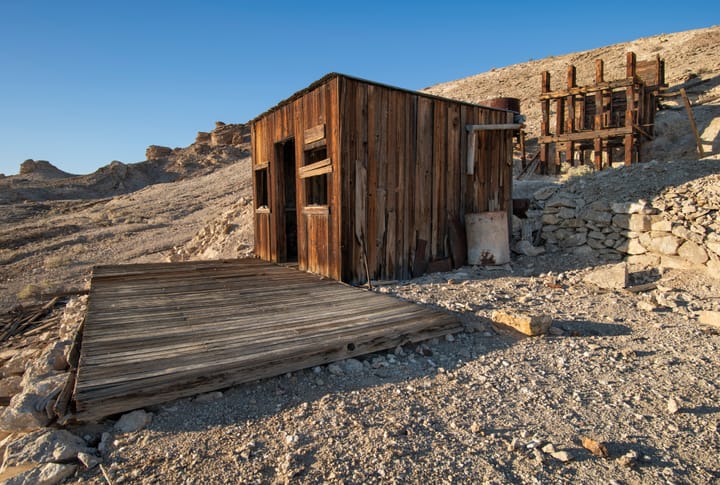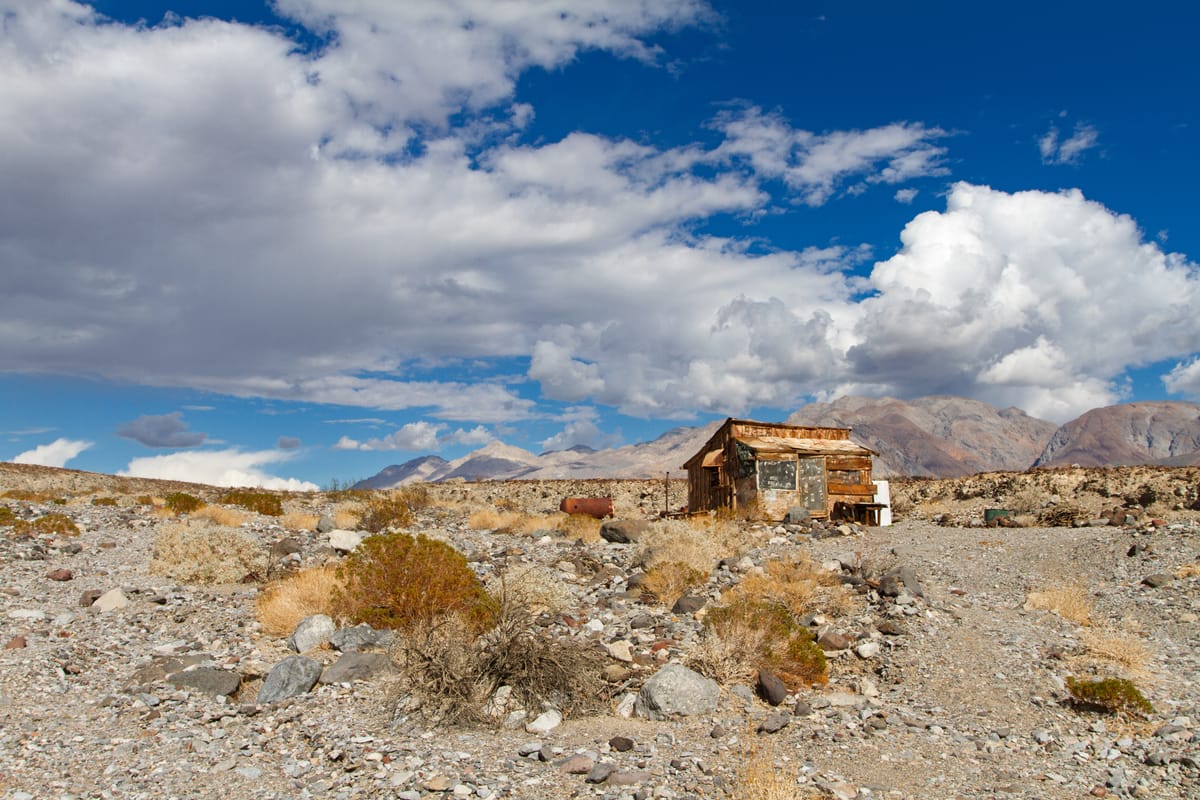
Spend enough time around the warm springs in Saline Valley and someone will eventually mention "the Murder Cabin." The name has stuck for decades, carried by rumor and retold with increasing inaccuracy. The cabin in question once belonged to Roy "Red" Braden, a pistol-packing cinnabar prospector who built it sometime in the 1960s. It had nothing to do with any murder. The actual crime that spawned the nickname took place miles away, and the man most often blamed for it was sitting in a jail cell when it happened.
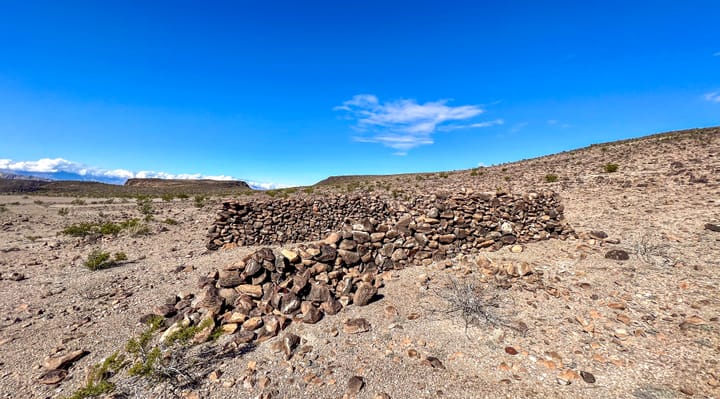
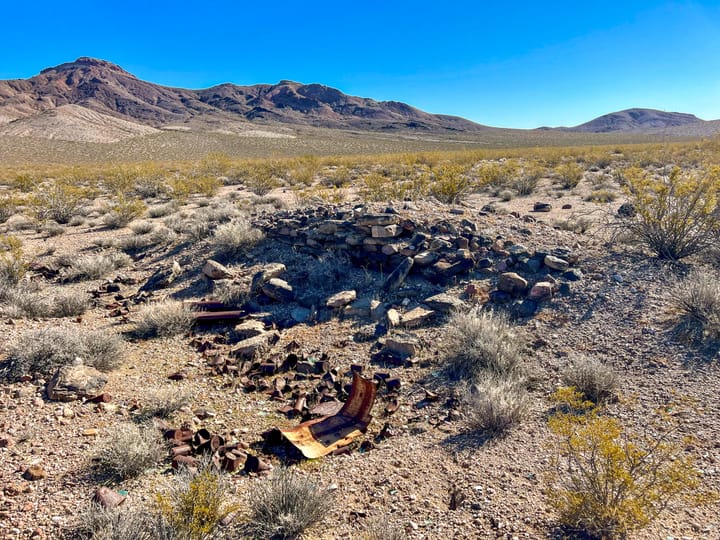
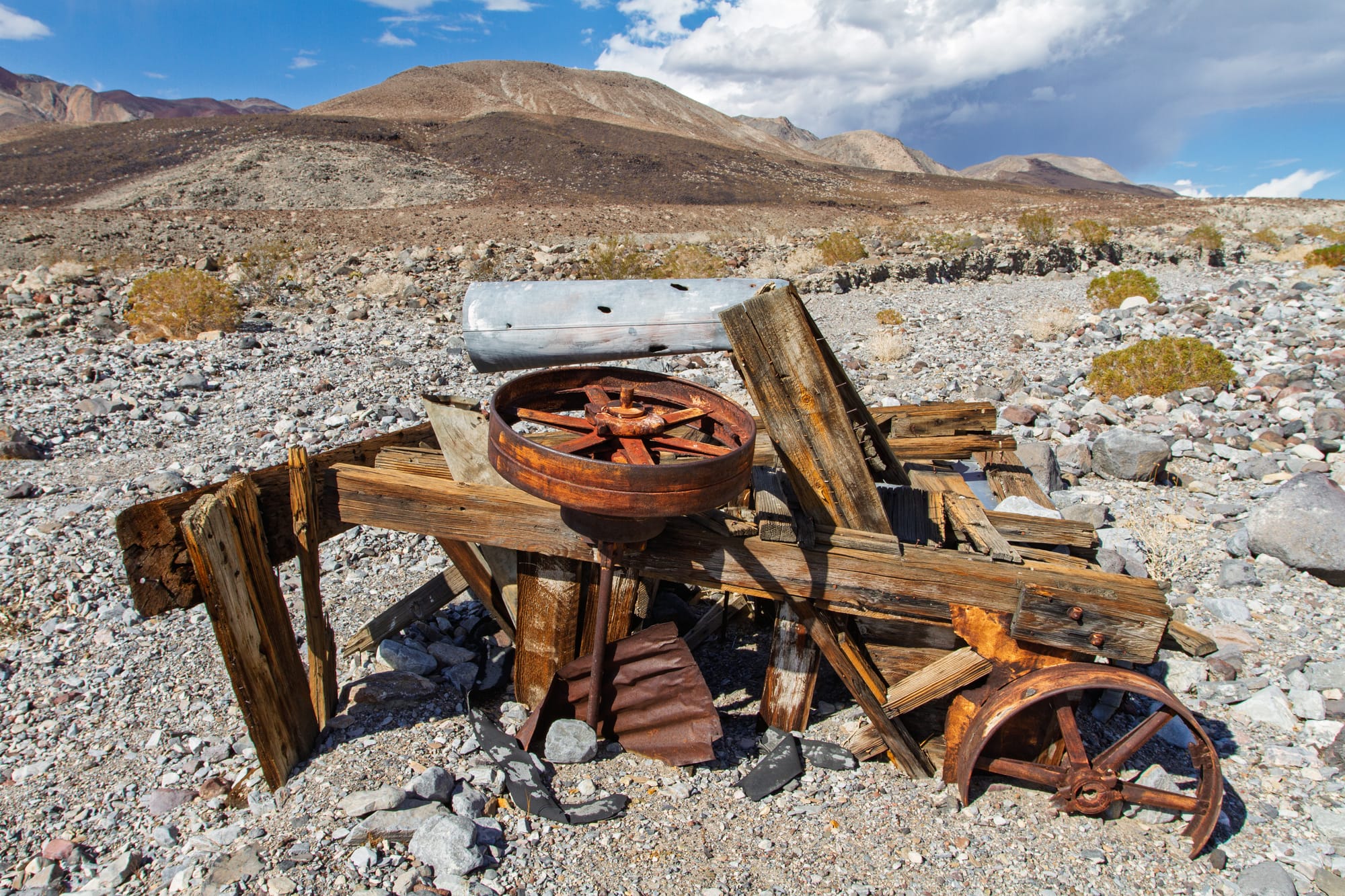
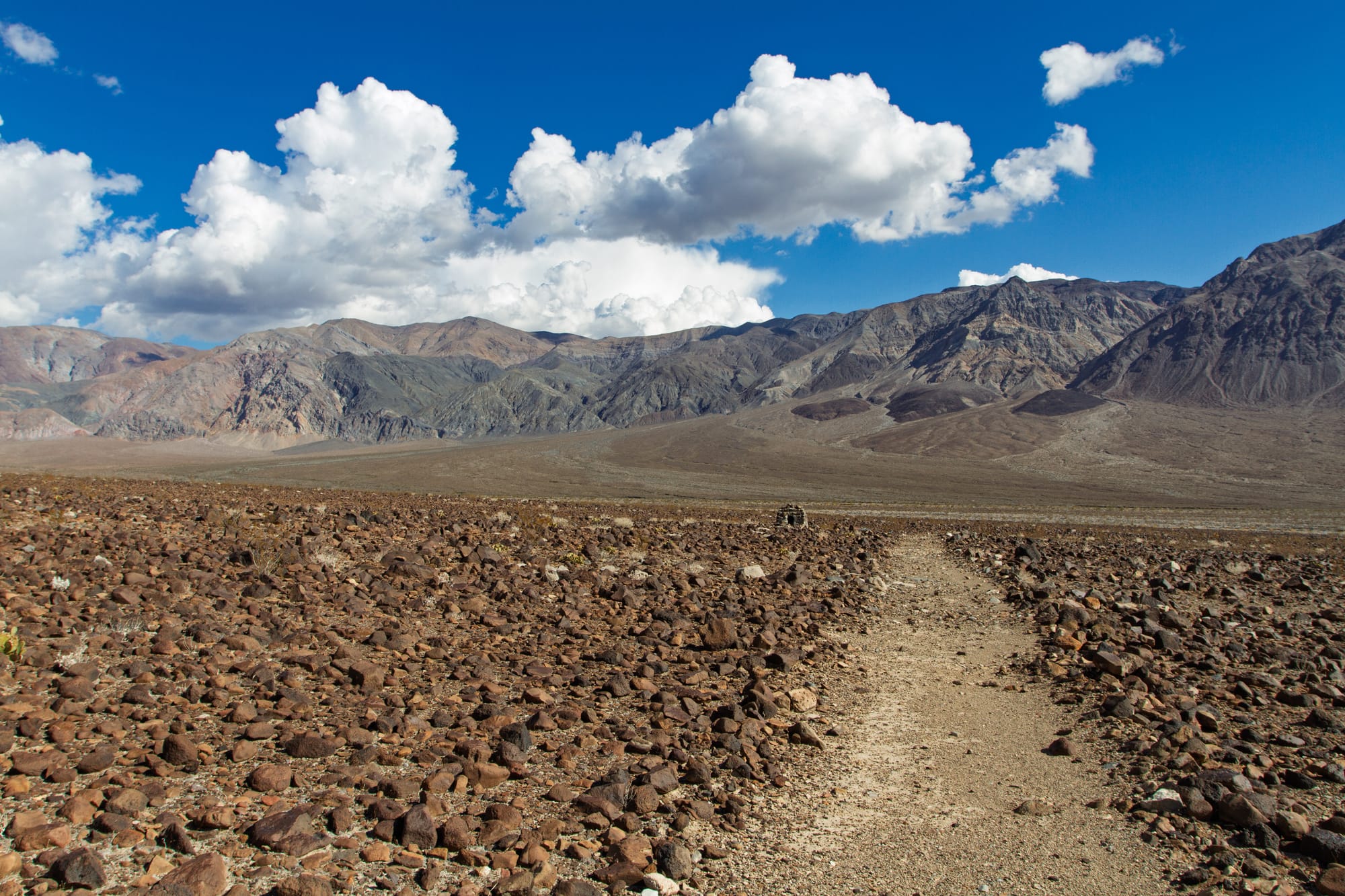
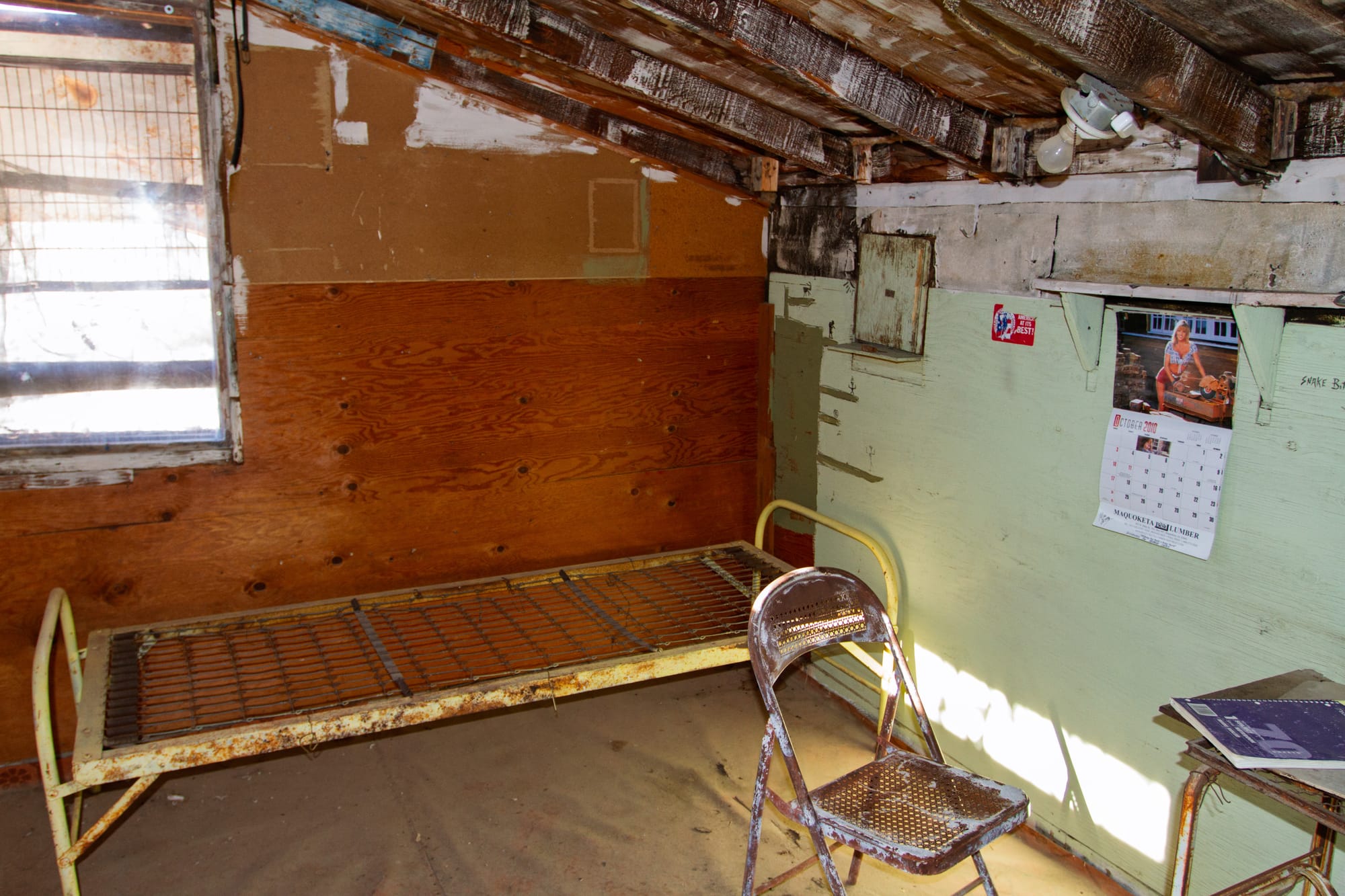
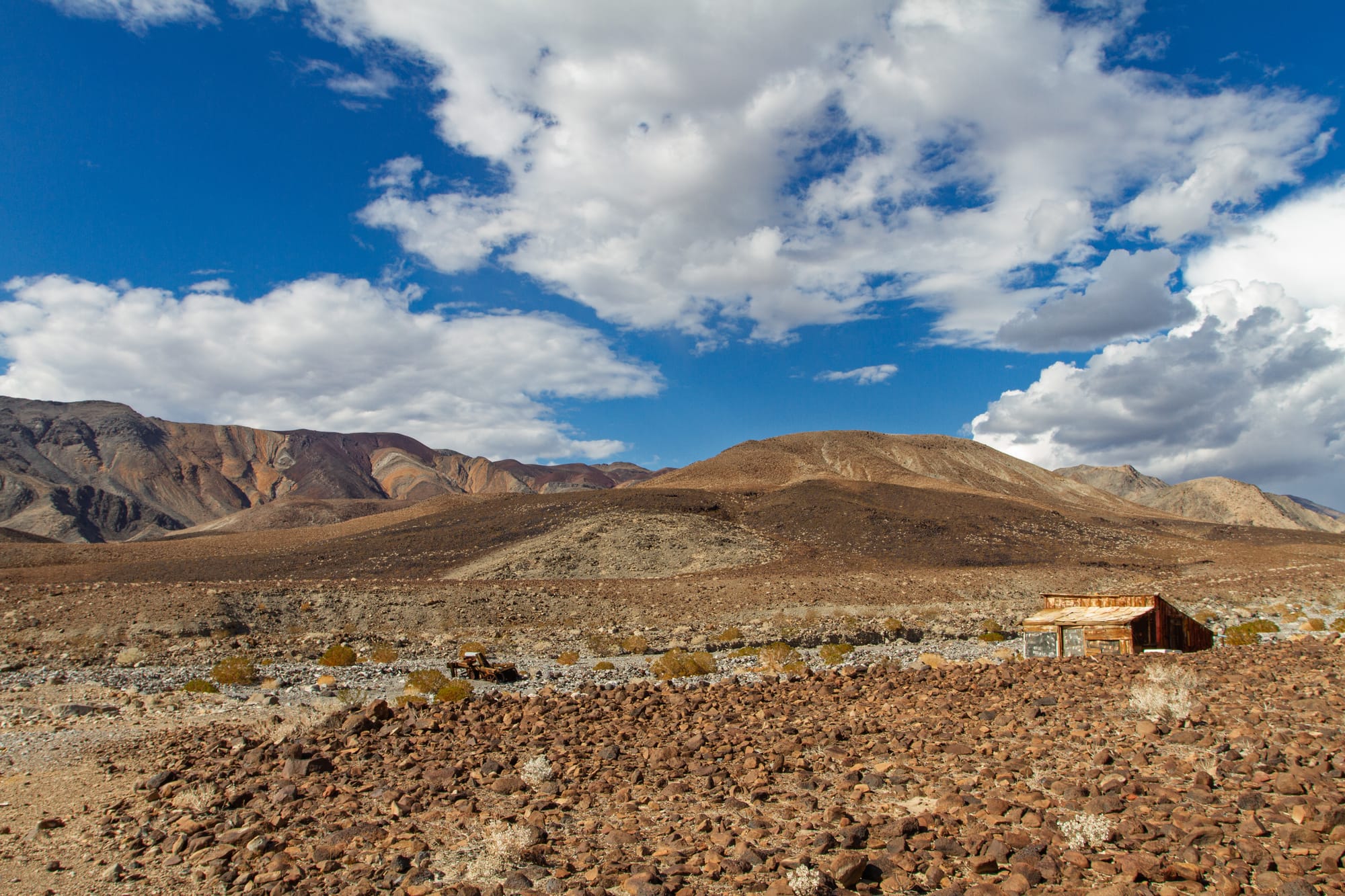
The cabin sits in a large wash about a mile above Upper Warm Springs along Steel Pass Road (sometimes spelled Steele). The surrounding alluvial fan is stark and barren. Inside, there is not much to see: a bedframe, a sink, a table, and a couple of folding chairs. What looks like an icebox sits outside near an outhouse and some household trash. Flash floods have been eating at the foundation for years. The cabin appears to be living on borrowed time. We scouted the area for anything mining-related and found little beyond the remains of a primitive ore-roasting furnace and, down in the wash, a custom-built dry washer presumably hoping for wetter days. Both are relics of Braden's mercury prospecting operation known as the Coffee Stop Prospect.
History
Red Braden and the Coffee Stop
Red Braden may not have been much of a builder, but he was resourceful. The cabin was originally part of the mining camp over in Marble Canyon, along the North Pass Road into the valley. He disassembled it, hauled it into Saline Valley, and reassembled it above Upper Warm Springs near his cinnabar claims.
Braden held a handful of claims in the area, including one called Cerro Albino a few miles up the Steel Pass Road, but the one that mattered was the Coffee Stop Prospect near the cabin. It consisted of at least six shallow pits dug into alluvium and tuff beds. The ore was unusual. Cinnabar occurred not in veins or lodes but as thin coatings on cobbles and pebbles in the top two feet of alluvial material. A USGS survey found that of 35 samples taken, only eight contained any meaningful mercury, ranging from 0.1 to 1.4 pounds per ton. It was never much of a prospect.
Mercury had its brief moment during the late 1960s, when prices peaked at $536 per flask (a flask being 76 pounds). By 1971, prices had dropped to $292 and prospecting ceased. Braden kept at it longer than most. He processed his ore in a furnace built from local rocks and pipes, the remains of which still stand along the old road to the cabin. One story claims he boiled mercury inside the cabin while he slept, slowly poisoning himself, but anyone who has seen the stone furnace outside knows that doesn't hold up. A prospector who knew him agreed he was never that foolish. Whether from mercury exposure or not, Braden died of oral cancer in 1977.
To say Braden was a colorful character would be an understatement. He was usually armed. He carried an Inyo County Sheriff's badge in his pocket that he would "accidentally" drop when meeting strangers, making sure they saw it as he picked it up. The Inyo County Sheriff eventually caught wind of this and made him surrender the badge. He feuded constantly with another Saline Valley prospector named Joe Ostringer, and the two regularly jumped each other's claims. At one point, Braden drew his gun on Ostringer at Lower Warm Springs and had to be tackled by Lucky Rich Baldwin, a fellow prospector, to prevent a shooting. In the evenings, he could be heard listening to recordings of gunfight sound effects while camp was otherwise peaceful and quiet.
After Braden's death, a drifter named Richard Watkins began squatting at the cabin. Watkins, known around the springs as "Wolfman," was an unpredictable, often intoxicated loner who was never welcome there. His presence led some to start calling the place "Wolfman's Cabin," a name that grated on anyone who knew the cabin's actual history. Wolfman had nothing to do with the Berman murders, though he would become the popular suspect. He was later killed in a shootout with police outside the valley.
The Berman Murders
On the evening of Sunday, January 5, 1986, Barry and Louise Berman drove their blue 1982 Datsun King Cab past the campfires and naked bathers at Lower Warm Springs and continued up the connecting road to Palm Spring. Barry, 35, was a blacksmith from Goleta. Louise, 52, was his wife. Both were devotees of the Indian spiritual path Radha Soami. The trip was a make-up vacation after a rough patch in their marriage. Louise told her son it was a second honeymoon.
They slipped into Wizard Pool and fell into conversation with three men already soaking there: two motorcycle riders from Modesto and a solo traveler who said he was in the military, a Marine Corps captain named Mike who was stationed at the logistics base in Barstow.
The next morning, January 6, a woman camped at Palm Spring reported seeing the Bermans leave on foot, heading up Steel Pass Road with daypacks. Shortly after, the military man loaded gear into his Datsun pickup and drove up the road in the same direction.
The Bermans never returned.
Their truck sat at Palm Spring with camping gear, clothing, food, and two cameras inside. Bathing suits hung from the steering wheel. For several days, nobody raised the alarm. People come and go from Saline Valley without announcement, and an unattended truck is not unusual. "Chili Bob", the campground host at Lower Warm Springs, had been away in town. When he returned on January 10 and heard about the abandoned truck, he radioed the Inyo County Sheriff's dispatch in Independence.
Deputy Larry Freshour didn't make it into the valley until January 13, three days later. Saline Valley is one of the most remote places in California, reached by forty miles of notoriously bad washboard road. Sgt. Dan Lucas and a team of search and rescue volunteers were soon mobilized. What followed may be the most massive search and rescue effort in Inyo County history: more than fifty ground searchers, two Bell AH-1 Cobra helicopters from China Lake Naval Weapons Center, a pair of CHP helicopters, an Army Huey, and a National Guard Chinook. Searchers combed the desert floor, hiked the canyons of the Saline and Last Chance Ranges, and were airlifted to high ridgelines. They found nothing.
Film from two cameras recovered from the Bermans' truck was developed, revealing photos of the couple in camp wearing Nike sneakers. This gave searchers a shoeprint pattern to track. Several factors kept the investigation active well beyond the normal window. Barry's father, Jules Berman, was a wealthy Beverly Hills businessman and the U.S. import agent for Kahlua. He had the resources and political connections to press for continued effort. Barry and Louise lived on exclusive Refugio Road in Goleta, adjacent to Ronald Reagan's Rancho del Cielo. Reagan was president, and the Secret Service took notice when his neighbor vanished.
Six weeks after the disappearance, two pairs of powder-blue Nikes matching the Bermans' shoes were found tucked under a bush near the road between Lower Warm Springs and Palm Spring. Deputy Leon Boyer theorized the killer stashed the shoes while driving away from the crime scene, stopping at a point in the road hidden from both camps.
Speculation at the springs ran wild. Wolfman, who had squatted at Braden's Cabin, became the popular suspect. But Sgt. Lucas confirmed that Wolfman had been incarcerated in Nevada at the time of the disappearance and was not a suspect.
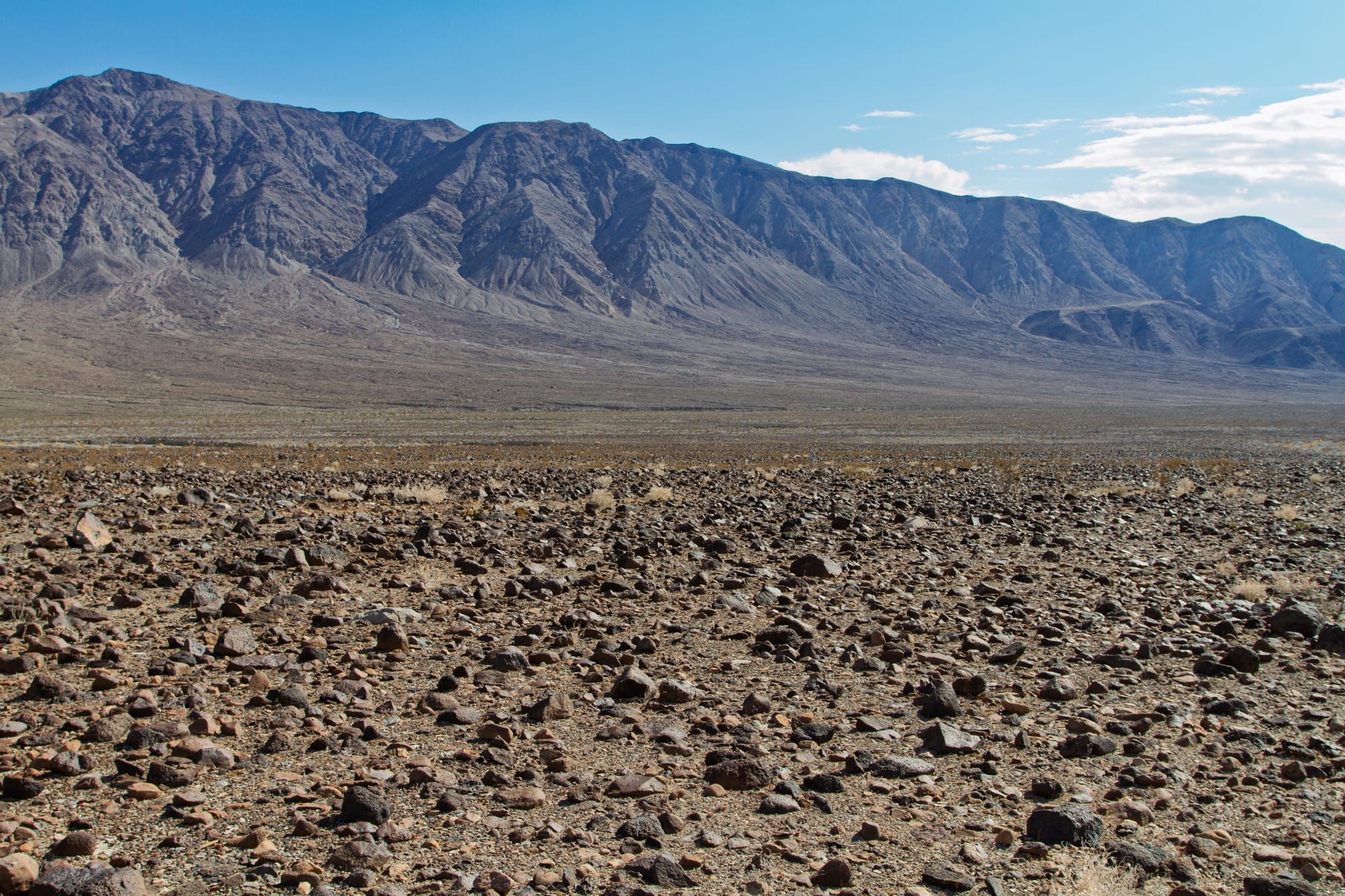
The real break came on November 12, 1988, nearly three years later. A hiker returning from a solo climb of Dry Mountain on the Saline Valley side, a route that gains nearly six thousand feet from the valley floor, crossed a broad alluvial fan about seven miles up Steel Pass Road from Palm Spring. This is open desert where no one has any reason to venture. He stumbled on a human skull lying on the desert pavement. He collected it, stacked rocks to mark the location, and drove to Lower Warm Springs to find the campground host at the time, Tom Ganner, known as "Major Tom."
Ganner radioed dispatch, and Sgt. Lucas and investigator Marston Mottweiler arrived the next morning. The four men drove up the road, parked, and walked to the cairn. They quickly found a jawbone with gold fillings. Ganner climbed a nearby boulder for a wider view and noticed something white on the desert floor. It was a second skull.
Searching the area, they noticed a narrow side channel feeding into the main wash, choked with rocks too large to have been deposited by normal water flow. Between the gaps, bones were visible. A forensics team arrived the following day and excavated the shallow grave. The two bodies had been placed one on top of the other in the narrow gulch and covered with rocks and dirt.
The remains were positively identified through dental records as Barry and Louise Berman. The coroner concluded they died in a double homicide, though the degraded state of the remains left the cause of death undetermined.
Investigators found Barry's gold wedding ring and fragments of underclothing. But all of Louise's jewelry was missing: an opal ring, a gold-and-garnet engagement ring, a quartz crystal pendant, and a freshwater pearl necklace. Barry's custom silver belt buckle, handcrafted for him by his friend Arthur Korb and visible in the photos from their camera, was gone. A handcuff key was found among the remains.
The investigation, led by Deputy Boyer, eventually identified the Marine captain from Barstow as the prime suspect. Captain Michael Pepe was the only person known to have driven a vehicle up Steel Pass Road on January 6 in the same direction the Bermans had hiked. He returned to camp late that afternoon looking dirty and nervous, bumming a pack of cigarettes. Within minutes of meeting another woman camper, he made unprompted sexual advances. When interrogated ten months later, Pepe was evasive about what he did on January 6, changing his story multiple times and claiming he couldn't remember basic details. He had repainted and sold his Datsun pickup shortly after the trip. One of his registered firearms was missing. He claimed it was stolen. Wolfman had an airtight alibi. Pepe did not.
In 2006, Pepe, by then a retired Marine captain, was arrested in Phnom Penh, Cambodia, for raping and torturing seven girls between the ages of 9 and 13. He was convicted under the federal PROTECT Act, which allows prosecution of Americans for child sex crimes committed overseas, and is currently serving a 210-year sentence at USP Tucson, Arizona.
After his conviction, Pepe's cellmate at USP Tucson, a convicted bank robber named Quincy Walters, came forward claiming Pepe had bragged about the Berman killings. According to Walters, Pepe said he lured the couple into his truck by offering to show them undiscovered hot springs. When Pepe made advances toward Louise and Barry intervened, Pepe shot him with a .357 revolver, handcuffed Louise to the steering wheel, finished Barry with a KA-BAR fighting knife, and strangled Louise with a coil of tent rope. The handcuff key found in the grave was his, Pepe allegedly said. A second inmate corroborated hearing the same account. An Inyo County investigator interviewed both men at the prison and considered them credible, though both were convicted felons with potential motives to cooperate. Some details in Walters's account matched facts about the case that had not been made public.
In 2017, an Inyo County investigator completed a formal homicide report on the case. As with an earlier review, the DA declined to file charges, citing insufficient admissible evidence. Pepe was never charged with the Berman murders.
Special thanks to Tom Ganner, aka "Major Tom," for his research on Saline Valley history. Visit his site at timenspace.net.
For a deep dive into the case, see The Berman Murders by Doug Kari (2026).
Some links are Amazon affiliate links. Purchases through these links support this site at no extra cost to you.
GPS Waypoints
- Braden Cabin: 36.84955°, -117.72029°