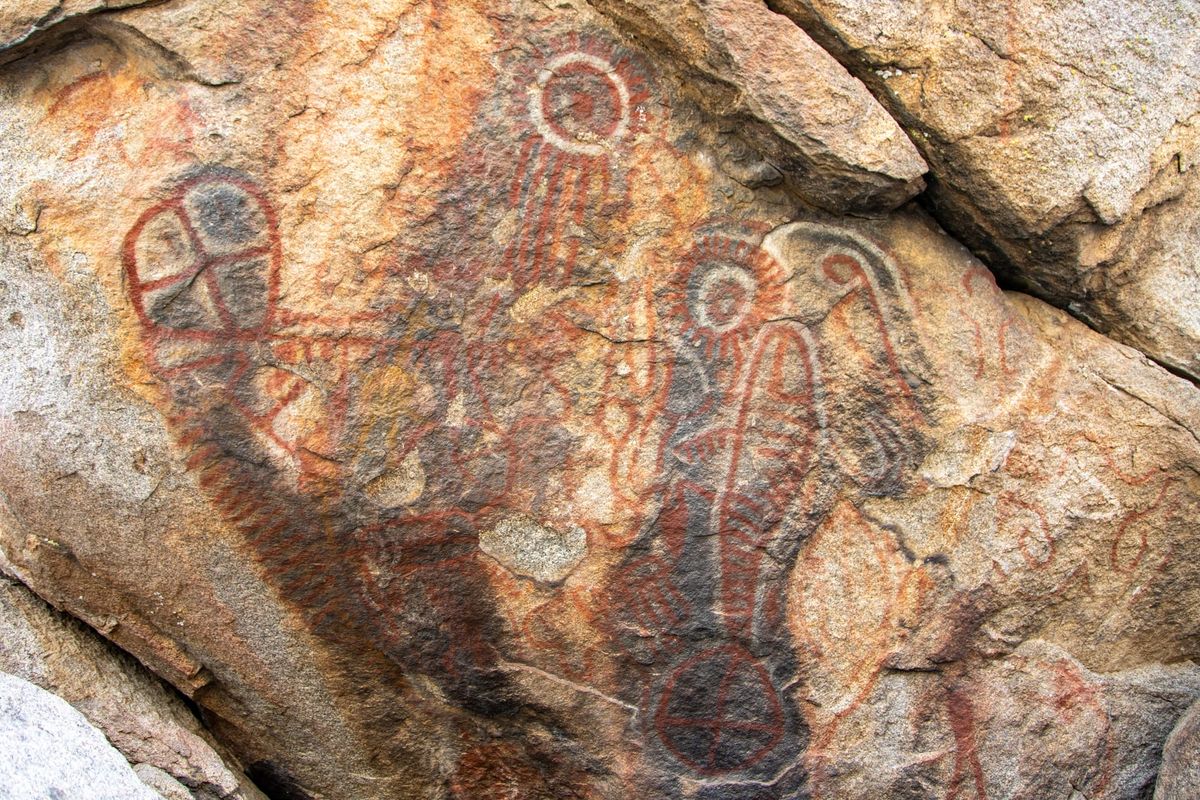
Two things make Burham Canyon remarkable: the vibrant pictographs painted in red, white, black, orange, and traces of blue, and the fact that women from three different tribes traveled here specifically for childbirth. The Kitanemuk considered it home territory, but Kawaiisu women came from the northeast and Tataviam from the southwest, all drawn to this remote canyon.
The main pictograph panel (CA-KER-273) hides deep under a granite overhang, sheltered from centuries of weather but requiring a bit of exploration to discover. Once you find it, the colors hit you immediately - vivid reds, whites, blacks, oranges, and traces of blue that seem impossibly fresh against the ancient rock. To the east sits a smaller site (CA-KER-1193) with a red sun symbol and thirty short dashes that archaeologist Albert Knight believes functioned as a winter solstice observation station.
Scattered across the granite boulders, you'll also find dozens of bedrock mortars, some surprisingly deep and positioned on angled surfaces that suggest ceremonial use.
History
The Burham Canyon sites sit within traditional Kitanemuk territory, connected to Willow Springs just a few miles southeast, once the largest Kitanemuk village in the northwestern Mojave Desert. But unlike most rock art sites tied to a single cultural group, Burham Canyon functioned as a shared sacred space.
In 1990, Kawaiisu elder Andy Greene provided crucial ethnographic information to archaeologist Albert Knight, explaining that women from the Kitanemuk, Kawaiisu, and Tataviam tribes all used CA-KER-273 as a "birthing cave." Greene called the entire canyon a pharmacy for women giving birth, emphasizing that every plant within walking distance served traditional purposes, particularly Desert bitterbrush (Purshia glandulosa), which women used as a tonic. The canyon may have been considerably wetter when these sites were actively used. Tataviam elder Charlie Cooke later corroborated Greene's account, recalling how his father and uncle brought him here repeatedly because it was "one of his father's favorite places."
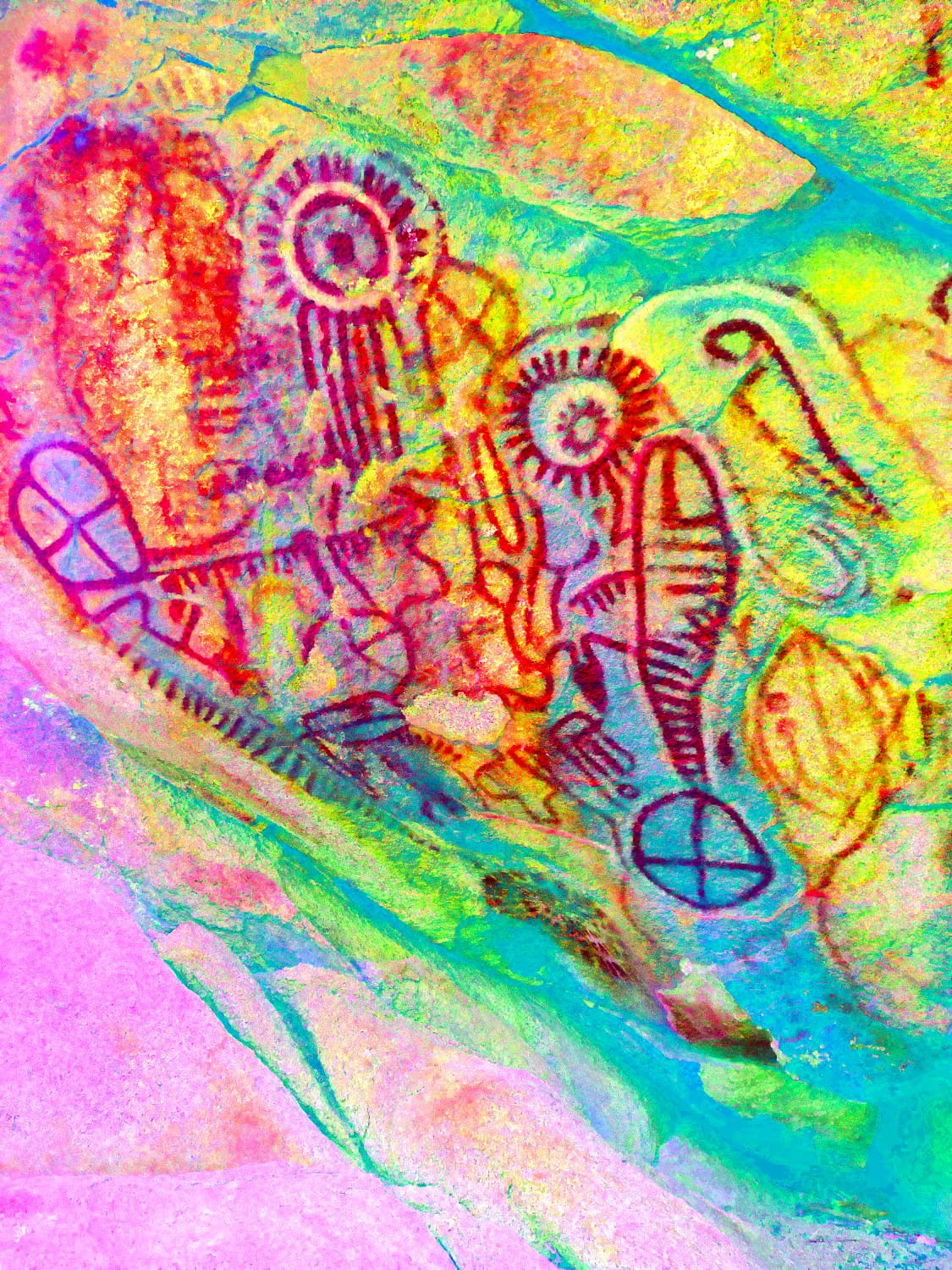
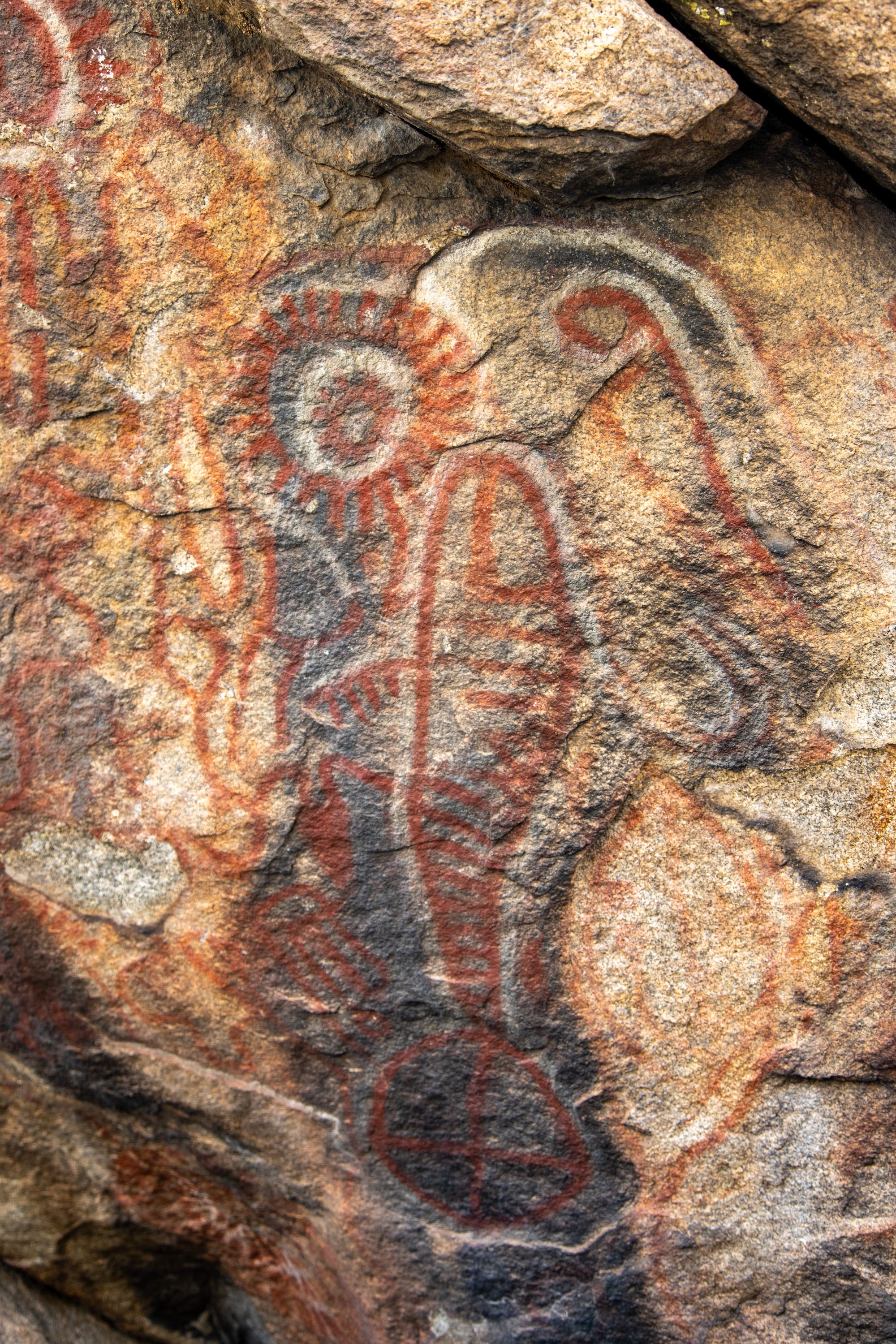
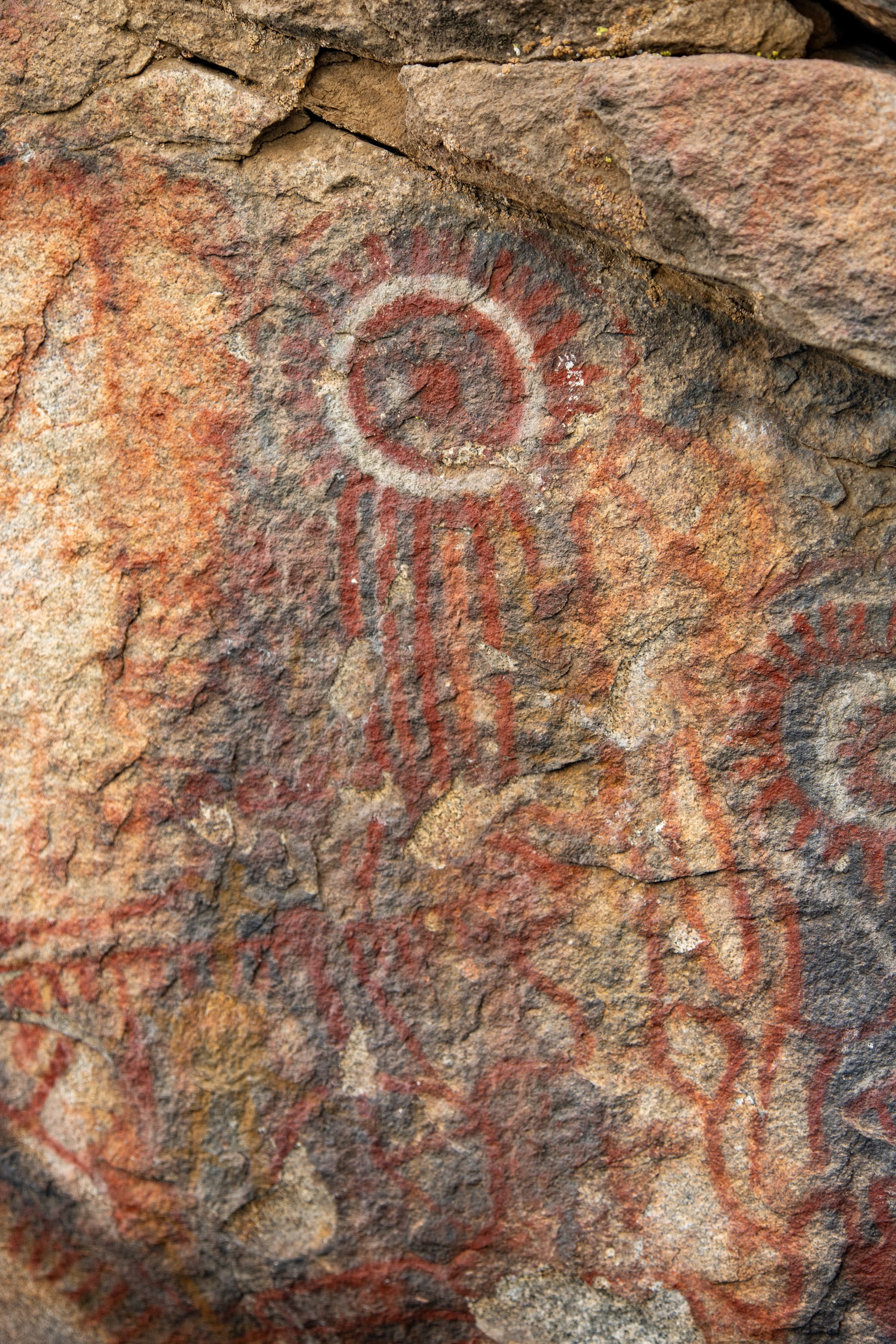
The main pictograph panel represents the Southern Sierra Style, characterized by large polychrome paintings mixing circular and linear motifs with stylized anthropomorphic and zoomorphic forms. Beyond the obvious circular and linear elements, careful examination reveals "pelt" figures with open hands and feet typical of shamanic imagery, a hidden yellow anthropomorphic figure with digitate appendages, and what appears to be a thunderbird motif with curved wings of hash marks. The central panel also features anthropomorphic and possibly celestial figures that add to its complexity.
The site dates to the late prehistoric period, though precise age determinations remain uncertain. Archaeologists continue to debate the exact timeline, demonstrating that arguing about art has been a timeless human tradition.
Both tribal elders emphasized that these sites remain sacred and "should not be casually visited." The Bureau of Land Management administers the area as public land, but visitors should approach with appropriate respect for ongoing cultural significance.
What continues to amaze me about Burham Canyon is how such an extraordinary site remains accessible yet relatively unchanged on the southern slopes of the Tehachapi Mountains. Despite being reachable by standard 4WD vehicles, the pictographs retain their vibrant colors and intricate details after centuries of exposure. Few locations in the Mojave offer such well-preserved artwork with relatively easy access.