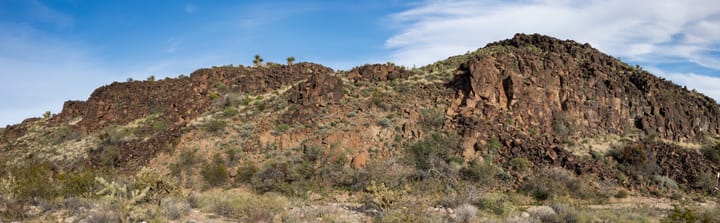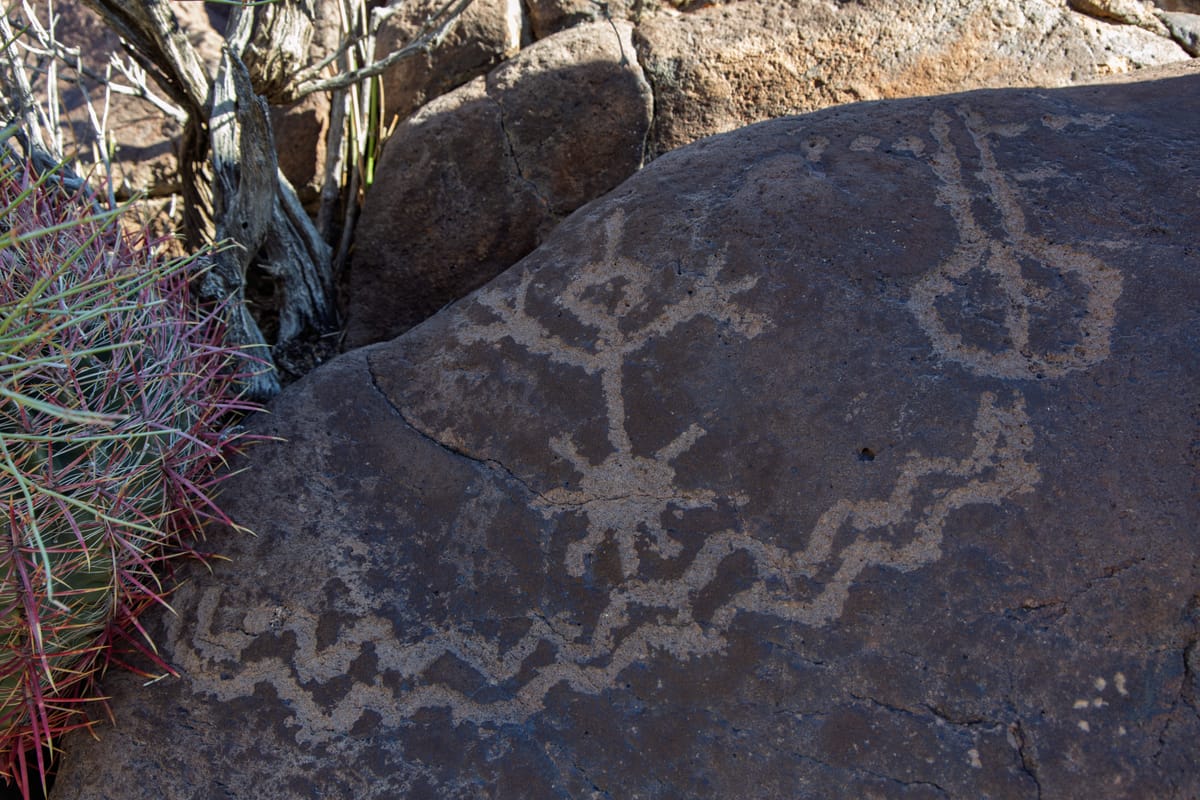
Most East Mojave rock art sites have a mix of abstract designs, the occasional bighorn sheep, maybe a few human figures. This canyon has those too, but what sets it apart is the number of enclosed crosses pecked into the basalt cliffs. I didn't name it, but whoever did had good reason. The crosses aren't the only things worth looking at. A repeating mask design shows up on the rock, sometimes with two dots, sometimes four. And in a side canyon at a tinaja (natural water tank), there's what looks like a thunderbird and a possible cougar.
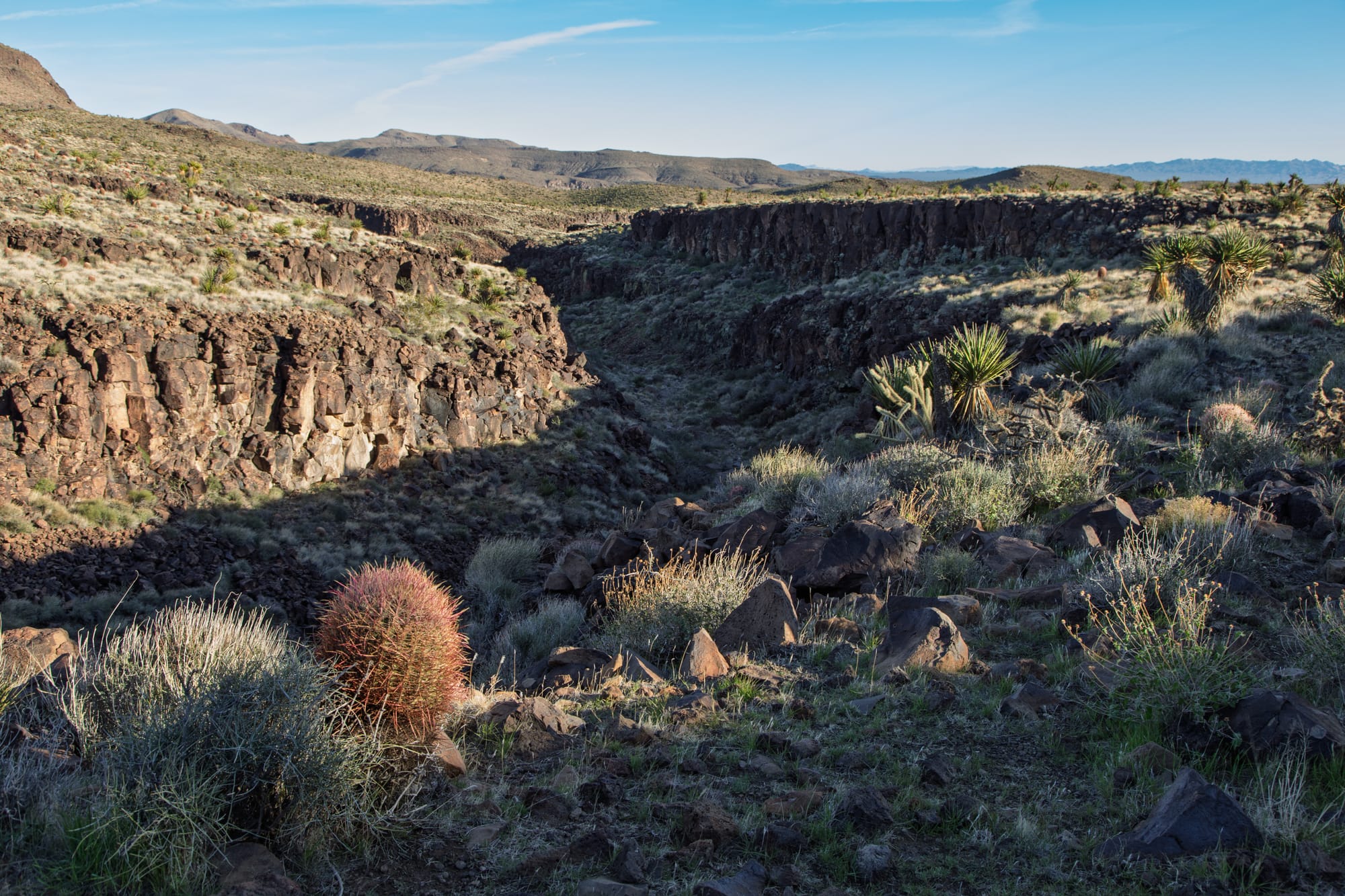
The canyon holds five separate petroglyph sites spread along basalt cliffs. The first site is near the mouth of the canyon, on a bench along a long basalt cliff wall. This one didn't have many crosses but plenty of other petroglyphs. The second site comes where the canyon narrows at a point of basalt rock, and the crosses start showing up. The third site has clustered crosses at a fork in the canyon. The fourth site is farther up the main canyon with only a few unusual petroglyphs. The fifth site is the most interesting. It's in a tributary canyon off of the main canyon and near a tinaja. It has some unusual animal-like petroglyphs that you don't see elsewhere in the canyon, including what looks like a bird (possibly a thunderbird) and what could be a cougar. You don't see that every day!
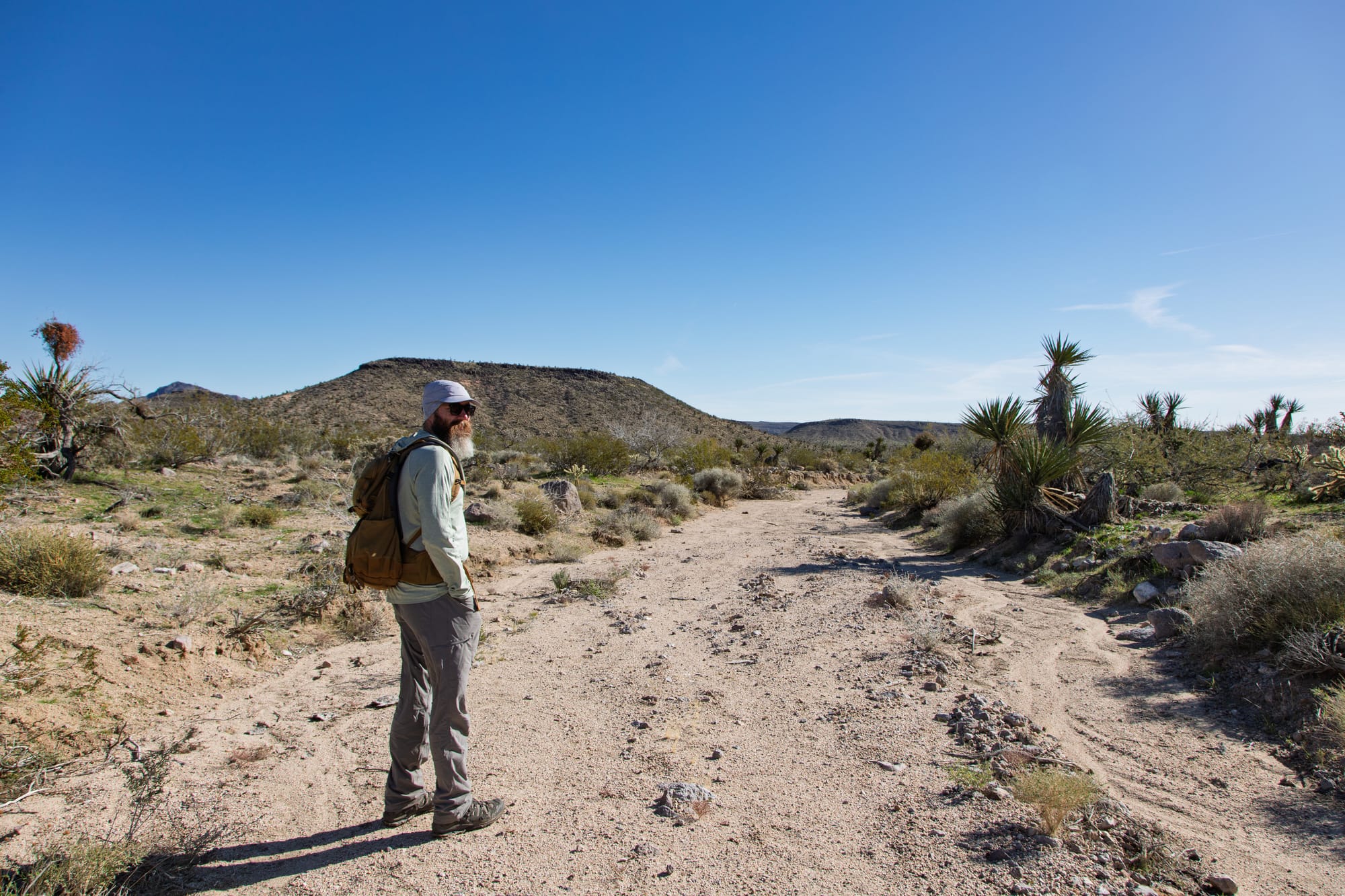
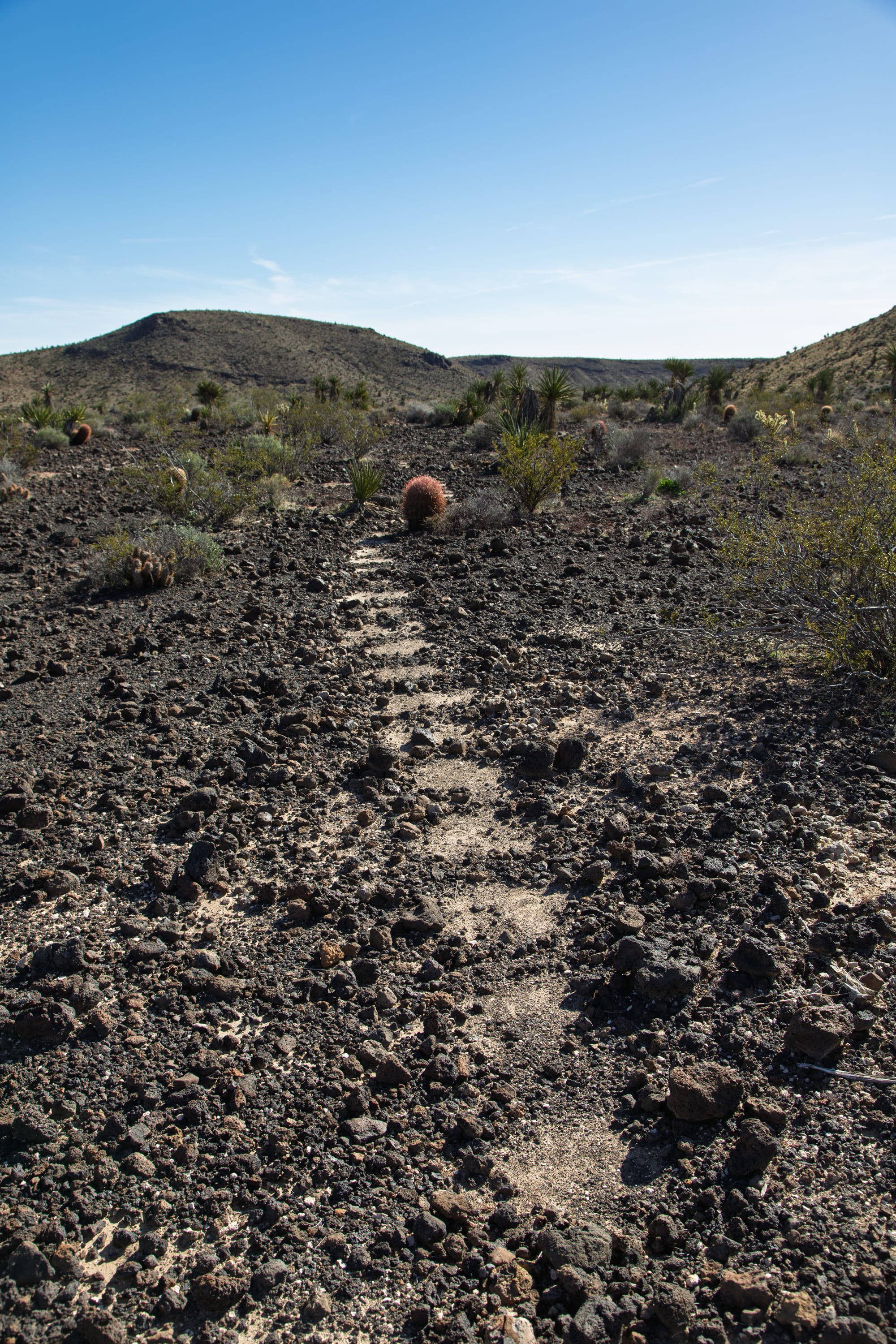
Prehistory
The East Mojave holds one of the largest concentrations of rock art in the Mojave Desert. A regional study of 56 sites found that the cross motif is widespread across the region and that every single site was associated with water: springs, natural tanks, or seasonal sources. Unlike rock art sites in the Owens Valley and Coso Range, the East Mojave sites are not associated with hunting blinds or rock dummy stacks (sometimes called stone men). The petroglyphs occur along natural access routes, often alongside pottery, milling stones, and other occupation debris, suggesting they served as territorial markers and water source indicators.
The oldest petroglyphs in the East Mojave appear to be in the Great Basin Pecked curvilinear style, with rectilinear elements somewhat later and representational figures (bighorn sheep, human forms) the most recent. Heavily patinated glyphs tend to be curvilinear. Dating remains difficult, but the Mojave Indians probably occupied the region from about 1 A.D. to approximately 1500 A.D., with the Chemehuevi moving in after that and contributing many of the most recent elements. What none of this explains is the concentration of crosses here.
Research across the Southwest and Southern California has documented a pattern: enclosed crosses appear in direct association with known fertility and female symbols. Among the Hopi, the encircled cross was considered an "emblem of fructification" and appeared on pottery vessels used in puberty ceremonies. Whether the people who pecked the crosses in this canyon held similar beliefs can't be answered with certainty, but it points to something deliberate.
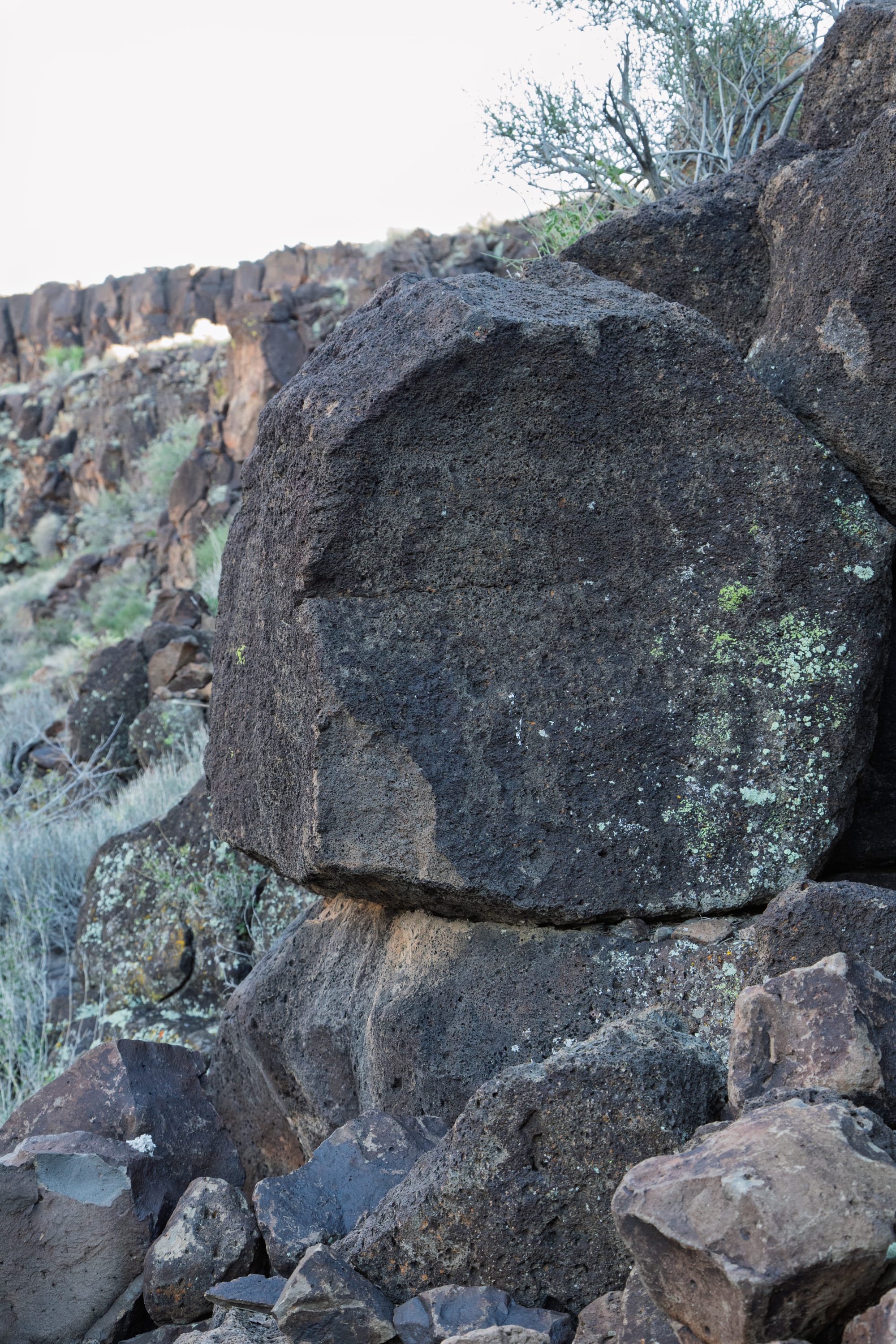
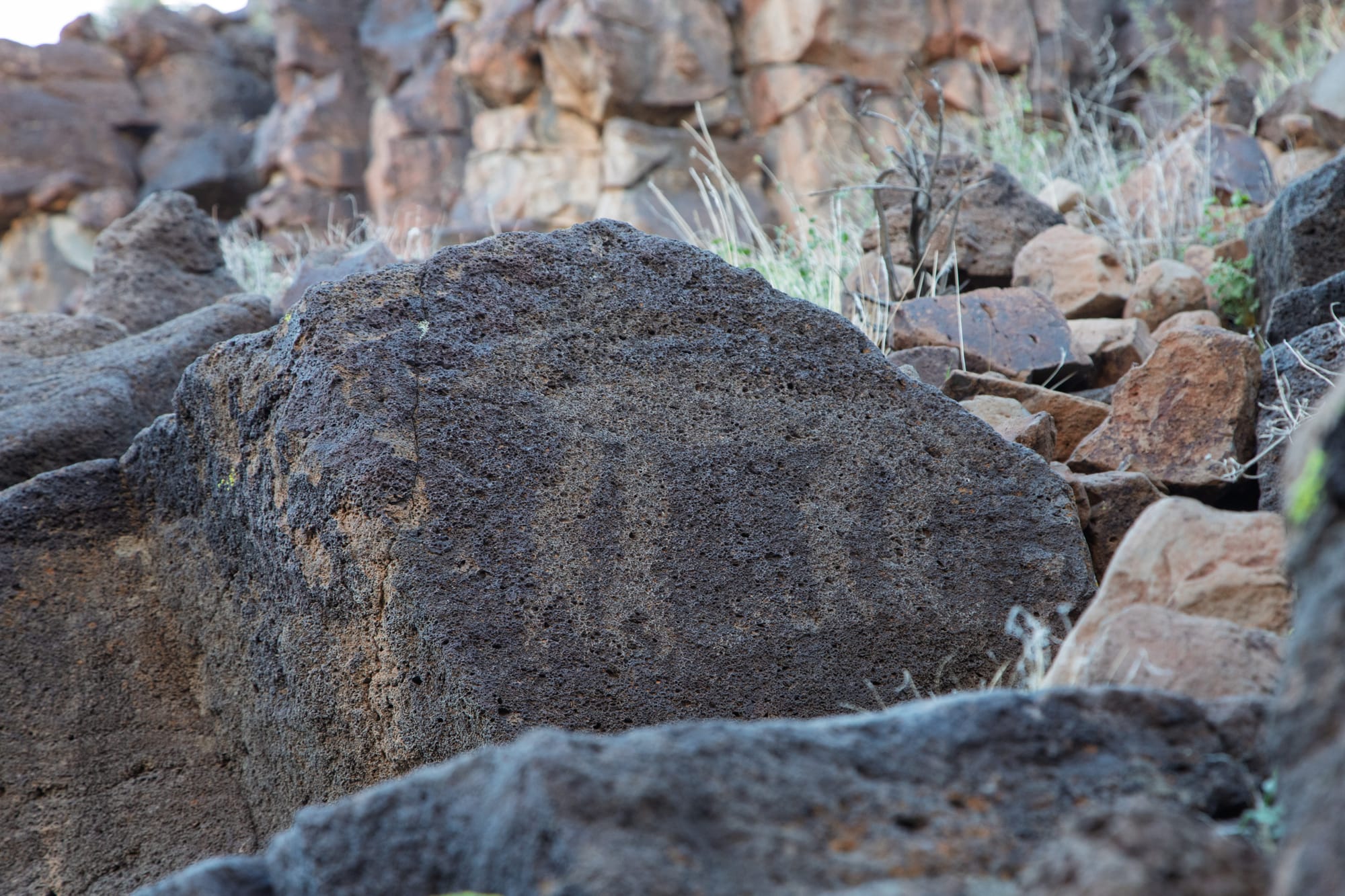
The Chemehuevi called marked or carved rock "Tuluguhoppe," meaning "marked by animal familiars," referring to a shaman's spirit helpers. It was the responsibility of some shamans to find water, and the Chemehuevi quarreled among themselves over water holes. They had specific hunting territories defined by songs. When the Colorado River fell into enemy hands, travel moved inland from watering place to watering place along well-defined trails, and wherever water was available along these trails, there are petroglyphs. Given how central water and territory were to the Chemehuevi, it's reasonable that glyphs served as markers of both.
Please follow proper rock art etiquette when visiting. Do not touch petroglyphs. Take only photos and leave only footprints.
No directions or GPS to this site. Photos below.