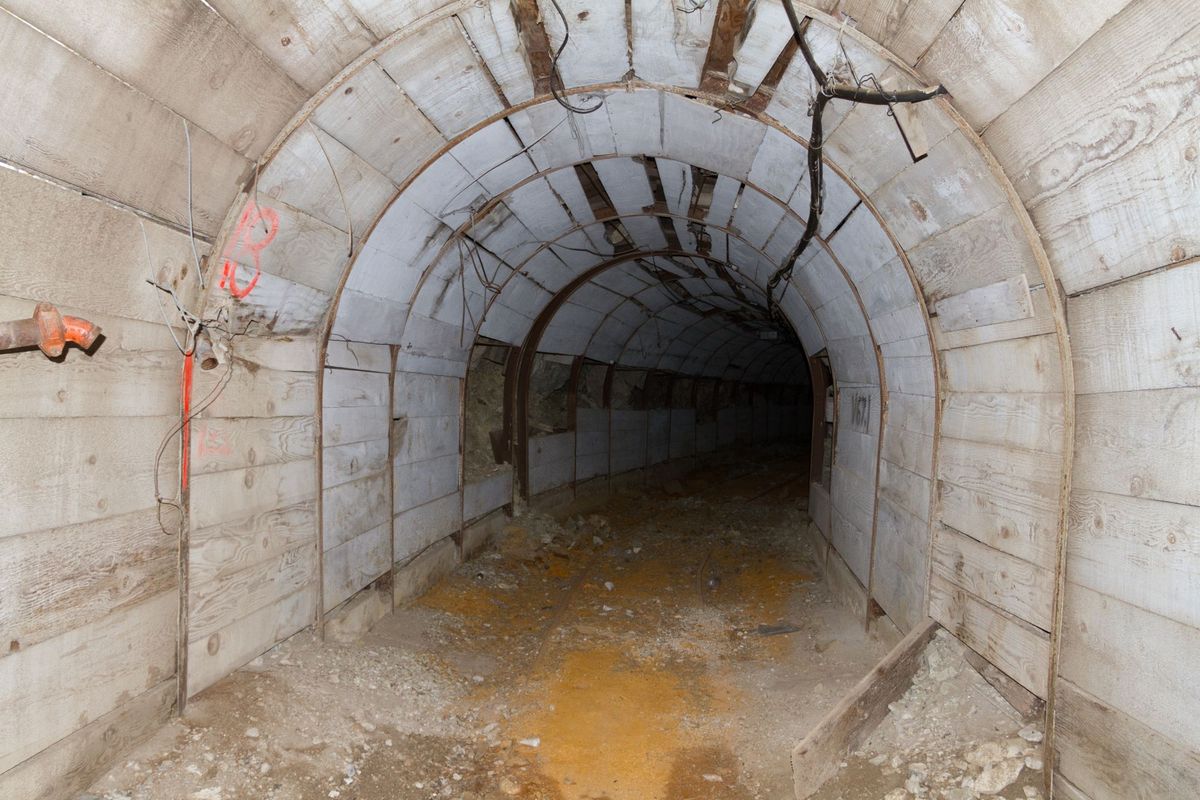
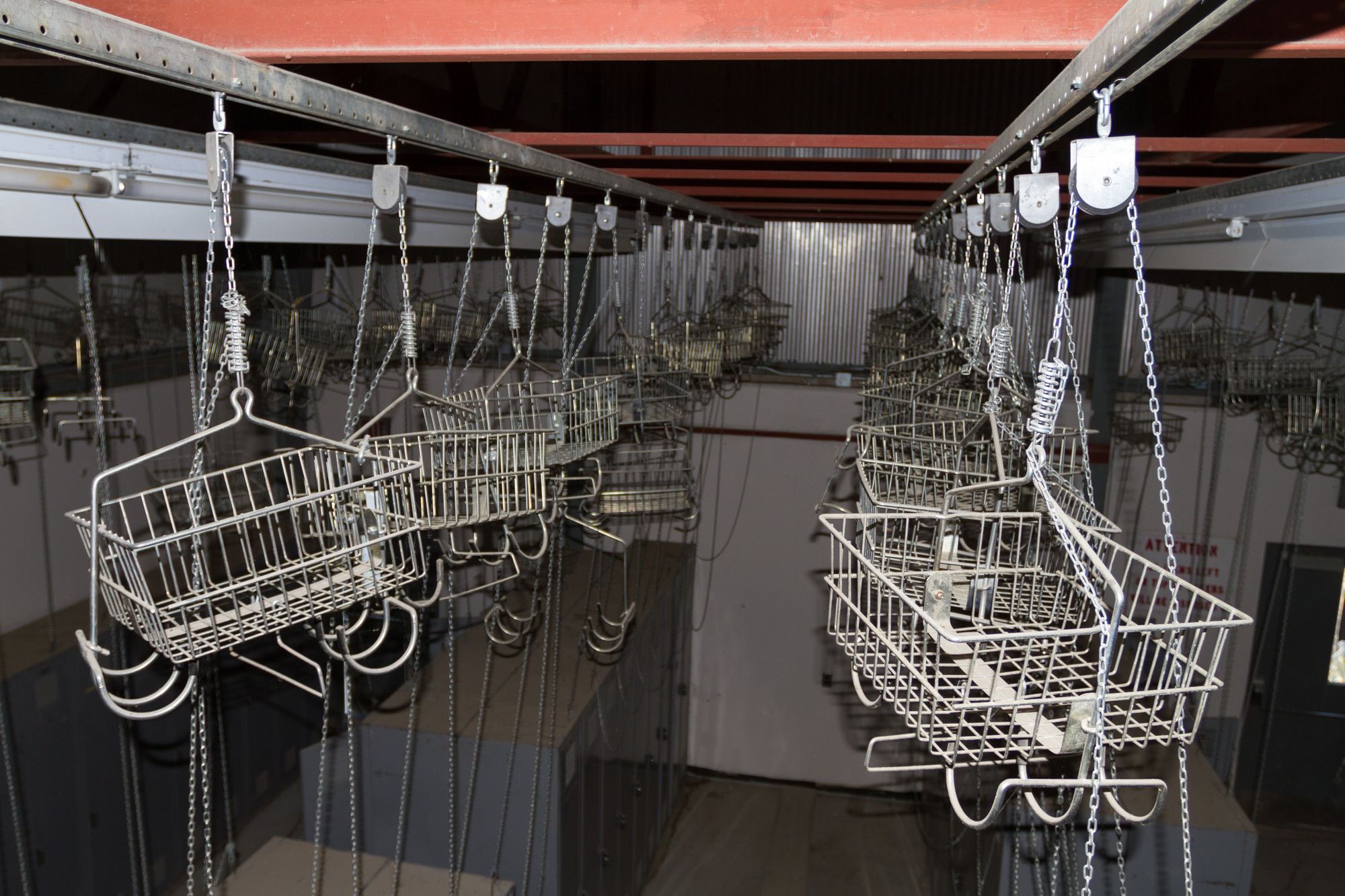
This is quite a place! This is a massive and strange mine with the sound of underground rivers far below, 4-foot boreholes going hundreds of feet through the mountain into the unknown, elevators, hoists, slushers, rusty ladders, pipes, stalactites, underground offices, workrooms, explosive lockers, and strange experimental testing equipment, all spread across nine levels and miles and miles of drifts. Among all that underground maze, you'll find something unexpected: offices of the Department of Defense ICBM Deep Basing program and steel pipes where pressurized freon was injected into rock to test whether these depths could shelter Peacekeeper missiles from nuclear attack.
The Emerson Mine, originally known as the Lincoln Mine, became Nevada's second-largest tungsten producer. Between 1940 and 1982, more than five miles of underground workings on six levels yielded an estimated 500,000 units of tungsten trioxide from skarn zones formed where molten granite met ancient limestone. But the mine's story extends beyond tungsten into the realm of Cold War nuclear strategy, where Defense Department researchers conducted classified experiments in chambers hundreds of feet below the Nevada desert.
History
Tungsten discovery came late to this remote corner of Lincoln County. The Millick brothers found scheelite here in 1916, but the rugged location and uncertain markets kept the claims dormant for two decades. In 1936, Wesley Koyen relocated the original claims, recognizing the potential in the white, fluorescent crystals scattered through the metamorphic zones.
Koyen partnered with G.W. Thiriot, D.F. Thiriot, and Winifred Green to stake 16 additional claims in 1937. Their first mill, a modest operation 15 miles west at Black Rock, processed about 250 tons of ore hand-sorted from shallow adits along what became known as the Grubstake and Moody ore zones. The $3,200 they earned from concentrate sales proved the deposit's commercial potential.
In 1938, C.L. Baker and A.K. McFarlane leased the property, quickly transferring it to J.G. Berry, who passed it to D.B. Fegles of Minneapolis. Fegles built a 40-ton mill and began operations in February 1940 under the name Lincoln Mines, Inc. World War II tungsten demand drove expansion to 75 tons daily by 1941. Through October 1944, the company produced over 61,000 tons of ore averaging over one percent tungsten trioxide before selling to Atolia Mining Company in June 1945.
Atolia rehabilitated the facilities and operated until 1948, processing another 24,000 tons before surrendering the lease when government tungsten purchases ended. The Koyen and Thiriot families resumed small-scale operations with a 20-ton mill until 1951, when Wah Chang Mining Corporation acquired the entire property.
Wah Chang transformed the operation. A new 700-ton daily mill rose from the desert, fed by expanded underground workings that eventually reached six levels connected by over 20,000 feet of drifts, crosscuts, and raises. The company camp of Tempiute housed 500 residents by 1956, complete with school, store, and guest facilities. Water was pumped to the camp through four miles of pipeline with a 1,500-foot lift.
The boom ended abruptly in August 1957 when government stockpiling ceased. Tungsten prices collapsed, and within months Tempiute became a ghost camp. Power lines that had been completed just months earlier were dismantled, equipment sold at auction, and the desert reclaimed what had been Nevada's second-largest tungsten mine.
Union Carbide revived the property in 1968, conducting extensive drilling that proved sufficient reserves for a major operation. The company constructed a new 1,000-ton daily mill and renamed the operation the Emerson Mine. Production resumed in June 1977, with many miners settling in nearby Sand Spring Valley where private land and water were available. When power lines reached that valley settlement in 1978, it became the town of Rachel (now famous for Area 51 and aliens). But the global tungsten market had changed. Competition from foreign sources and falling demand led to closure in 1982, ending the mine's productive life. The mine has remained abandoned since Union Carbide's departure, though several companies have investigated reopening it for various purposes.
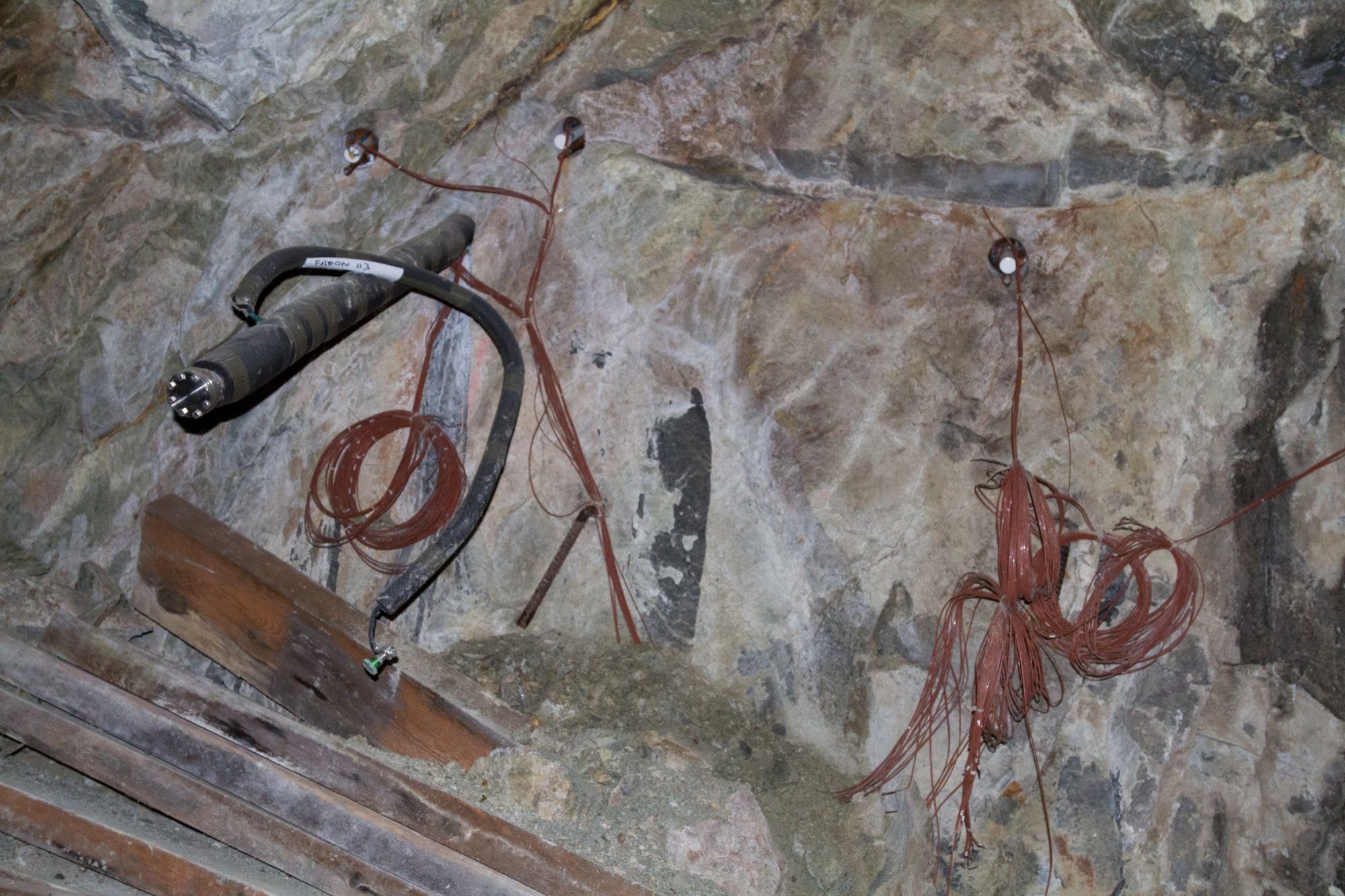
The Department of Defense's involvement occurred during the Union Carbide era. Researchers from the ICBM Deep Basing program established offices in the underground workings during the late 1970s and early 1980s. Their experiments involved injecting pressurized freon 113 into the rock through steel pipes, monitoring thermal transfer with sensors drilled into surrounding stone. The program aimed to determine whether deep underground chambers could shelter Peacekeeper missiles from nuclear attack, though the specific test results remain classified.