Also known as Von Trigger Springs, the spring and surrounding hills were first prospected in 1858 (some say the 1870s) by a German man named Erick Vontrigger for gold. He found a rich pocket of gold but kept his discovery secret. He died in San Francisco in 1880, taking his secret with him. The area wasn't worked again until 1891 when the nearby California Gold and Copper Mine (also known as the Vontrigger Mine) came into production. Though promoted as such, this mine is not thought to be Vontrigger's original discovery, so the location of the "Lost Vontrigger Mine" remains a mystery.
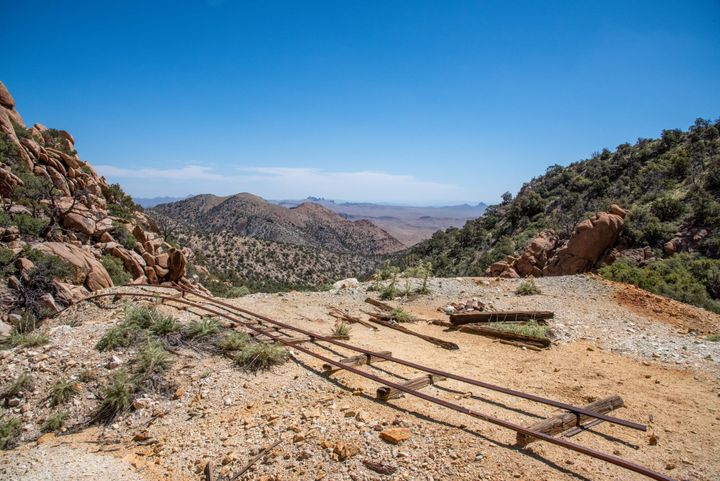
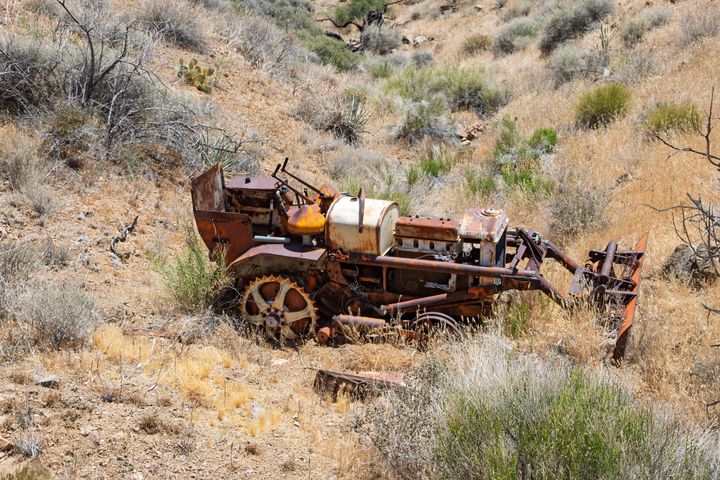
Vontrigger Springs itself is easy enough to find, though. It is a short distance from Lanfair Road in Fenner Valley of the Mojave National Preserve. You will need a map and a 4WD high-clearance vehicle to reach it. Once you are at the parking spot, you can go explore a small open-pit mine, but there isn't much there; instead, drop down into the wash, where you will find a small pond and a batch of reeds. Look for pictographs and petroglyphs along the large wall just upstream. They are so faint that they are easy to miss. It's also tricky to get a good photo of them. The pictographs are along the main wall, and the petroglyphs are high and on the north end. I climbed up on rocks on the opposite side of the wash to see them a bit easier.
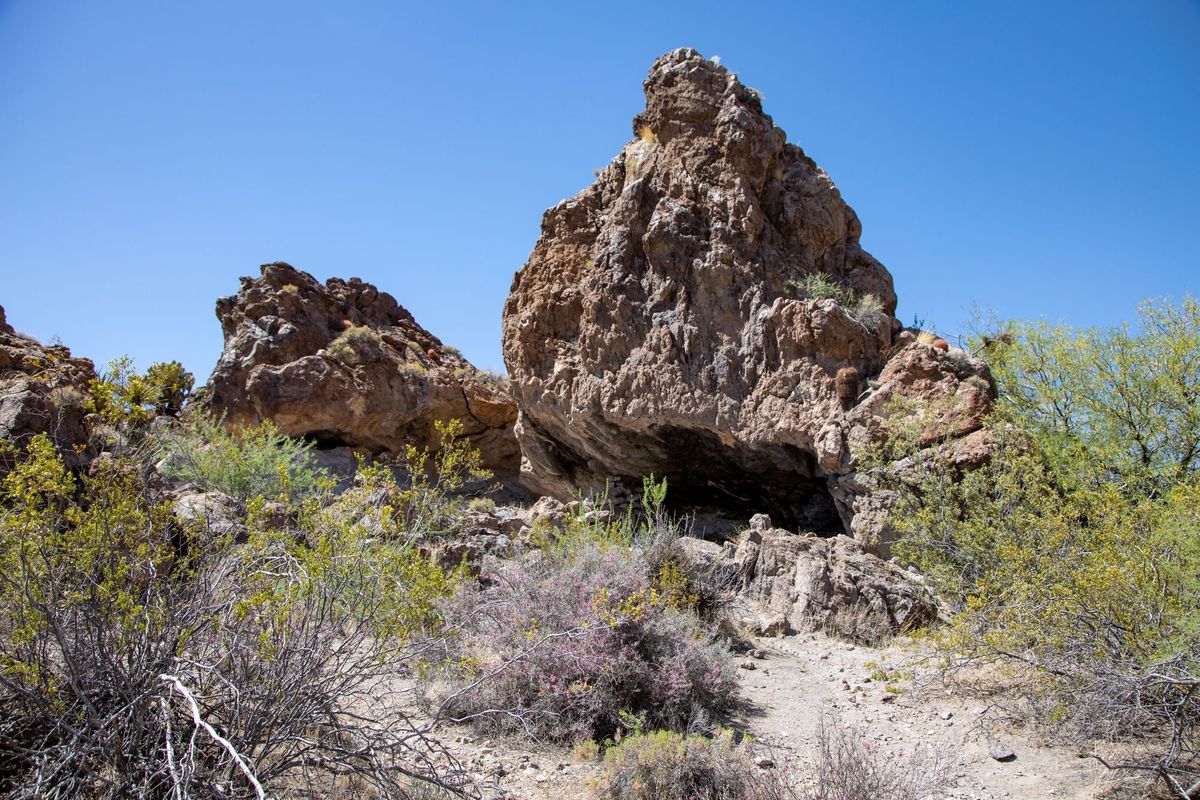
Drop back down into the wash and backtrack to the reeds. A side canyon leads off to the west directly across from the parking spot. A short walk up that canyon and around the corner will lead you to an old miner's cabin built out of a rock shelter. Watch for bees on the right as you approach. There was a hive in a crack near the shelter when I was there.
The door has blown off the shelter since the last time I was there in 2007, but it once had "Home Sweet Home" scrawled on it. The ceiling of the shelter is blackened from smoke. It's likely that the miners weren't the first people to use this cave as shelter. There is only a table left inside these days.
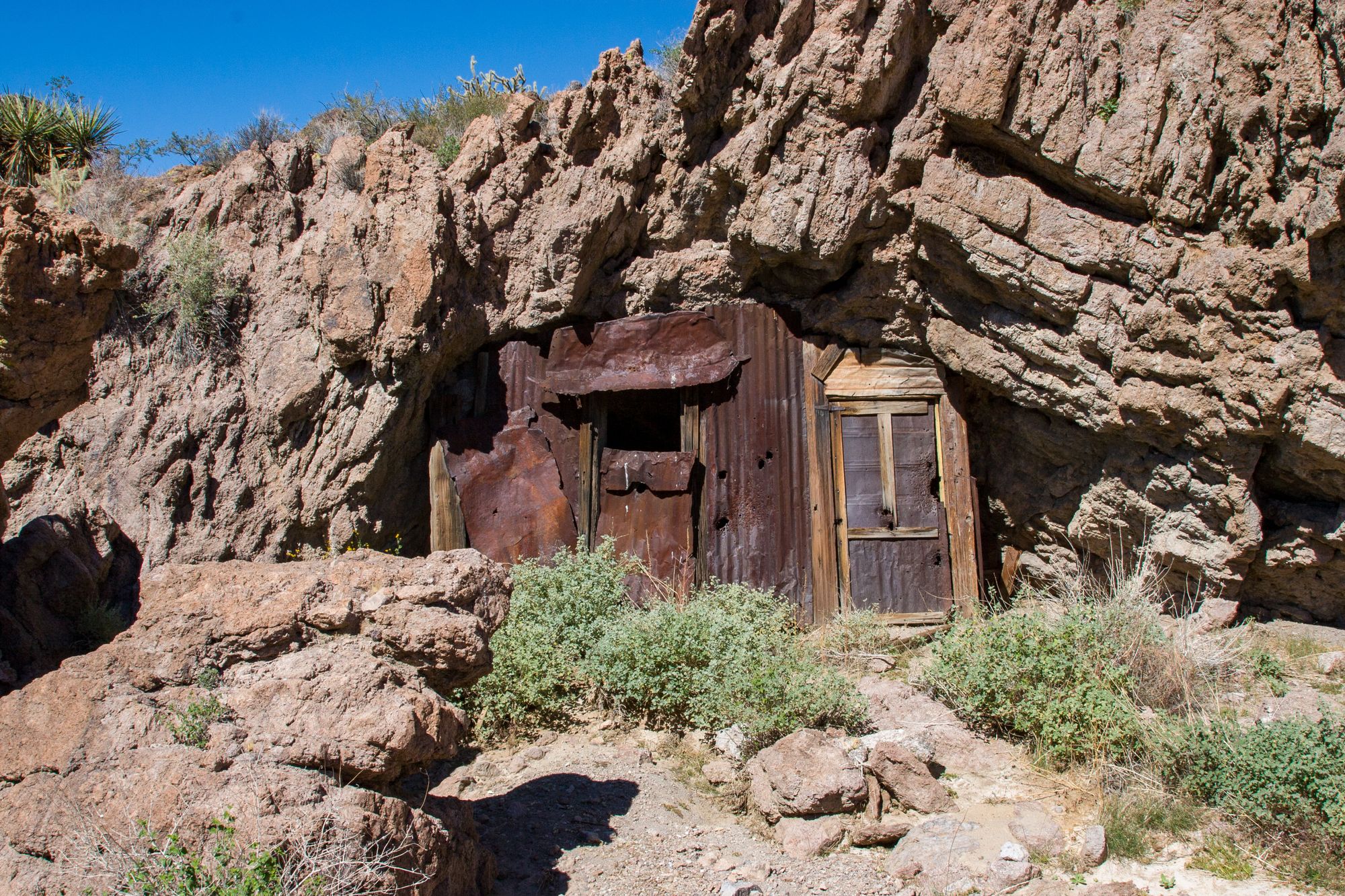
Head back to the main wash and upstream to find the arrastra and a well near a large rock shelter. Again, watch for bees; they have another hive in the shelter. They sure do love this area—no doubt because of the water. The same hive was there fifteen years ago when we visited in 2007.
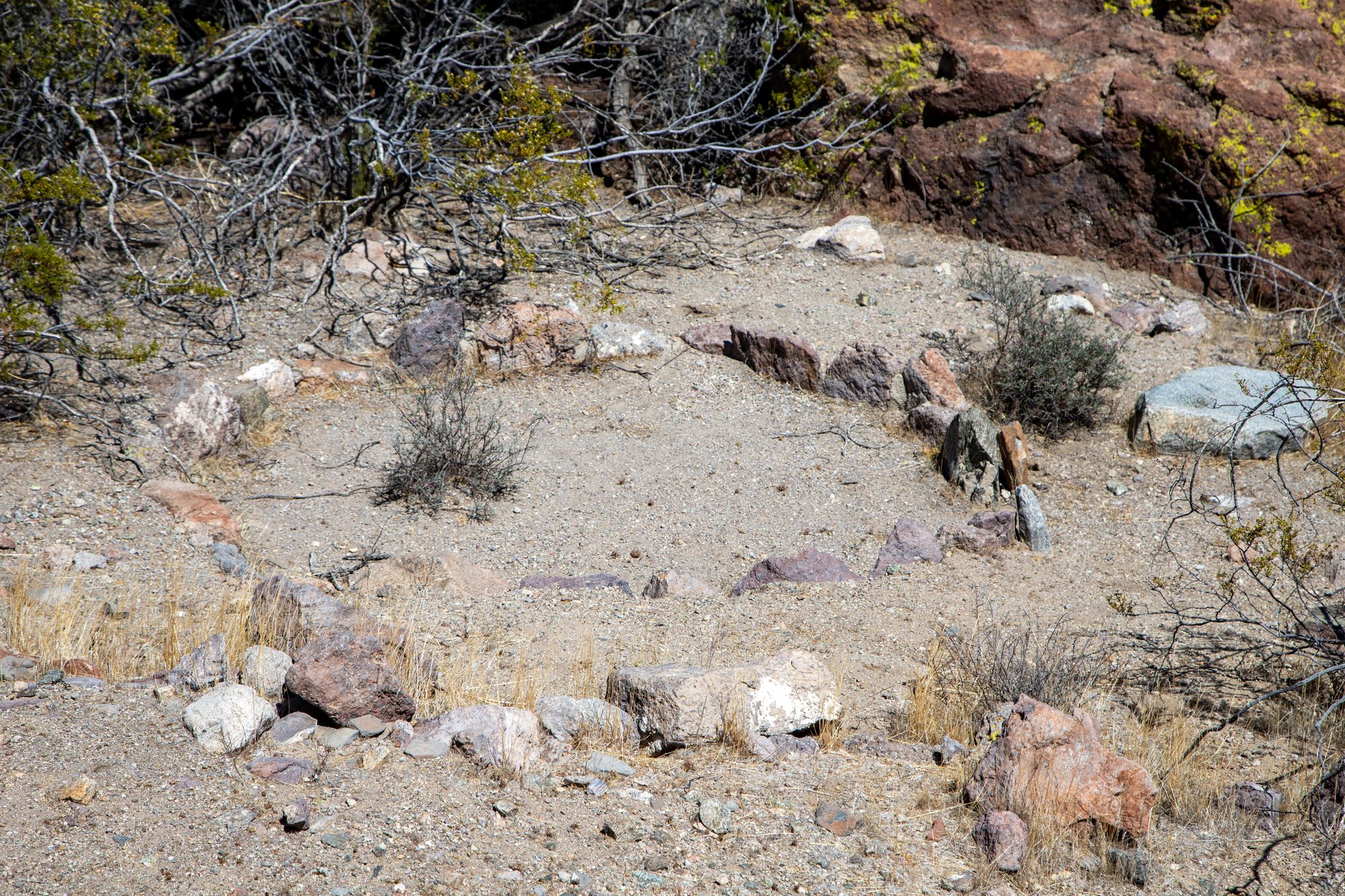
The stone well in the wash will be obvious. The arrastra is hidden behind creosote bushes and directly opposite the well. Little remains of the arrastra except for the ring of stones that make up the arrastra itself and a drag stone.
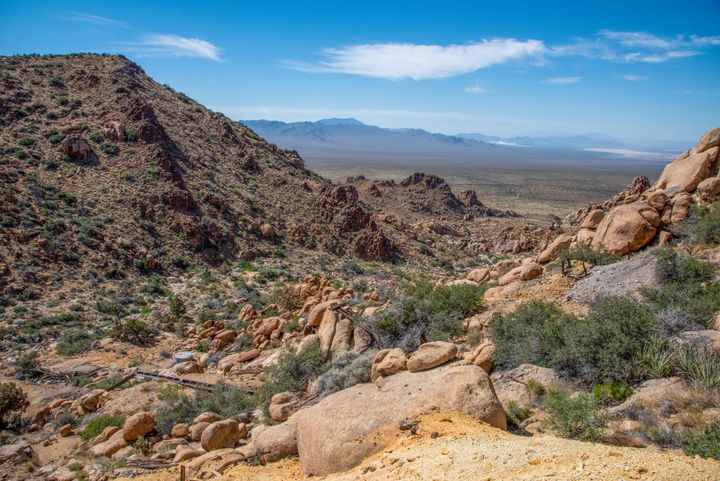
Hike back or prowl around these volcanic hills. They are a wild and open country. And who knows, maybe you'll find a lost gold mine.
We first visited this site in 2007 with the Dzrtgrls and Dan. I made a return trip in 2022 when I was in the area to check on the site.