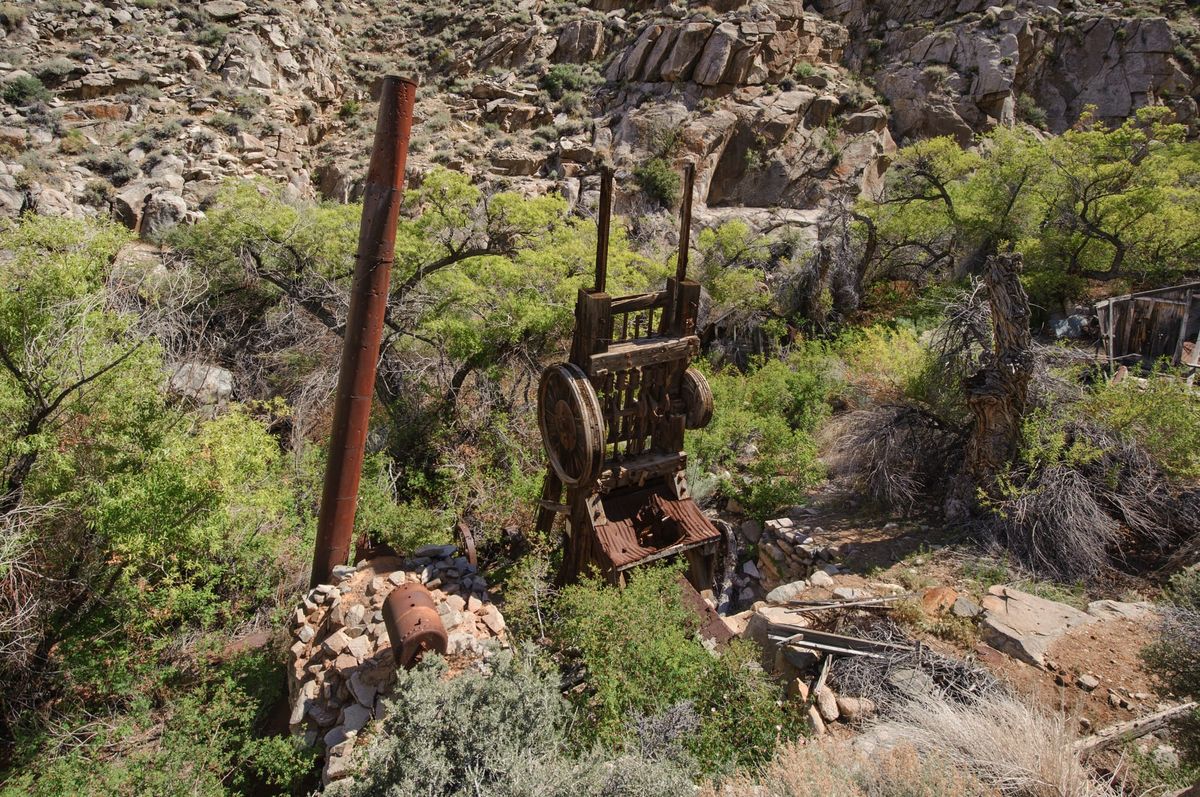
Beveridge is a legendary place. The mining camp is one of the most inaccessible gold-mining sites in California. It is a place few people ever see.
The standard approach today starts on the crest of the Inyo Mountains at nearly 10,000 foot elevation at the New York Butte Trailhead, reached by a treacherous four-wheel-drive road for experienced off-roaders only. From the trailhead it is a strenuous drop of more than 5,200 vertical feet down Beveridge Canyon to the ghost camp and Lasky's stamp mill. An 1880 correspondent for the Inyo Independent described the canyon walls as "so nearly vertical in most places as to be inaccessible to anything without wings." That has not changed.
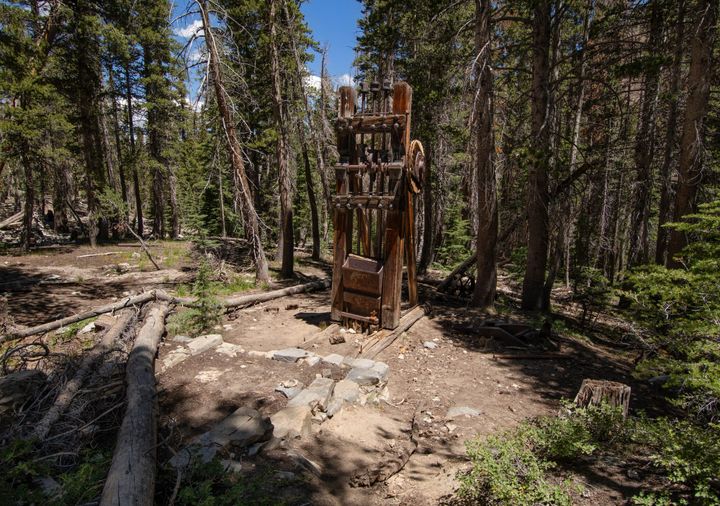
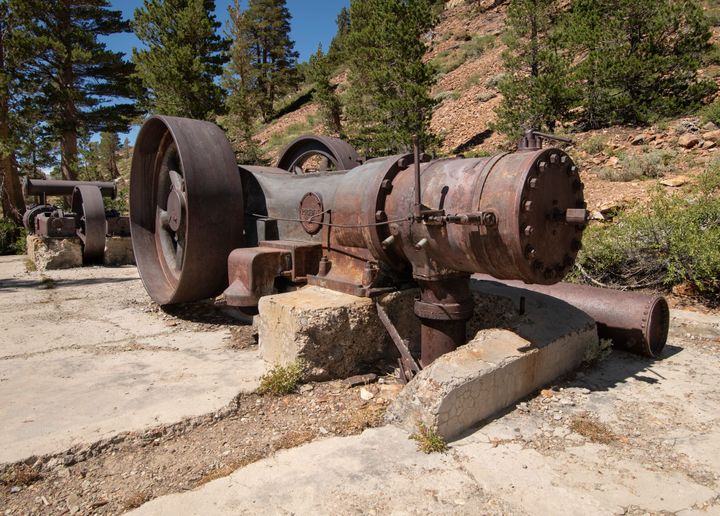
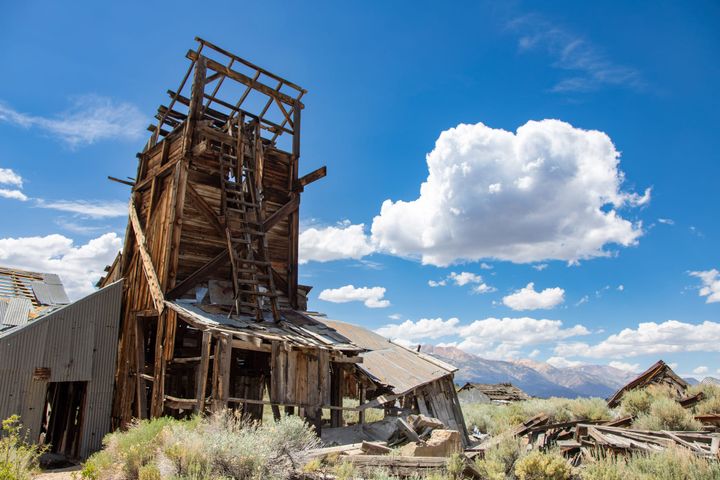
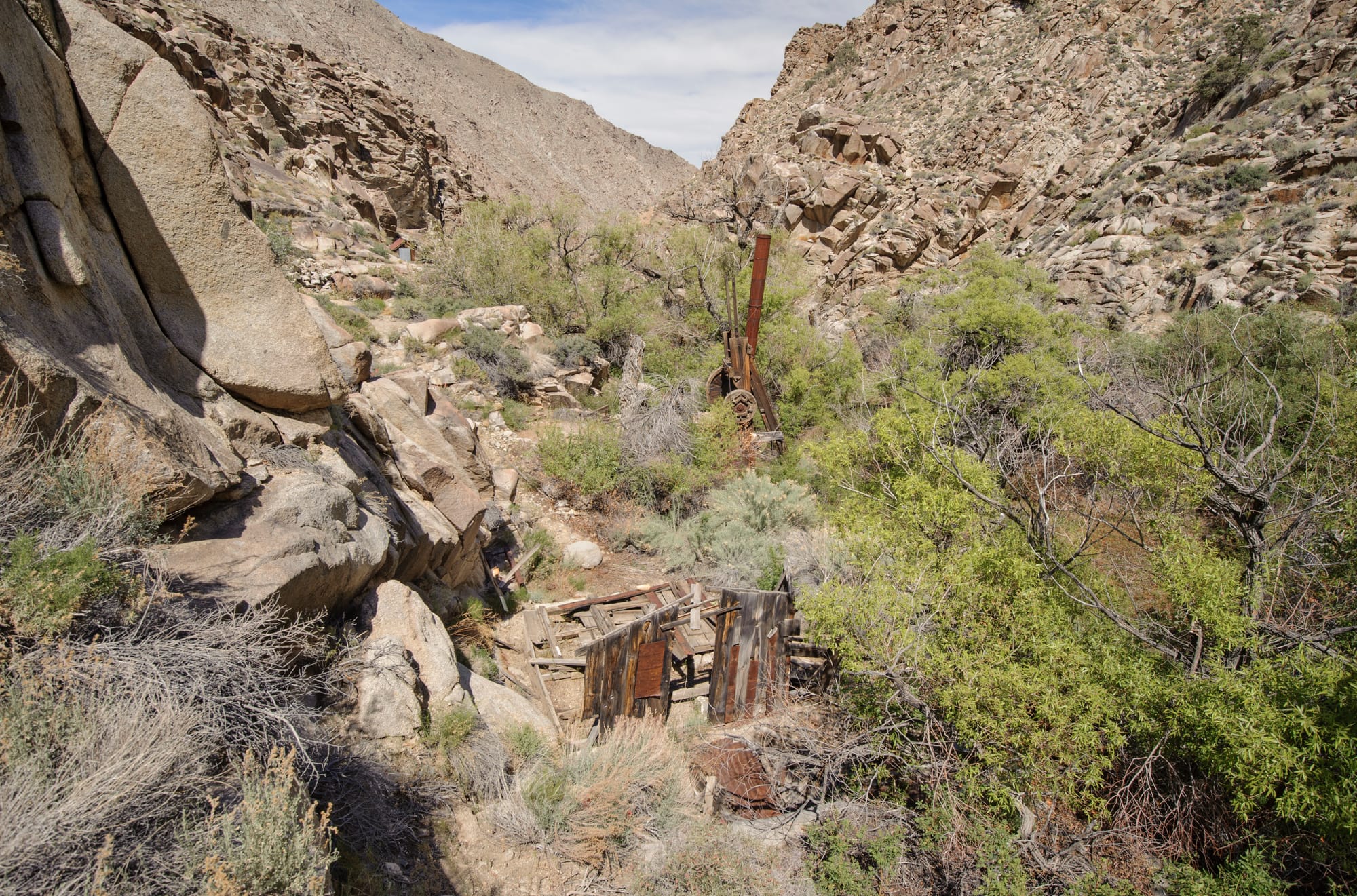
The mill still stands, and hidden buildings and equipment remain scattered through the canyon for those who go looking. The canyon walls tower 2,600 feet above the camp. A creek runs through the bottom, choked with willows (Salix spp.) and California wild rose (Rosa californica). Bring clippers. Beveridge is a place that has to be earned. It stays with the people who make the trip, and it pulls them back.
My photos here are from a brutal fourteen-hour day hike I made in the spring of 1996, coming in from the Snow Flake Mine on the lower eastern slope. That road washed out years ago. Hugh took the route described in the directions below. My friend Brian was kind enough to provide photos from a couple of his trips as well. See below.
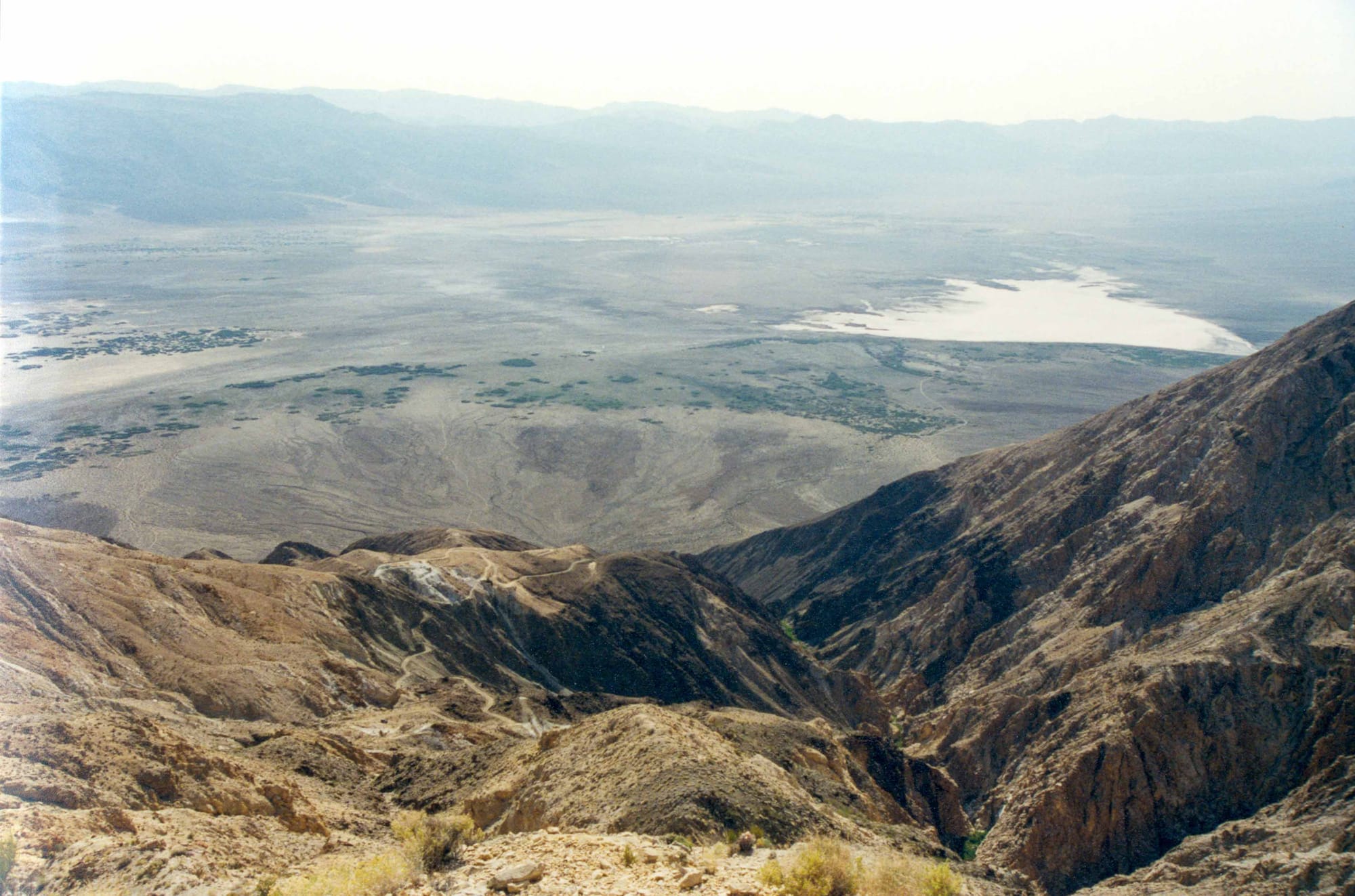
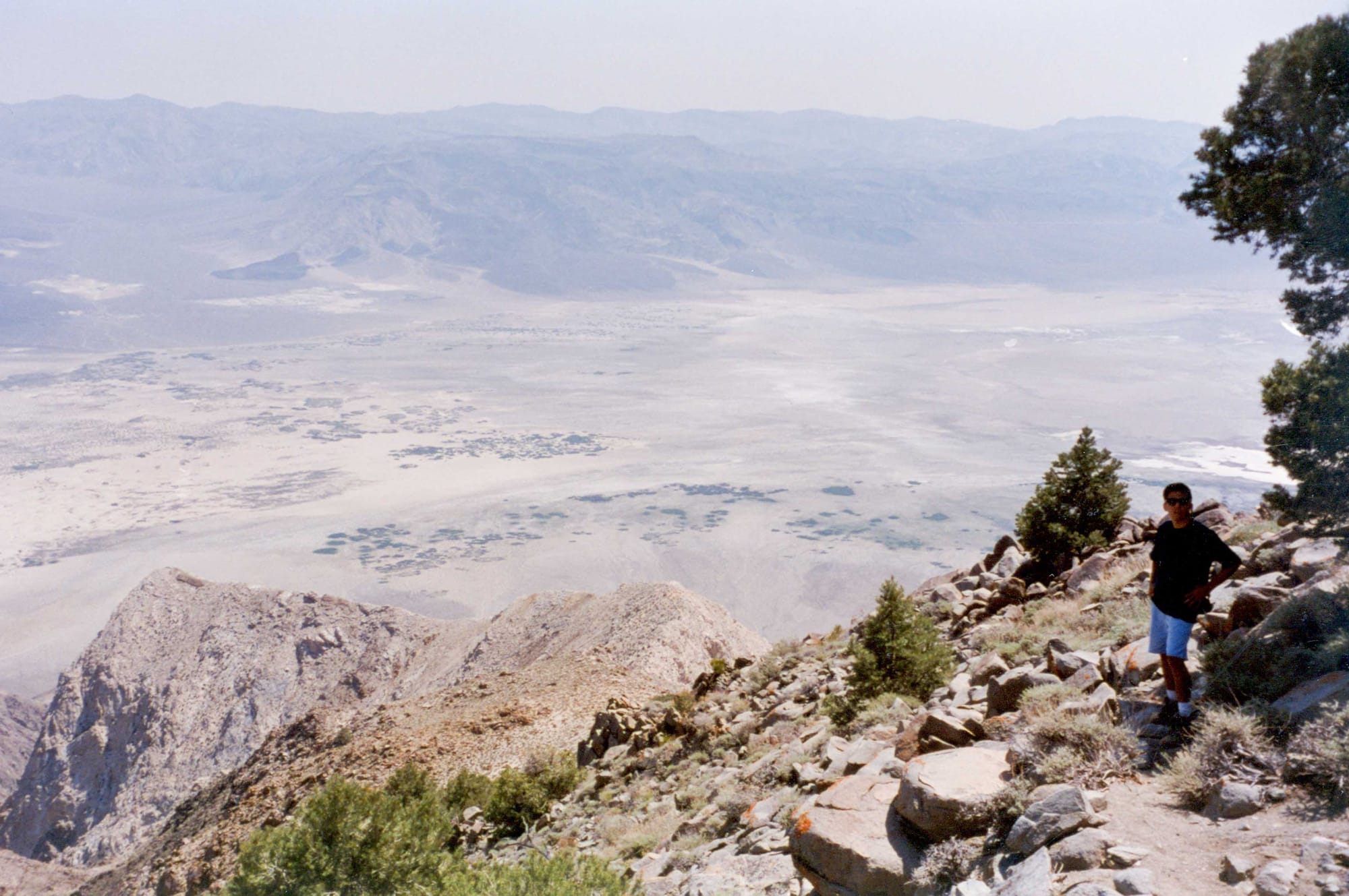
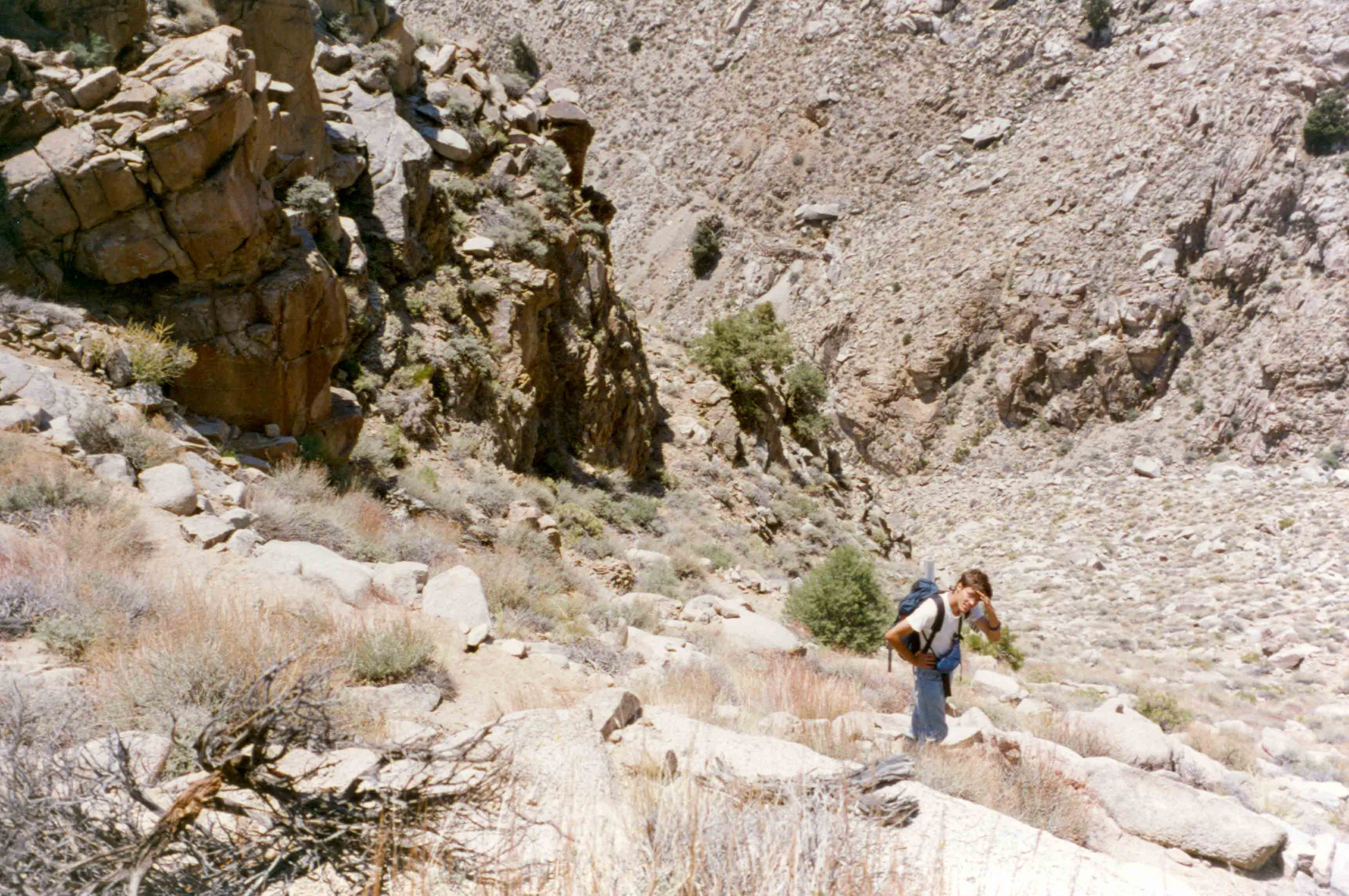
Hiking up from the Snow Flake Mine. Circa 1996.
History
The Beveridge Mining District was organized in 1877, but the country had been prospected long before that. The earliest documented claim dates to 1866, and Mexican miners worked these canyons through the 1860s, drawn over the crest from the Cerro Gordo silver discoveries on the southern end of the range. The Anglo accounts glossed over what really happened. Refusing to honor Mexican mining claims was standard California practice from the start of the gold rush. Karen Swope's archaeological report of the district notes that the line "when the white man came the Mexicans quit" almost certainly understates the reality. The "Mexican camp" at the Keynot Mine was still running eleven arrastras as late as 1881.
The district took its name from John Beveridge, the first district attorney of Inyo County, who died in October 1874. Three years later, his friend W. L. Hunter, the longtime Inyo packer for whom neighboring Hunter Canyon is named, organized the district and named it for him. Beveridge Canyon was previously known as Hahn's Canyon, and before that, Arrastra Canyon.
The incredibly rugged terrain of the eastern Inyos is hard to convey. These are cathedrals of stone, with walls towering two thousand feet above the canyon floor. The Inyo Independent kept reaching for adjectives. An 1880 correspondent reported that at the McElvoy Mill camp the miners got "about one hour's sunshine" during winter days. At another camp, in winter, "the sun does not shine for four months." Another correspondent, in May 1882, called the district too "grand, gloomy and gorgeous" to be described in words. "It must be seen and traveled over to be appreciated."
By July 1880, about forty mines were being worked across four locales, all milling with arrastras. The three principal canyons were Hunter, Beveridge (Hahn's), and Keynot. About sixty miners were working the Beveridge mines in 1885, and at least 111 mines operated across the seventeen square miles of the district at one time or another. Beveridge was never more than a string of mine camps and mills, not a true town. There was no church, no cemetery, no fraternal lodge, no school, and no newspaper.
The five-stamp mill at the heart of what remains was built and operated by L. L. Lasky, a Lone Pine grocer turned mill proprietor and Keynot Mine owner. He packed his machinery in from Lone Pine by mule train in February 1883, an undertaking the trail itself makes hard to picture. Lasky's Mill started crushing Keynot Mine ore that March, and by the end of 1883 it had ground 975,612 pounds of ore. The McElvoy Mill in the canyon north of the Keynot was running at the same time, along with a large arrastra. Even the three together could not keep up with the Keynot Mine's output. The mill closed for the winter, reopened in May 1884, and crushed another 144,792 pounds of ore by June. Cyanide recovery plants were eventually added to the operation. A wire-wrapped wooden water pipe carried water down the canyon to feed the mill.
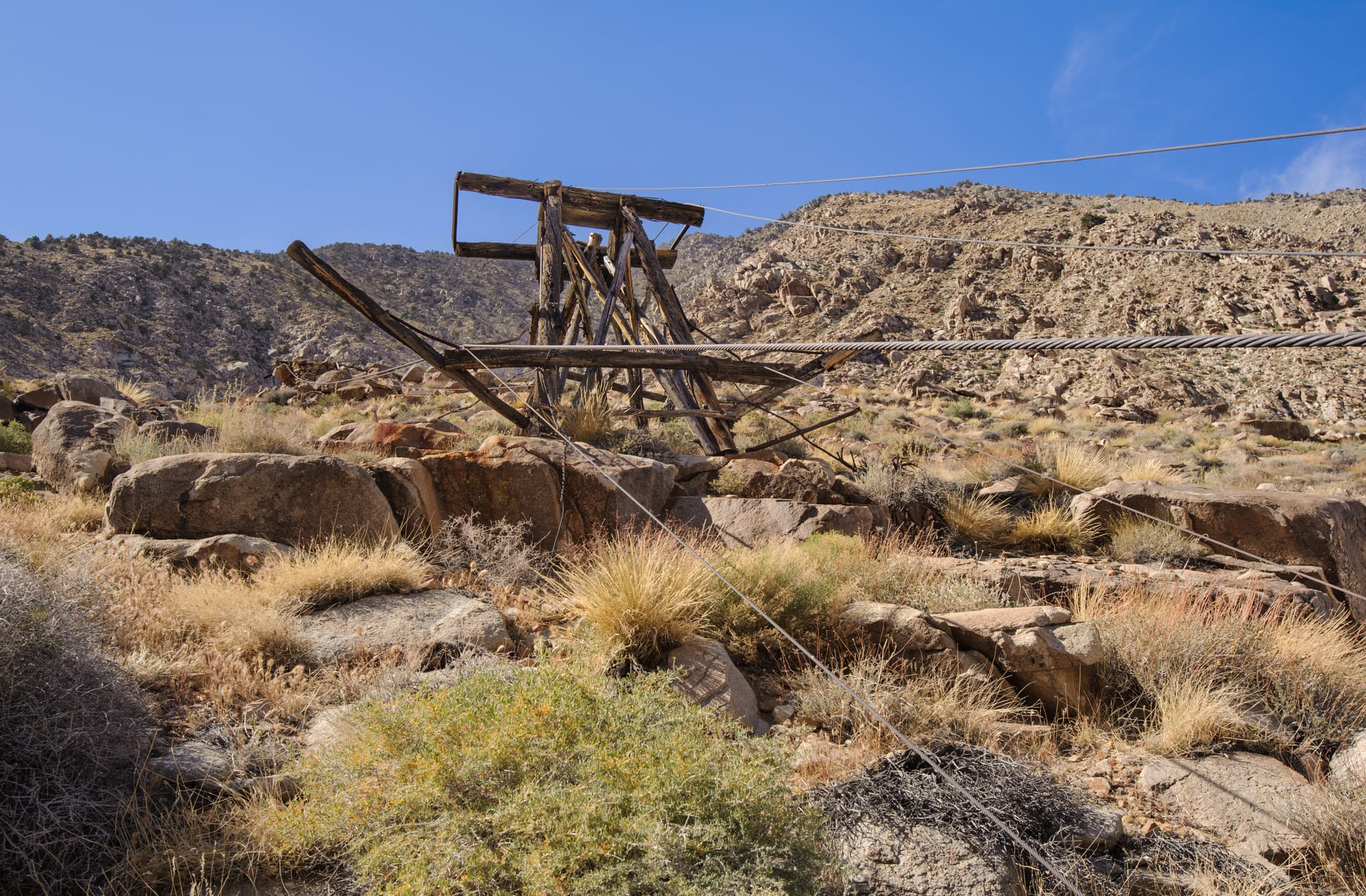
The boom was short. Most of the gold production happened between 1878 and 1906. Aerial tramways were built later in the period, keeping a few claims producing on the impossibly steep upper slopes after the others were abandoned. As the last few mines closed, the place emptied out; the miners left almost everything behind. Beveridge resembled an open-air museum until the mid-1900s, when souvenir hunters and vandals began destroying the camp's heritage. This is a special place. Leave everything you find.
One piece of mythology, in case you have heard it: a helicopter did not carry a piano out of Beveridge. It was actually a potbelly stove. Even getting a stove out of there required a helicopter, which is about as fitting an epitaph for the place as anything I can offer.