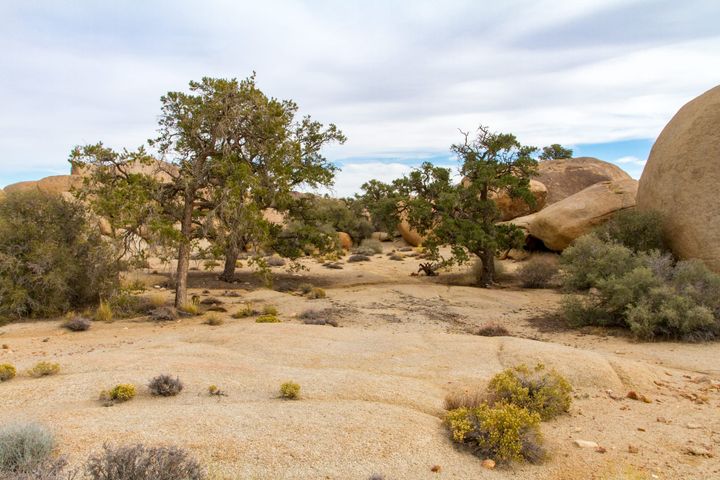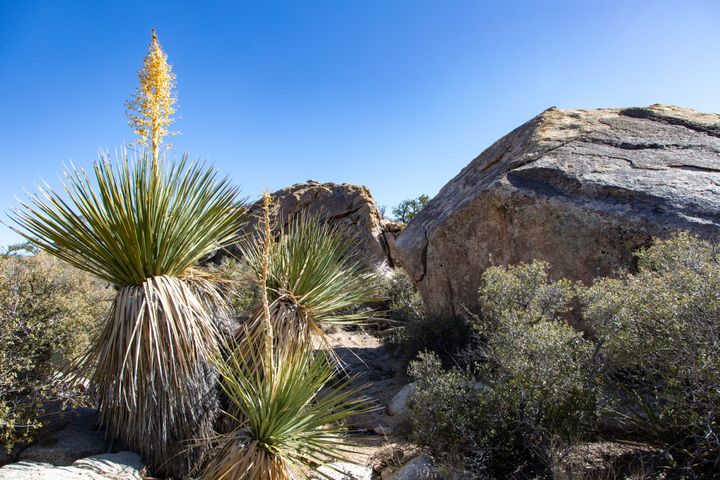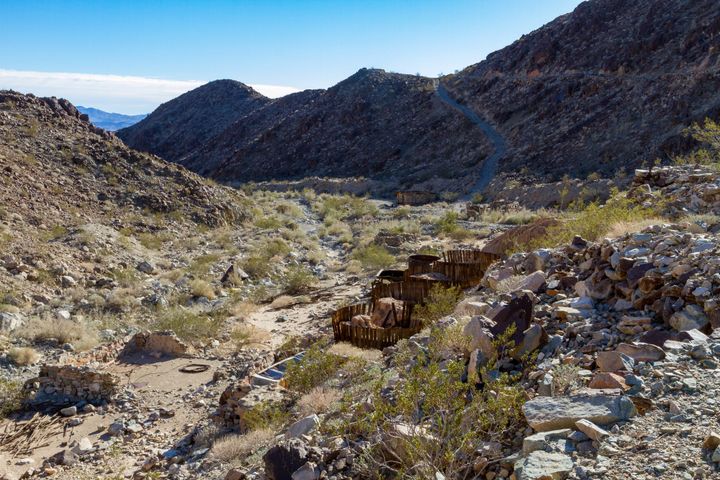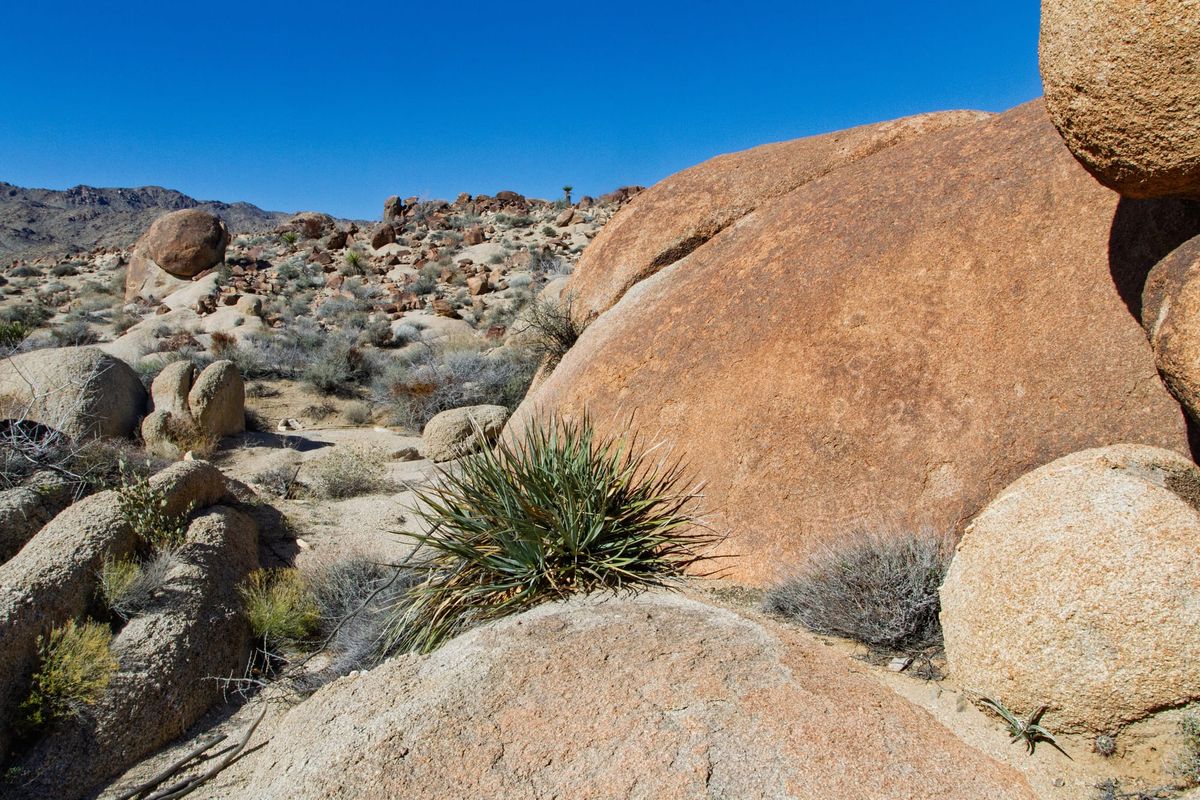
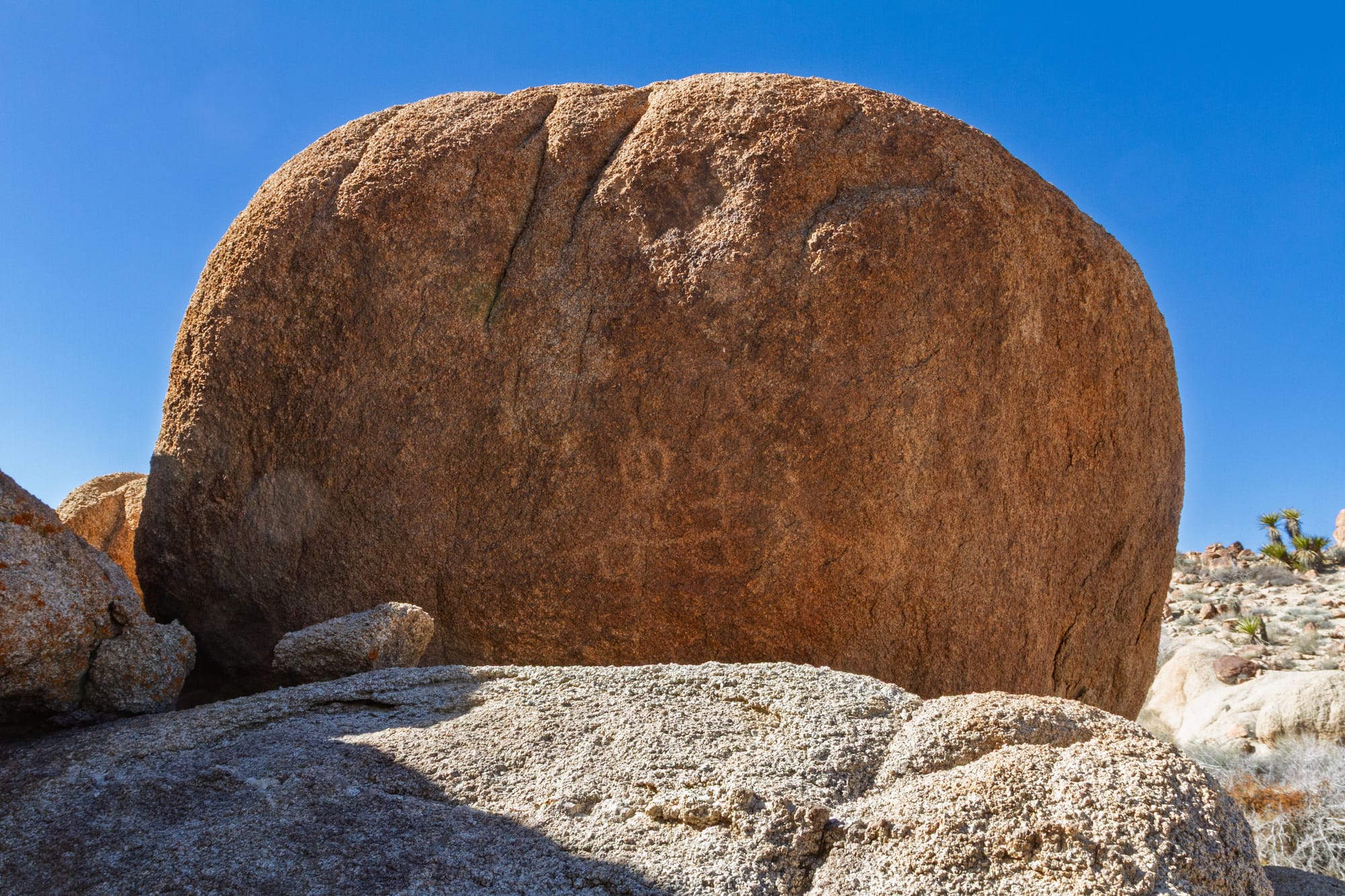
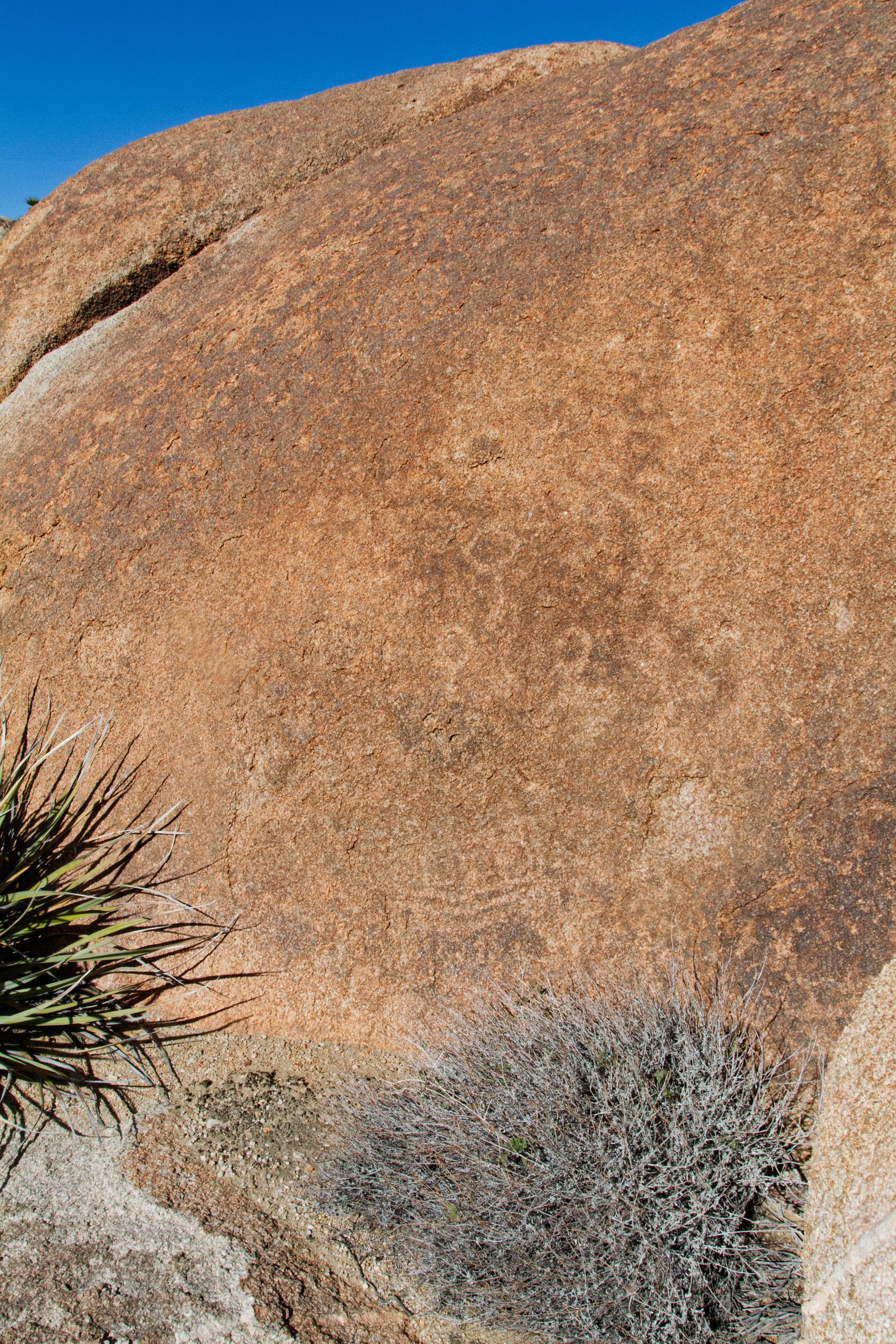
In 2016, on an adventure north of Cary's Castle (one of many), I stumbled upon these petroglyphs hidden among the granite boulders of the Eagle Mountains. The abstract designs appear to be Desert Archaic in style, likely created by indigenous peoples who traveled these washes for thousands of years.

The petroglyphs sit at a narrow point between granite boulders in a depression in the wash. There's no trail here, but this spot is a natural path between the canyon that leads to Cary's Castle and points north. The depression functions as a tinaja, a natural rock basin that collects and holds water after rainstorms. Indigenous peoples knew every reliable water source in their territory, and this tinaja would have made a logical rest stop during the wet season.
Five glyphs are visible at the main site: three circles with tails or lines extending from them, and two more complex abstract designs. A short distance away, a second site features an abstract design of circles and boxes. They're typical of the Desert Archaic tradition, which dates from approximately 5,000 to 1,500 years ago. Unlike the pictographs found at Cary's Castle itself, these petroglyphs consist of simple geometric forms. What the symbols mean remains a mystery. (See Cary's Castle for more on that site.)
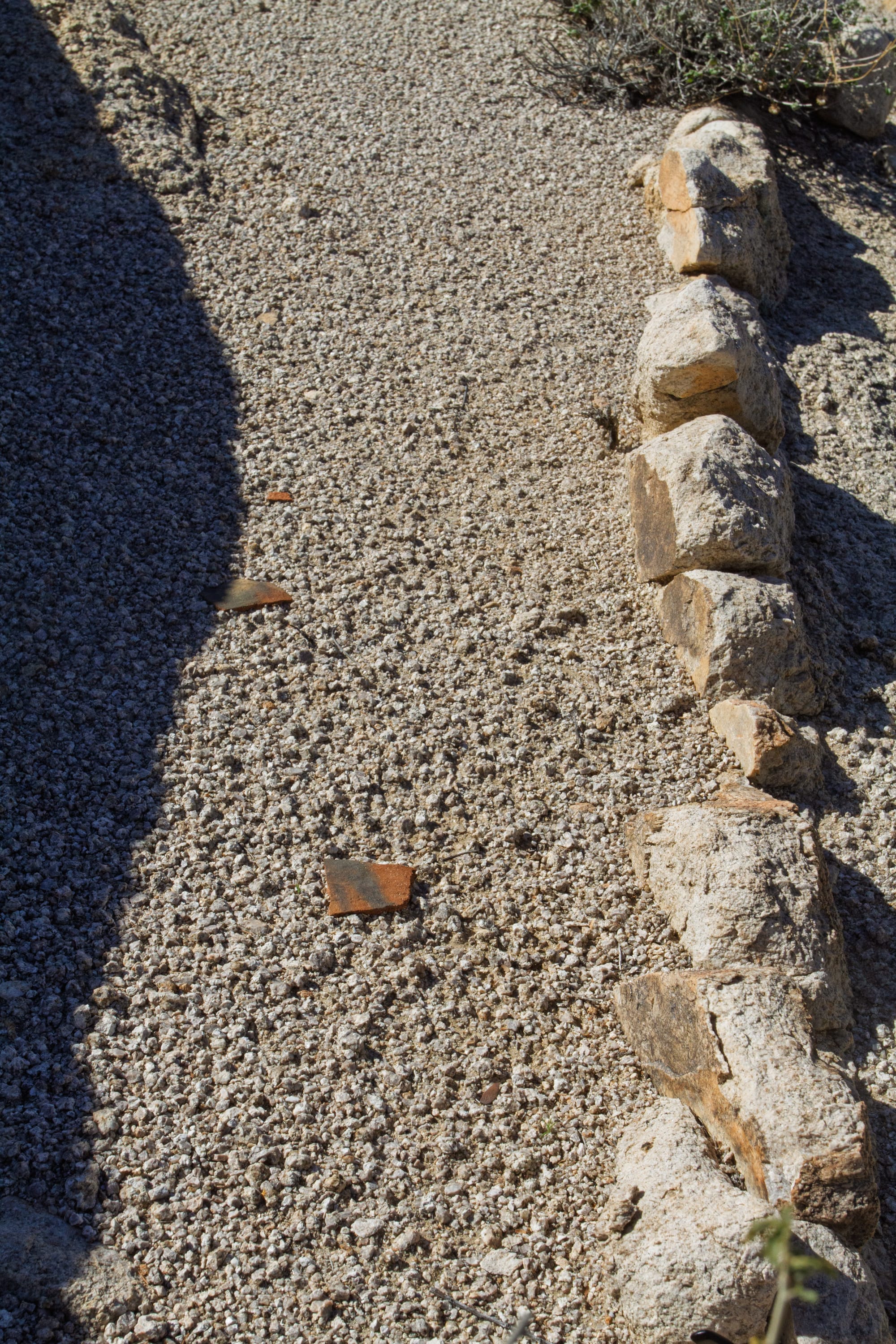
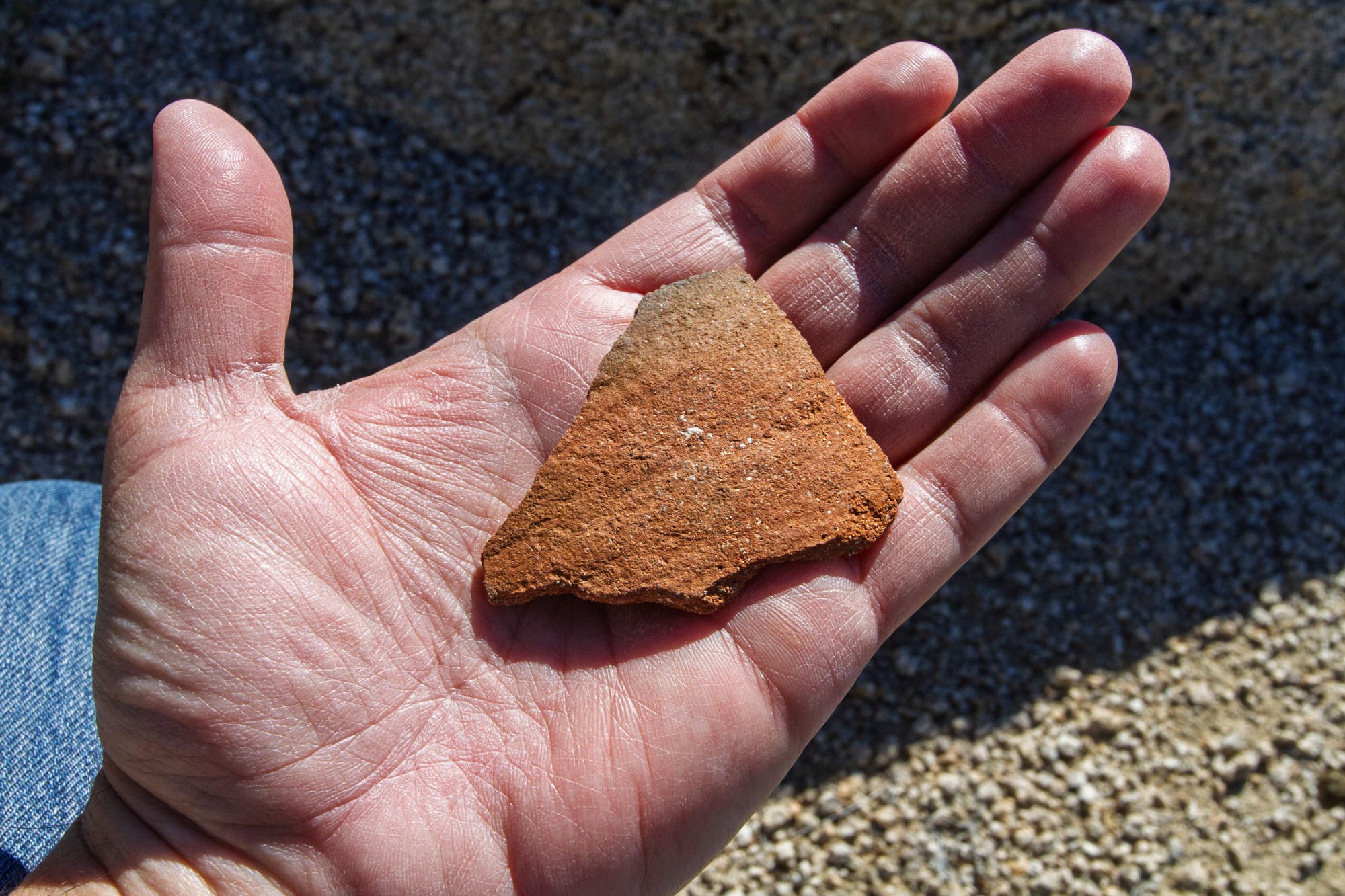
Along the wash, I found several pottery sherds scattered about, further evidence that Native Americans used this area. Please leave these artifacts in place and don't touch the rock art. (See Rock Art Etiquette for more on protecting these sites.)