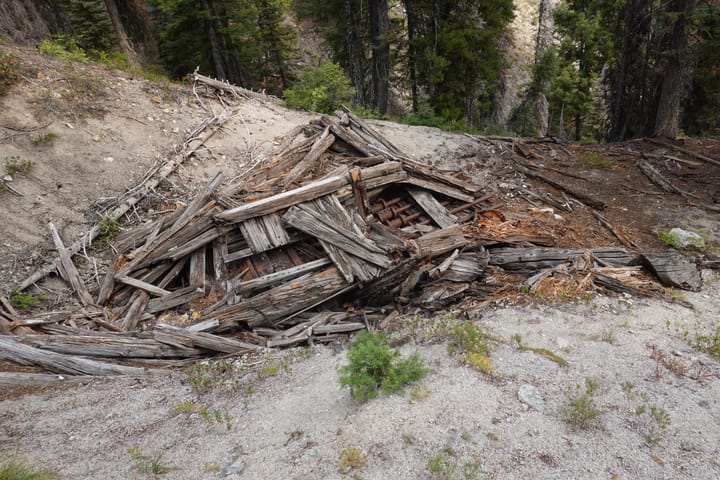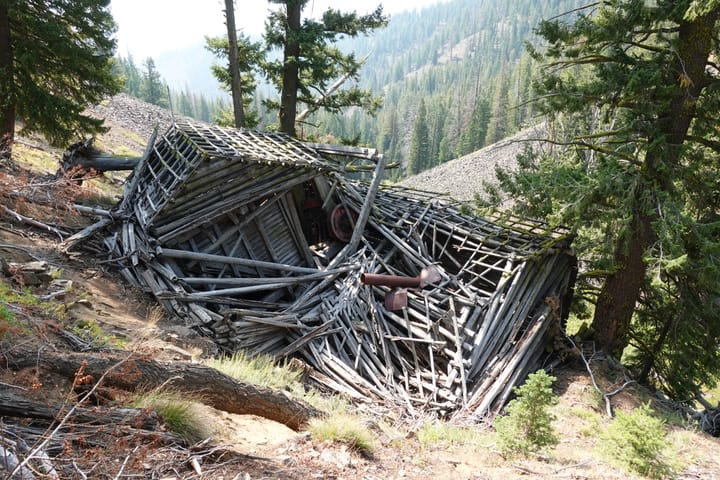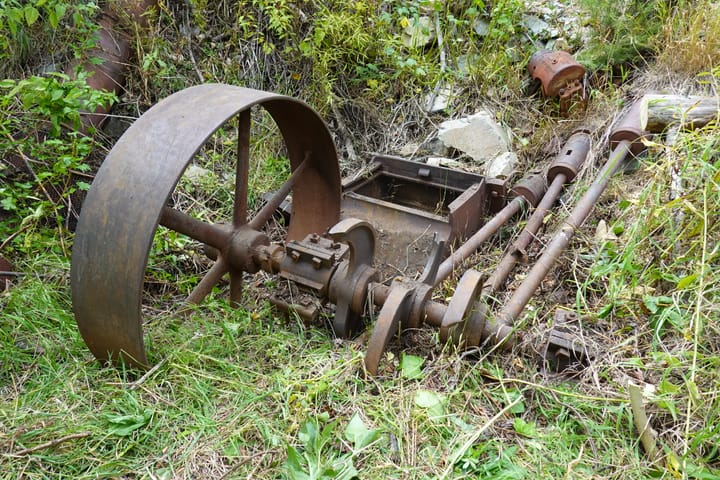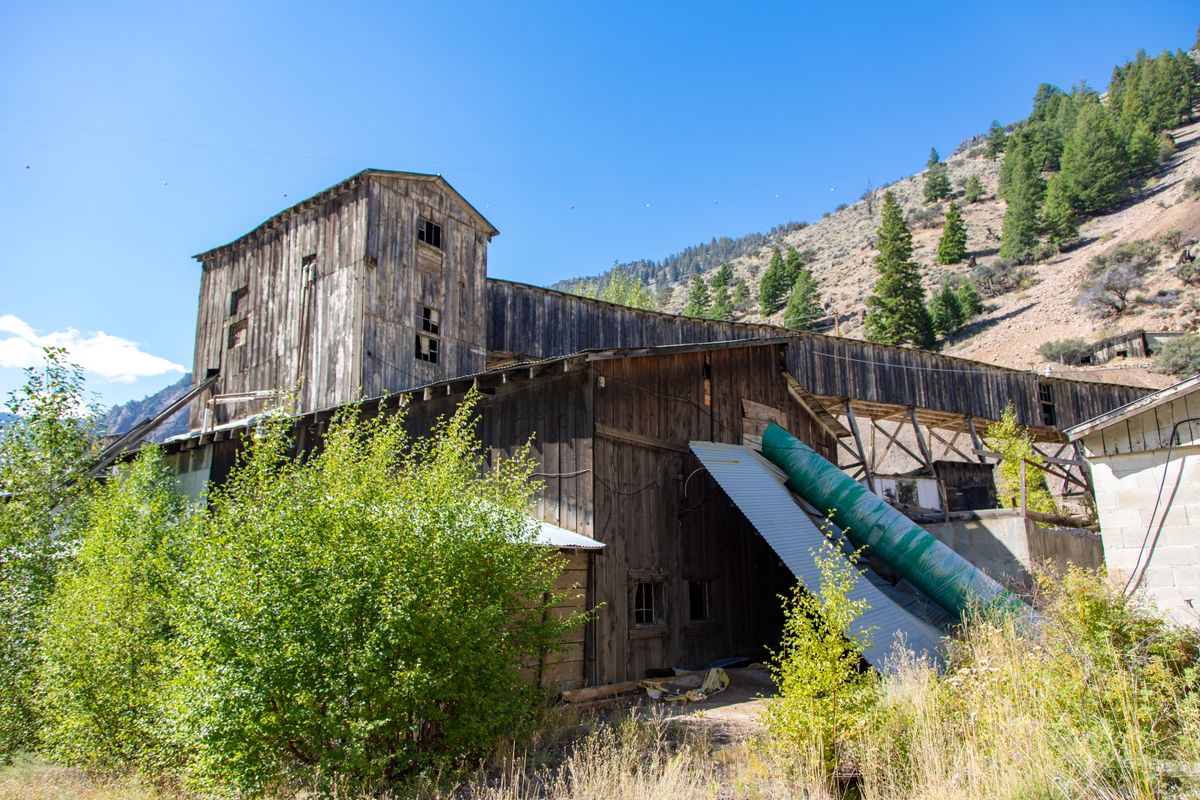
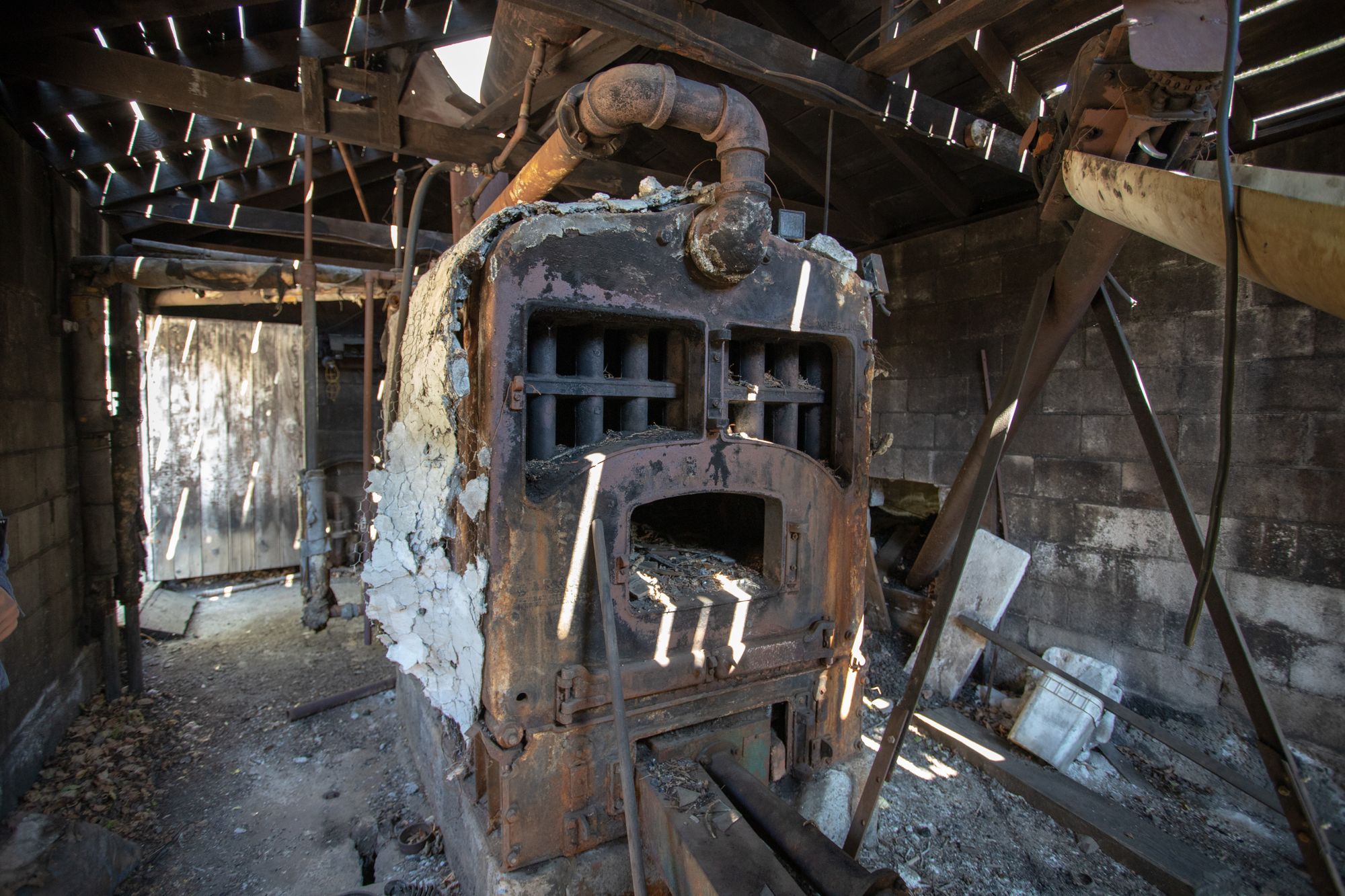
The Clayton Mine has something you rarely find at abandoned mines: a mill with nearly everything still inside. The coal-powered boiler still has coal in the bin. The massive diesel generator, the compressor, the ball mill, the flotation tanks, and vacuum filters are all still in place, as if the crew knocked off for the weekend in 1986 and never came back.
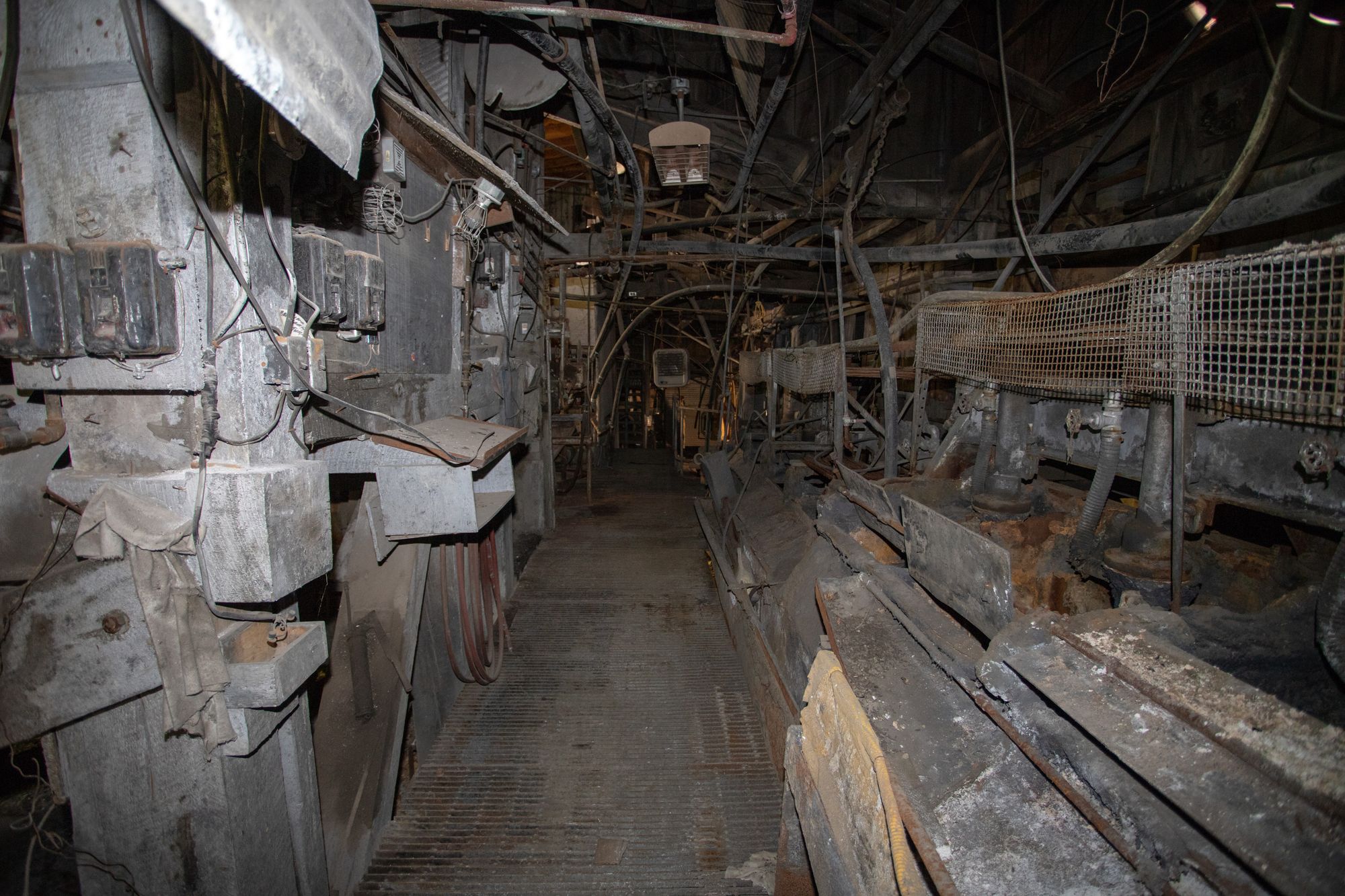
A small camp sits nearby, with a changing room where miners showered off the grime after their shifts underground. The whole complex feels less like ruins and more like a machine on pause.
We were fortunate to tour the mill through prior arrangements with the on-site caretaker. This is private property, so please don't trespass. Enjoy my photos instead.
History
Lead and silver deposits were discovered on the mountain slopes above Kinnikinic Creek in the 1870s, part of the broader Bay Horse mining district. In 1880, the Salmon River Mining and Smelting Company built a 30-ton smelter at what became the town of Clayton, about two miles down the creek from the future mine site. The smelter ran during short summer seasons, processing ore from mines scattered across Kinnikinic Creek, Poverty Flat, and Sugar Creek.
For the first two years, coke had to be hauled all the way from Pennsylvania. Local charcoal soon replaced it, with crews of 48 men producing 180,000 bushels annually to keep the furnaces burning. The smelter changed hands several times and eventually expanded to 100 tons per day. By 1899, it was producing over a million pounds of lead-silver bullion in a single season. But ore supplies from the surrounding mines dwindled, and the smelter shut down in 1902. A brief revival around 1912–1914 didn't last, and by the 1930s the old smelter had been sold for scrap.
The mine and mill visible today came later. In 1927, Clark Mining Company began exploring the Camp Bird group of claims and built a small mill at the site. A partnership called the Camp Bird Group took over in 1928 and started work on a hydroelectric power plant. Litigation stalled operations for a few years, but by 1932 the newly formed Clayton Mining Company resumed work. They sank a shaft and built a 50-ton pilot jig mill in 1934. The ore proved exceptionally rich. Concentrates ran 60 percent lead and 73 ounces of silver per ton. The 50-ton mill was scrapped the following year and replaced with a 100-ton flotation plant.
Renamed Clayton Silver Mines in 1935, the operation expanded steadily. A new hydroelectric plant powered by a Pelton wheel went online in 1937, along with a new headframe and hoist. Mill capacity grew to 150 tons per day. Flotation cells for zinc recovery were added in 1941, and by 1942 the mill was producing both lead-silver and zinc concentrates for shipment to smelters in Utah.
The Clayton Mine had an unusually long and productive life. By 1960, it accounted for 93 percent of all lead, silver, zinc, and copper ore mined in Custer County. The mine ran six days a week; the mill ran seven. Underground workings eventually reached eight levels, extending 1,100 feet deep with nearly four miles of tunnels, shafts, and crosscuts. By 1981, the mill could process 250 tons of ore per day.
Then came setbacks. Low metal prices forced a temporary closure in mid-1982, though the mine reopened that December. The bigger blow came on October 28, 1983, when the magnitude 6.9 Borah Peak earthquake struck about 25 miles away. The quake did little structural damage, but it triggered a massive increase in groundwater flow. Before the earthquake, pumps handled 950 gallons per minute from the 1,100-foot main shaft. Afterward, the flow jumped by two-thirds. With water rising at a foot and a half per minute, crews evacuated. The mine flooded to the 975-foot level within a week. New pumps capable of removing 2.25 million gallons daily eventually brought the water under control, and the mine reopened in February 1984. But the added costs, estimated at $800,000 in new equipment and downtime, weighed heavily on an operation already struggling with depressed metal prices.
In mid-1985, Clayton Silver Mines celebrated fifty years of operation by minting a commemorative silver coin. It wasn't enough. Wages were cut 10 percent for miners and 30 percent for office staff. Exploration stopped. The Clayton Mine shut down for good on May 24, 1986.
Over its nearly sixty years of modern operation, the mine extracted more than 2.2 million tons of ore and produced approximately 6.7 million ounces of silver, 83.5 million pounds of lead, 28 million pounds of zinc, and 1.6 million pounds of copper. The tailings piles are estimated to contain at least a million tons of low-grade material that improved technology might someday make recoverable.