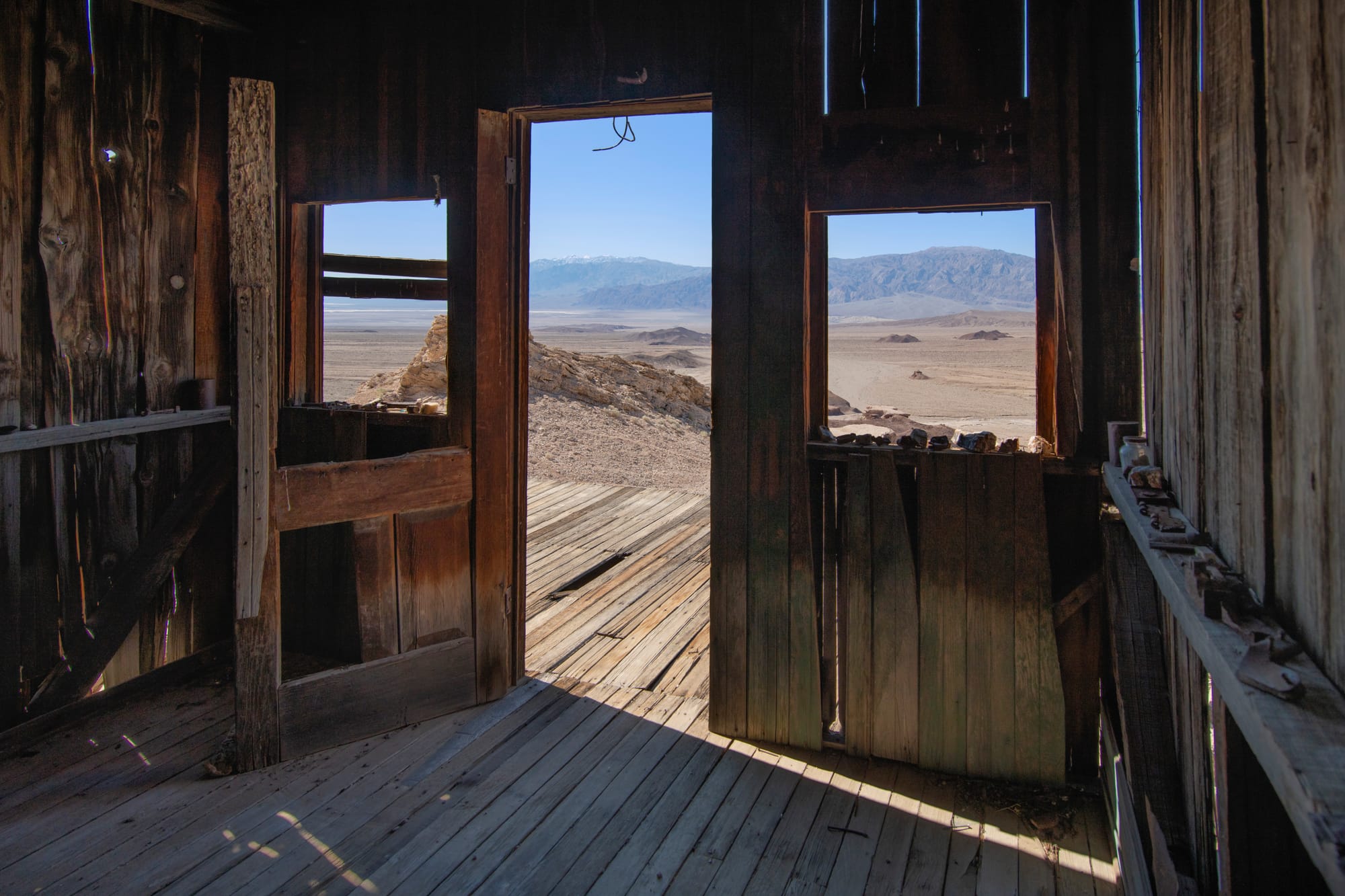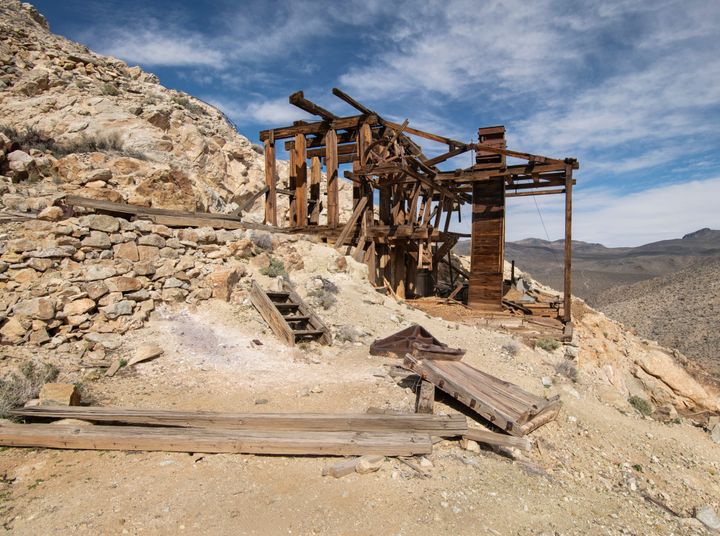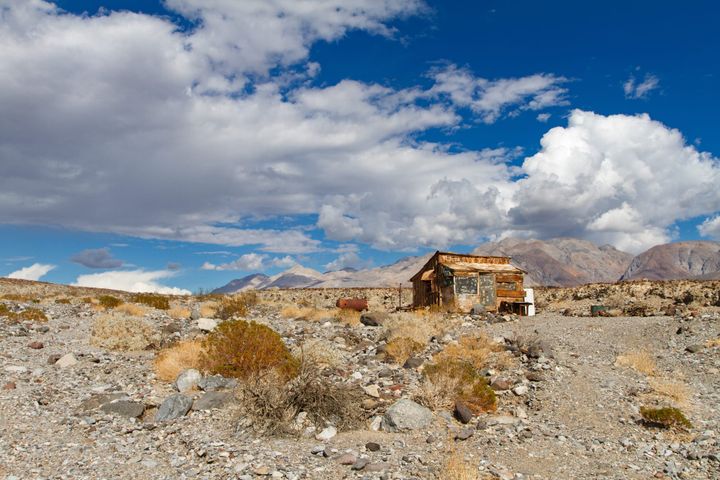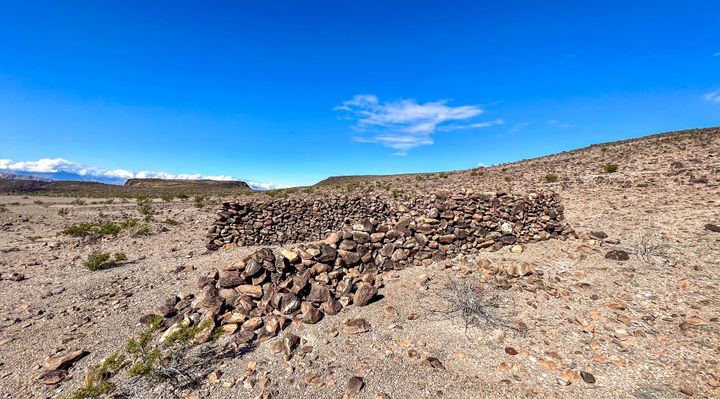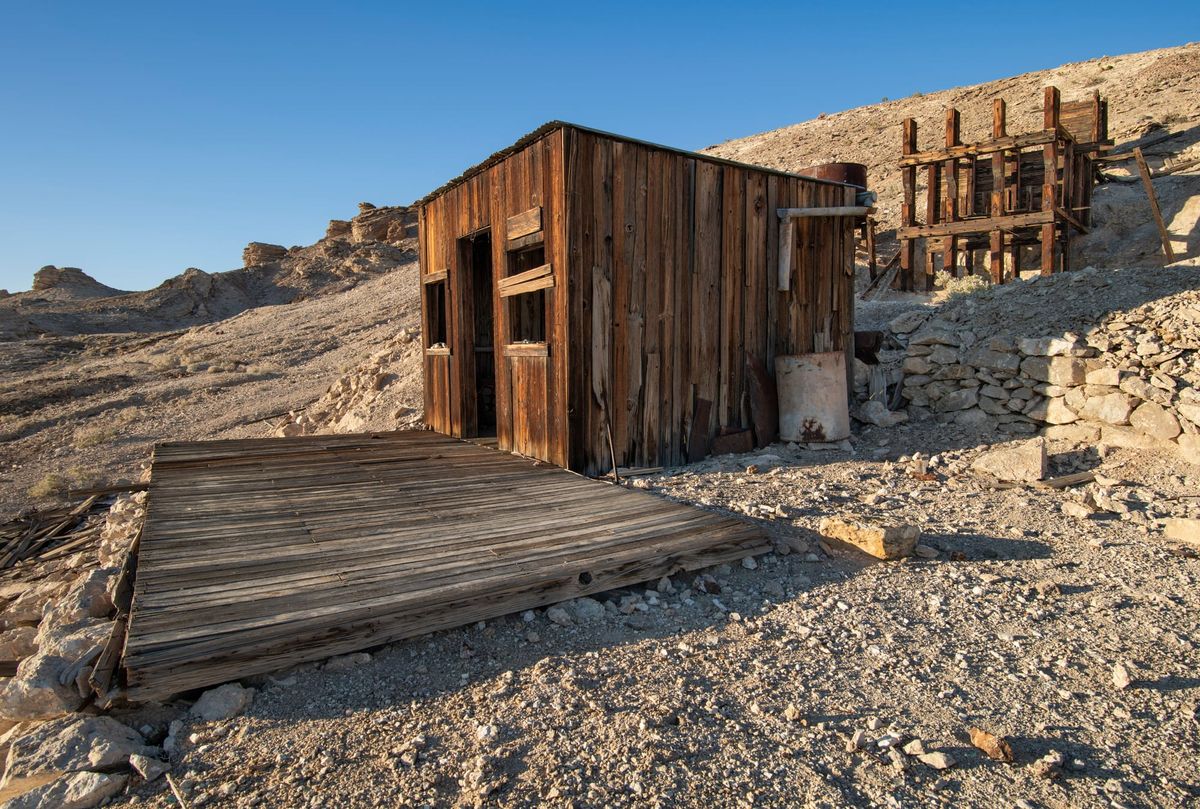
Just north of the well-known Keane Wonder Mine site lies Cyty's Mill, a smaller, seldom-visited mill site and cabin. A short hike along the base of the Funeral Mountains will lead you past scenic Keane Wonder Springs to John Cyty's 1910 cabin and mill, which processed ore from his Big Bell Extension Mine. More ambitious hikers can continue up to the mine, high in the canyon above.
History
The story began in 1904, when the discovery of gold in the Funeral Mountains brought hundreds of prospectors to the Keane Wonder Mine area. While the Keane Wonder became one of the most successful mines in Death Valley's history, numerous other small mines sprung up in the vicinity. That summer, Cyty and his partner Mike Sullivan found gold above the Keane Wonder, filing ten claims which became the Big Bell Mine. They also filed claims for some promising prospects in a nearby canyon, which they named the Big Bell Extension.
Although not as well-known today as such legendary Death Valley characters as Death Valley Scotty, Shorty Harris, or Pete Augerberry, John Cyty was certainly a character, right out of a Hollywood western. Initially more interested in prospecting and promoting mines than actually running them, he optioned the Big Bell Mine to a series of operators who worked the mine for the next few years. (For more on this fascinating mine, see the Big Bell Mine.) His first brush with the law came in 1906, when he bought a dance hall in Rhyolite, gave up his ownership stake after a business dispute, then was arrested for subsequently breaking into the building. The quick-tempered and usually-armed Cyty was to become known locally by the nickname "Johnnie-behind-the-Gun". His fortunes took an even darker turn in 1908, when he lost his 250,000 shares in the Big Bell Mine in a 12-hour roulette marathon in Rhyolite.
Now left with only his Big Bell Extension claims, Cyty devoted his efforts to working that smaller mine. However, there was a problem: Kyle Smith, the well-liked recorder of the South Bullfrog Mining District, had questioned whether Cyty had done the required assessment work to maintain his claims, and had filed claims on the same area. A dispute arose as to whose claims were valid, leading to a shootout at the mine in November 1908. Cyty was wounded while Smith died of his wounds, leading to a trial in Independence the following spring. Cyty was found guilty of manslaughter and sentenced to ten years in prison. He successfully appealed the conviction, and was acquitted at the 1910 re-trial.
Cyty wisely disappeared for about a year, then returned in 1911 to continue work on his Big Bell Extension claims. When the early results looked promising, he bought a used 3-stamp mill at auction, which was transported to its current location. He developed three small springs to provide water, and built a small cabin below the mill. The mine proved unsuccessful, however, as he had apparently struck only a small body of ore. He made only one shipment of ore before abandoning the claim.
Cyty bounced around the area for several more years, until, in 1926, he was again involved in a shooting. He was convicted of assault with a deadly weapon, but once again was able to avoid jail time after a successful appeal. He then lived out the rest of his life, apparently quietly, in the Rhyolite and Beatty area.