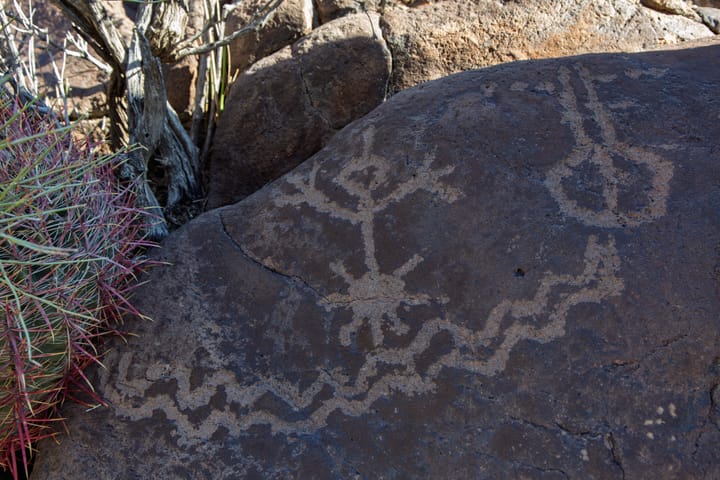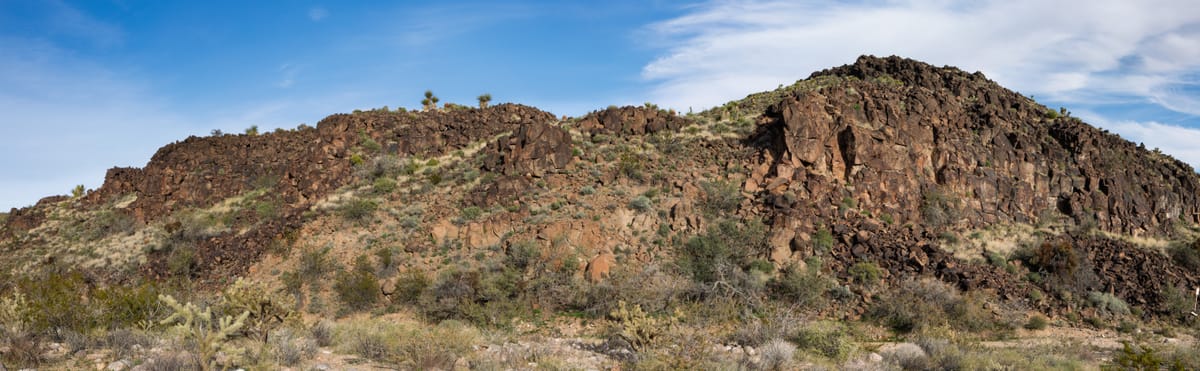
Native Americans passed through Grass Canyon thousands of years ago and left their marks on the basalt. I am not sure why they picked these rocks, though. There are plenty of other surfaces around that don't have anything on them. But this spot where a basalt butte meets the wash is covered with petroglyphs, probably over 70 of them pecked into the west-facing cliff and scattered across the boulders at its base.
The designs are mostly abstract. Curving lines, circles, and geometric patterns dominate, but with fewer bighorn sheep and human figures than at other East Mojave sites. The site reminds me of Lanfair Buttes. Heavy patination on the rock surfaces suggests these petroglyphs are among the older rock art in the region, likely thousands of years old and dating to what archaeologists call the Western Archaic tradition.

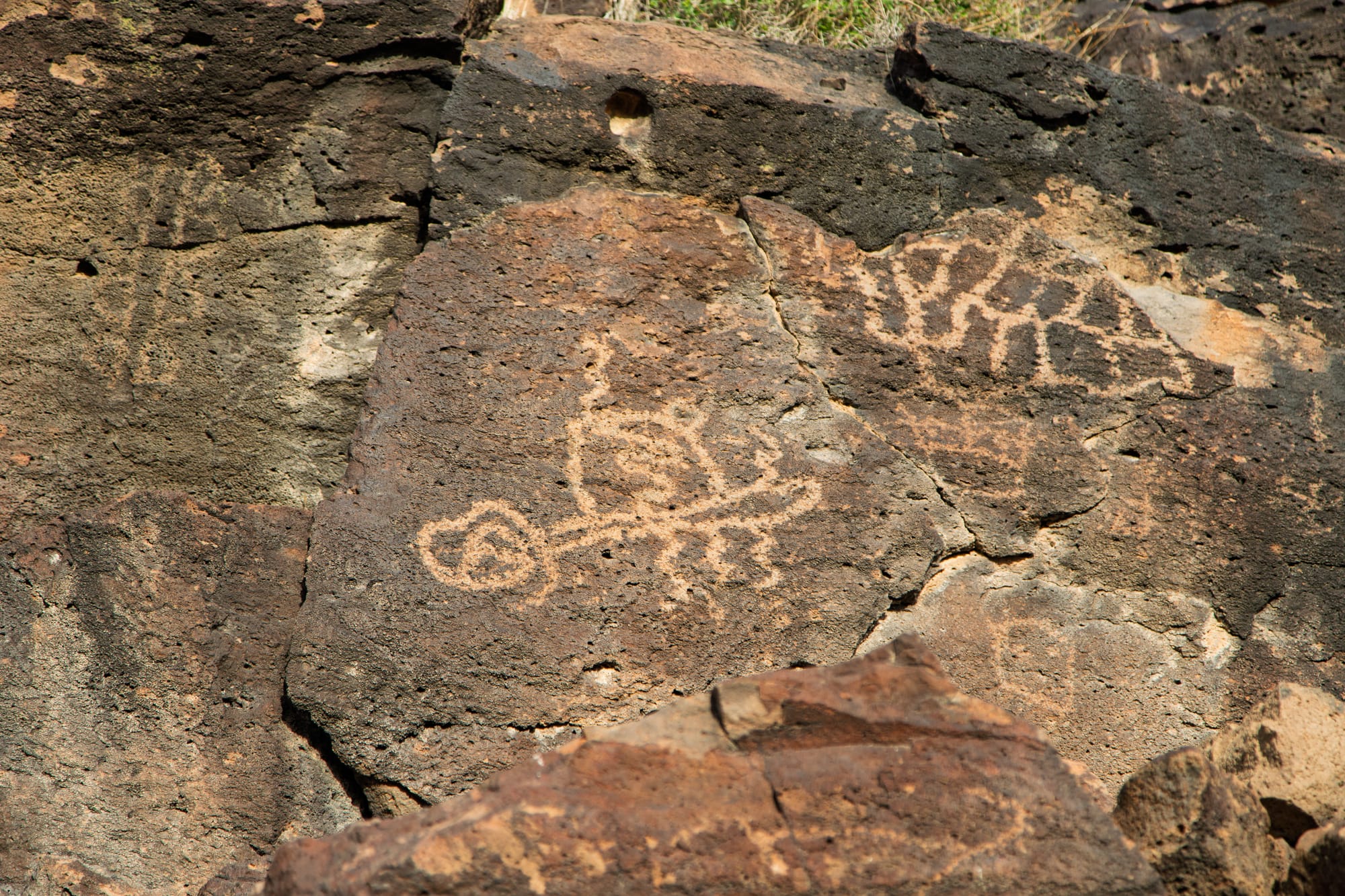
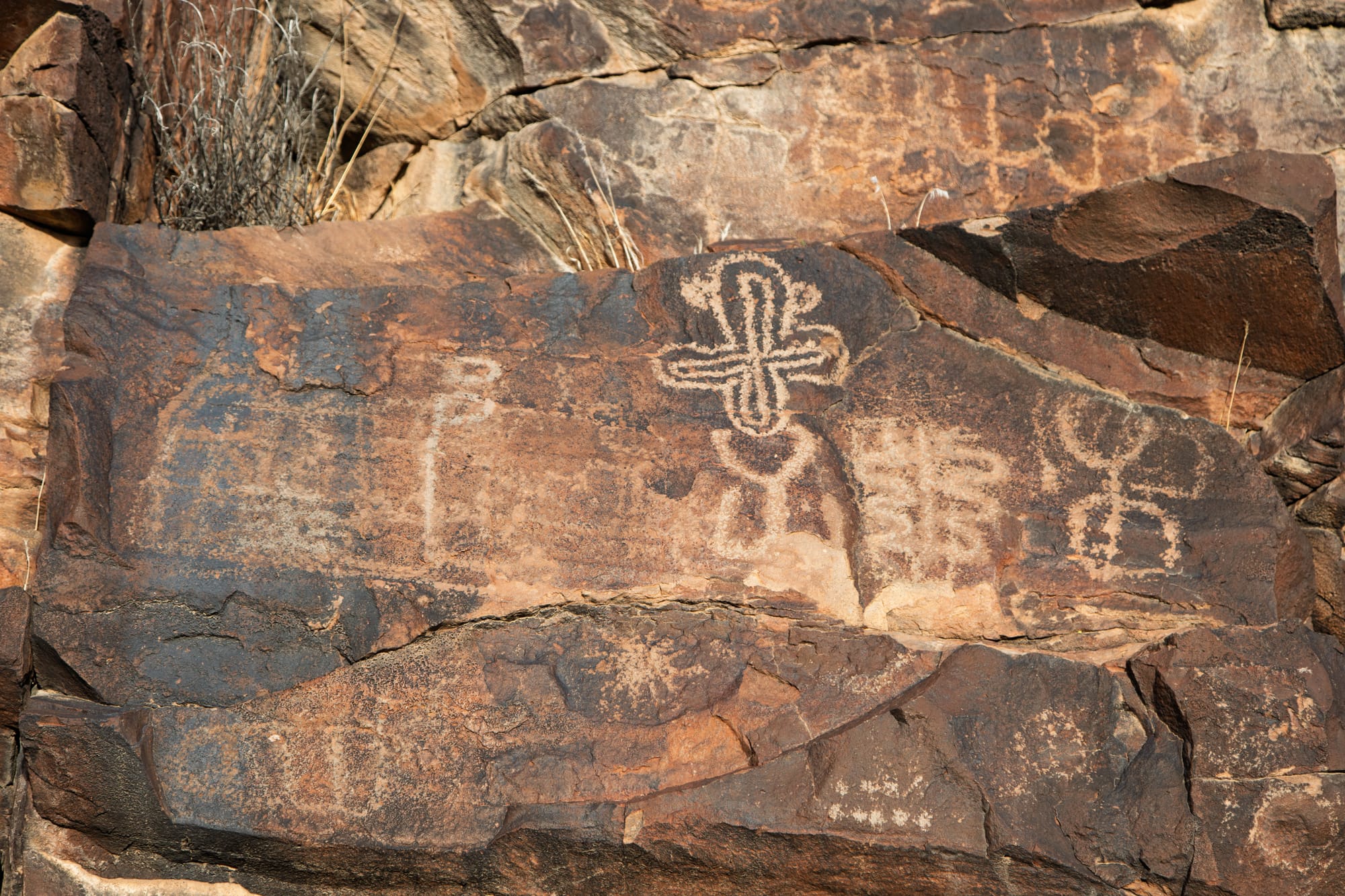
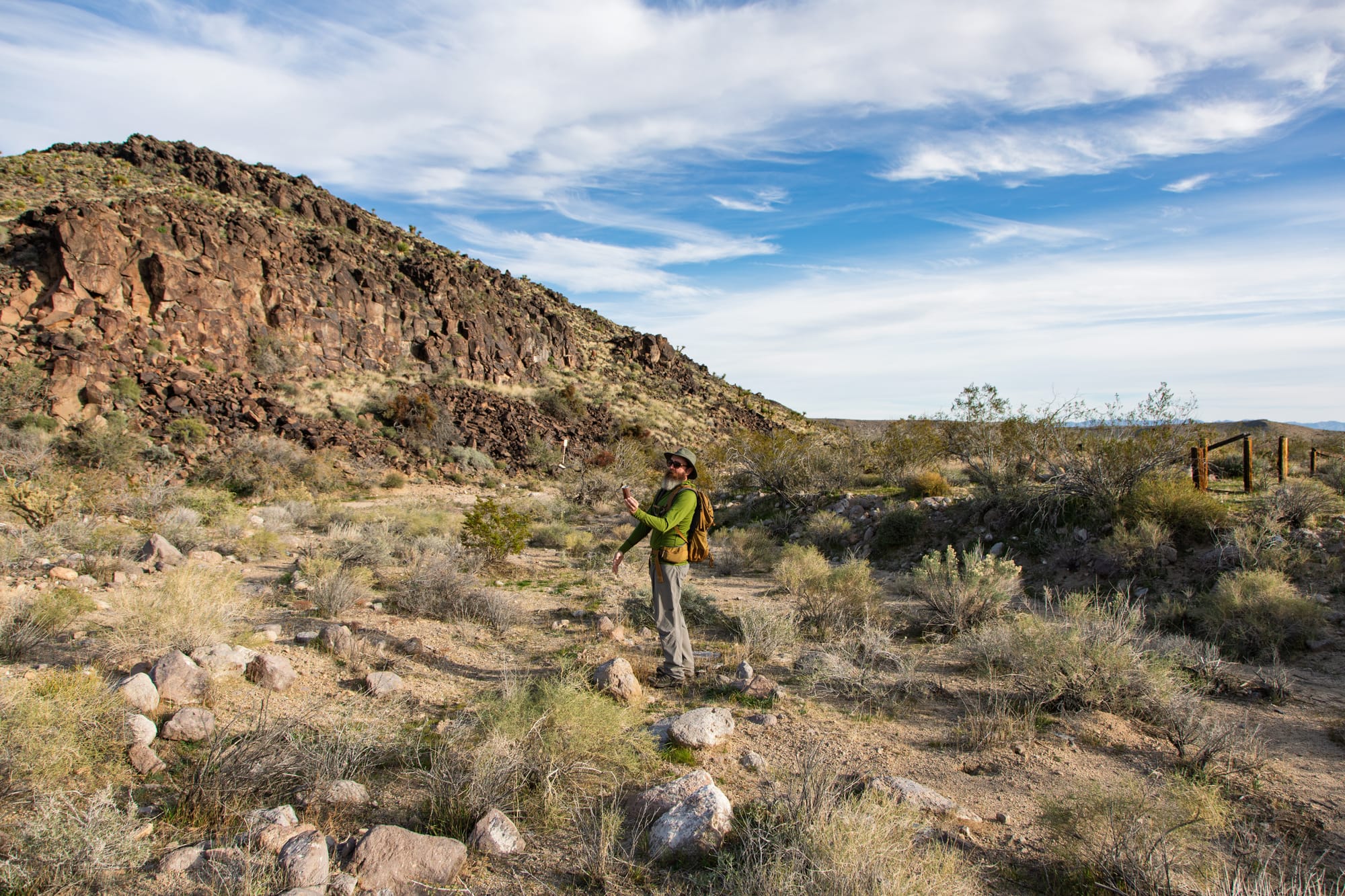
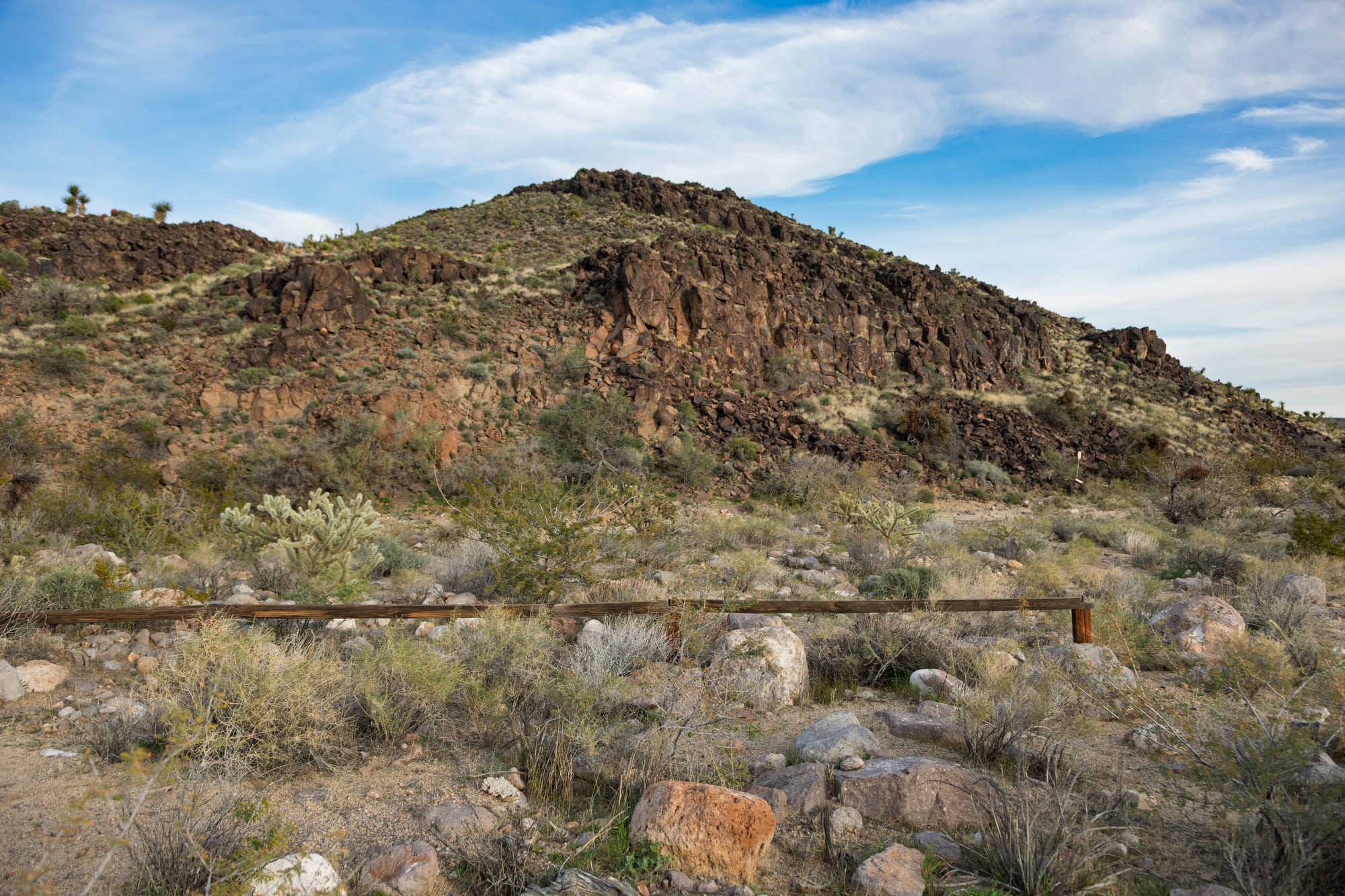
Petroglyphs often cluster throughout the East Mojave wherever water meets easy travel routes. A BLM study found that nearly every known rock art site in the region was associated with springs, natural tanks, or seasonal water sources. Grass Canyon fits this pattern. The mesquite trees here indicate water lingers at shallow depth, and the butte stands out along the hills - a natural place to mark territory along the wash.
The function of these petroglyphs remains uncertain. Some researchers argue that Great Basin rock art served as hunting magic, placed along migration routes to ensure successful hunts. But in the East Mojave, the evidence points elsewhere. The glyphs occur with occupation sites containing pottery, milling stones, and other signs of repeated habitation. No hunting blinds or game fences have been found nearby. The current thinking is that most East Mojave petroglyphs marked territories, travel routes, and water sources rather than hunting rituals.
Wooden rails near the petroglyphs mark what I think was once a BLM parking area for visitors. It's long abandoned now and you have to walk the extra mile.