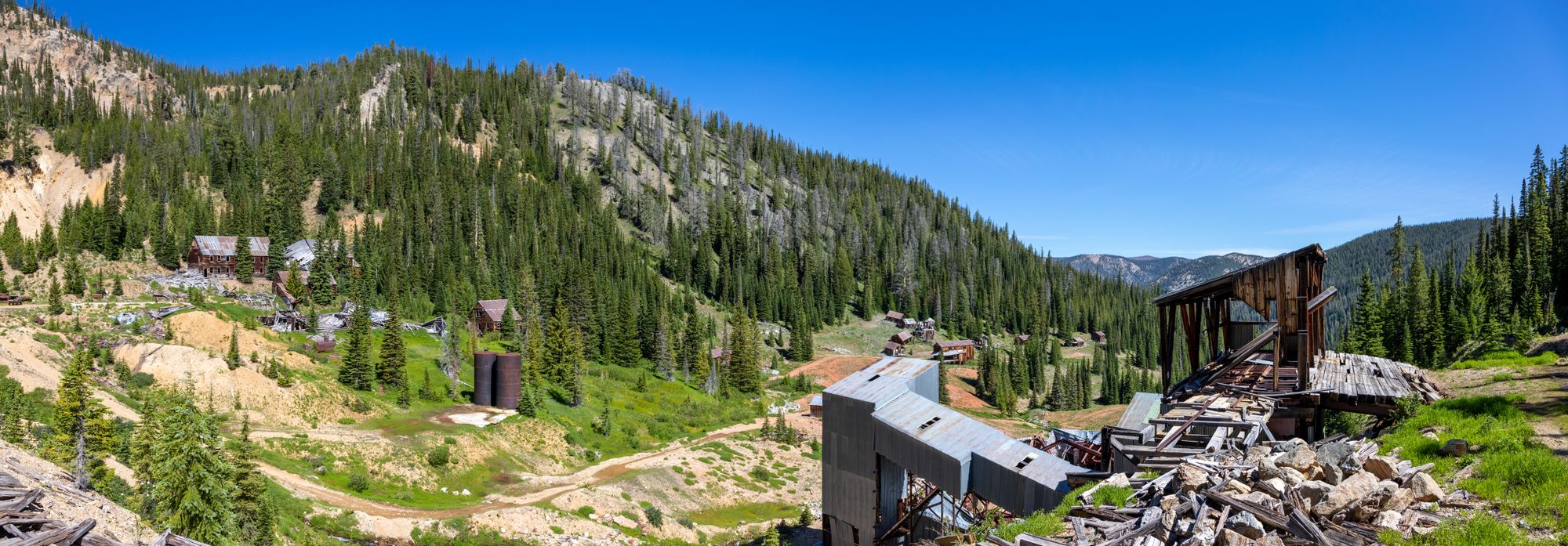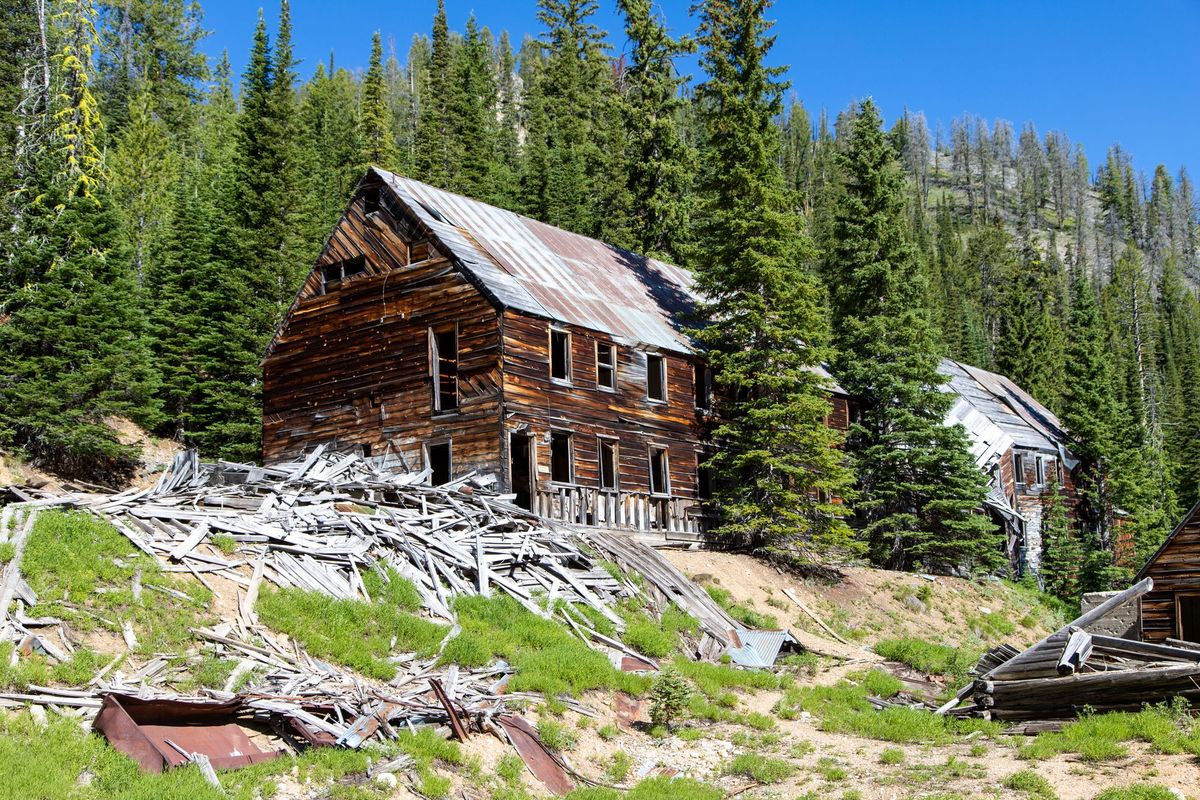
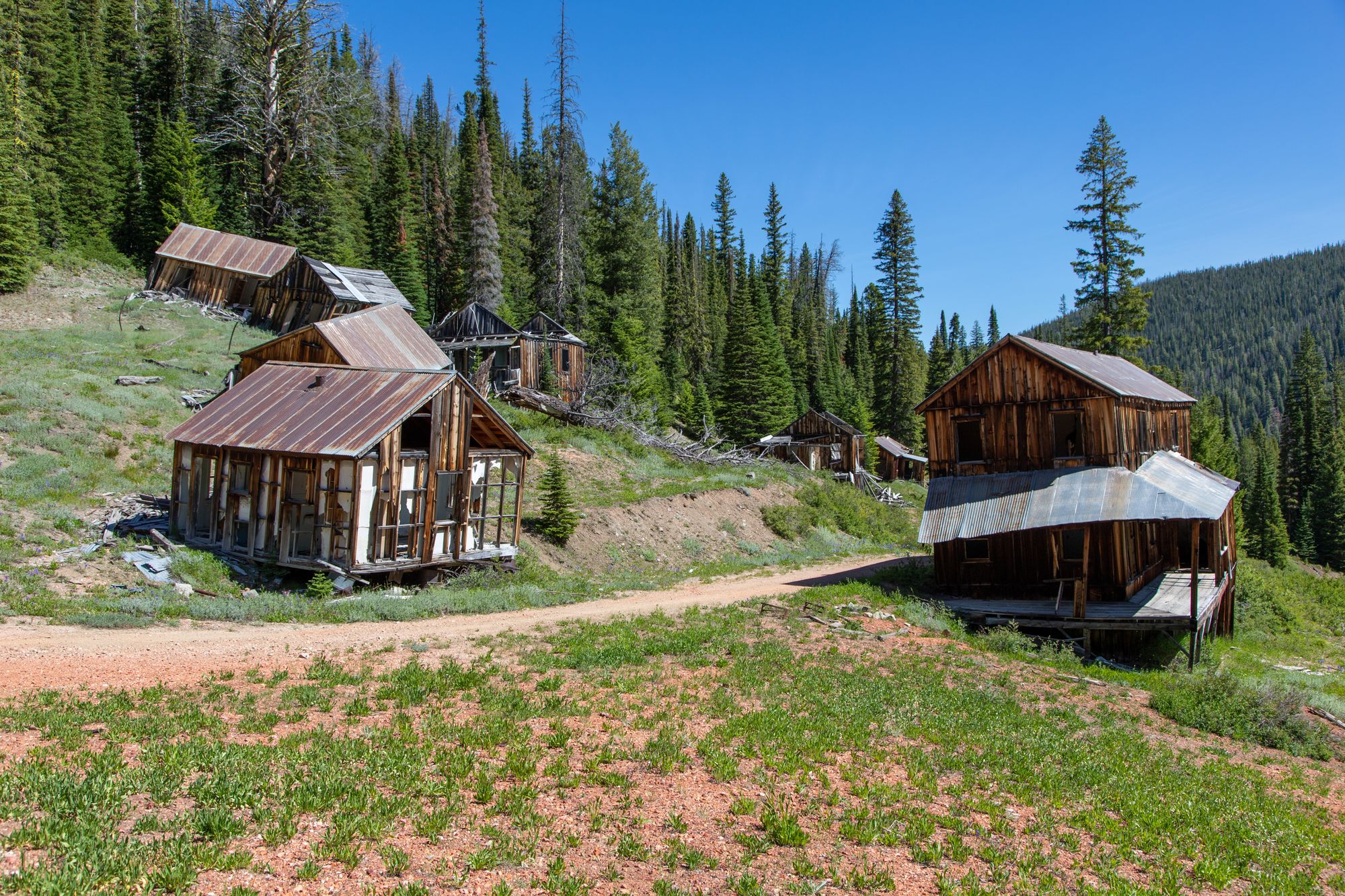
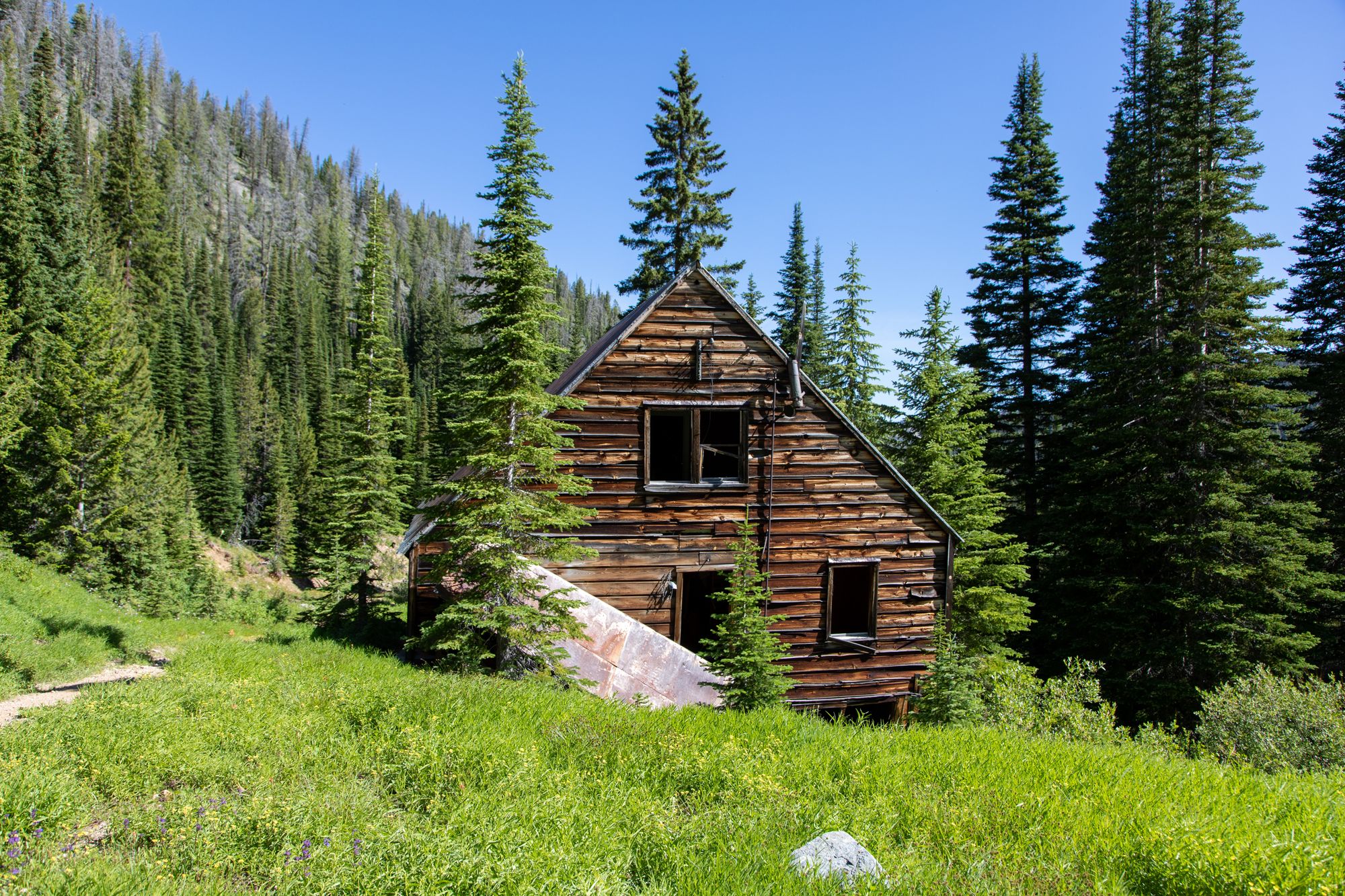
In 1942, while other mining camps slowly faded into obscurity, Cinnabar Camp was bustling with new construction: a three-story bunkhouse, a dozen cabins, and a mill rising from deep in the central Idaho mountains. This wasn't gold fever or silver dreams driving the activity. The United States needed mercury for detonators and scientific instruments, and the Hermes Mine, just above Cinnabar Camp, suddenly mattered to the war effort.
Getting to this remote spot requires commitment even today. The roads are rough, narrow, and steep in places, demanding four-wheel drive and careful navigation through miles of thick forest. This isolation didn't stop the mine from becoming one of the largest mercury producers in the United States during World War II, extracting between 200 and 400 flasks per month at peak production. The meadow below the mine, at the headwaters of Cinnabar Creek (renamed from Sugar Creek after the mercury discoveries) and once carved by glaciers, provided the only flat ground substantial enough for a mining camp.
History
The cinnabar deposits near the head of Cinnabar Creek have a history that mirrors the volatile mercury market itself. Pringle Smith discovered the distinctive red ore in 1902, but actual mining didn't begin until the early 1920s, producing only a handful of flasks (a flask is 76 pounds of mercury). The United Mercury Mines Company held the claims through the lean years, operating a small screw retort that produced six flasks from the Hermes claim between 1917 and 1927, while the nearby Fern mine managed twenty-seven flasks during the same period.
Everything changed in 1941 when Bonanza Mines, Inc., operators of quicksilver properties in Oregon, entered into an operating agreement for a 55 percent interest. They brought capital and expertise in at exactly the right moment. With World War II creating unprecedented demand for mercury, the company launched an aggressive development program. By January 1942, they had installed the first unit of their furnace plant, though initial recovery rates were dismal at 41 percent. Through constant refinement, they pushed recovery to over 95 percent by September, producing 1,124 flasks (over 85,000 pounds of mercury) in the first nine months of operation.
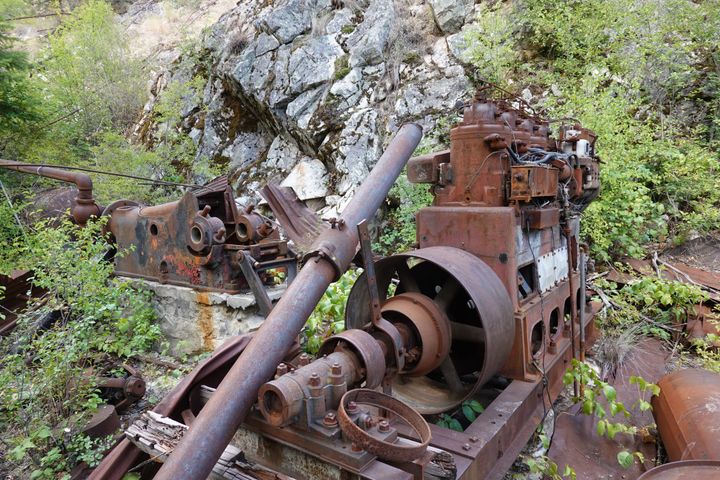
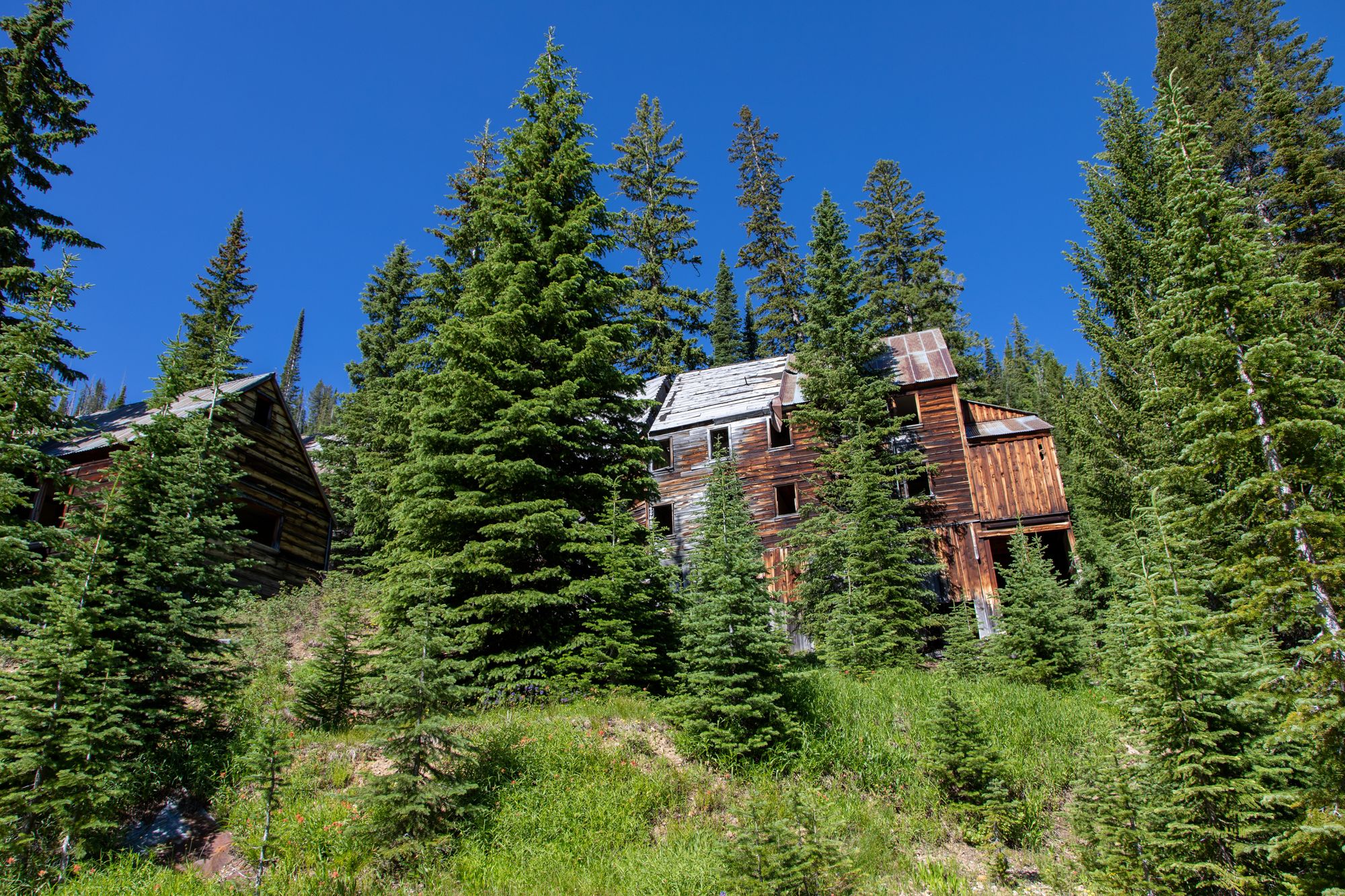
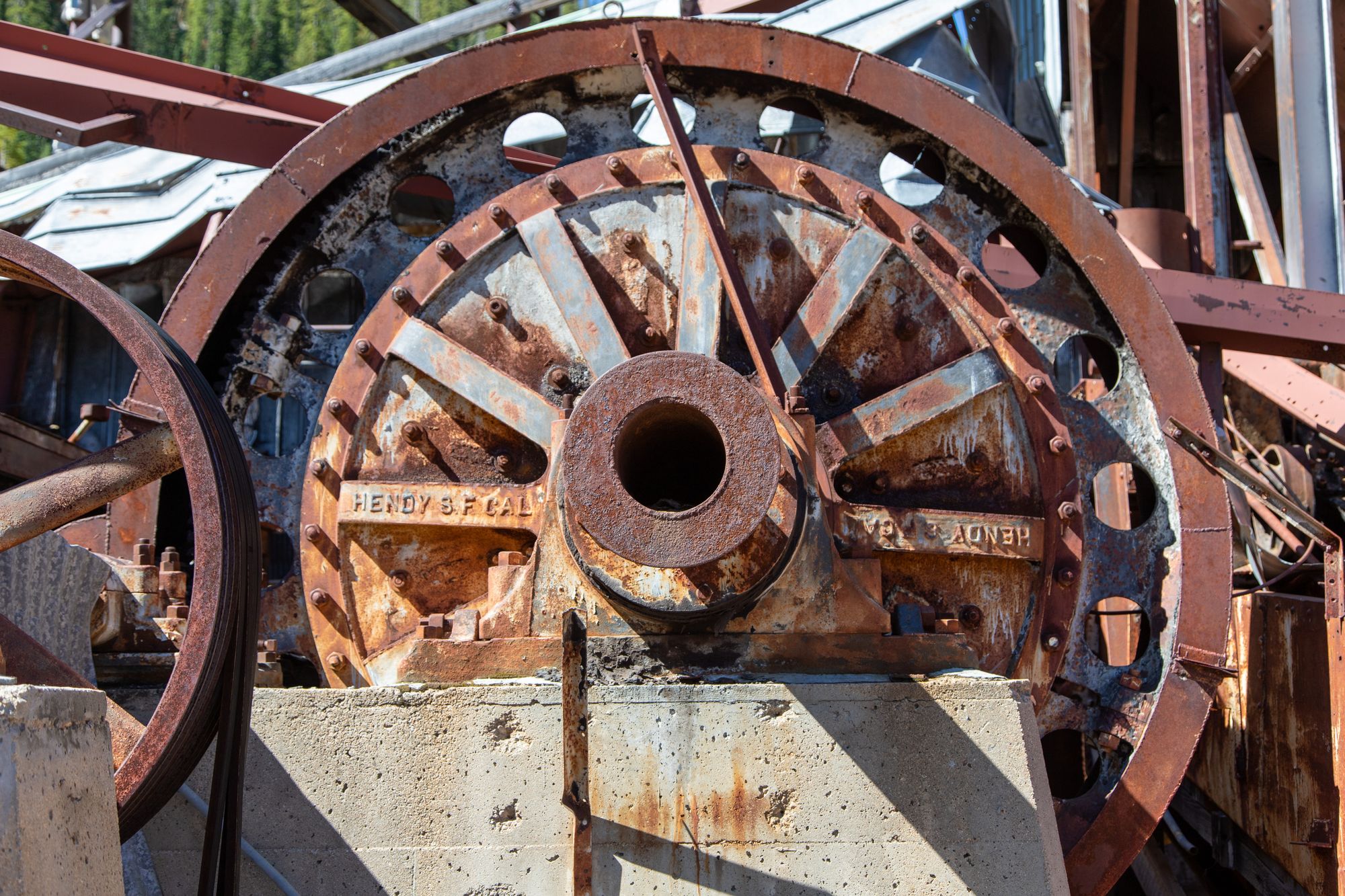
The camp and mill they built was remarkable for such a remote location. The camp included a two-story bunkhouse with capacity for 60 to 70 men, several family cottages, a boarding house, change rooms, recreation facilities, and eventually two 4-by-60-foot Gould rotary furnaces with a combined capacity of 140 tons per day. A 350-horsepower diesel engine provided power. The company even sold fuel oil at cost and operated a company store without profit, though they still struggled to maintain adequate staffing in such an isolated location.