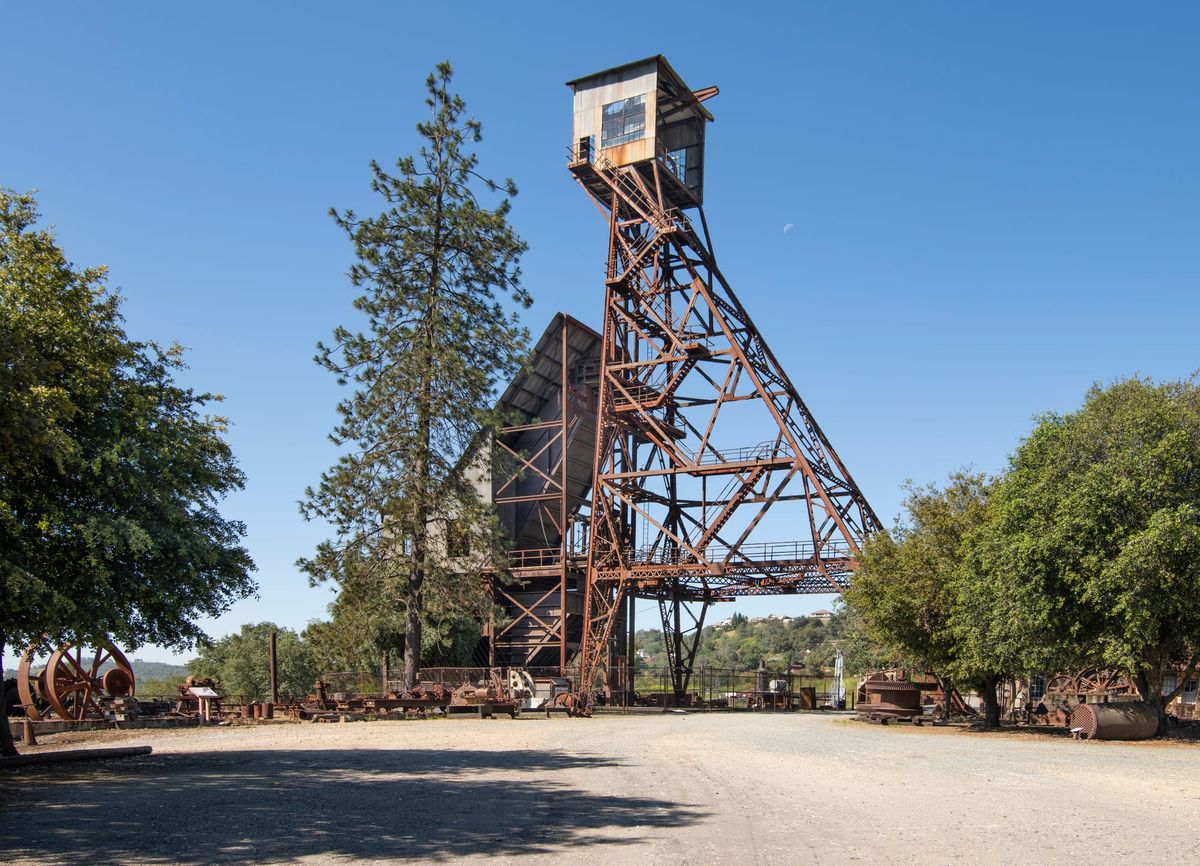
As you depart the downtown of historic Gold Rush town Jackson heading north on Hwy 49, a large headframe and three-story building can be seen on the hillside below. A small sign advertises weekend tours of the Kennedy Mine. This only hints at the enormous scale of this major gold mine, as well as what remains today. The property is now operated by the Kennedy Mine Foundation, a 501(c)3 non-profit. Access is by tours only (including self-guided), normally only on weekends. See The Tour below for details.
If, like me, you are resistant to tours and "tourist attractions", you might never consider stopping here. After years of driving by, wondering what was down there, my curiosity finally overcame me, and I decided to take the tour. I was surprised when I drove down the hill (right under the headframe!) and discovered numerous preserved and well-maintained buildings as well as a huge outdoor display of mining and milling equipment, all in a beautiful setting. However, even more impressive was the gorgeous three-story Mine Office building seen from the highway, and of course the towering 135-ft headframe. The 90-minute guided tour was one of the best tours I have ever taken. (Self-guided tours are also available, but the guided tour is highly recommended.) The best time to visit is in the spring (March through mid-May), when the hillsides are green, flowers are blooming, and the temperature is moderate.
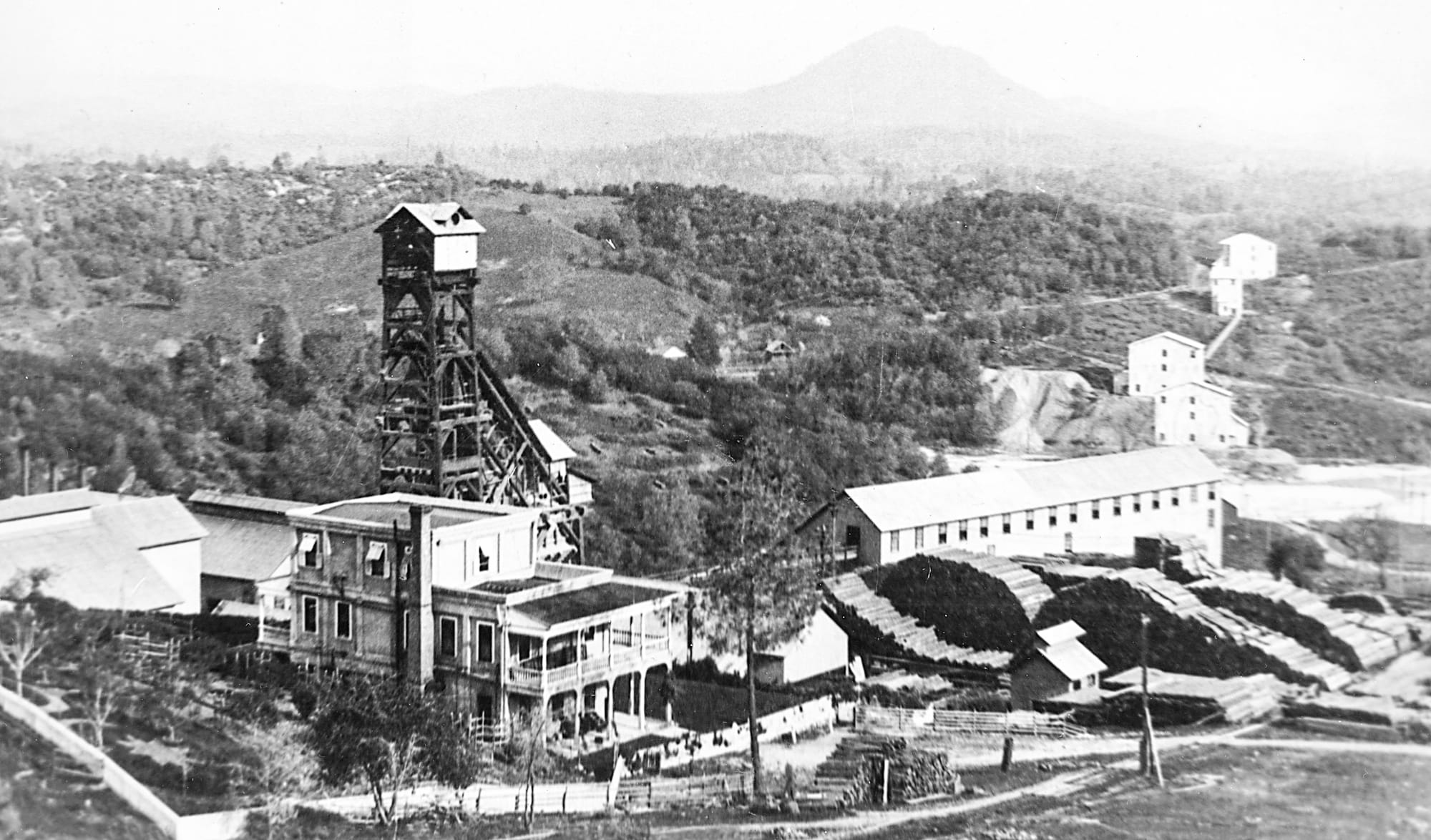
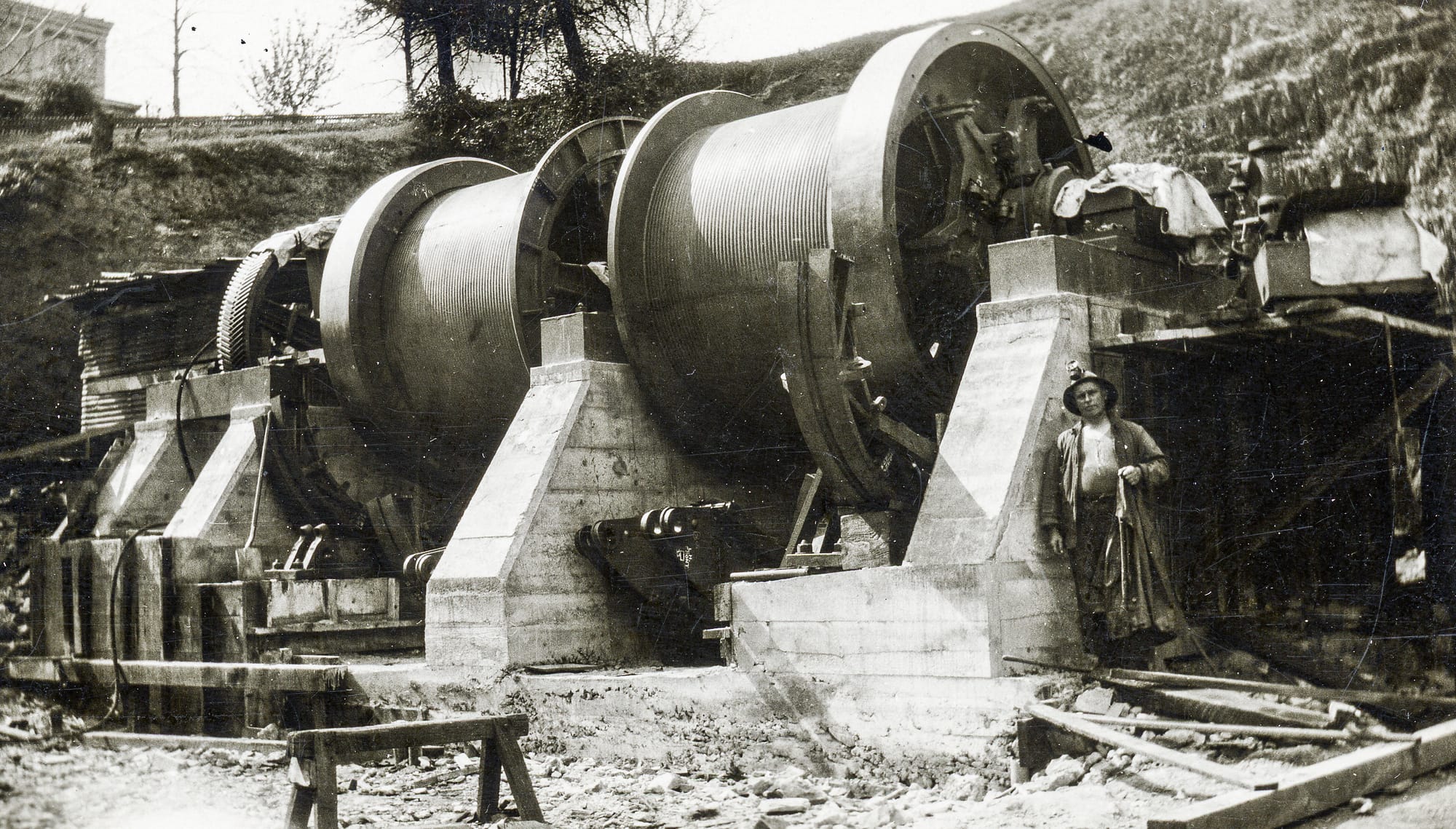
L: Kennedy Mine circa 1920; R: main hoist. Photos courtesy of Amador County Archives, used with permission.
History
By the late 1850s, prospectors and miners had harvested much of the placer gold in the Mother Lode, and were now searching for the source of the gold. After Andrew Kennedy discovered a quartz outcropping near today's Hwy 49, he and three other partners began excavating a shaft. They worked their mine intermittently until 1869, then sold out to a group of local investors. A new corporation called the Kennedy Mining Company was formed, which was able to recover $300,000 in gold by 1878. Little further progress was made until 1886, when a new well-funded group of investors took over, incorporating under the name of the "Kennedy Mining and Milling Company." The new company made significant improvements, installing modern mining and milling equipment and hiring experienced mine operators. The new East Shaft was started in 1898, becoming the sole producer for the duration of the mine's life. (This is the shaft/headframe which remains today.)
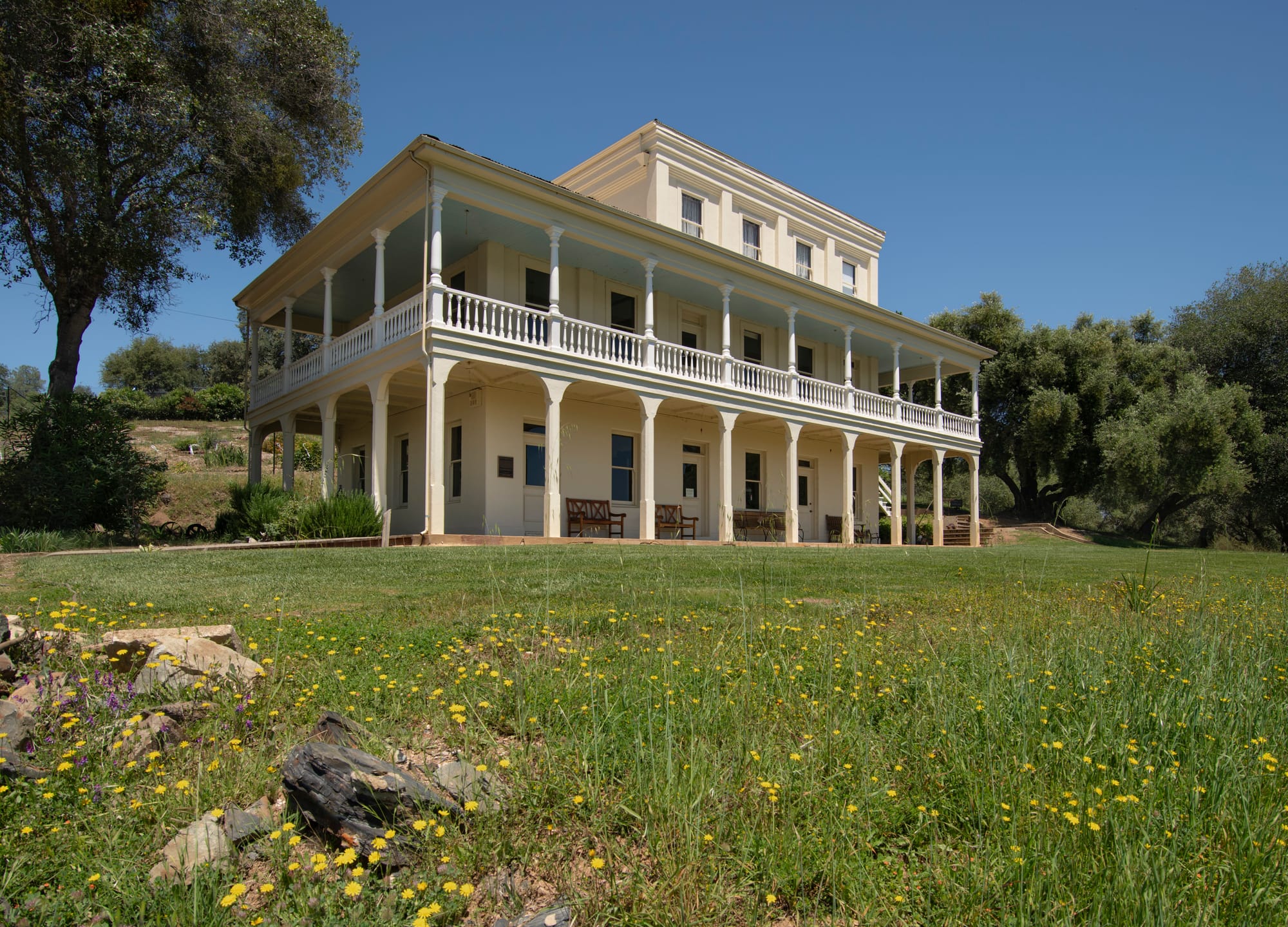
The three-story Mine Office building, just above the headframe, was built in 1908. The concrete building housed a retort room and assay room on the first floor, offices on the second floor, and guest rooms for visiting dignitaries on the third floor.
A significant addition to the mine operation occurred in 1914, when the Tailing Wheels began operating. Mine and mill runoff had been contaminating water sources for decades, leading to legislation in 1912 which mandated impounding mill tailings in storage ponds. Due to limitations imposed by the surrounding terrain, the company had to resort to extreme measures. The closest suitable location for an impound pond was 4000 feet to the east, and it lay beyond two intervening ridges. The solution, modeled after a similar arrangement at a Montana mine, was to construct a flume to transport the tailings from the mill to the pond. A series of four 58-foot water wheels were added, to carry the tailings over the ridges.
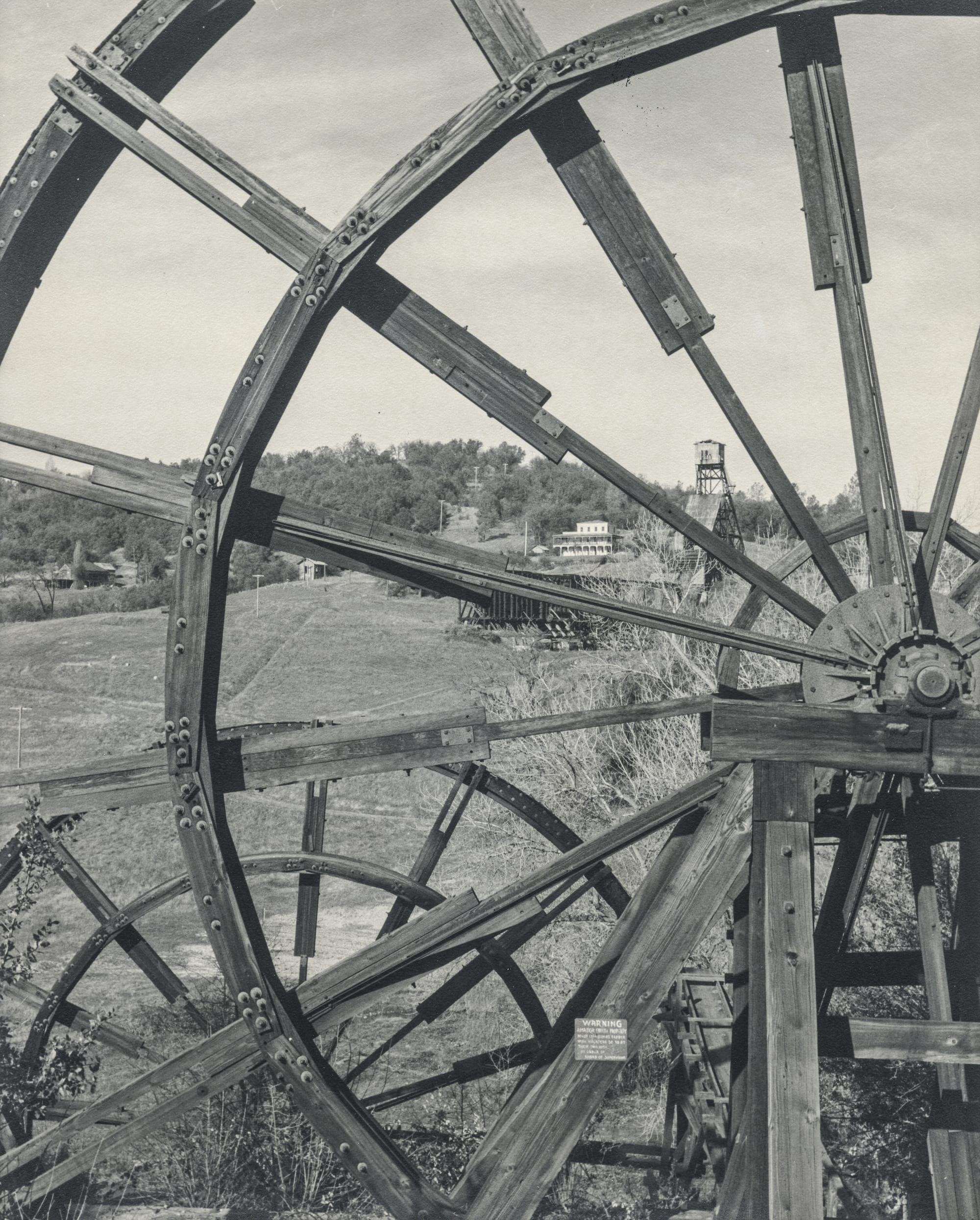
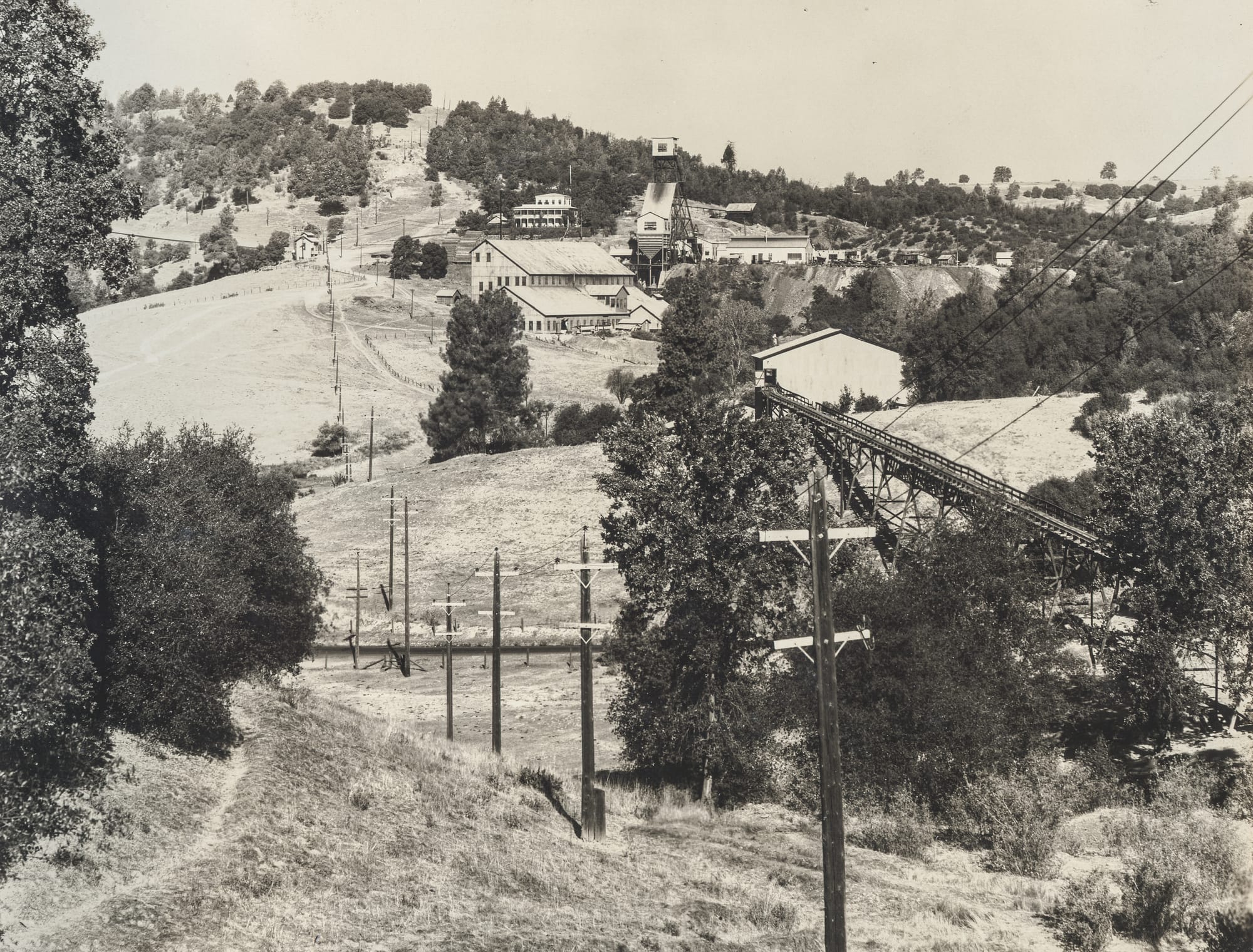
L: Tailing Wheels #1 and #2, R: Flume and Wheel #2 (in building). Photos courtesy of Amador County Archives, used with permission.
The Kennedy Mine became world famous in 1922 for its part in a disaster at the neighboring Argonaut Mine (you can still see the Argonaut headframe above Hwy 49, just southwest of the Kennedy Mine.) On the night of August 27 that year, a fire started near the 3000-ft level in the Argonaut shaft. The fire quickly spread, trapping 47 miners working over 1,000 feet below. The only feasible rescue option, although very time-consuming, would be to tunnel over from the Kennedy mine through an old collapsed drift which connected the mines, near the Argonaut's 4200 level. The rescue effort, which eventually lasted three weeks, attracted news reporters from all over the world. Despite non-stop heroic efforts to save the trapped miners, the public was devastated when the rescue crews finally broke though, only to find that the miners had succumbed to carbon monoxide poisoning only hours after the fire began.
Another milestone occurred in 1926, when the mine switched from steam power to electric. The boiler which remains today was then used to provide heat and hot water.
The Kennedy Mine suffered its own devastating fire in 1928, although it was a surface fire which caused no deaths. The mine had its own sawmill, used to cut logs into mine timbers. A fire which began in the log pile spread to nearby buildings, eventually destroying the wooden headframe and all surface buildings except the Mine Office and the mill. The metal headframe you see today, along with all the current buildings, soon replaced them.
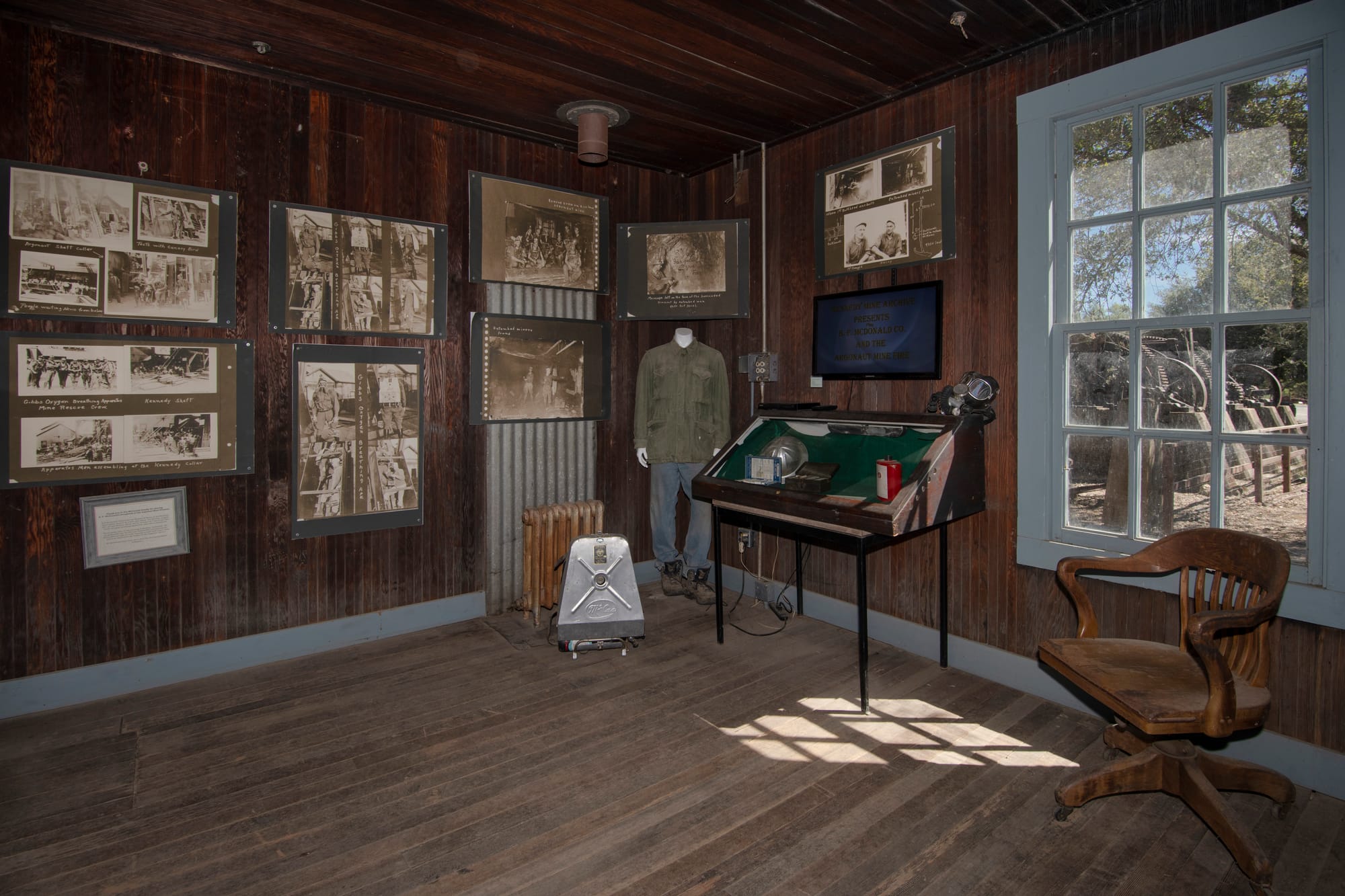
The Kennedy Mine's long run ended during World War II in 1942, when all gold mines in the United States were ordered closed as non-essential to the war effort. The mine did not re-open after the war ended, as it was not deemed economically feasible. Metal from some of the buildings, including the mill and the Tailing Wheel structures, was salvaged At the time it closed, it was the deepest mine in North America, at 5912 feet. Over its lifetime, it produced 1.7 million ounces of gold, valued at over $34 million.
In 1961, a teacher named Sybil Arata bought the property at a liquidation sale. When she died in 1994, her will stipulated that the property be kept as open space for wildlife habitat, and that the mine be preserved for its historical value. The Kennedy Mine Foundation was established, and today many local volunteers work to keep her dream alive. The Foundation volunteers have done an incredible job of restoring and maintaining the remaining structures and equipment.
Directions
Getting There
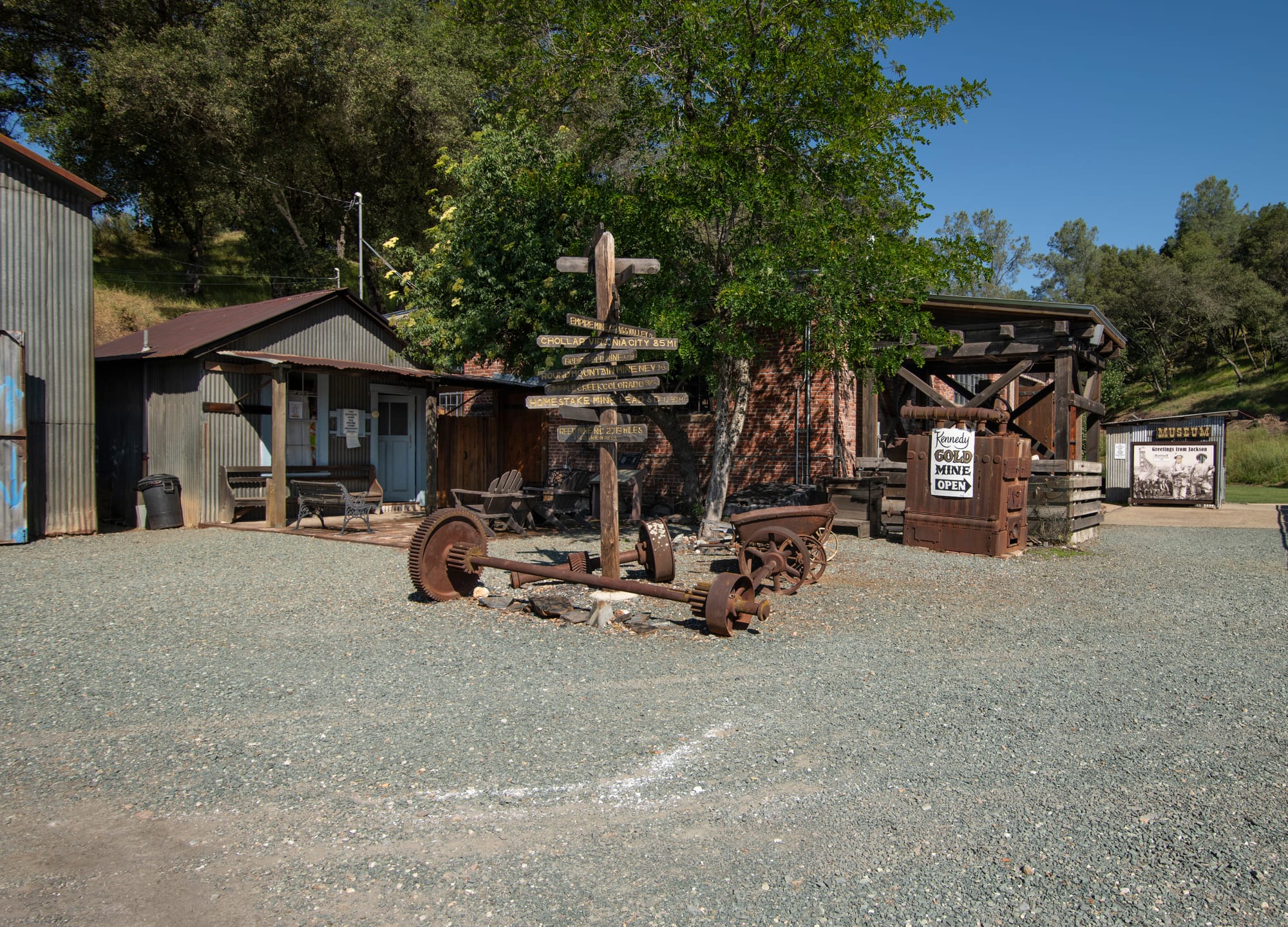
From the intersection of Hwy 49 and Hwy 88 in downtown Jackson, drive 1.7 miles northwest on Hwy 49, toward Sutter Creek. Just past Argonaut Lane (on your left), turn right onto Kennedy Mine Road. (Look for the Kennedy Gold Mine Tour sign at the entrance to Kennedy Mine Road). Follow signs for the tour. Shortly after turning off Hwy 49, the 0.6-mile road turns to graded dirt, suitable for all vehicles. The road passes under the headframe, with plenty of parking just beyond. Sign in for the tour at the Visitor Center/Gift Shop in the large brick building.
The Tour
The Kennedy Mine is open Saturday, Sunday, and holidays from 10 am to 3:30 pm. Guided tours are given at 10 am, 12 pm, and 2 pm from March through October. During the off-season, November-February, the mine is open the second Saturday of each month, with the same three tour times. Private tours can be reserved for any time by contacting the mine ($15/person, minimum of $100, as of 2026).
The Guided Tour is highly recommended. The tour guides are very knowledgeable (and entertaining), covering all aspects of the history and operation of the mine. They allow access to the shaft area under the headframe, as well as the Mine Office building, which are not open to the public and the highlight of the tour. Even people who are not mine enthusiasts (and kids) will love this tour!
Note: it is recommended that you book a spot on a Guided Tour on the Foundation's website before arriving, as space is limited: https://kennedygoldmine.com/
In addition, there are two self-guided tour options:
- Includes a self-guided tour book, access to the Change House museum, a short video of the mine in operation in 1914, and access to most of the buildings. Nominal fee.
- Access to the Change House Museum and most buildings. Free. The self-guided tour book can be purchased in the Gift Shop.
Note: the self-guided tours do not include access to the shaft area or the Mine Office.
Picnic tables with shade are available to use in the yard. The property hosts events during the year, and is available for events and small weddings. (There is an amphitheater and small church down the hill from the headframe). See the Foundation's website for details.
If you have time, a visit to Kennedy Tailing Wheels Park is also recommended. The park, with picnic tables and restrooms, is owned by the City of Jackson. There is an informative kiosk with photos and displays. Only one of the original four wheels is still standing, now protected by a metal and glass structure, and it is an impressive sight. The park, located at 1200 N. Main Street, can be accessed from either downtown Jackson or Jackson Gate Road in Martell.
Tailing Wheels website:
https://www.ci.jackson.ca.us/visit_jackson/kennedytailingwheelspark.php
Special thanks to Amador County Archives and Teresa Guidi for assistance with historical photos.
GPS Waypoint
- Kennedy Mine: 38.368°, -120.78°