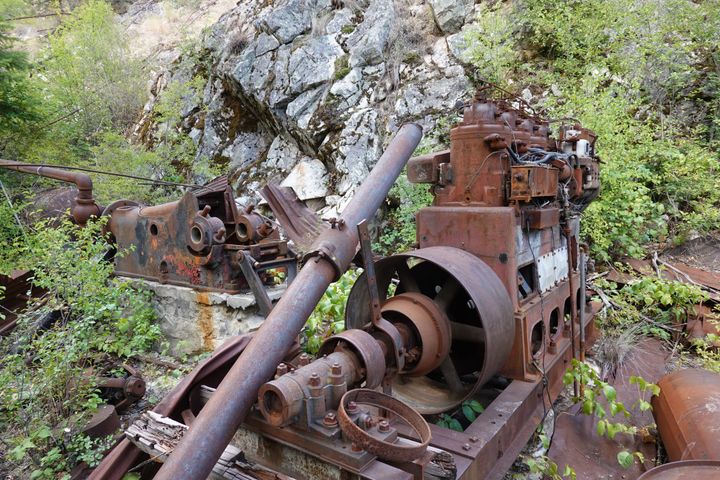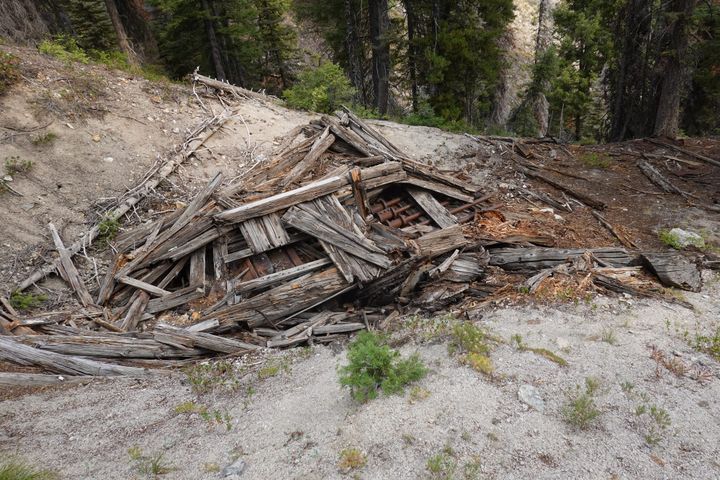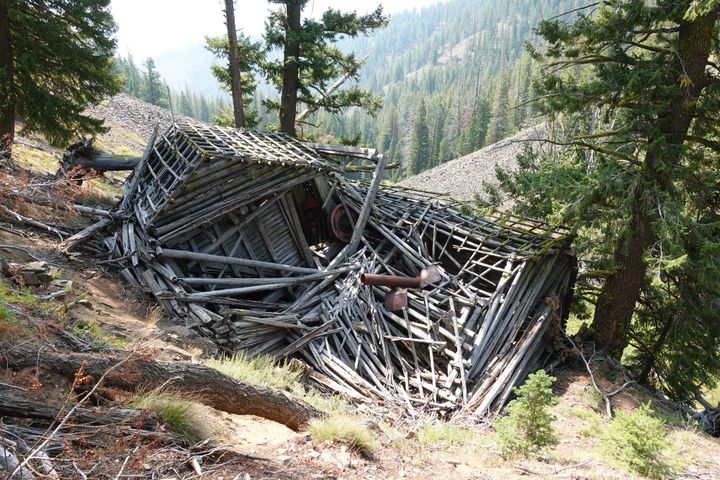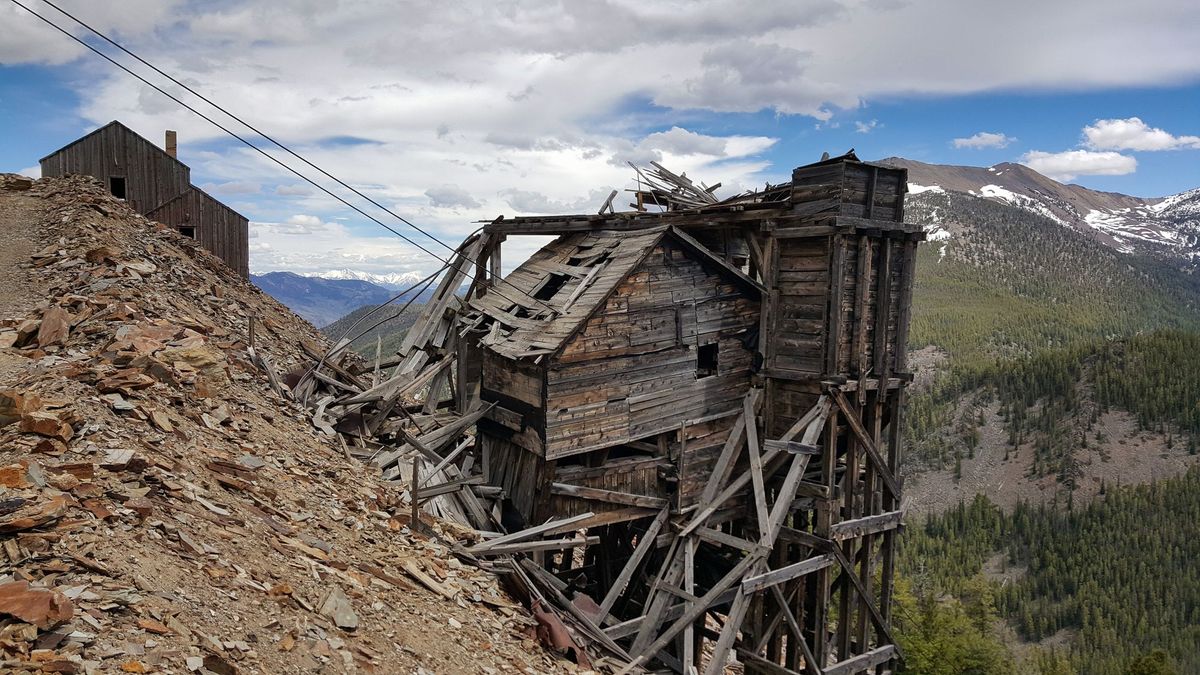
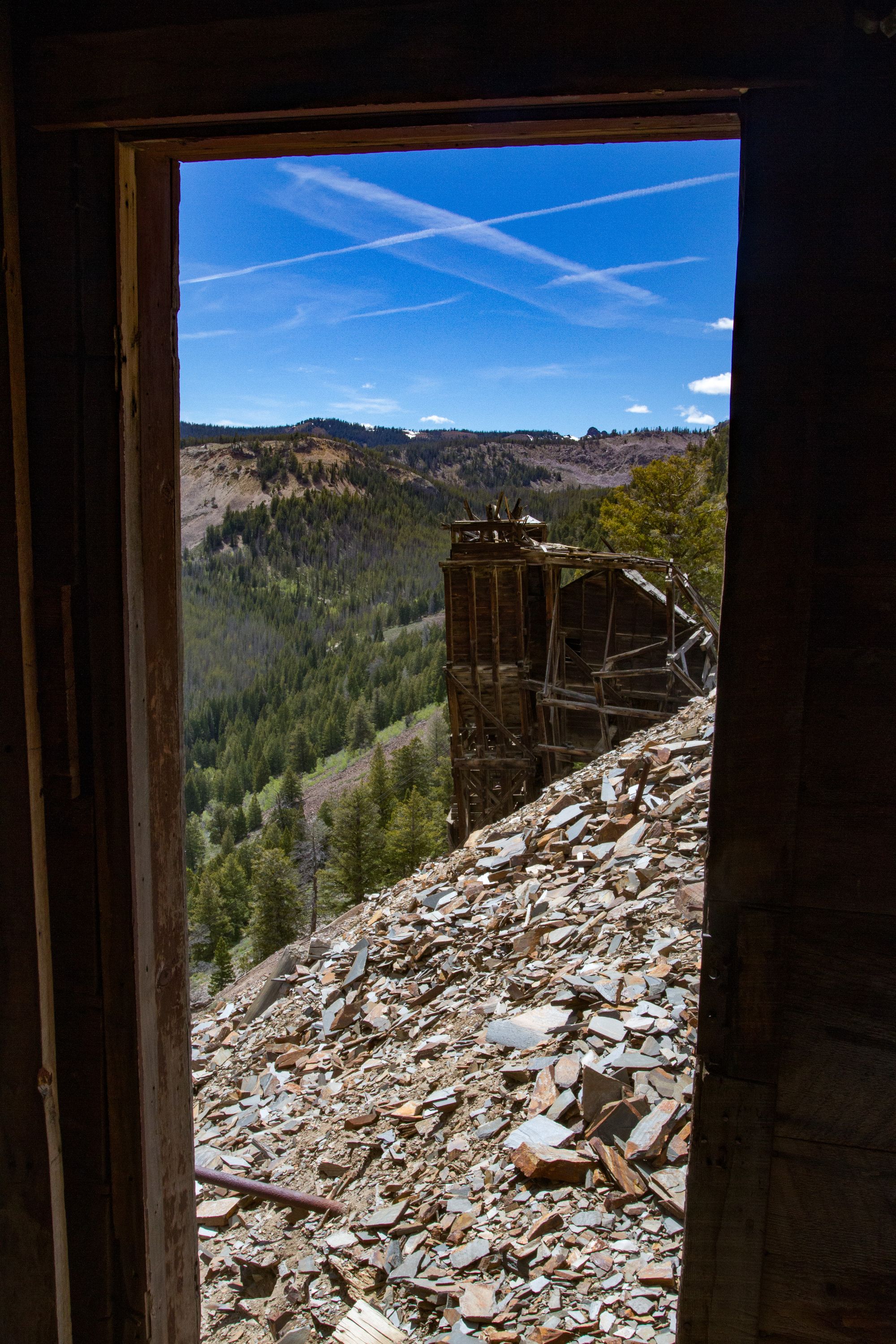
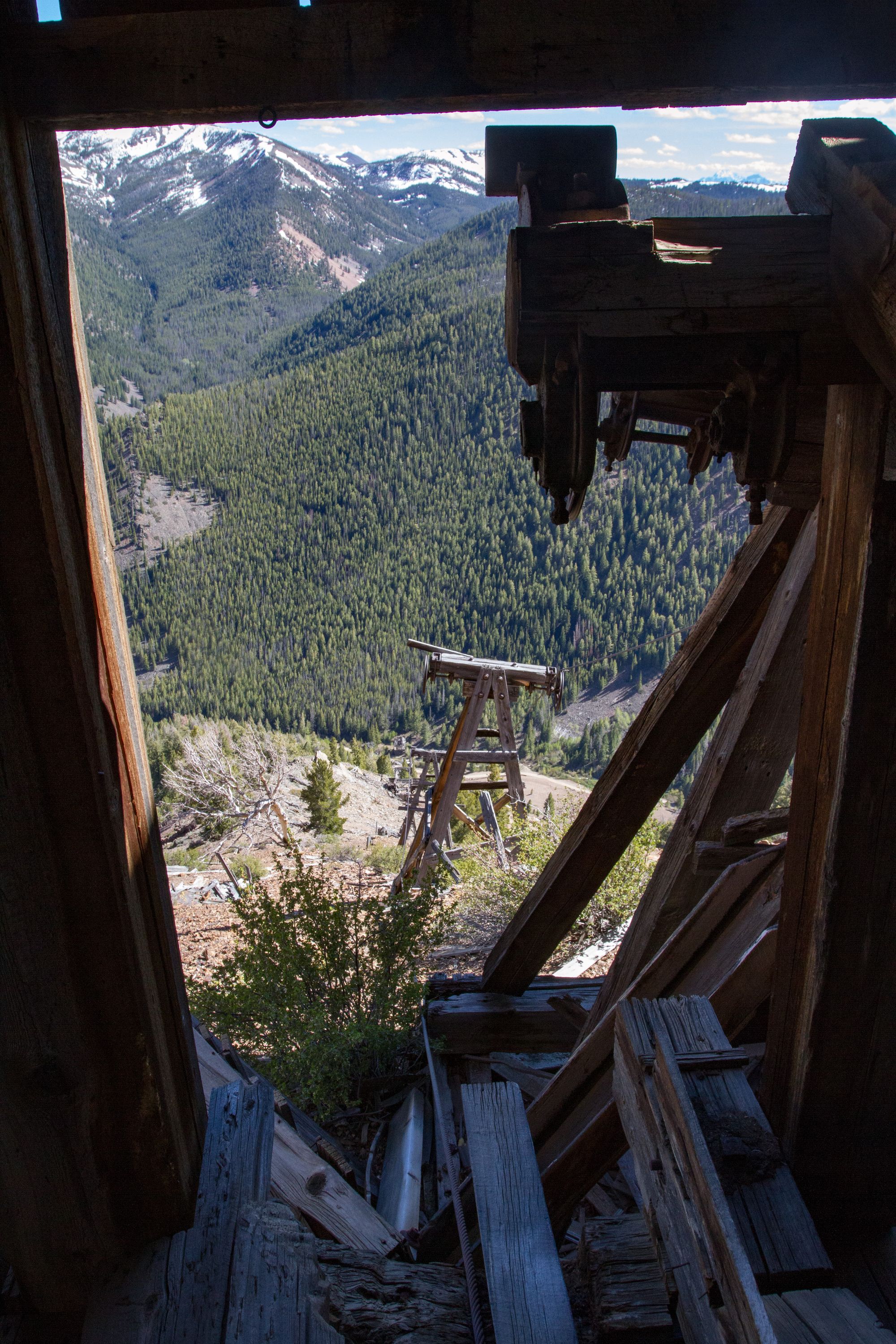
The Ramshorn and Skylark mines cling to a steep mountainside at over 9,000 feet, connected by the remains of an aerial tramway that once carried ore down to the canyon floor. In the 1880s, silver here ran rich enough that miners packed it out by mule despite $47-per-ton transport costs. The bunkhouse still stands, and the tramway headhouse looks out over Bayhorse Creek far below.
History
Ramshorn Mine
Tom Cooper and Charley Blackburn discovered the Ramshorn in August 1877, but they couldn't develop such a remote property and quickly sold it to a group from Salt Lake City. The first 30 tons of ore shipped out in 1878 earned $800 a ton. At those prices, even the brutal $47-per-ton cost of packing ore down to Bayhorse by mule and then wagoning it 150 miles to the railroad at Blackfoot still left room for profit.
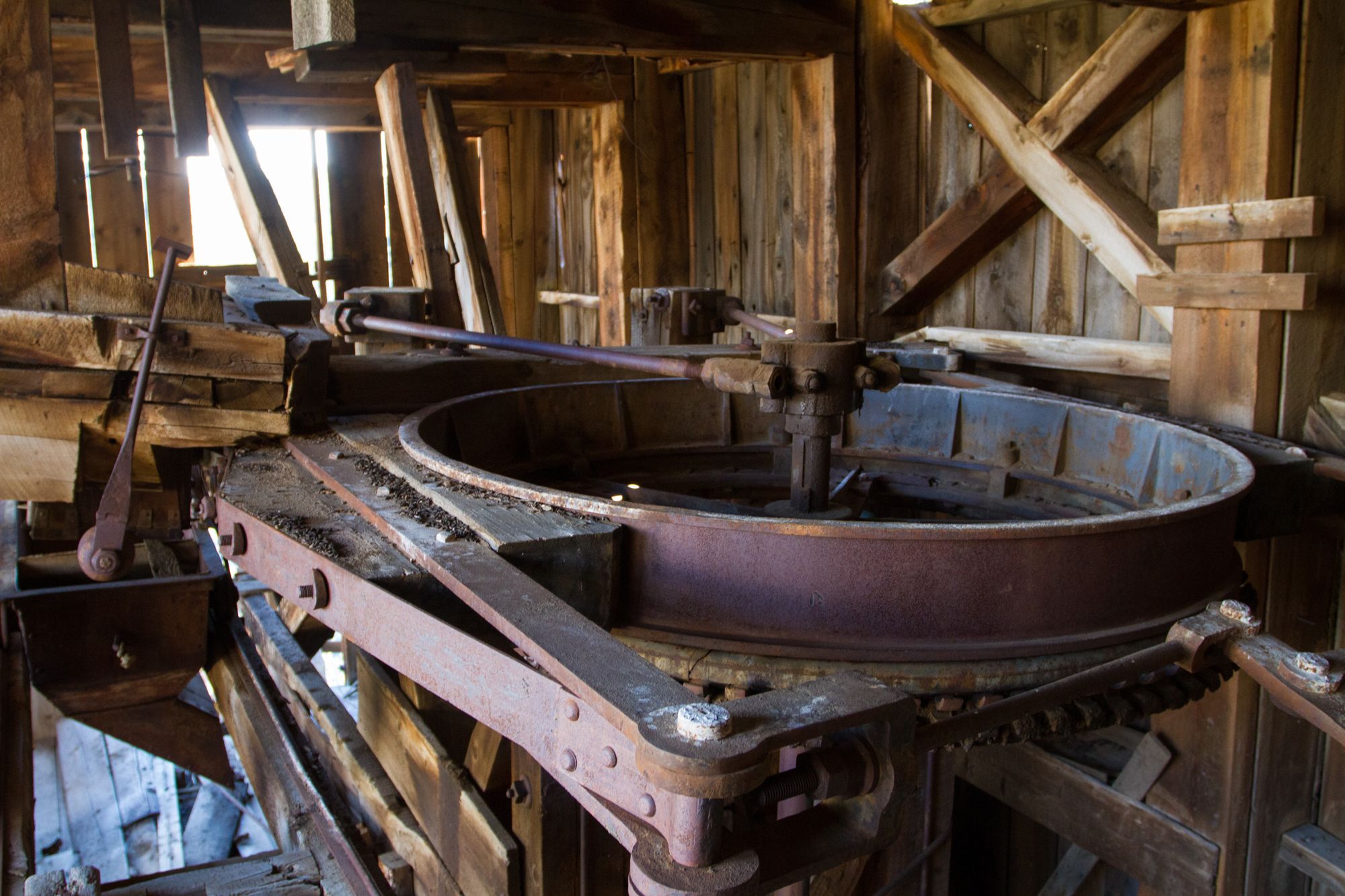
That profit margin justified a 30-ton smelter at Bayhorse in 1880. Two years later, stage line operators John T. Gilmer and O.J. Salisbury bought the Ramshorn, enlarged the smelter, and installed a 30-stamp mill at the mine. They built an aerial tramway to carry ore down to the canyon floor, which began operating on September 1, 1883.
The Ramshorn's vein ran through black slate on a precipitous mountainside at about 9,400 feet. The ore body varied from two to seven feet wide, carrying gray copper, native silver, ruby silver, and chloride. A visitor in 1881 described seeing "most beautiful masses, flaked with native silver" being extracted. Selected ore ran from 500 to 1,000 ounces of silver and 10 to 20 percent copper per ton. By 1900 the mine had over six miles of tunnels, raises, and drifts.
Production through the 1880s totaled about $2.5 million. Then silver prices crashed in the 1890s, and the mine went quiet in 1897. For the next twenty years, a watchman kept the property and small lots of high-grade ore were shipped occasionally to cover development costs. World War I brought rising silver prices and a reason to reopen. A 50-ton flotation mill ran from 1919 until October 1925, when operations ceased for good. Total production probably exceeded $4 million.
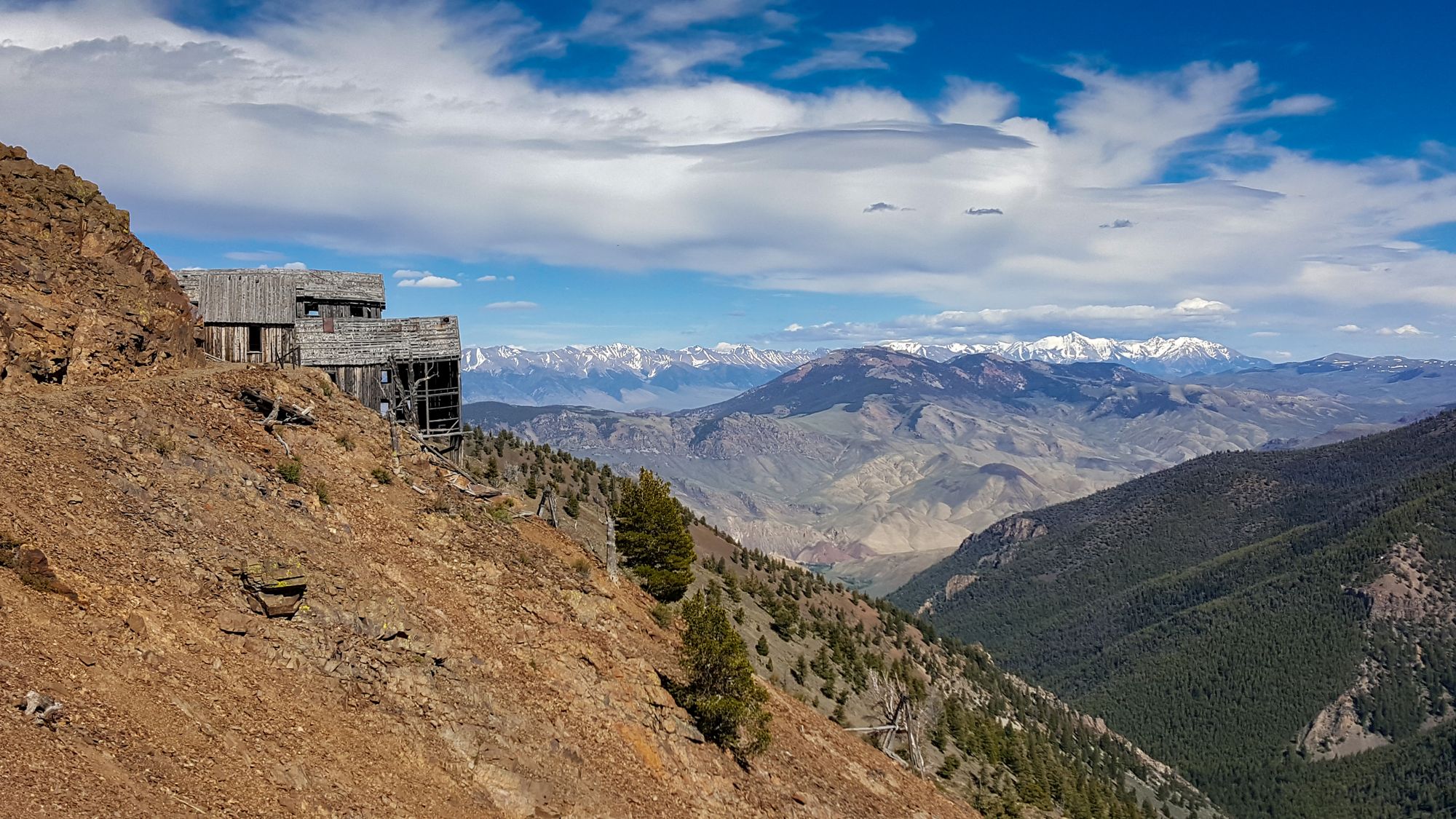
Skylark Mine
About 1,000 feet higher on the same vein system, the Skylark was also located in 1877. The Omaha Smelting and Mining Company purchased it in 1880, and after a slow start, the major ore bodies were discovered in 1883. The Skylark ore averaged about 8 percent copper and 80 ounces of silver per ton, though some high-grade ran several thousand ounces of silver. Most of it went by pack train over the summit of Ramshorn Mountain to the Clayton smelter, a grueling 12-mile trek.
By 1900, the mine had 18,000 feet of workings and 16 principal tunnels along a 2,000-foot outcrop. Production continued until the Clayton smelter closed in 1902, after which lessees shipped ore to Salt Lake City. Intermittent work continued until about 1921. Total production was estimated at $2.7 million.
The mines have collapsed but the structures are still there. They are now part of Land of the Yankee Fork State Park.
 State of Idaho
Land of the Yankee Fork State Park