Having recently moved to Arizona, Kat and I have been spending a lot of time exploring our new backyard. One of the most famous places in the world is just up the road, the Grand Canyon, with its sweeping views, crowded overlooks and steady flow of visitors. More than four million people come each year. Most arrive by car, follow the highway to the South Rim and never wander far from the main route. It was not always that way.
In the early twentieth century, one of the main ways to reach the big ditch, as Arizonans sometimes call it, was by train. The original Santa Fe and Grand Canyon Railroad struggled to complete the line, but the Atchison, Topeka and Santa Fe eventually took over and brought the first passenger train to the South Rim in 1901. What began as an industrial railroad quickly became one of the primary ways visitors reached the Canyon.
Then the automobile changed everything. Passenger service faded and finally ended in 1968. For a while it looked as though the Grand Canyon Line would become just another chapter in Arizona railroad history. Passenger trains returned in 1989, giving the old line a second life. Xanterra Travel Collection acquired the Grand Canyon Railway in 2007, and today more than 200,000 people ride the railway each year. Most look forward to the Canyon. I tend to wonder about everything they are passing on the way.
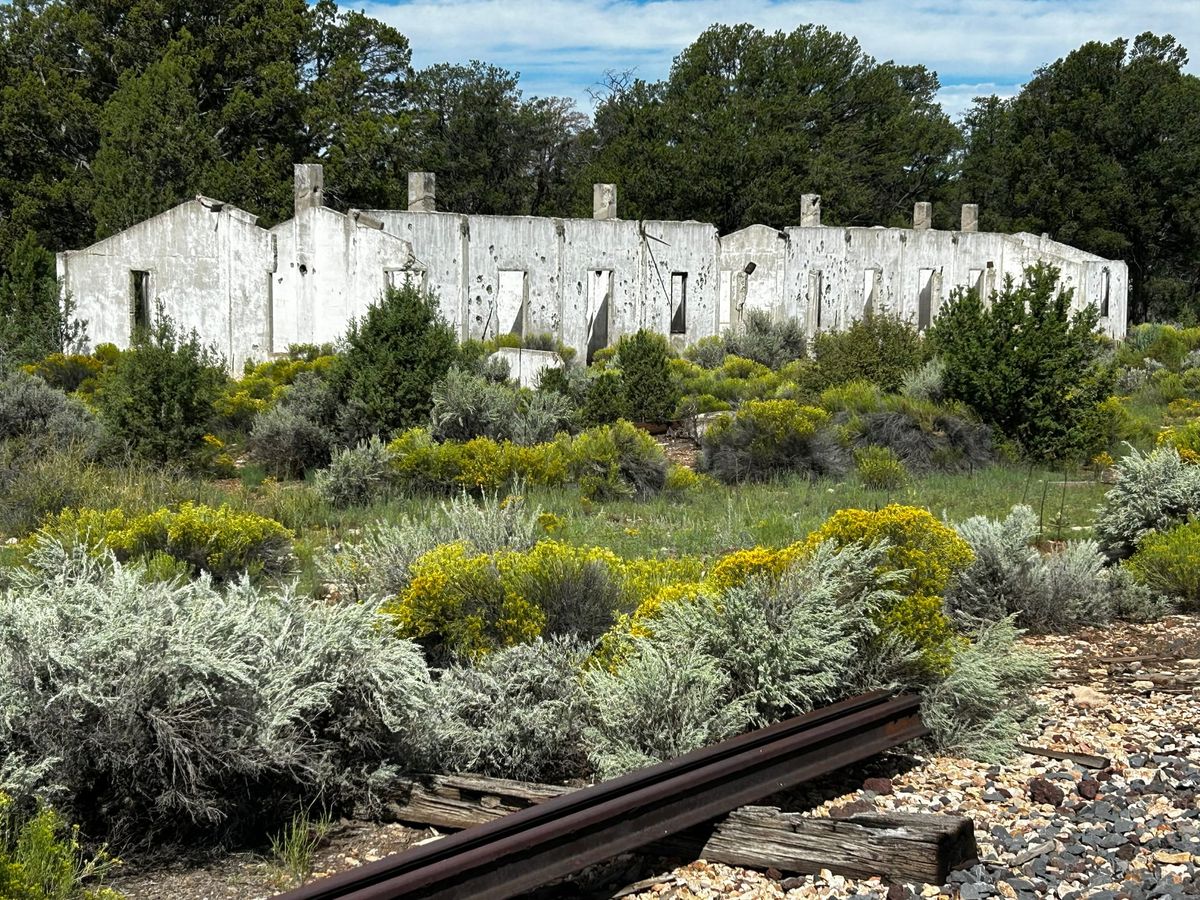
Along the route are the remains of places that once mattered to the railroad and the people who worked for it. Some have almost disappeared. Others survive just enough to make you stop and wonder what they once were. One of those places is an old Santa Fe bunkhouse.
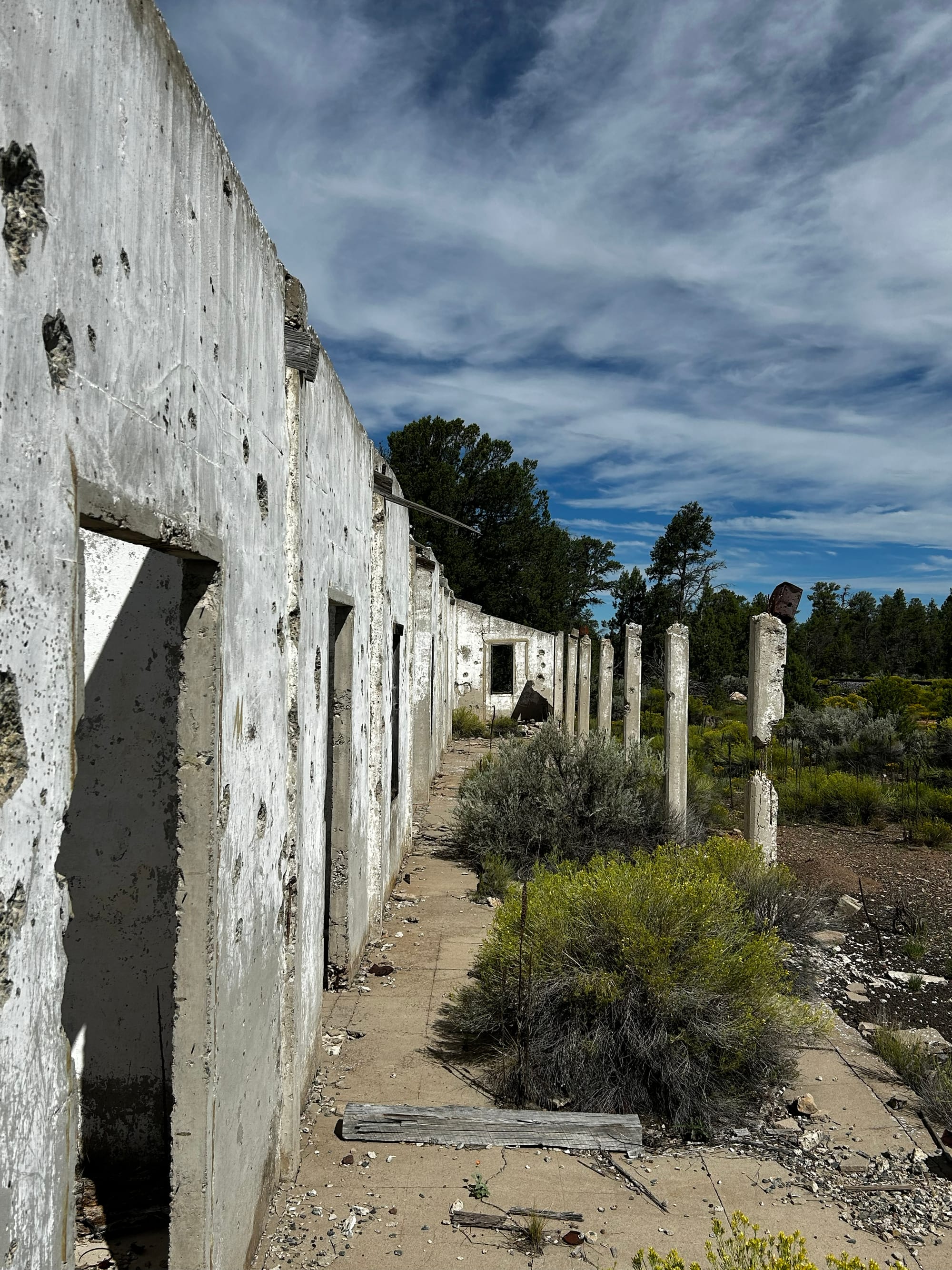
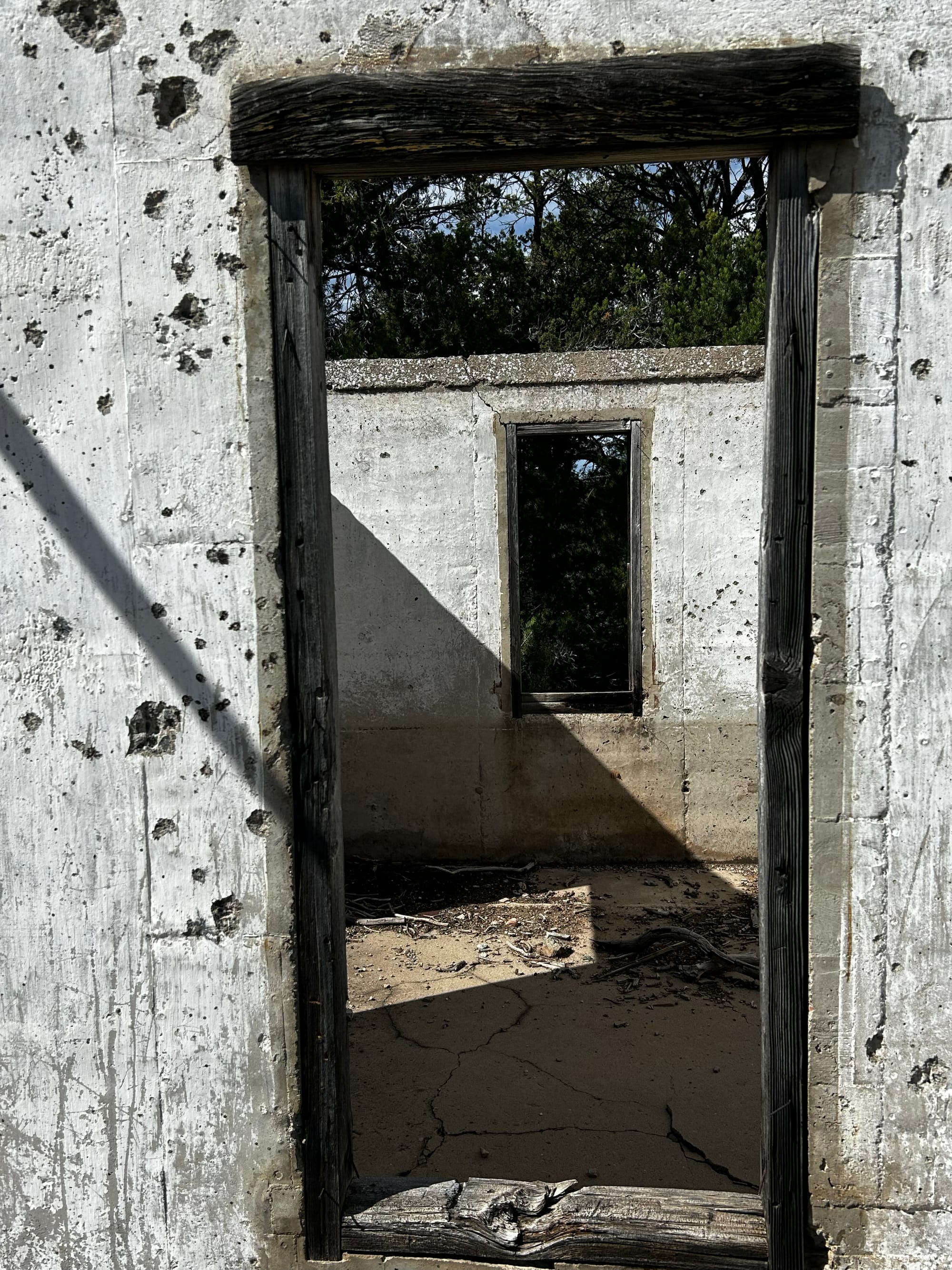
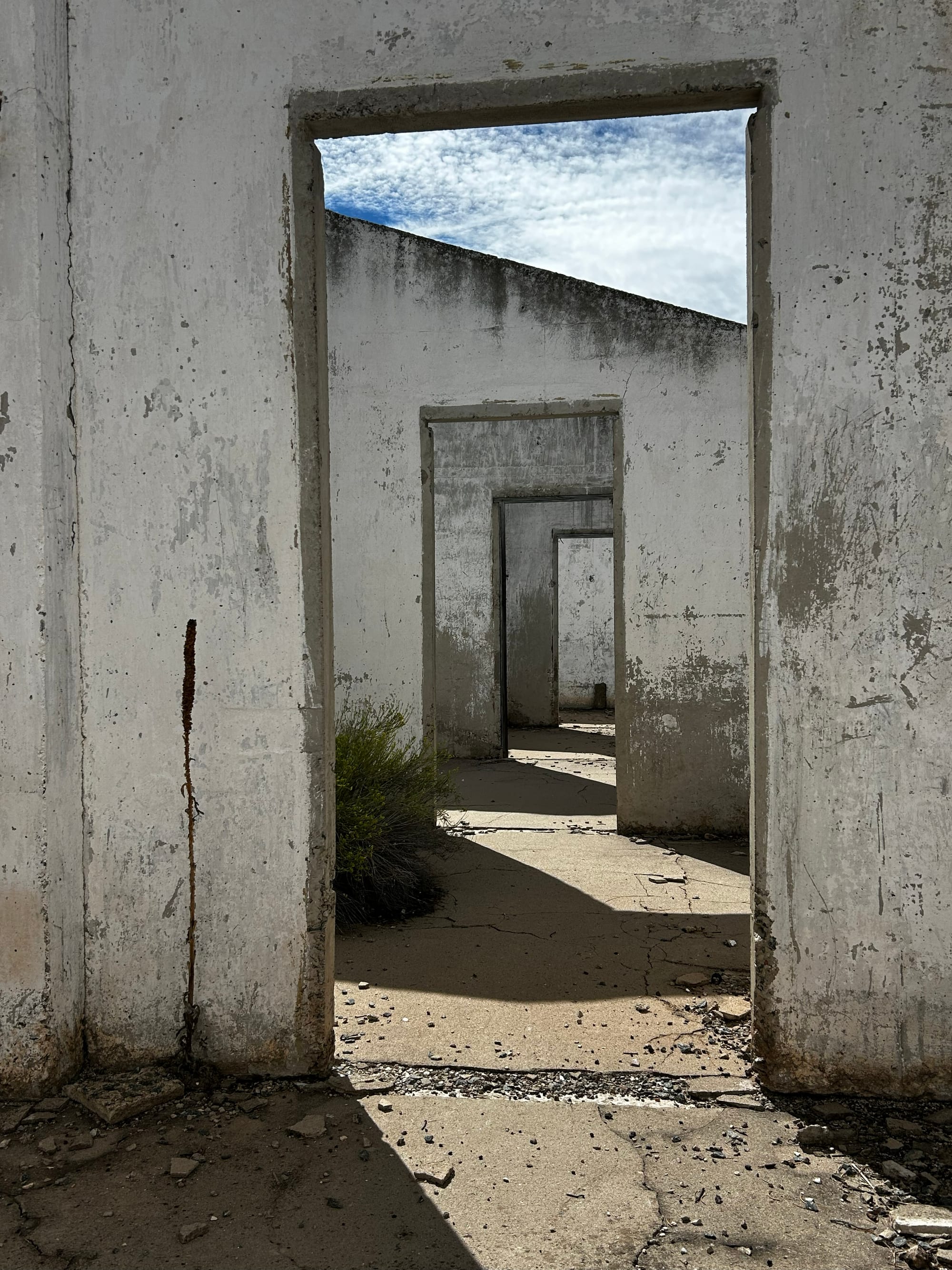
Thousands of passengers roll past it every year, but very few ever stand inside it. The roof is gone. Windows stare across the tree line through empty openings. The rooms are open to the weather, and whatever noise once filled the building has long since been replaced by wind, birds and the occasional passing train. The concrete walls remain.
This was once a working railroad station with a siding, section house and other buildings needed to support the line. Crews lived and worked here. Trains met here. For a time, this little place beside the tracks had a purpose. Most of that is gone now. Foundations and scattered remnants hint at what once stood nearby, while the bunkhouse remains one of the most substantial reminders of the station that occupied this stretch of the Grand Canyon Line.
Exactly when it was built is unclear. Records mention early facilities along the line, but none identify the construction date of this particular building. The National Register nomination for the Grand Canyon Railway describes Santa Fe’s standardized concrete bunkhouse design and notes that only a few examples survived when the line was listed. More than a quarter century has passed since that inventory, and some of those structures have since disappeared, leaving the remaining ruins along the route increasingly uncommon.
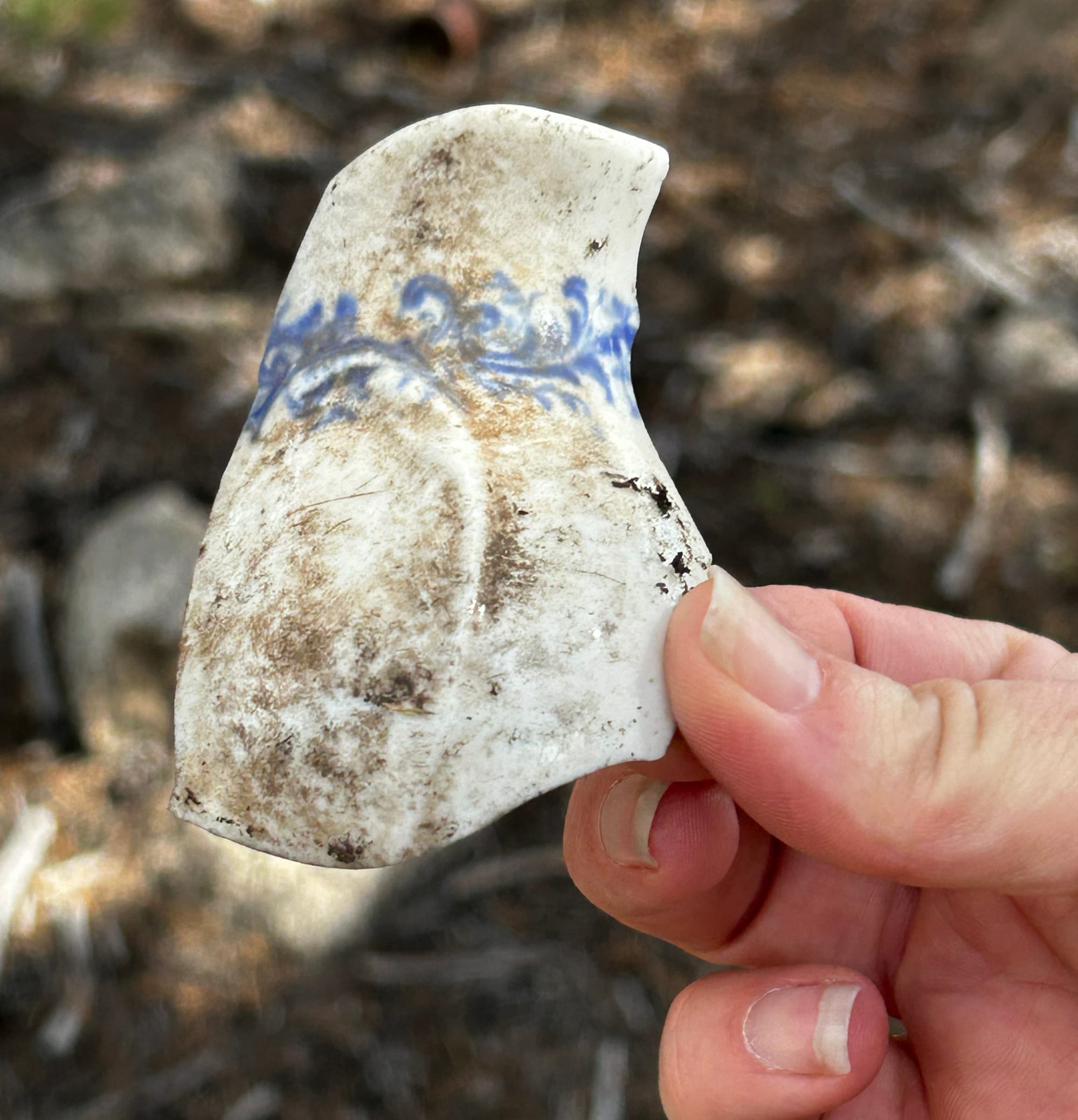
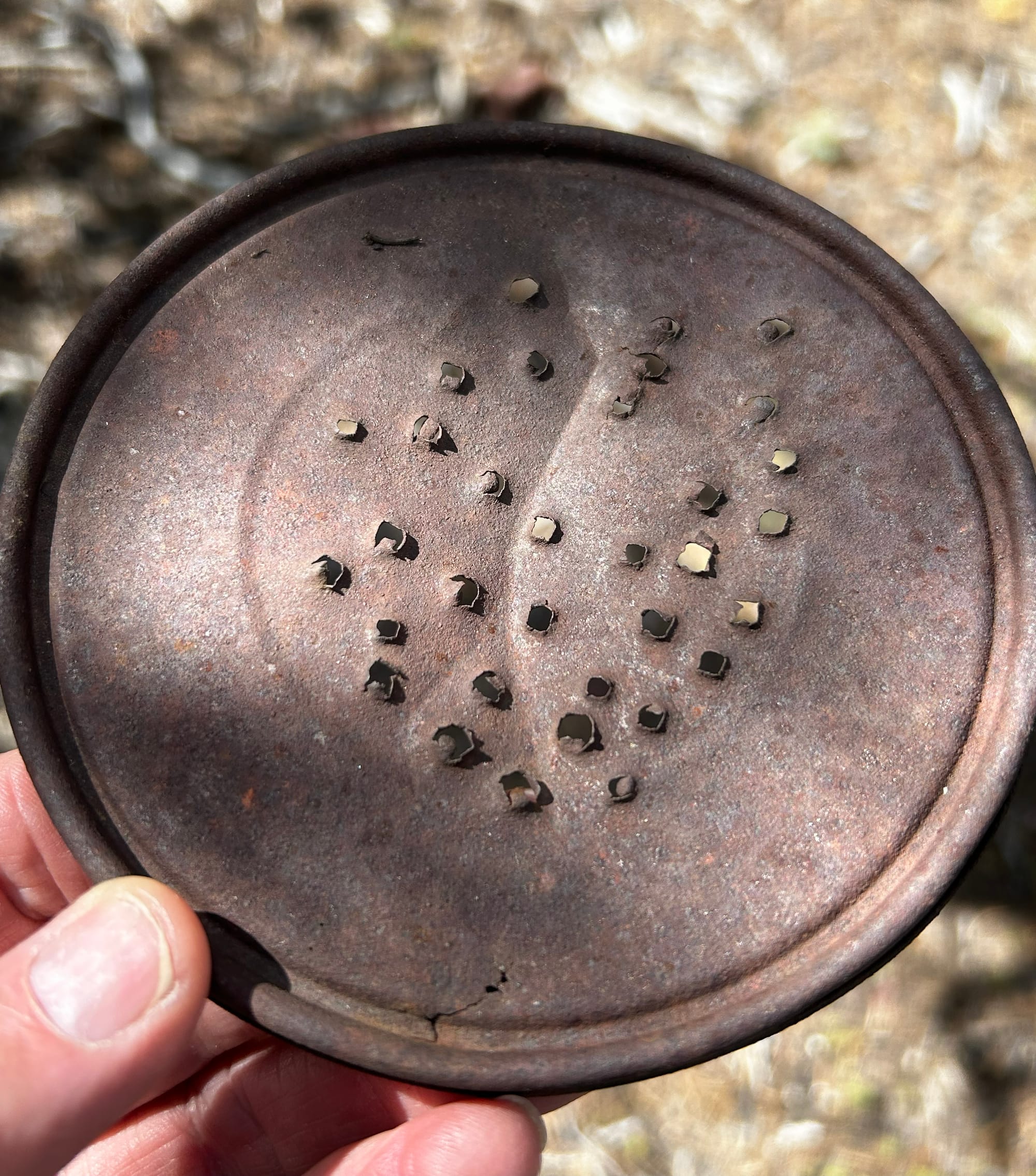
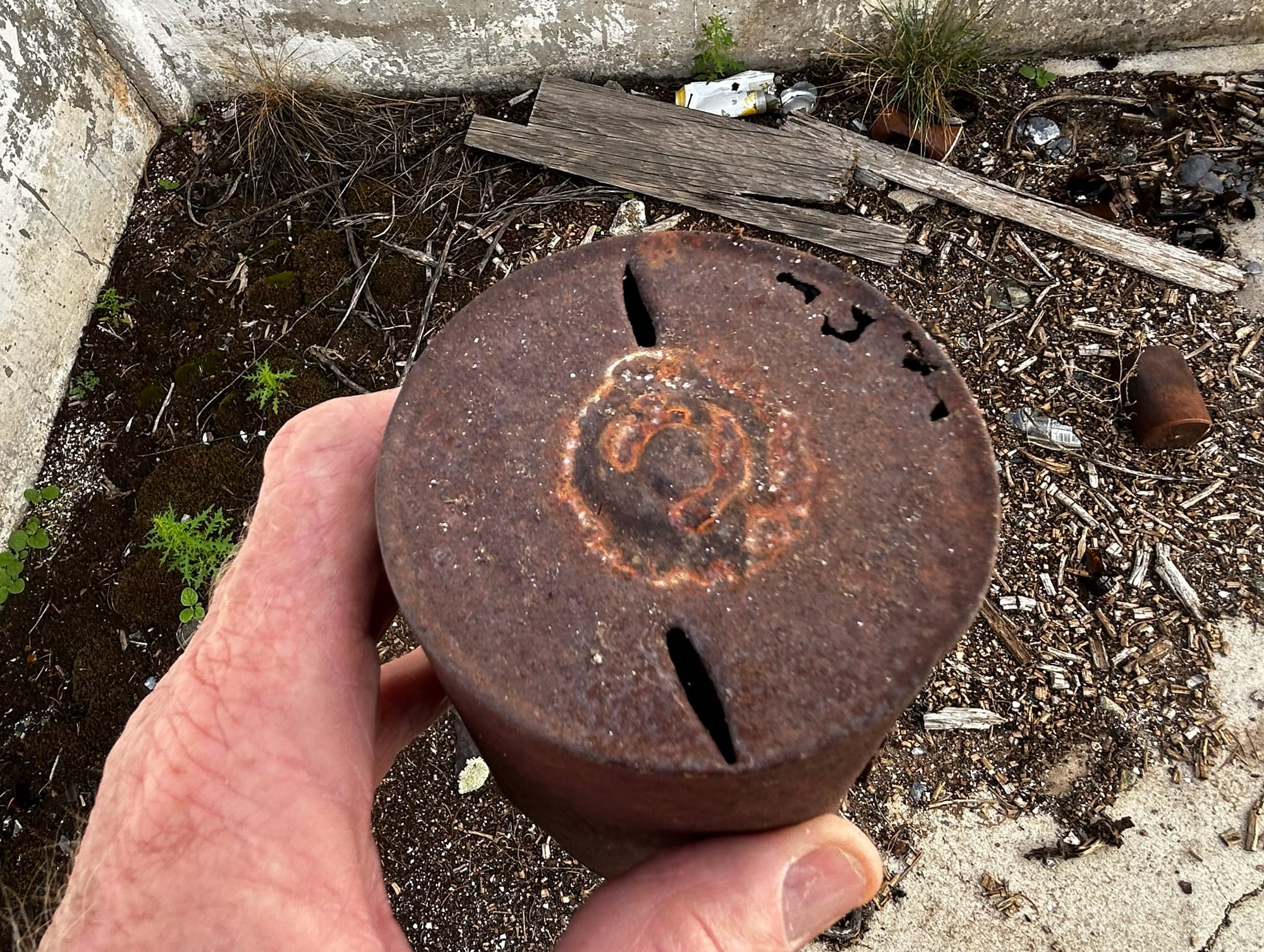
Standing inside this one today, it takes a little imagination to put the building back together. It is easy to photograph an abandoned structure and see only ruins. It is harder to think about the people who lived and worked here. Somebody once came through these doorways after a day along the railroad. Meals were cooked here. Stoves burned through cold northern Arizona winters. Work clothes probably hung somewhere to dry. There were conversations about the weather, the job, family and when the next train was coming through.
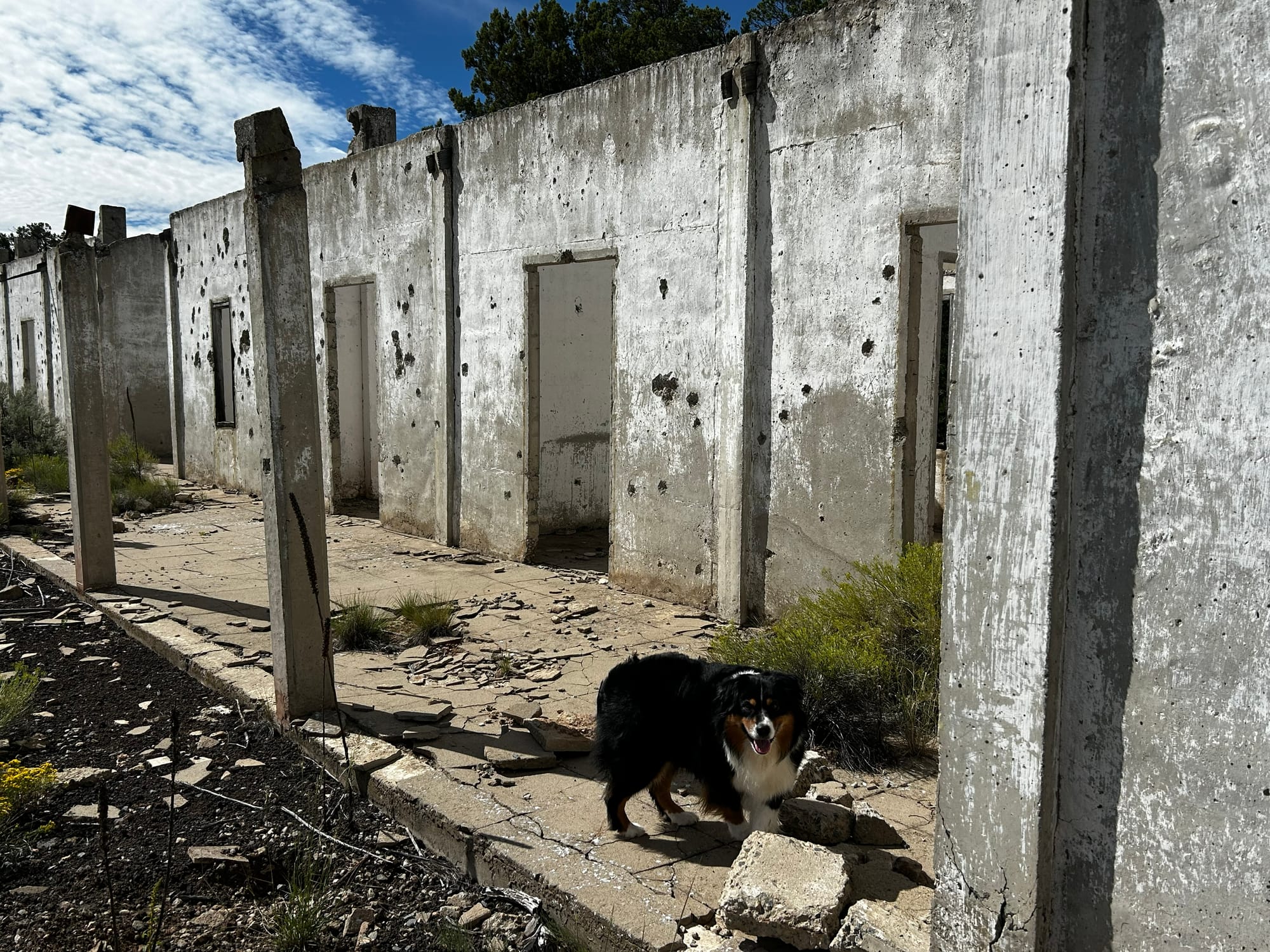
Today, passenger trains still roll along the same historic route, carrying visitors toward one of the most famous landscapes in the world. Most will never know that places like this still exist just beyond the windows. Maybe that is part of what makes them interesting. They are not destinations in the usual sense. No crowds, no signs, no gift shop, just a few old walls, an active railroad and a piece of history sitting quietly beside the tracks. You just have to stop long enough to let it tell its story.