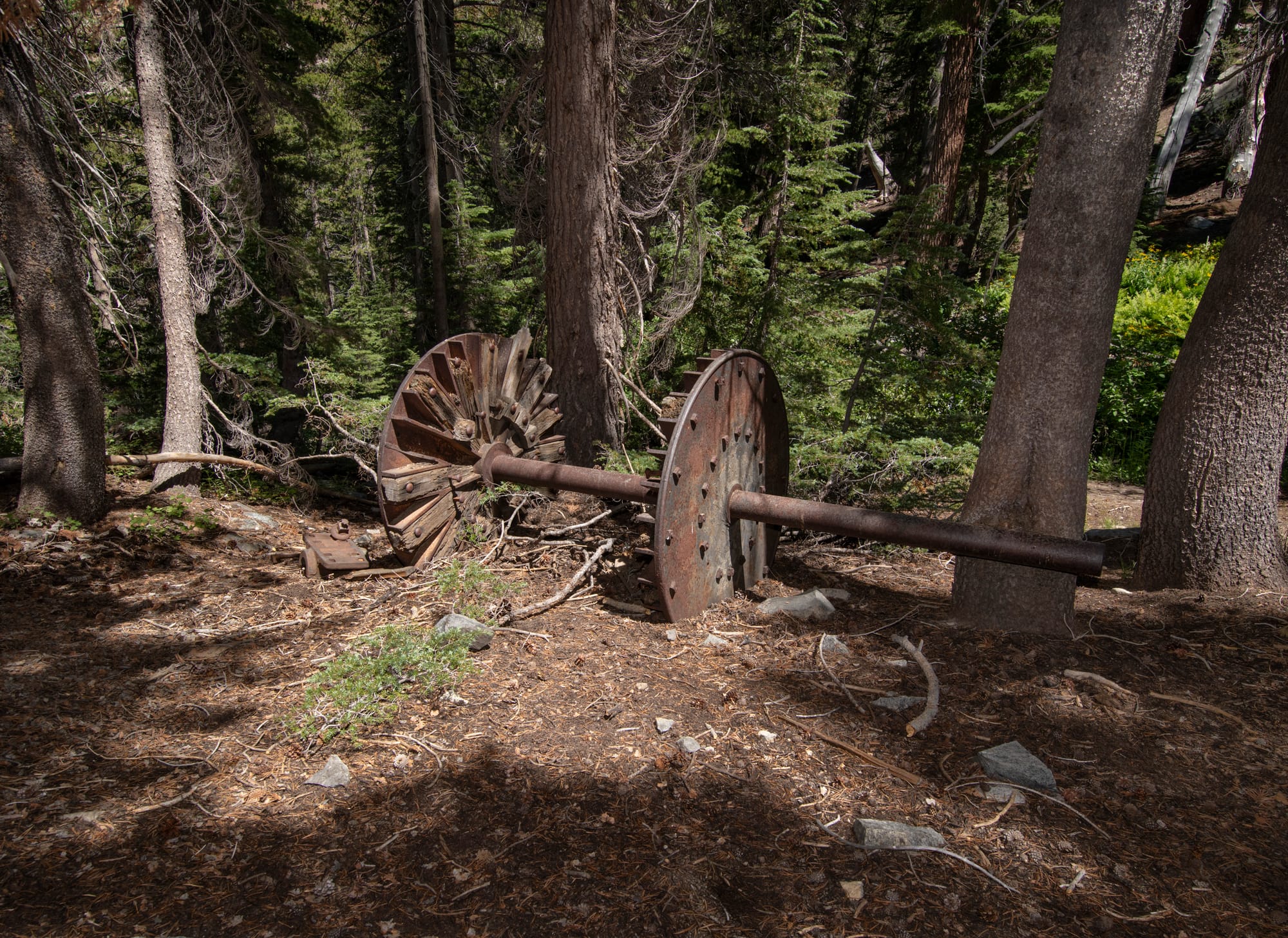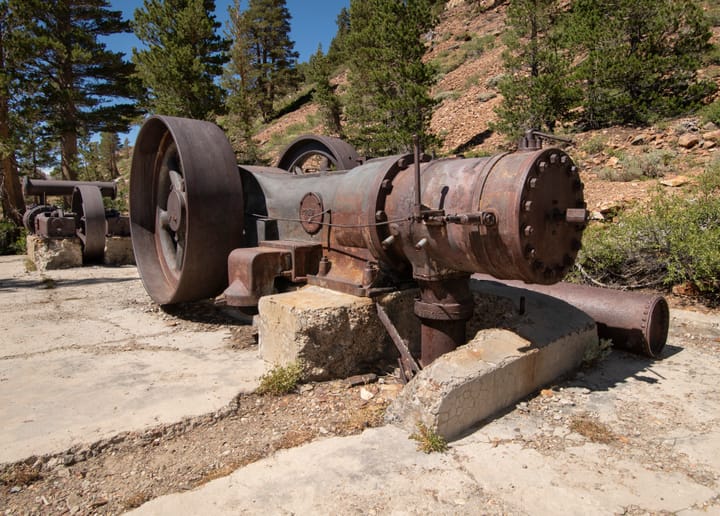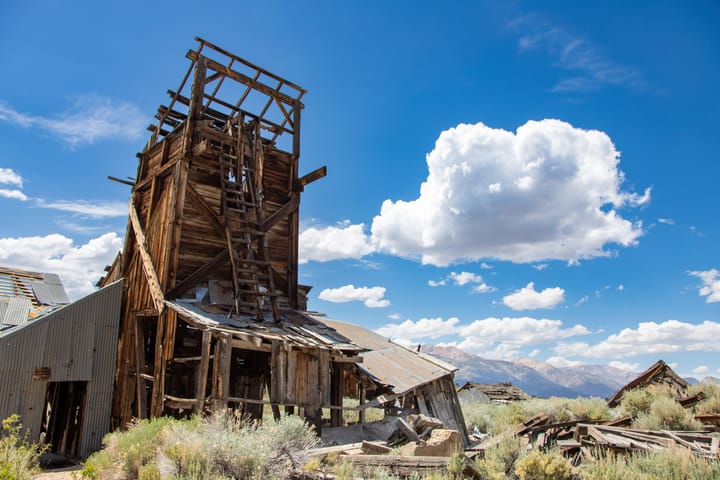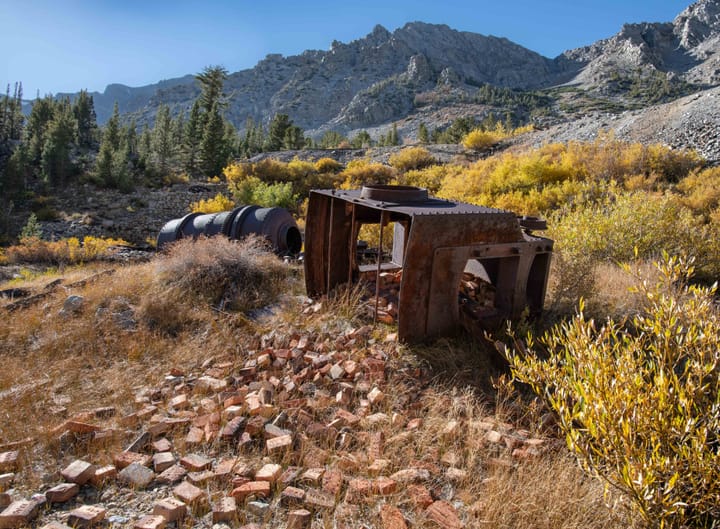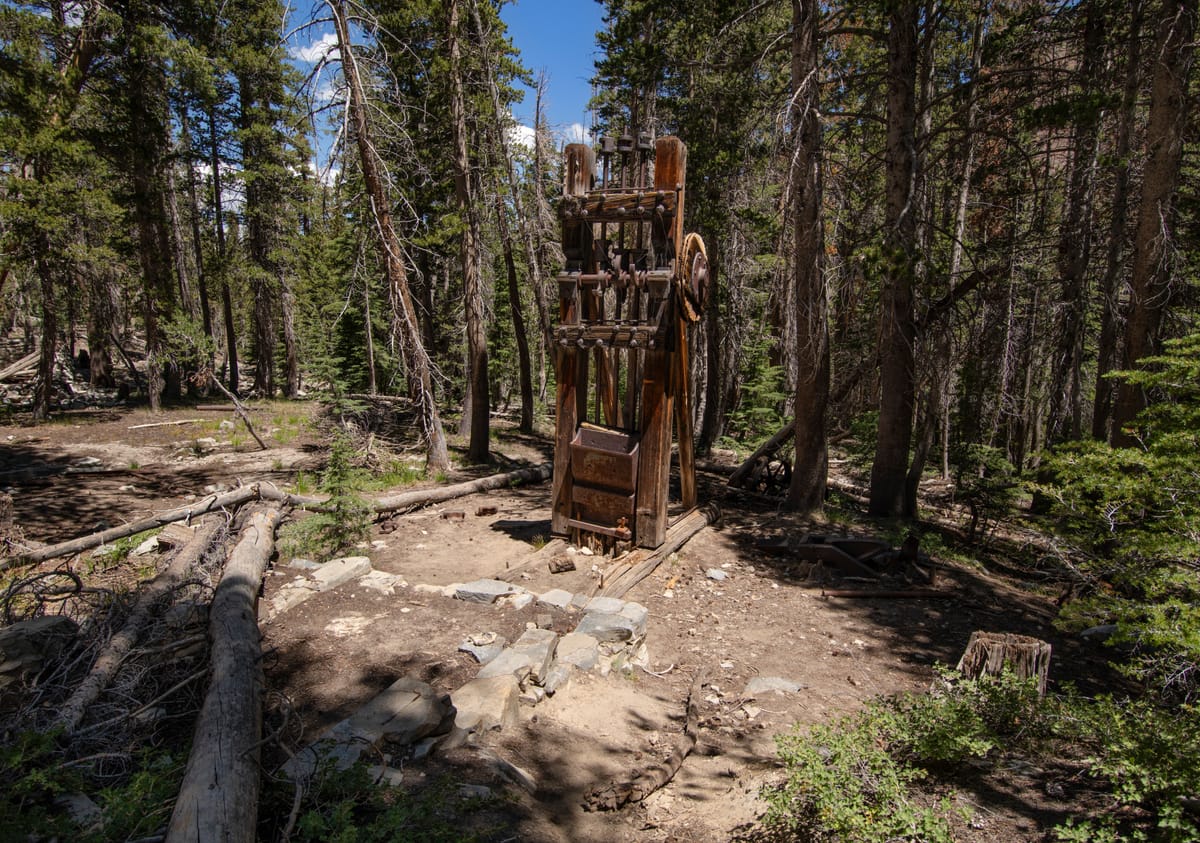
Hidden in a dense forest about a mile above Lake Mary (in the Mammoth Lakes area) lies a mysterious mill site dating back to the late 1890s. Although the passing years have not been kind to the mill, old foundations and a few unique mill artifacts remain today. The site can be reached with a short moderate hike, or incorporated into a more ambitious hike to any of the lakes accessed by the popular Duck Lake Trail.
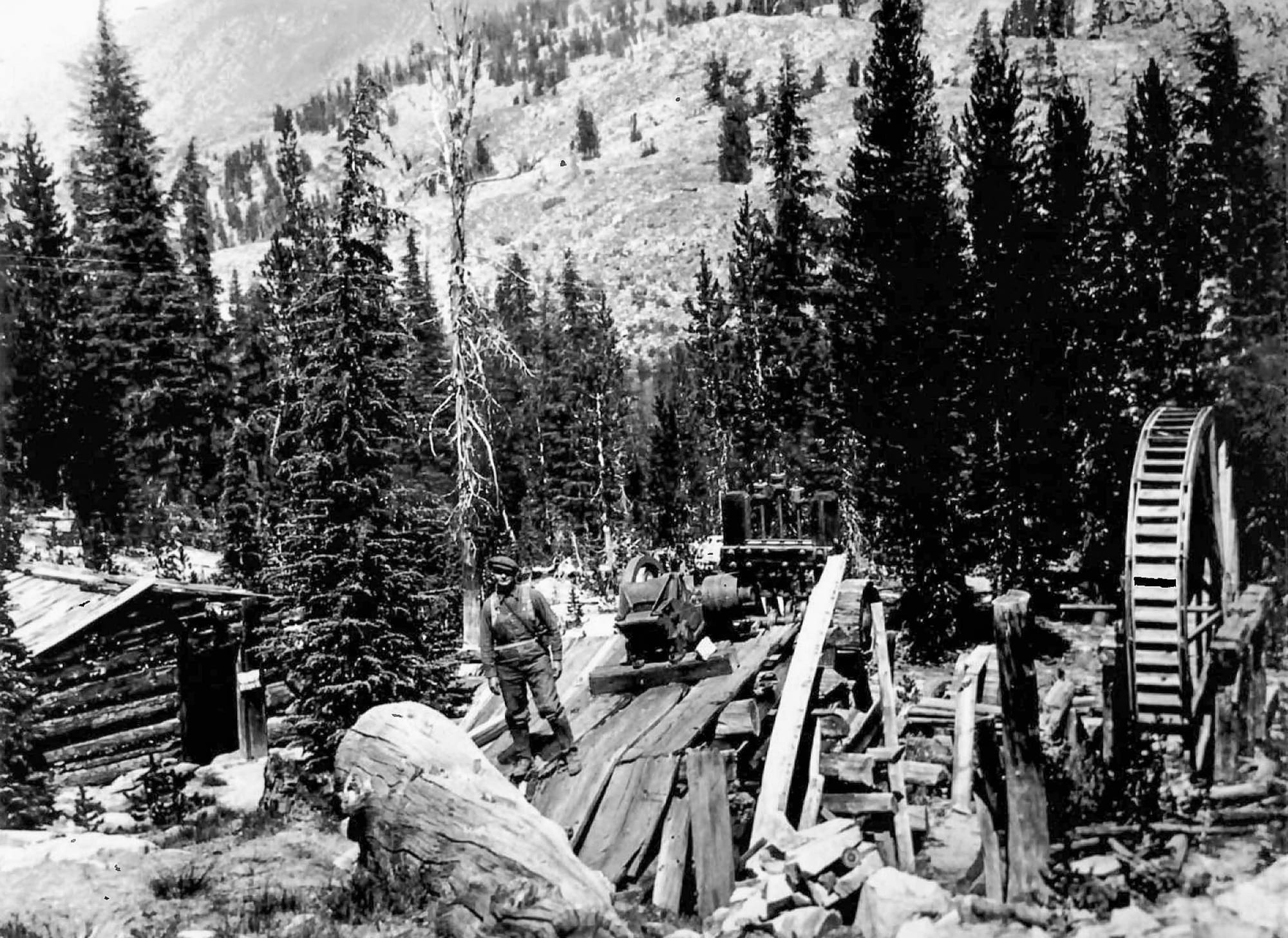
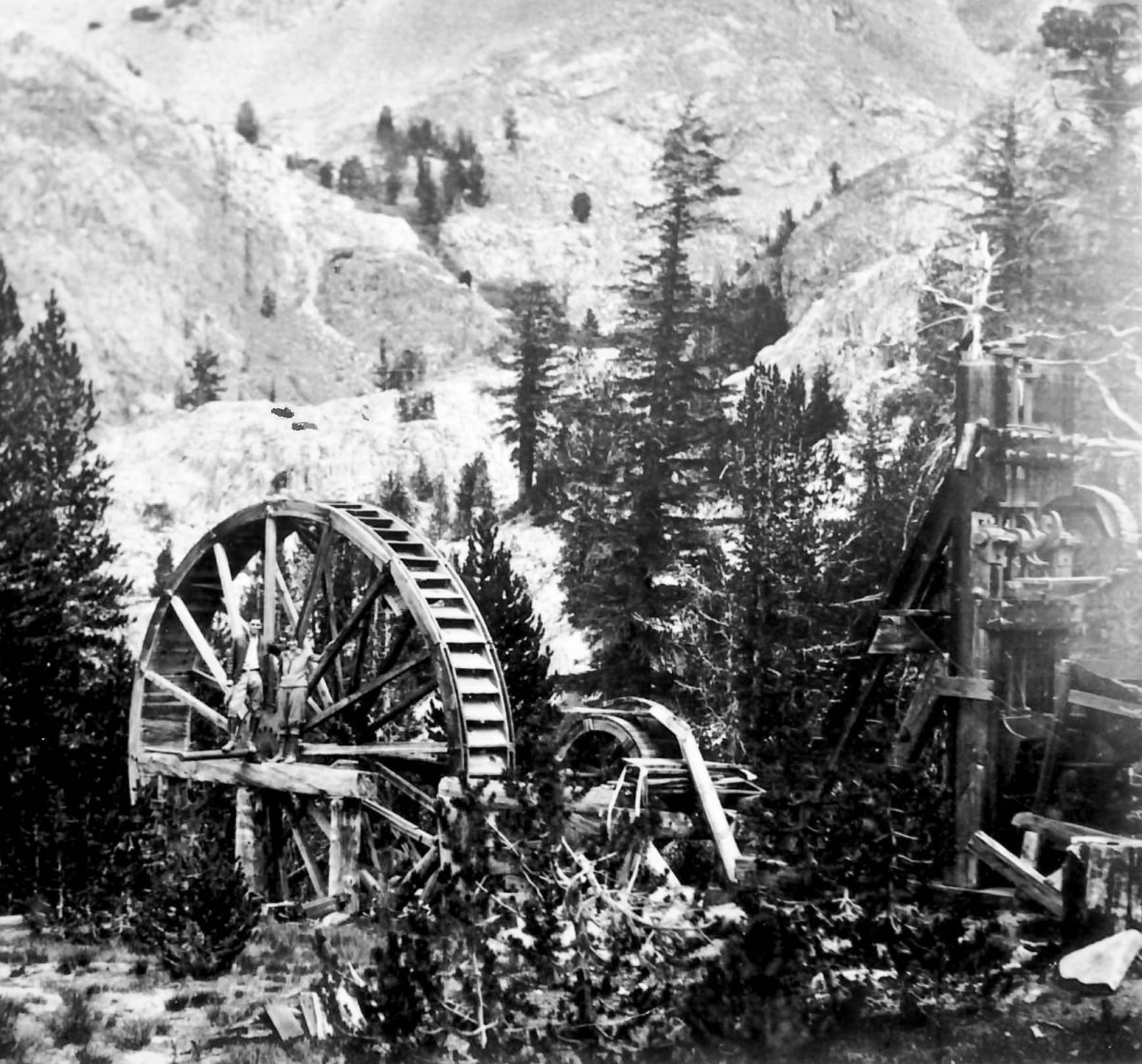
Skelton Mill photos courtesy of Southern Mono Historical Society
History
The Mammoth Lakes region experienced a short-lived gold mining boom in the late 1870s, resulting in the founding of several mines and small towns above today's town of Mammoth Lakes. The Mammoth Mine, which was the largest operation in the area, ceased all operations by 1881. A few nearby mines, such as the Monte Cristo and Lisbon, continued large-scale mining for a few more years before closing. By the early 1890s, only a few small operations remained, employing arrastras or small mills. The Skelton Mill, located further up the mountain between Arrowhead and Skelton Lakes, appears to have been the largest of these small-scale operations.
Very little historical information is available about the mill beyond a few short mentions in old mining journals, as well as a couple of obscure old photos.
According to the Mining Scientific Press, August 24, 1901:
P. Somerville and F.M. Skelton are operating a 6-ton cyanide plant at Pine City, near Mammoth, on 1500 tons of tailings from D.C. Albright's arrastra.
From the Mining and Scientific Press, Sept. 1900:
Albright & Skelton are developing a mine 5 miles southeast of Pine City, near Mammoth.
Most revealing is this, from the book Place Names of the Sierra Nevada:
Skelton Lake: named for the "Skelton boys", early prospectors who had a 3-stamp mill below the lake.
That is the sum total of what we have been able to dig up on the mill and a possible associated mine, even after talking to a local USFS archaeologist and the Southern Mono Historical Society. The two historical photos (above) appear to have been taken in the 1920s, years after the mill was abandoned. The 3-stamp Joshua Hendy stamp mill seen in the photos remains today, in fair condition, as well as part of the jaw crusher on the wooden platform. Only the stone foundation and partial walls of the cabin remain. Of the two water wheels seen in the photo (a large 20-foot model and a smaller one adjacent to it), only the hubs and belt wheels remain. A few metal water pipes and some miscellaneous metal parts lie scattered nearby.