The Skookum Mine is a hard place to make sense of. A large amount of work clearly went into it, but I cannot figure out why. From a fair amount of time spent searching the dumps and hillside, I could find no sign of mineralization whatsoever. Calling a mine a “stock promotion” is the strongest insult one can give an operation, but I am not sure what else to call it. Hopefully some future visitor will rediscover the bonanza that compelled people to develop this isolated place.
The first reported work was when the Skookum Copper Company was organized in 1902. From 1904 to 1905 a 16 mile long wagon road was built from Roslyn to the mine. Equipment began to flow into the mine, with a sawmill and compressor being installed. The only evidence of production I could find was a 100 pound lot of ore being packed out in 1905. The ore was reportedly rich, containing abundant native copper. A boulder of ore containing 9% copper was displayed at the 1909 Seattle World’s Fair.
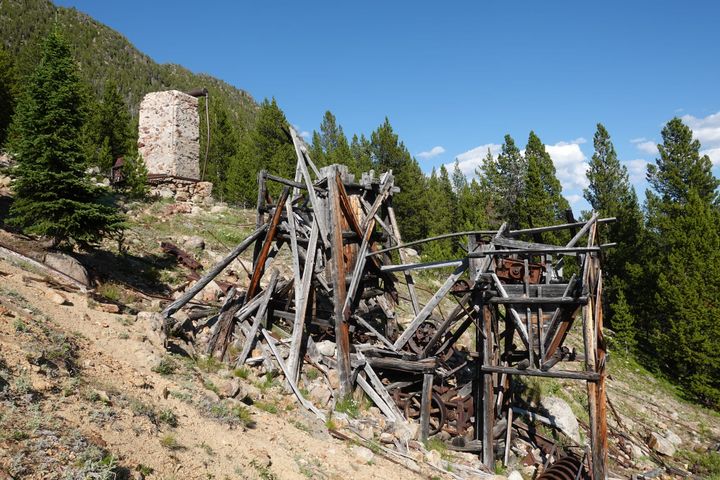
In 1908 the company purchased a 200 ton per day mill from Fairbanks Morse of Seattle. The lot of equipment weighed 50 tons. The mill was installed in 1909 and reportedly started running shortly thereafter. How much (if any) concentrates it produced is unknown.
The camp was located at the mouth of a small gully. A townsite was laid out called Koppenville, named for George Koppen, the mine manager. The most notable event in the history of the mine occurred in March of 1910 when the camp was swept by an avalanche. The mine office was swept off its foundations and the bunkhouse was largely destroyed. The mine superintendent sleeping in the mine office died, but the miners in the bunkhouse were spared. This apparently spelled the end of the operation as the company was listed as being bankrupt by the end of that year. In 1911 the mine was listed as being completely idle. It is unclear if anything was ever done at the mine after this time. Around 1930 the US Forest Service vandalized the camp by burning the remaining buildings down.