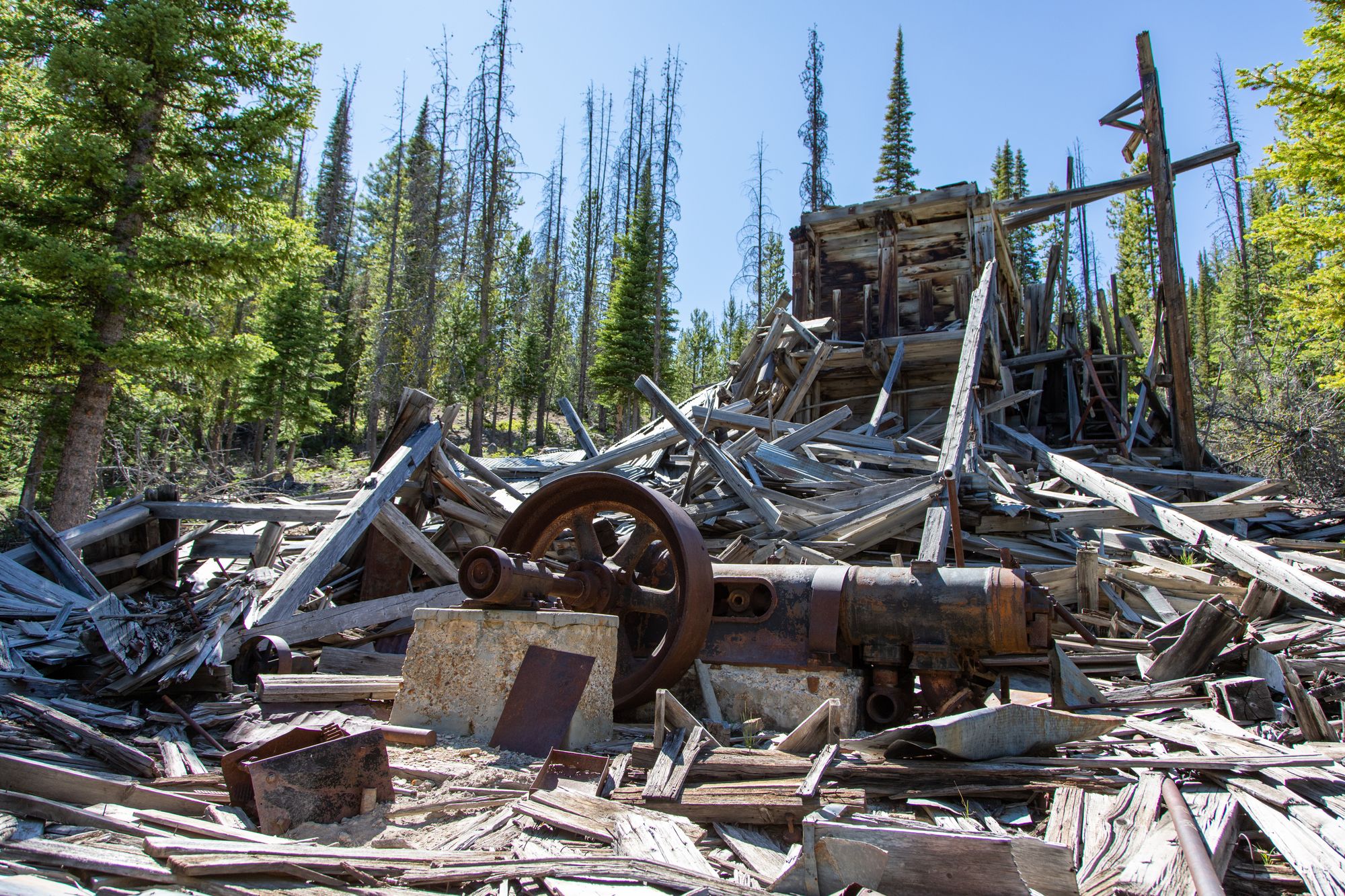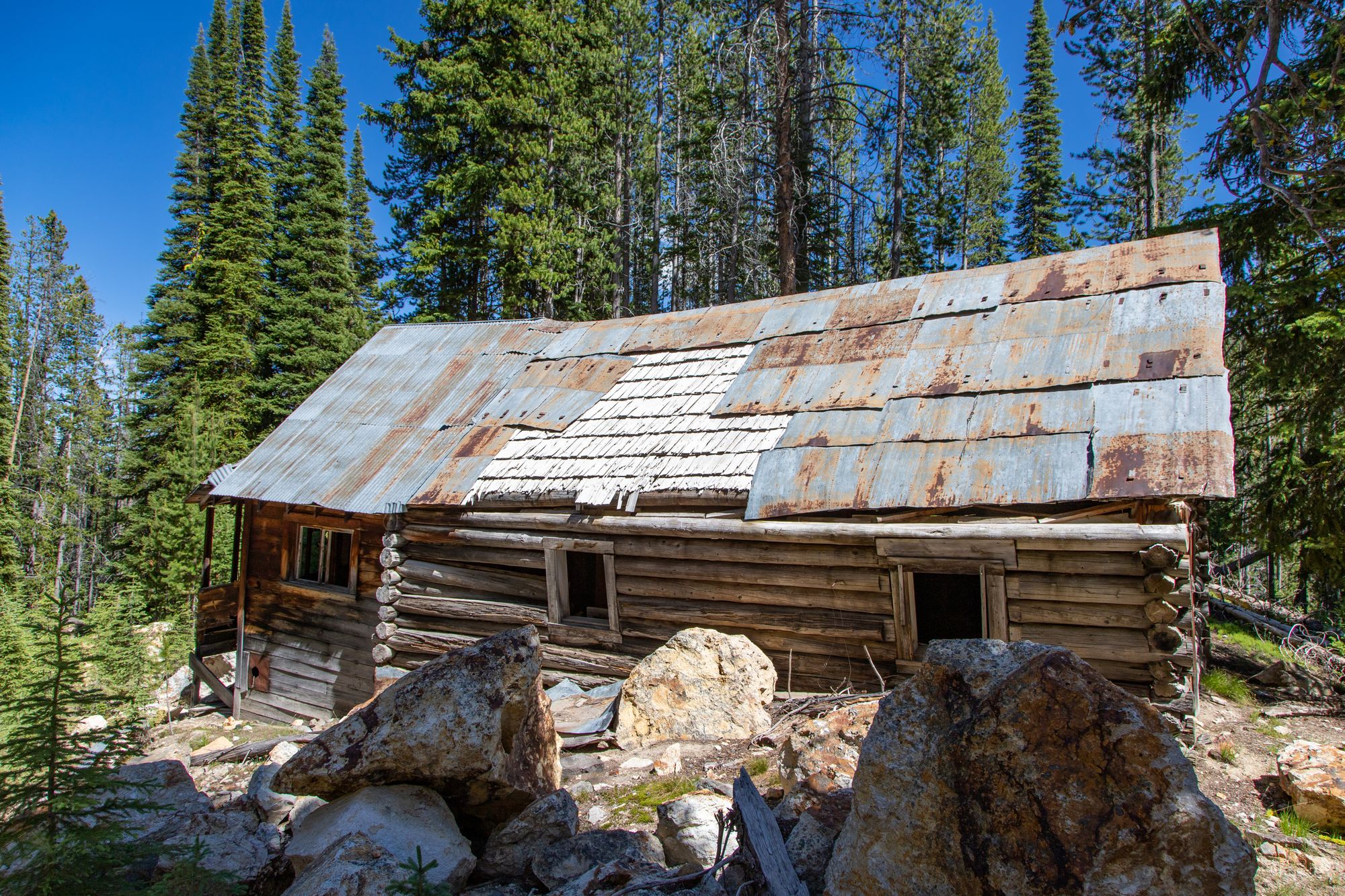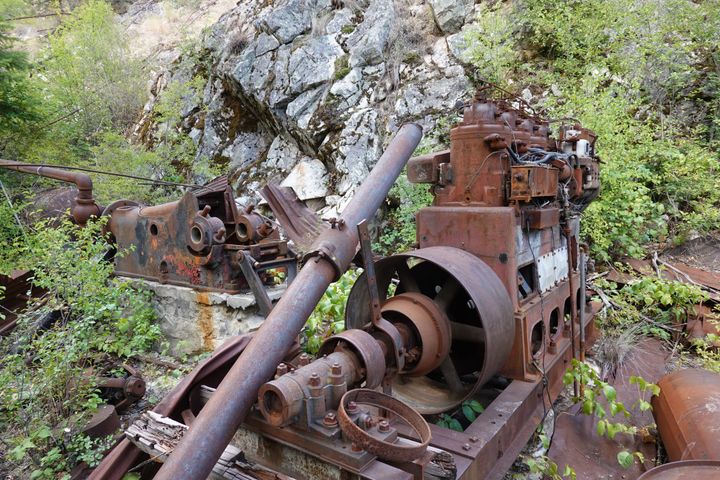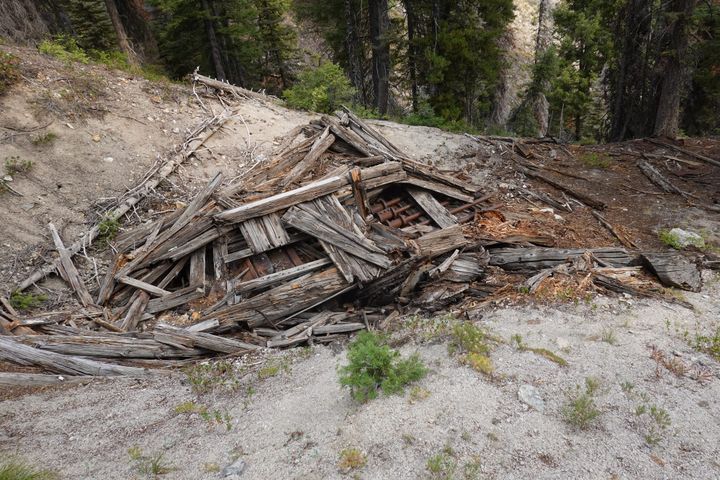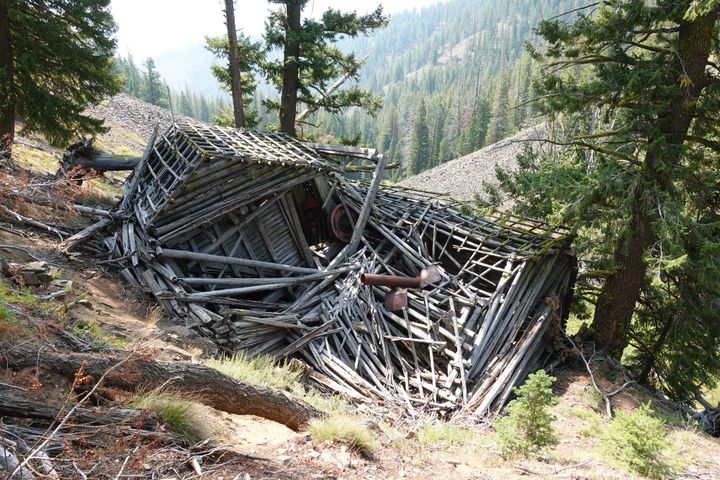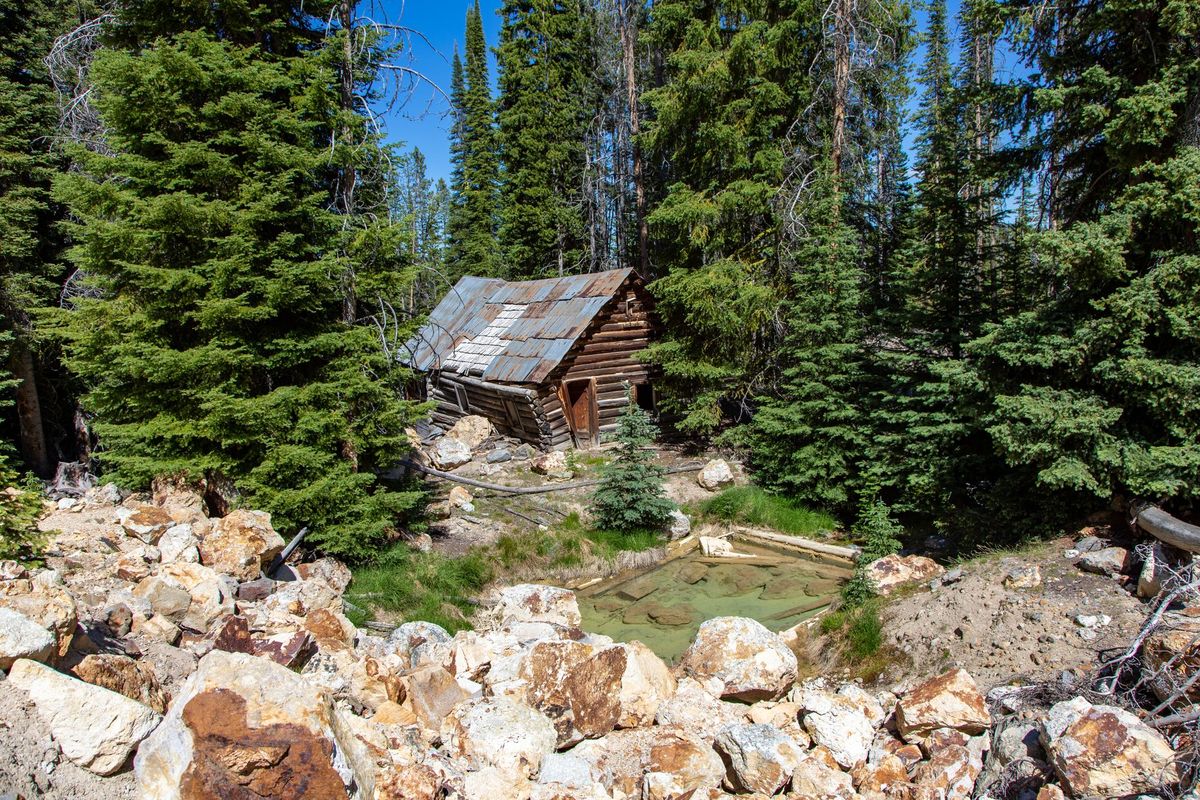
What remains of the Sunnyside Mill sits at the end of a short walk through the forest, a crumbled foundation and scattered machinery in a landscape that has largely erased a century of mining activity. The mine that fed this mill once had over 9,000 feet of underground workings and employed two different stamp mills in two different locations across four decades of intermittent operation. Nearly all of that has vanished. The site offers a quiet glimpse into central Idaho's early gold rush, but anyone expecting a well-preserved ruin will find the forest winning this particular battle.
History
The Caswell Brothers discovered the Sunnyside deposit in 1899 while prospecting the hills around Thunder Mountain. They sold out quickly. The Lightning Peak Gold and Silver Mining and Milling Co. acquired the property in 1901 and reorganized the following year as the Belle of Thunder Mountain Mining & Milling Co. The new company had grand ambitions for the remote claims.
By 1904, they had completed roughly 7,000 feet of underground development and constructed an 8,000-foot aerial tramway to carry ore down to a 40-stamp mill at Belleco, a small mining camp near the mouth of Sunnyside Creek on Marble Creek. A cyanide plant followed in 1906. The operation looked impressive on paper. In practice, it struggled badly.
Test runs at the mill recovered only about $5,000 worth of gold. The amalgamation process captured less than 70 percent of the gold in the ore, and the transportation costs of operating so far from civilization proved ruinous. The mine closed in 1908. The Thunder Mountain boom had already collapsed by then, done in by a catastrophic mudflow in 1909 that buried parts of the nearby town of Roosevelt and much of the workings at the Dewey mine.
The property sat idle for sixteen years. In 1924, D.C. and R.J. McRae and R.A. Davis relocated the claims and took a different approach. Rather than building an elaborate tramway to a distant mill, they erected a 10-stamp mill right at the mine in 1926. This operation proved more successful. From 1927 to 1936, they ran the mill about four months each summer, working when weather allowed access to this remote country. During that period they processed 9,000 tons of ore averaging 0.28 ounces of gold per ton. From 1936 until mining ceased in 1938, another 8,000 tons went through the mill at a slightly lower grade of 0.22 ounces per ton. Total production for this second era was around $115,000.
No ore has been mined from the Sunnyside since 1938. The mill did see some final use during World War II when operators trucked ore from the nearby Dewey mine here for processing in 1941 and 1942. War Production Board Order L-208 shut down gold mining operations shortly after.
The mine has since been completely reclaimed. The underground workings, which totaled about 9,000 feet on three main levels, are inaccessible. What visitors encounter today is the collapsed 1926 mill rather than the original 1904 facility at Belleco, which lies farther down in the wilderness along the old tramway route.