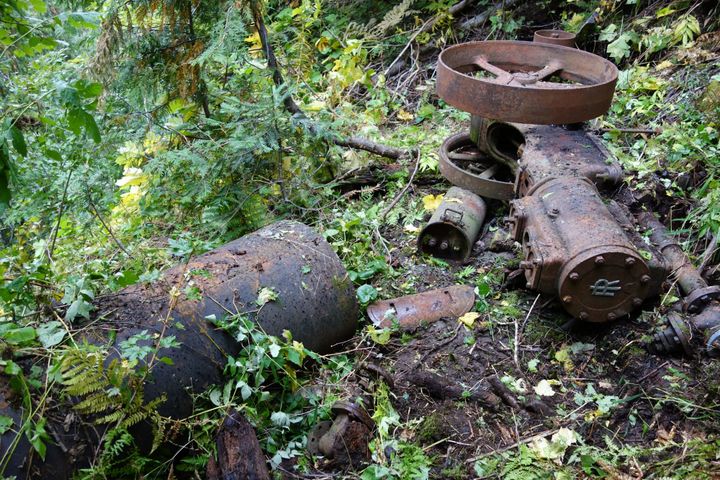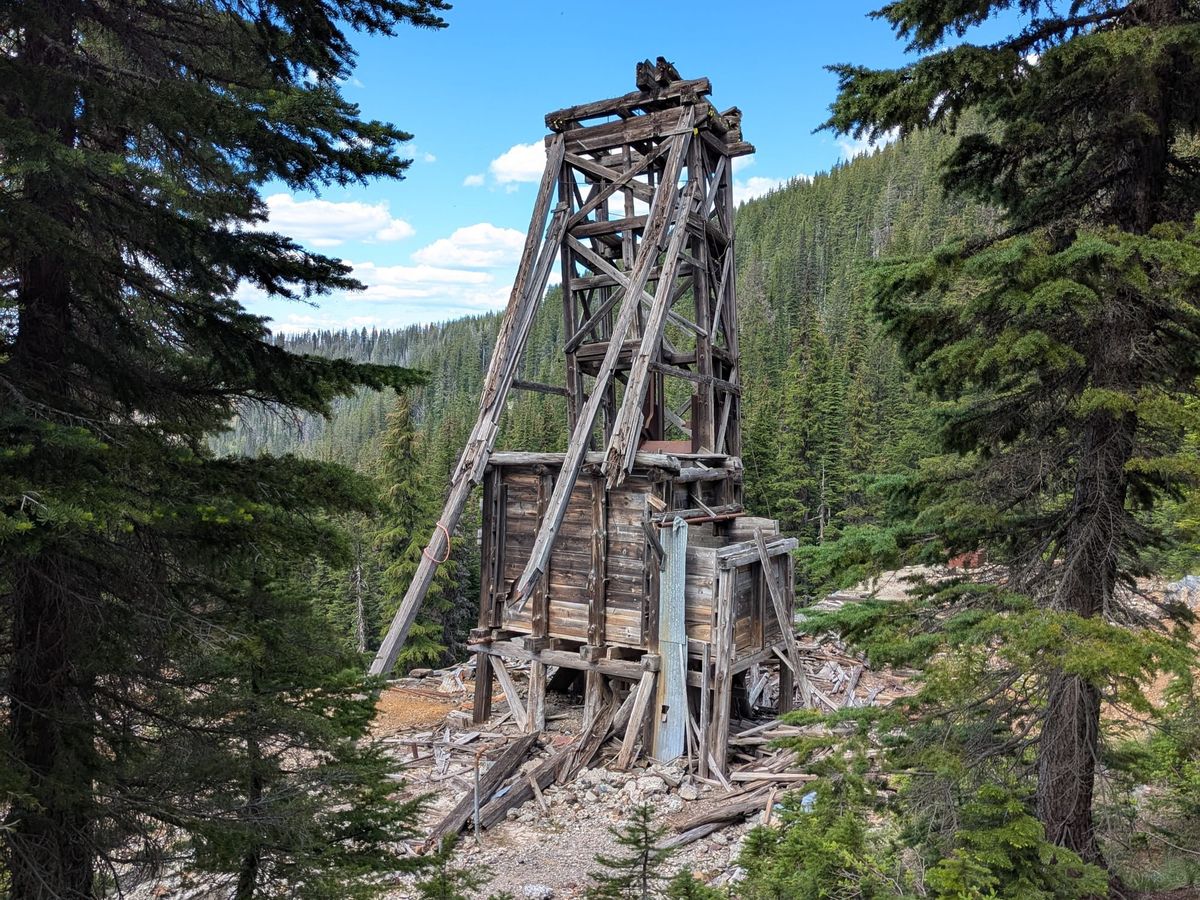
Located near the top of Sunset Peak in Shoshone County, Idaho, the Sunset Mine saw scattered periods of development for nearly a century. Initially developed under Montana copper magnate William A. Clark, the mine produced tens of thousands of tons of lead and zinc, along with smaller amounts of copper and silver. Ultimately, while the deposits worked by the mine were promising, its mountain-top location often impeded greater development, despite its long period of use. Today, the wooden headframe still stands over the shaft, and the workings extend up and down the mountain.
History
W. A. Clark & The Sunset Mine: 1883-1911
The Sunset Mine was first located in 1883 by William Sutherland, and around 1885, Sutherland sold the property to William A. Clark. Between the 1880s and 1912, however, little development occurred at the property, aside from some minor work done in the late 1880s by W. A. Clark’s brother, Joseph.
One major factor in the initial lack of development at Sunset was W. A. Clark’s preoccupation with economic and political affairs in Montana. Between the 1880s and 1900s, Clark vied for control of the copper industry in Butte and political influence in Montana with the other “Copper Kings,” Fritz Augustus Heinze and Marcus Daly, founder of the Anaconda Copper Company. In 1894, Clark became embroiled in the referendum for Montana’s state capital, spending $500,000 on bribes, propaganda, and newspapers to push Helena as the capital, over Daly’s Anaconda. Although Daly spent $2.5 million on similar methods of buying support, Anaconda lost to Helena by just 1.8% of the vote.
W. A. Clark had also long sought to become a U.S. senator, launching a failed bid in 1890, a year after he had served as the president of the 1889 Montana Constitutional Convention. In 1899, Clark won a seat in the Senate, but did so in an election fraught with bribery and was forced to resign in 1900. However, in 1901, the newly elected Montana legislature selected Clark as a senator; notably, many of those who won seats in the legislature were financially supported by Clark. His greatest rival, Marcus Daly, had also died the previous year, and this, combined with the new legislature, meant that no charges of bribery were raised. Perhaps Clark’s greatest influence on national politics came after his senatorial career had ended: his bribery fiascos helped spawn the creation of the 17th Amendment, allowing the direct election of senators.
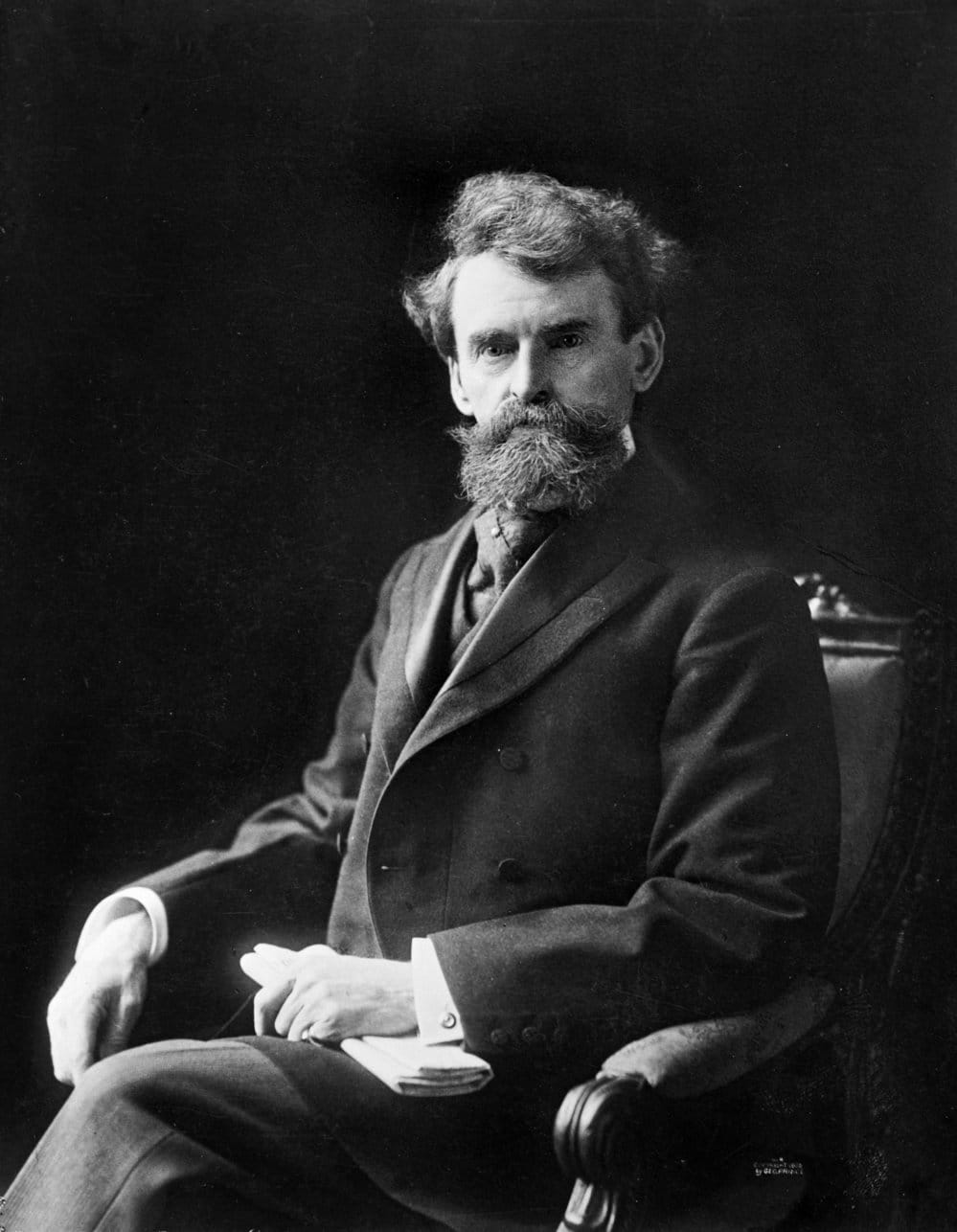
After serving an undistinguished term, Clark turned his attention back to his business ventures, including the Sunset Mine. Local papers, such as The Press-Times Weekly, lauded Clark’s various visits to the Sunset Mine, describing the “most sumptuously fitted up [railroad] car,” in which the millionaire arrived in Wallace, Idaho, for a 1910 visit. Although W. A. Clark made multiple high-profile visits to the “Clark Property,” work at Sunset did not begin in earnest until 1912. Other factors, such as poor roads, long, harsh winters, and a lead-zinc market that did not see significant growth prior to the 1900s, also contributed to the underdevelopment of the mine, with the former two continuing to impede the mine throughout its operation.
Development Under Clark: 1912-1918
On one of Clark’s visits to the property, the Shoshone News-Press quoted him in 1912 as stating that he had never seen “a better surface showing than right here on the Sunset claim” despite having “mined for 46 years.” This large deposit of primarily lead-zinc ore, coupled with the growth of the lead-zinc market for electric appliances and industrial applications like galvanized steel, helped spur on active development of the mine.
Work soon began on a wagon road to supplant the mountain trail to the mine, but heavy snow prevented equipment-bearing wagons from reaching the property as late as June 1912. Once the snow cleared, a small gasoline-powered hoist was installed, and a shaft was sunk to work the promising vein. The Fifteenth Annual Report of the Mining Industry of Idaho for 1913 confirmed Clark’s claimed bonanza: Robert N. Bell, Idaho State Inspector of Mines, noted that Sunset showed “one of the largest surface evidences of [lead-zinc ore] in the Coeur d’Alene District,” which could be traced “for almost half a mile.” Indeed, a later study by the U.S. Geological Survey showed that the Sunset mineral belt on which the mine sat measured approximately 16,000 feet long and 1,000 feet wide.
From 1914 to 1915, the mine employed about a dozen men, and as the U.S. was cut off from Belgian and German zinc supplies due to the First World War, domestic demand for the mineral increased, thereby stimulating more development at the mine. As further development overtaxed the small hoist, a new, more powerful electric hoist, compressor, and pump were installed on site in 1915, and by the following year, the shaft had reached a depth of 800 feet.
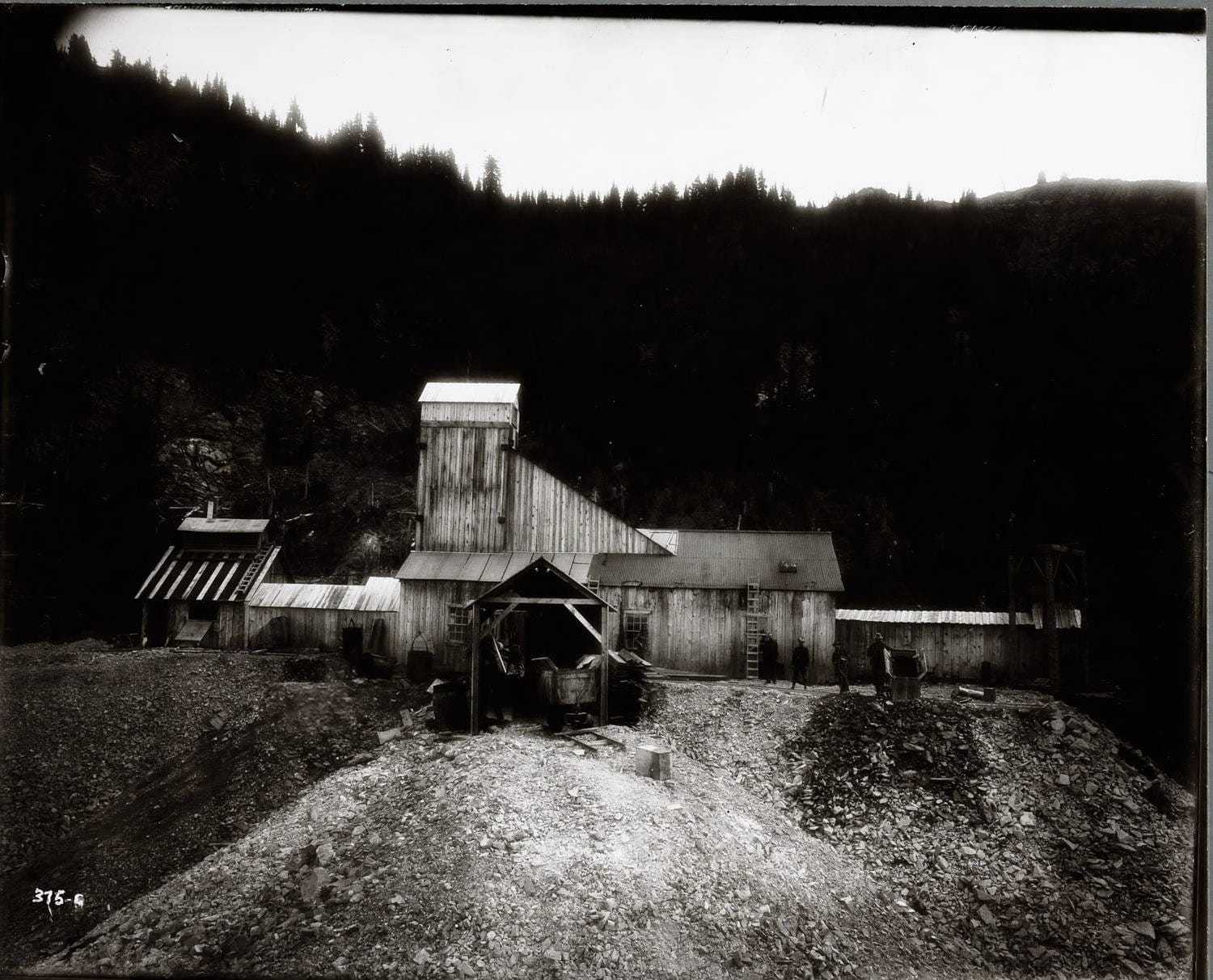
In July 1918, while the men working the mine were eating dinner, a fire engulfed and destroyed the hoist and compressor houses, which the miners believed resulted from a lightning strike. Although the hoist and compressor were restored before the end of that summer, work at the Sunset Mine was suspended by W. A. Clark in December, likely due to lessened mineral demand with the end of World War I. On top of this, much of the lead-zinc ore discovered in the mine was low grade, thus necessitating a more extensive and expensive milling process that was simply not worth it with the war over.
First Lessees: 1919-1935
Once Clark shut down the mine, his involvement waned, and a long period of the mine being worked by lessees began. The first of these lessees was the West Sunset Mining Company, which rented the Sunset shaft from Clark to explore its West Sunset (or Portland) Mine between 1919 and 1921. After the exploratory work ceased, all equipment and machinery from the mine was shipped to Butte. This included removing the track from a half-mile-long tunnel through Sunset Peak that connected the boarding house to the mine. While it is unclear when this tunnel and boarding house were first built, it was likely during the first major development of the mine in the 1910s.
The next lease of the mine was in 1922 by A. G. Bachman (sometimes noted as A. H. Bachman), a Butte man who had previously helped remove the equipment from the mine. Following his discovery of a lead-silver vein, Bachman replaced equipment, repaired the road, and began working the mine with a few associates, including George K. Garrett, who had a contract to haul ore from the mine. The first shipments of ore were made in late 1922, but heavy snow in the winter of 1922-1923 prevented further shipments. Sadly, during that winter, Bachman died of typhoid fever; the remaining ore shipments were made in the summer of 1923 by G. K. Garrett and processed at the Bunker Hill Smelter in Kellogg, Idaho.
In 1924, the Long Wait Mining Company was incorporated and obtained a lease on Sunset from Clark. The company only did limited work, employing an average of four men at the mine in 1925. That same year, W. A. Clark died, and three years later, his heirs sold off his properties, including the Sunset Mine, which was purchased by the Anaconda Copper Company in September 1928. The Long Wait Mining Company continued to lease the mine, but by 1931, the Idaho State Inspector of Mines listed the property as “inactive,” and the company collapsed, its charter forfeited in 1935.
Sunset Lease Partnership: 1940-1967
After nearly a decade of inactivity, C. P. Pollock obtained a lease on the Sunset Mine from the Anaconda Copper Company in 1940 and formed a partnership known as the Sunset Lease. The road to the mine was once again repaired, new mine buildings were constructed, machinery was installed, and a contract to haul ore from Sunset to the Golconda Mill, 15 miles from the mine, was obtained by E. G. Smith. A test run of 1,800 tons of ore processed at the mill in 1940 averaged 6.5% lead, 3.2% zinc, and 3.4 ounces of silver per ton.
The timing of this renewed activity at Sunset was no accident: the start of the Second World War spiked lead and zinc prices, and the U.S. War Production Board noted in 1944 that several previously inactive zinc enterprises had resumed operation in 1940. Additionally, before the U.S. had entered the war, it was already facing a zinc shortage in late 1940. Thus, the Sunset lead-zinc vein made for an attractive opportunity, regardless of the low-grade nature of the ore.
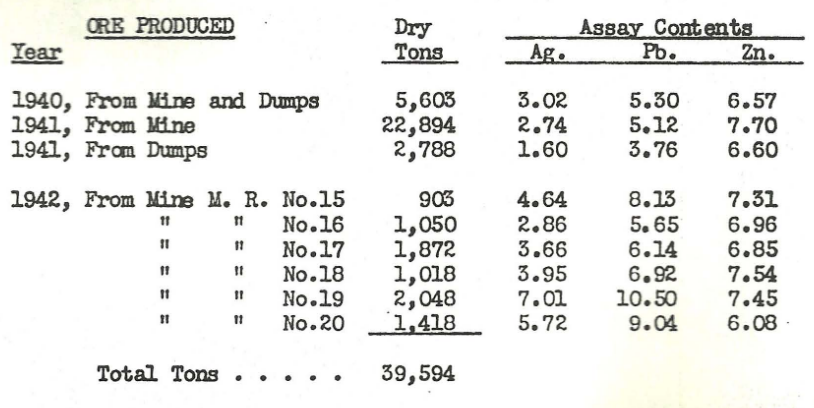
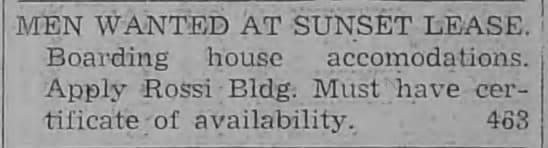
Activity at the mine continued into 1943, producing an average of 75 tons of ore per day. That April, miners protested the condition of the roads to the mine, which had already deteriorated to such an extent that 12 miners quit work (out of a total crew of 55 men) and six trucks had broken down from the rough conditions, putting the mine on a virtual standstill. A delegation of miners called on the County Commissioner to repair the road, but he refused, quoted by the Shoshone News-Press as saying that the county had “spent more money per mile on this road than any other in [his] district.” With no outside help in sight, E. G. Smith switched his trucks from hauling ore to hauling gravel to fix the road.
The following year, Smith began buying out partners in the Sunset Lease. Between 1944 and 1947, the boarding and bunk houses were refurbished and fitted with a cooling plant, a change room was added, a more powerful hoist was installed, and some of the oldest sections of the workings were reopened and de-watered. By 1948, however, Day Mines, Inc., formed the previous year from the consolidation of 12 other mining companies and run by the prominent Day family, had acquired a 70% interest in the Sunset Lease, and Smith assigned his lease to the company in December.
In 1949, E. G. Smith, along with John Korsage, obtained a sublease from Day Mines, Inc. for the northern portion of the Sunset Mine, as well as the adjacent Silvertip property, a mine owned by the Days. Brothers Bromo and William Zanetti simultaneously obtained a sublease on the southern portion of the Sunset Mine, shipping ore to the Rex Mill, while Korsage-Smith shipped ore to the Golconda Mill.
The only fatal accident at the mine occurred on the Korsage-Smith sublease on December 27, 1951. Late in the day, Otto J. Mark, 51, was mucking (drawing broken-up waste rock and ore out of the stope) when a large boulder dislodged this muck, causing Mark to lose his balance and fall 100 feet down the stope. Almost immediately after, the miner was buried under 450 tons of dislodged ore, tragically leaving him no chance of survival, even if he had survived the initial fall.
As snow drifts measured more than ten feet deep, preventing access to the mine by conventional vehicles, John Korsage immediately snowshoed out to report the accident. In Wallace, Korsage met with representatives of Day Mines and returned to Sunset on a “snow weazel” (likely an M29 Weasel, a WWII-era tracked transport) with a crew led by Day Mines safety inspector Robert Ward. After days of around-the-clock work, Mark’s body was uncovered and transported back to Wallace via toboggan pulled by four men on snowshoes on January 2, 1952. Mark, a widower originally from Sweden, was survived by his son, daughter, and brother.
Following this unfortunate incident, the mine continued to operate until the end of the 1950s. By 1958, the Sunset Lease had produced more than 309,000 tons of ore, or about 87% of the mine’s lifetime production. Although the 1940s and 1950s were the most productive decades for the mine, metal prices began to fall at the end of the 1950s and ore reserves at Sunset were nearly exhausted. Because of this, Korsage-Smith terminated their sublease in January 1959, and in 1967, the Sunset Lease partnership was fully dissolved after more than half a dozen years of near-inactivity.
End of the Mine & Anaconda: 1975-1977
The final lease of the mine from the Anaconda Copper Company was acquired in 1975 by Lavon Fausett of the Wallace Diamond Drilling Company. Employing a team of three, Fausett engaged in mechanized mining, employing more machines than men, to work a low-grade pillar of ore that had previously been unprofitable to develop. Utilizing these methods, Fausett was able to extract 100 tons of ore per day, and in late 1976, shipped 310 tons of lead, silver, and zinc to the Nabob Mill.
Just as production was once again ramping up at Sunset, the Anaconda Company was bought out by the Atlantic Richfield Company (ARCO) in 1977, and ARCO soon suspended many of Anaconda’s former operations, including the Sunset Mine. In the 1970s, Anaconda had already been on the decline, particularly after the company’s profitable Chilean copper mines were nationalized by the country’s socialist president, Salvador Allende, in 1971. While Allende was ousted in a U.S.-backed coup in 1973, the new military junta’s reimbursement of $250 million to Anaconda Copper was not enough to refloat the company.
By the time the sun had set on the mine, it had produced 355,000 total tons of ore between the years of 1913 and 1976. The U.S. Bureau of Mines lists this ore as containing about 15,600 tons of zinc, 11,400 tons of lead, 320 tons of copper, 18 tons of silver, and 568 ounces of gold. While not the largest producer in the district, Sunset still outlived many of its contemporaries, owing in large part to the scattered periods of lessee operation.
Workings & Remains
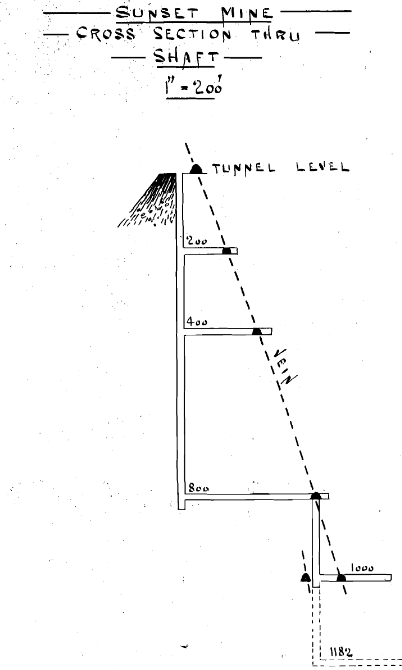
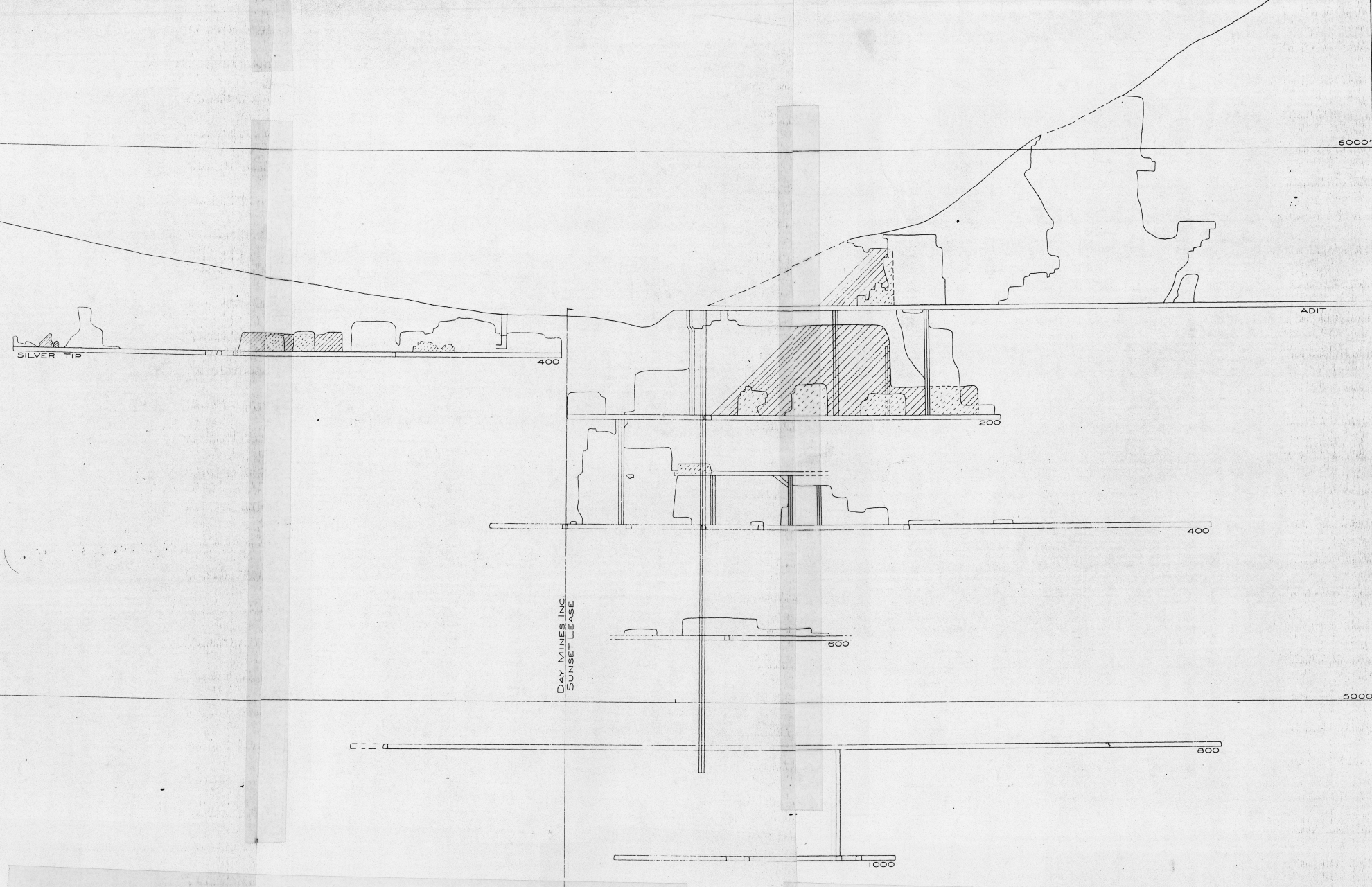
In total, the workings of the Sunset Mine measured more than 17,200 ft. This included the 800-foot shaft, a 200-foot winze below the shaft, the tunnel piercing Sunset Peak, and drifts and crosscuts at 200-foot increments down the shaft. Structures at the mine included a blacksmith shop, boarding and bunkhouses, change room, electric shop, framing shed, headframe, hoist and compressor houses, ore bins, a store room, and 285 feet of snowsheds.
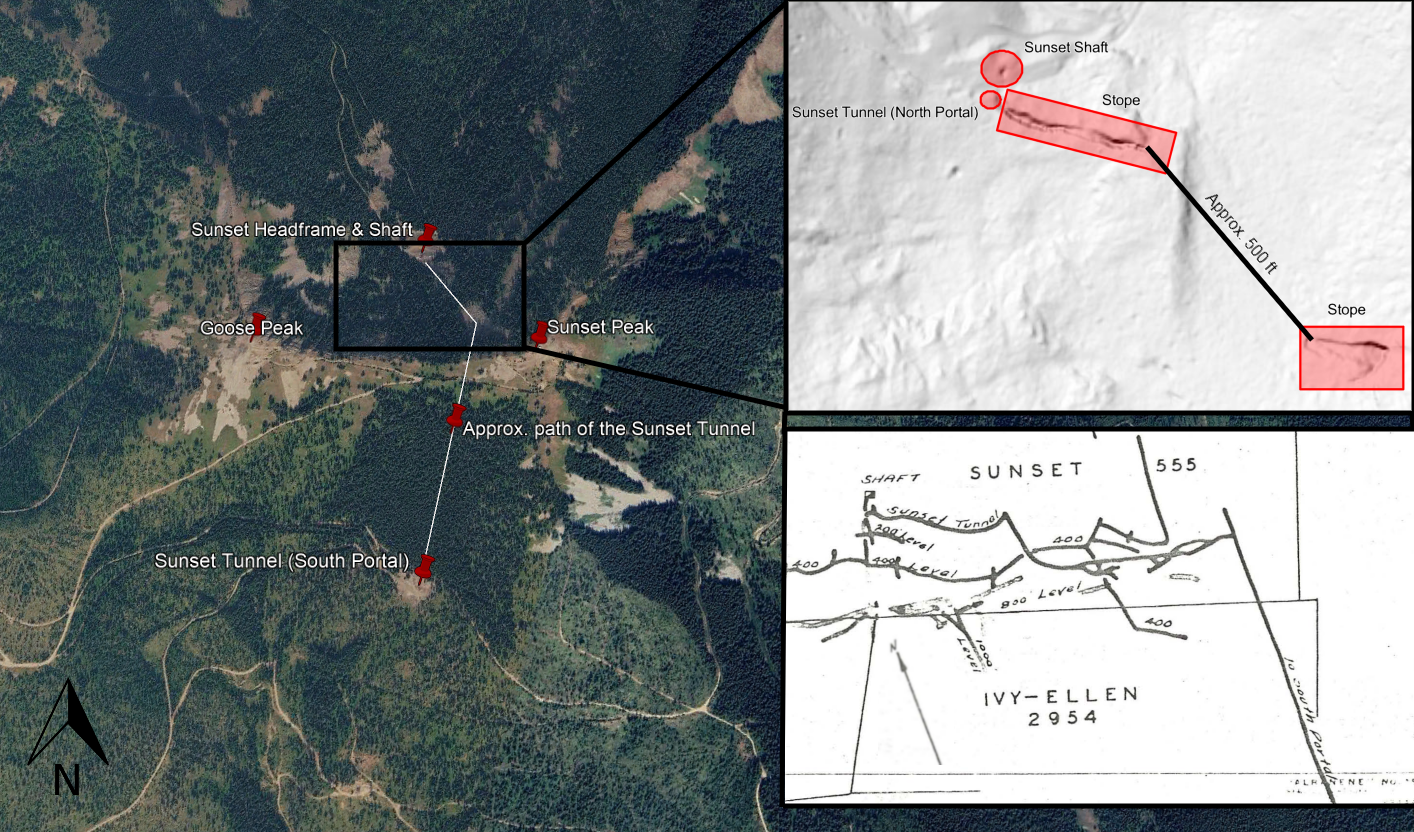
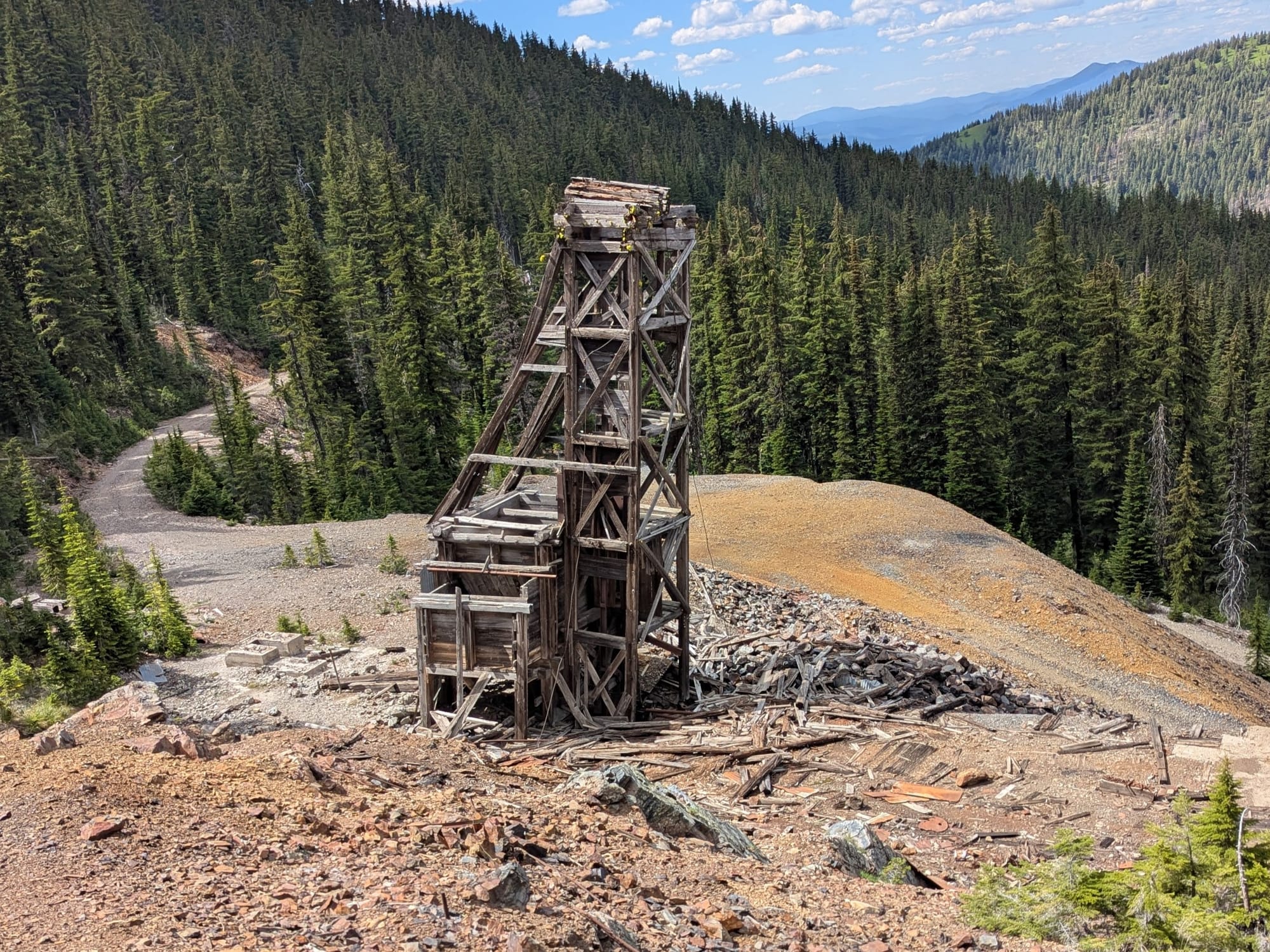
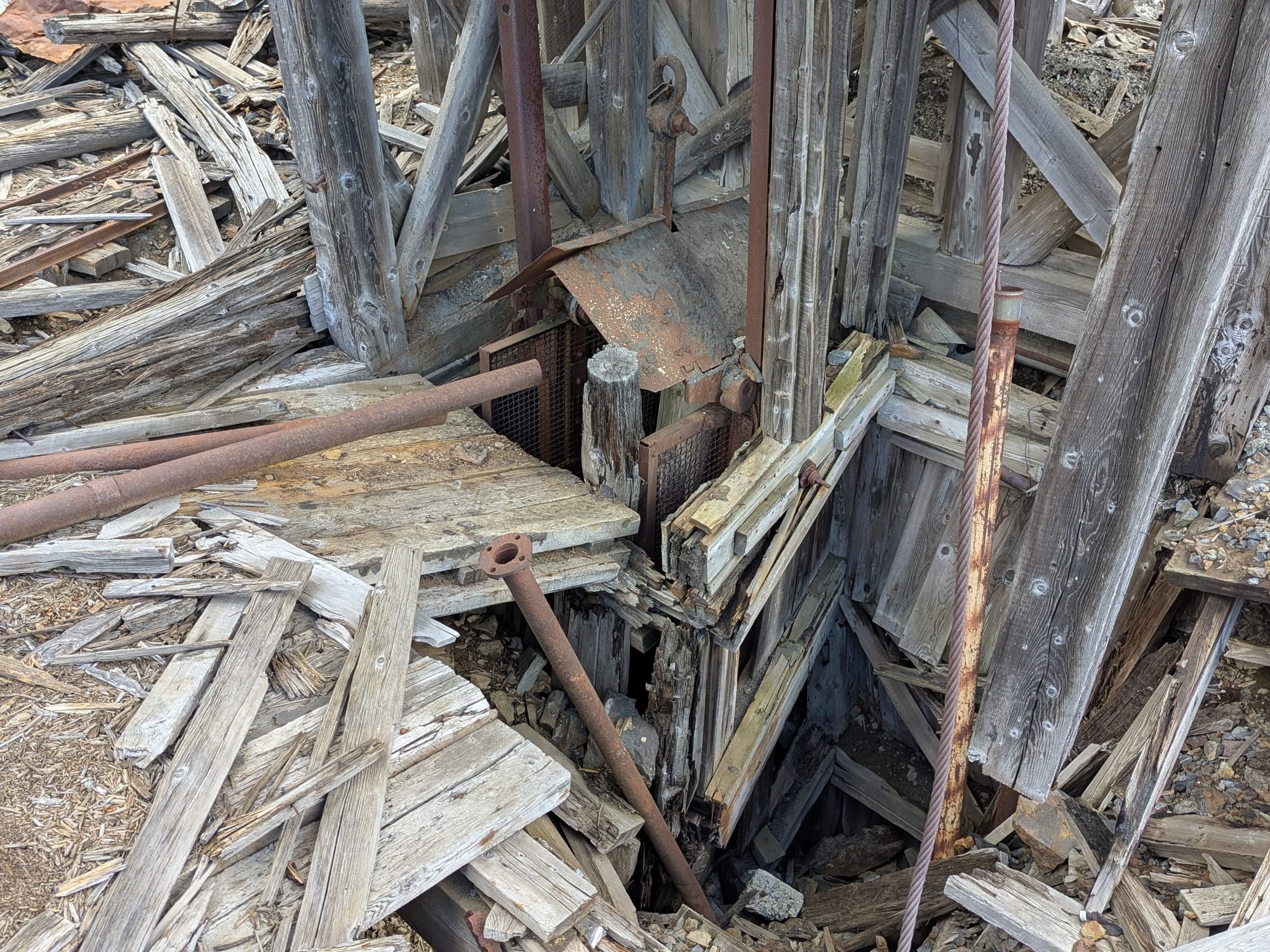
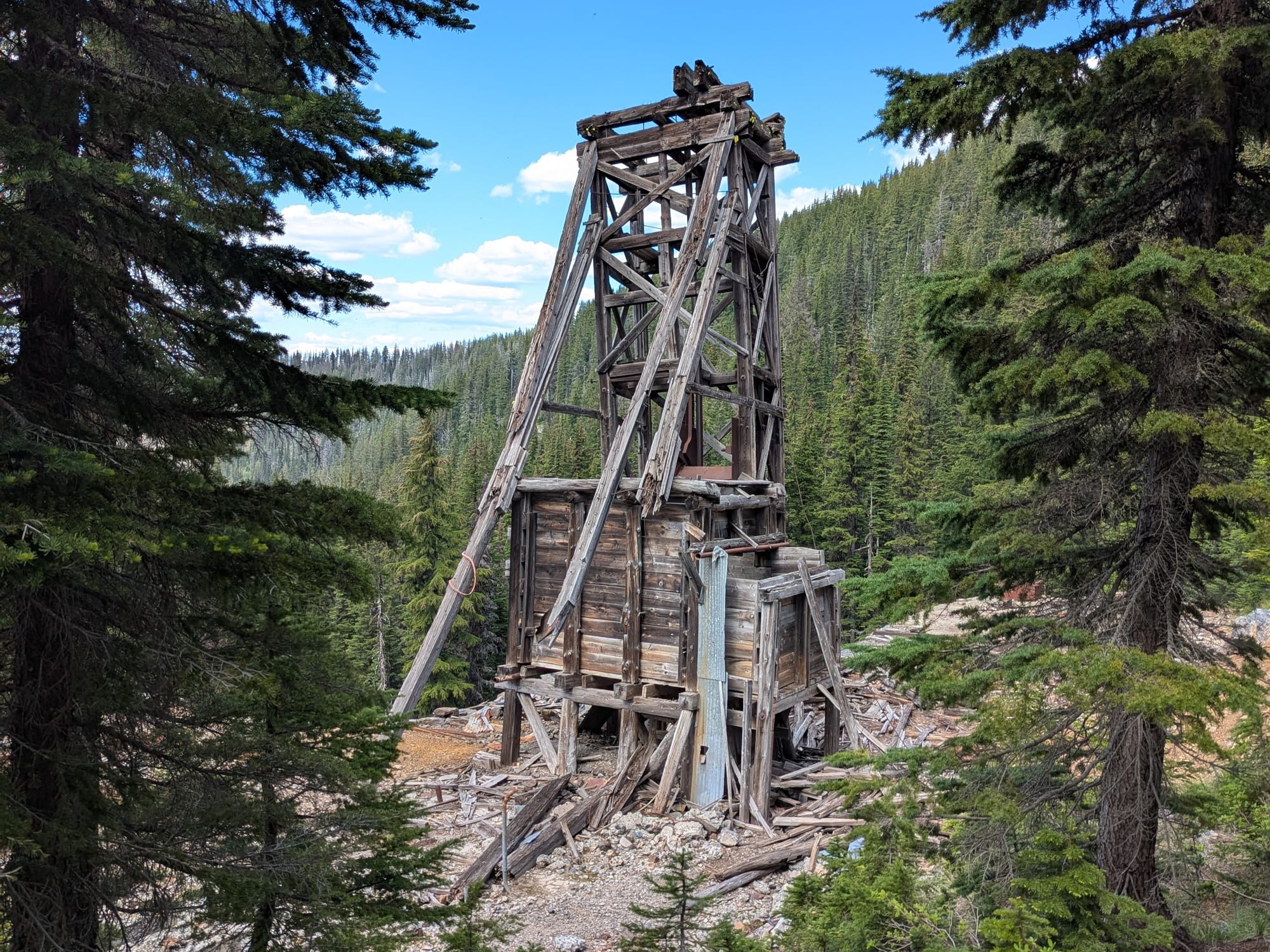
Today, the only significant remaining structure is the wooden headframe. Although the hoist is gone, an elevator cage is still rusted in place over the shaft; in the gap between the elevator and wall, one can look down into several hundred feet of darkness. Near the headframe, a few concrete foundations remain, with the one directly behind the headframe likely belonging to the hoist house.
Climbing up Sunset Peak, there are a few large, caved stopes (see workings map above). The lowest and longest of these contains multiple levels and one portal, which is likely the north portal to the tunnel that ran through Sunset Peak. Less than 500 feet above it, there is another large stope that affords a good view of the mine and surrounding area. On top of the peak, there is also an old lookout and weather station that is worth checking out.
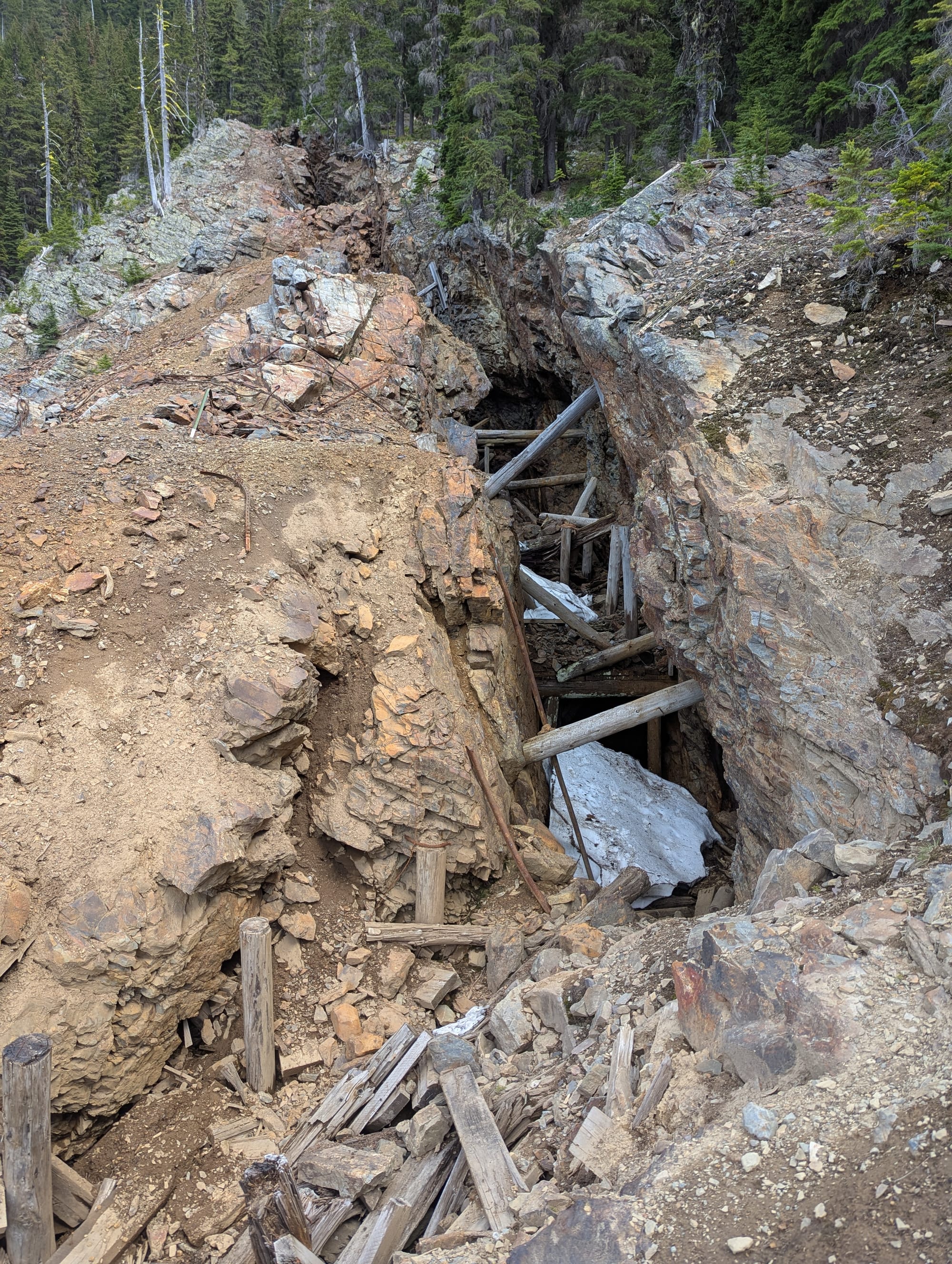
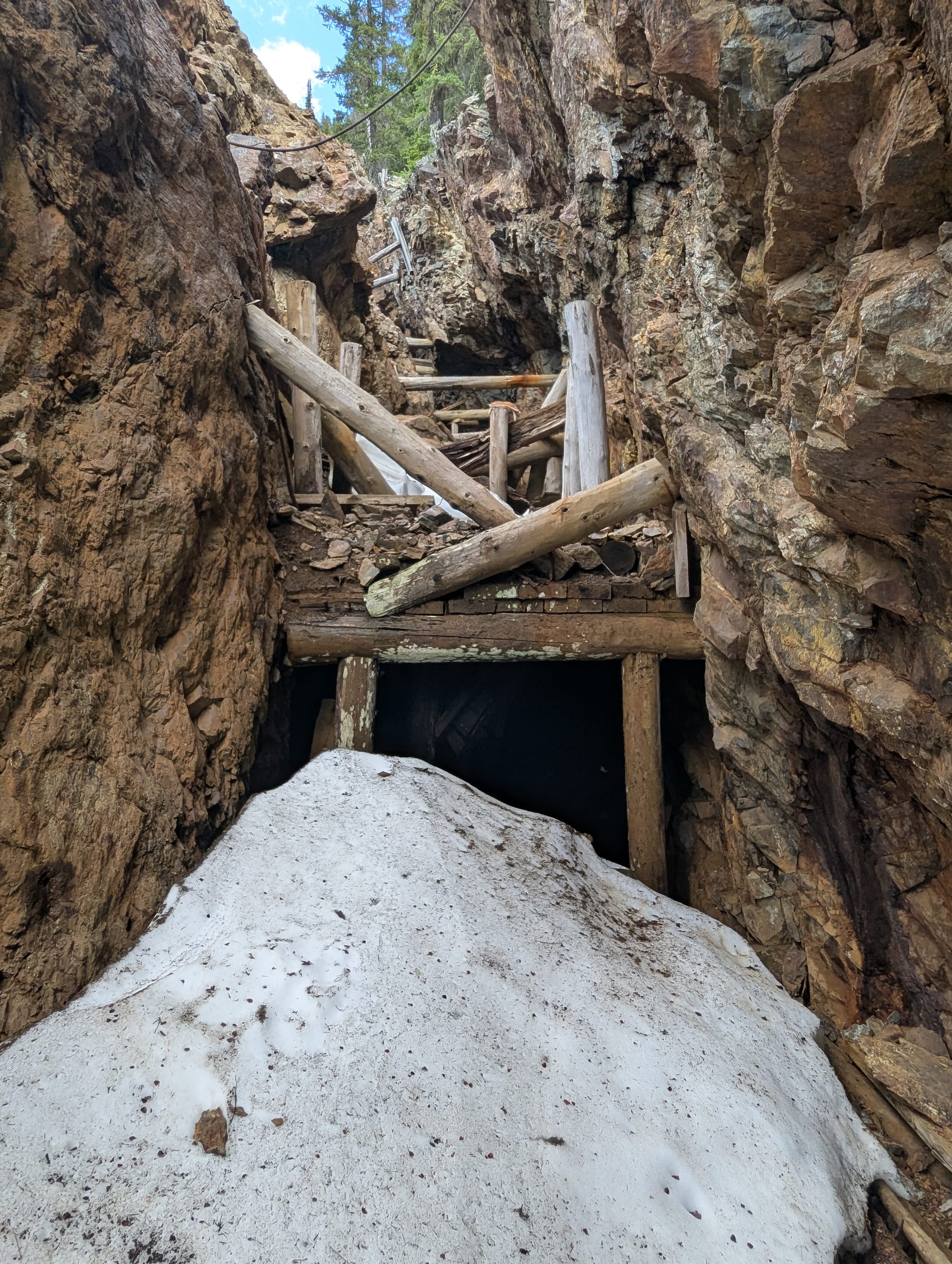
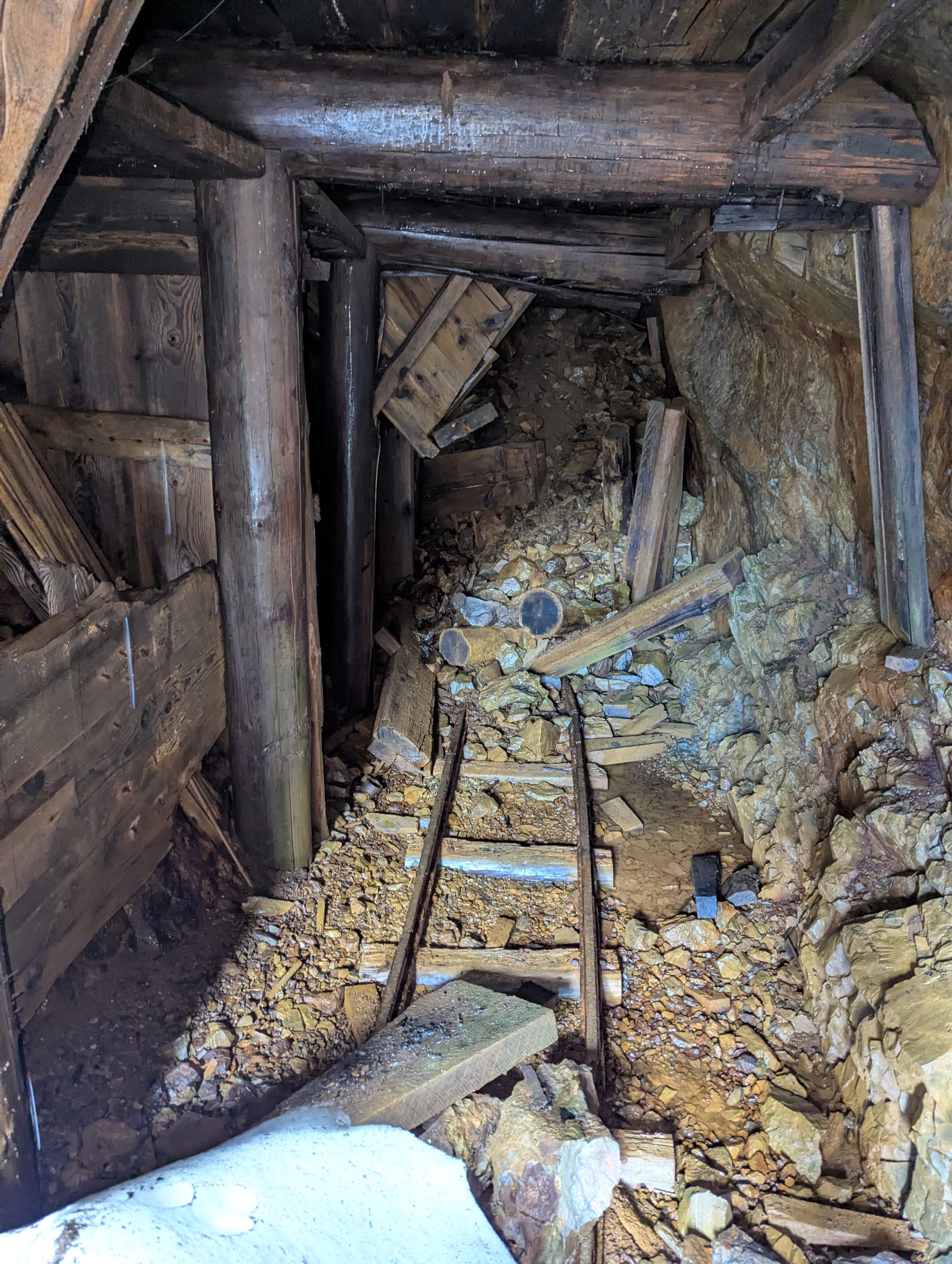
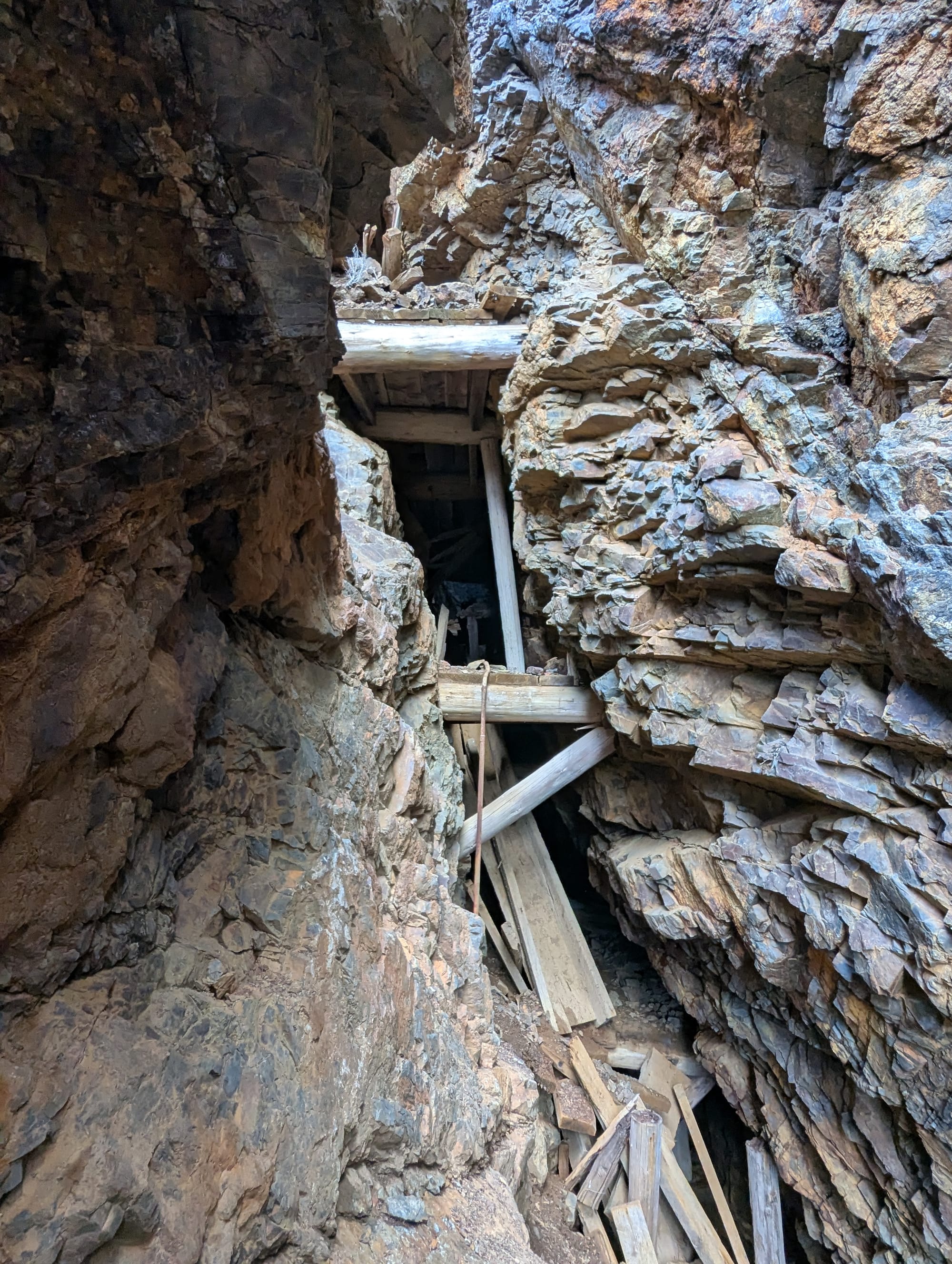
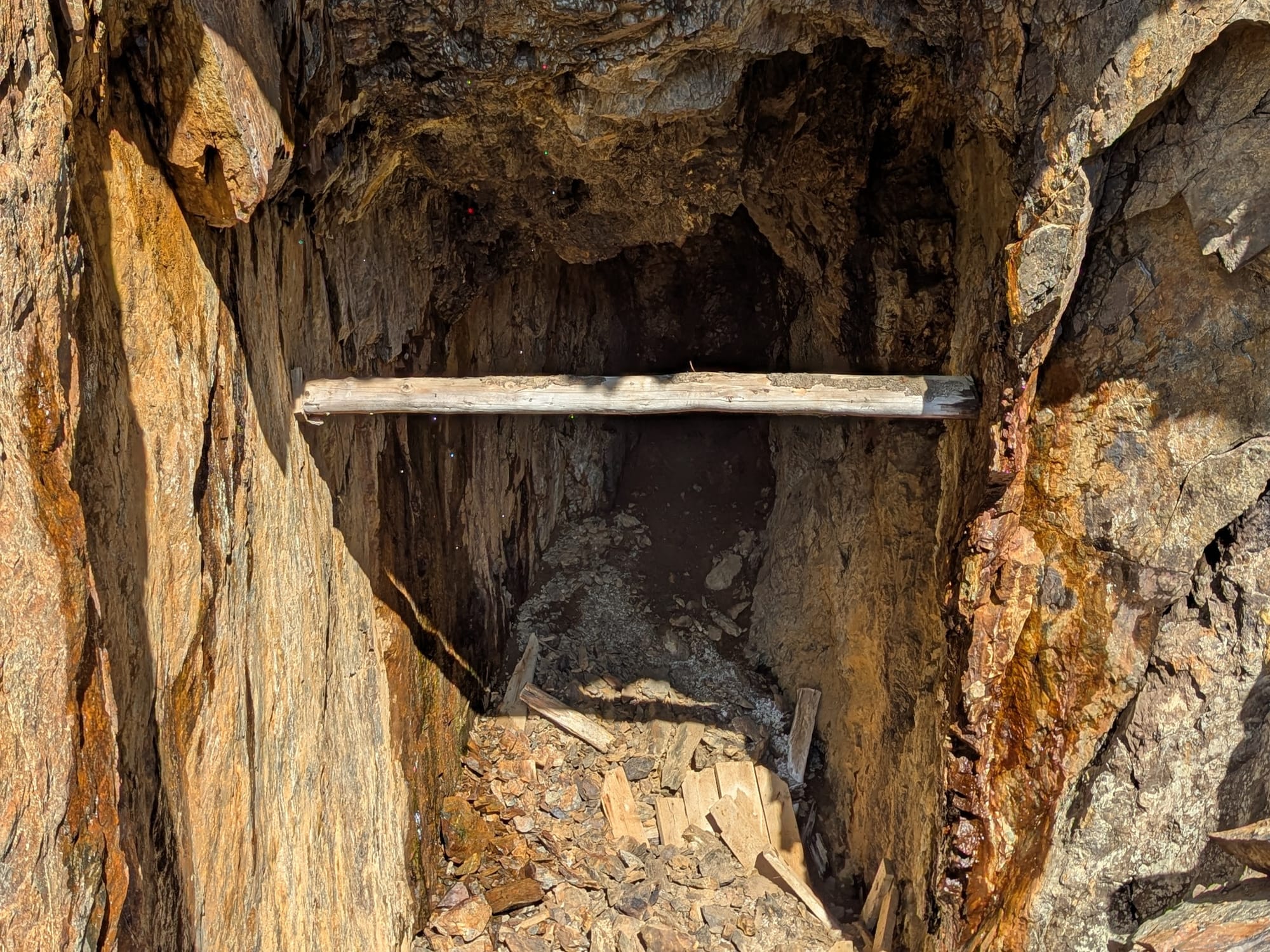
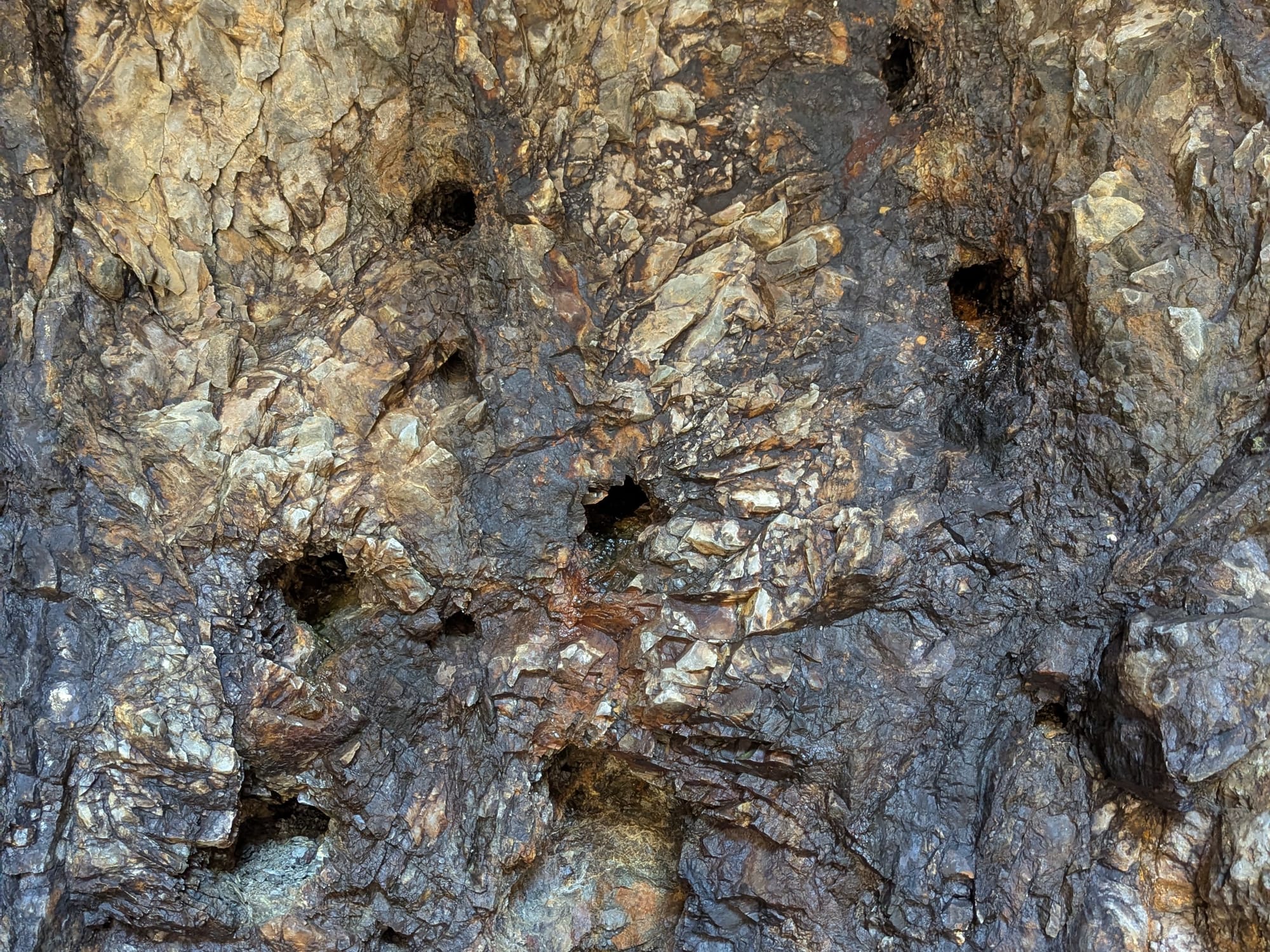
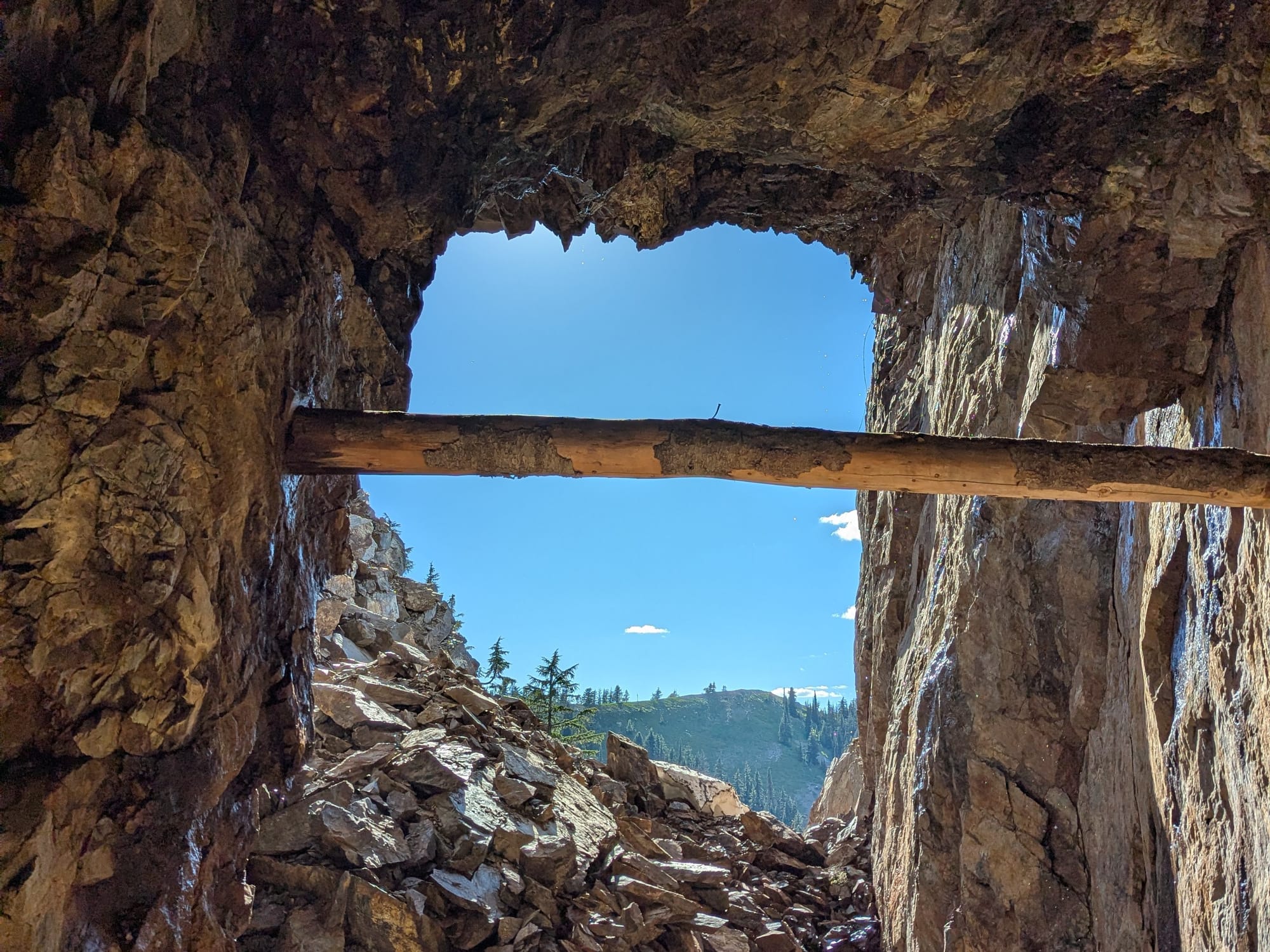
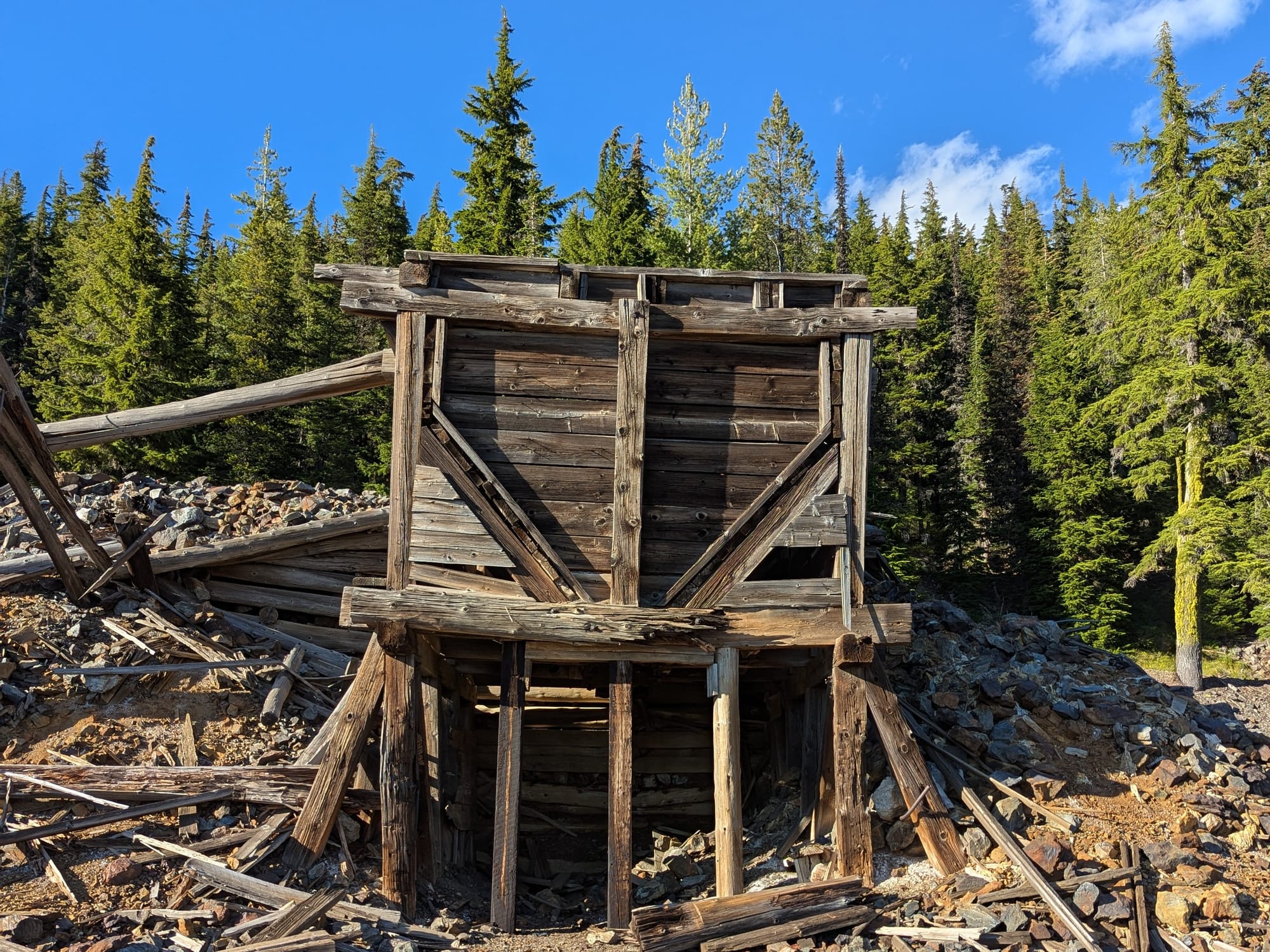
On the opposite side of Sunset Peak, near what was once the south portal of the Sunset Peak tunnel, an ore bin stands next to scattered timber ruins and a small foundation that may have been from the change room. A boarding house was once near here, but it is unclear where exactly it was located.
The Sunset Mine site is located on land owned by a timber company, which is partnered with Idaho Fish and Game to provide public access to the land. Due to the nature of this program, public access to the land may change at any time; observe any posted signs. While perhaps not as bad as once described, roads in the vicinity of the mine can get quite rough, and a 4WD vehicle with high clearance is strongly recommended.