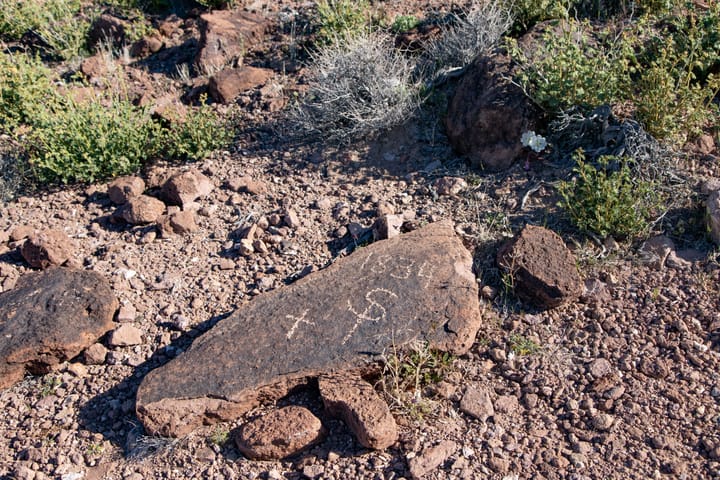
1834 Rocks
There are still some enduring mysteries in Death Valley. One of them is the 1834 Rocks. These puzzling inscriptions, found at three sites and separated by a wide distance, each bear a unique combination of symbols: a date, a cross, and a chalice, with an enigmatic "SP" monogram
Lost Rhodes Mine
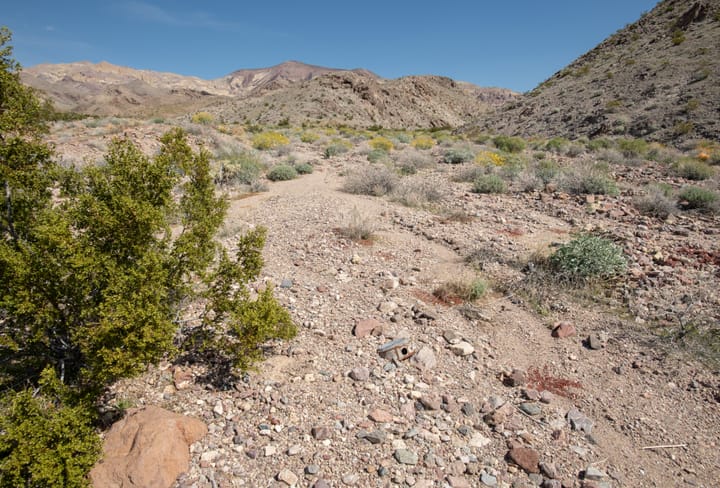
Albert G. Rhodes is nearly forgotten in desert lore, but he and his partner discovered a rich silver deposit in 1886 at the remote southeastern end of the Black Mountains of Death Valley. They hauled 1,200 pounds of silver ore on the backs of mules over eighty desolate miles
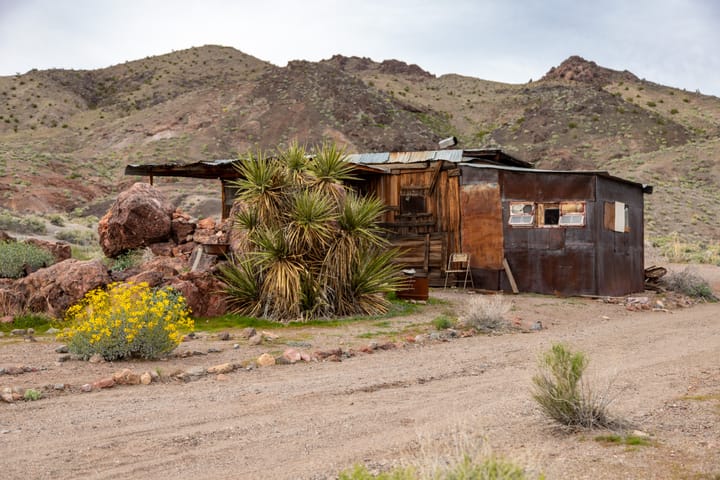
Rhodes Spring Cabin
In 1886, Albert G. Rhodes and his partner discovered a promising silver deposit in the hills behind the spring that would come to bear his name. They extracted and transported 1,200 pounds of ore, worth approximately $800, before meeting a tragic fate on a return trip to the mine.
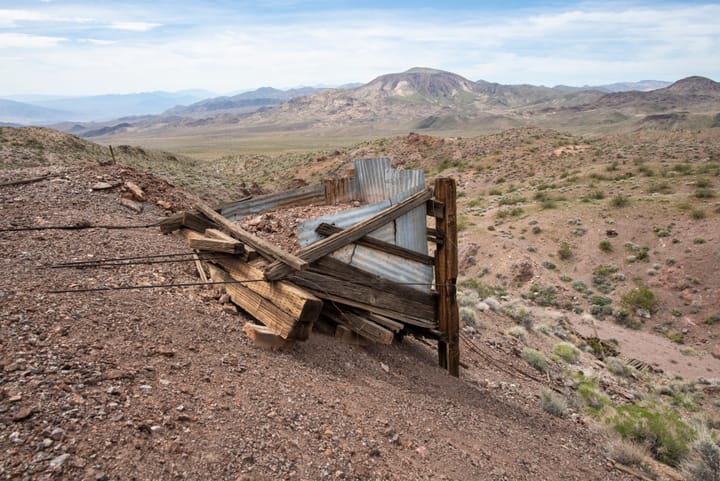
Salsberry Prospect
The Salsberry Prospect was a small mining operation on the shoulder of Salsberry Peak, which can be traced back to the Greenwater Valley copper boom of the early 1900s. Little is known today about the history of the mine, but it appears to have been owned by Jack Salsberry, a
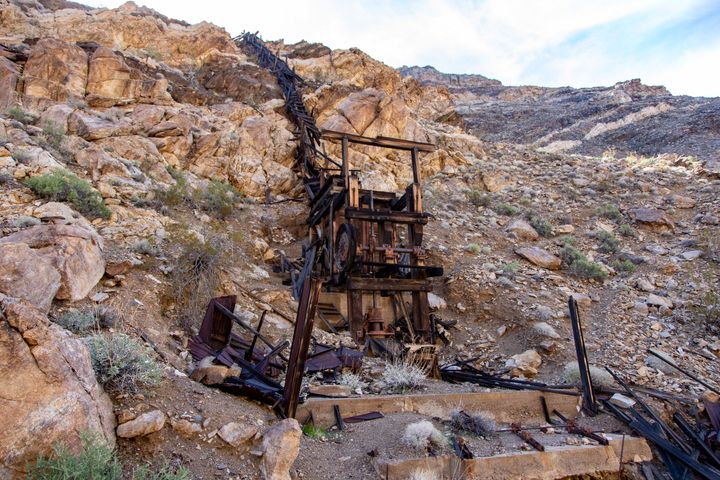
Indian Mine (Death Valley)
Over in eastern Death Valley, just north of the Keane Wonder Mine, is the Indian Mine in Monarch Canyon. It is a small mine that was worked for gold with only minor workings and was never profitable. What makes it a worthwhile visit is the mill and its remaining single
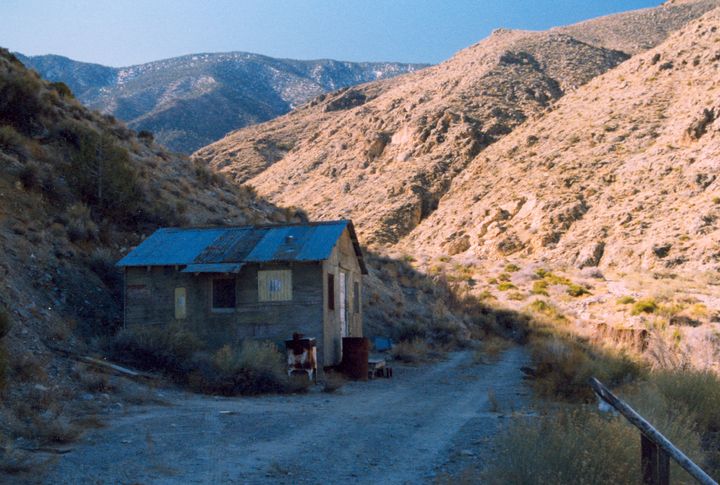
Morning Glory Mine (Death Valley)
The Morning Glory Mine is a neat little mine high up in the pinyon pines of Trail Canyon. It's not easy to reach, so it doesn't get as much visitation as other places in Death Valley. You really have to want to go there. And despite