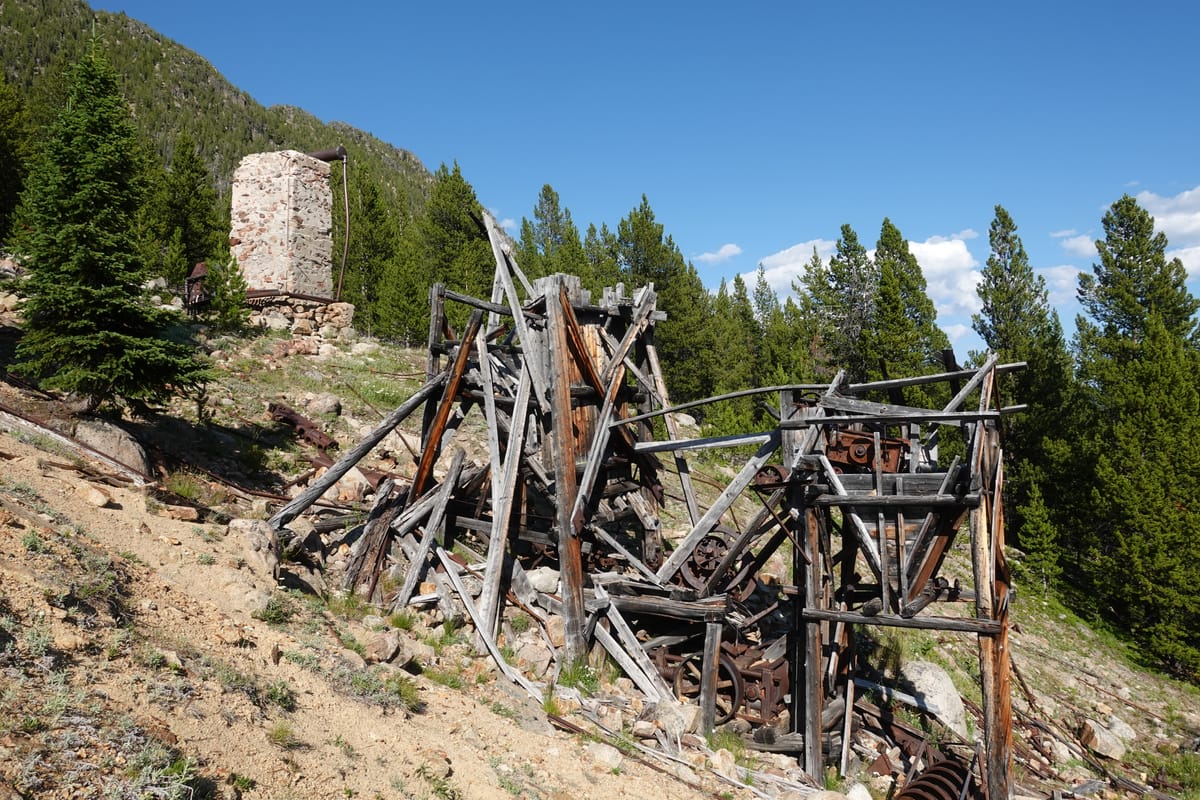
Despite having plenty written about it, the Tungsten Mine is surprisingly hard to find good information on. There are countless disagreeing dates and details of the operation. Some individual reports even contradict themselves on the history of the mine. At various times the mine was known as the: Tungsten Mine, Hatfield Mine, Border Lord Mine, Wolframite Mountain Mine, Old German Mine, Boundary Mine, and Last Chance Mine.
Whatever the historical details were, the Tungsten Mine was unarguably remote. Over the course of the mine’s history, it was accessed through Keremos, Loomis, and Winthrop. One of those three towns isn’t even in the United States! It is now easiest to get to the mine from Winthrop by hiking 14 miles each way up the Chewuch River.
The first mineral discovery in the area was made by surveyors of the International Boundary Commission sometime between 1898-1904. In 1906 the Tungsten Consolidated Company was organized in Loomis. Reportedly the company began to develop the property and build a camp, but other accounts contradict this. German operators leased the property in 1914, coinciding with the start of World War One. It is unclear how long these foreign leasers were involved with the property, but they apparently did not produce anything. Shortly before and during the war tungsten was an incredibly valuable commodity. The Germans were more successful at sourcing tungsten from the Germania Mine near Spokane, Washington. It is quite possible that tungsten from the Germania Mine was used against the US during the war.
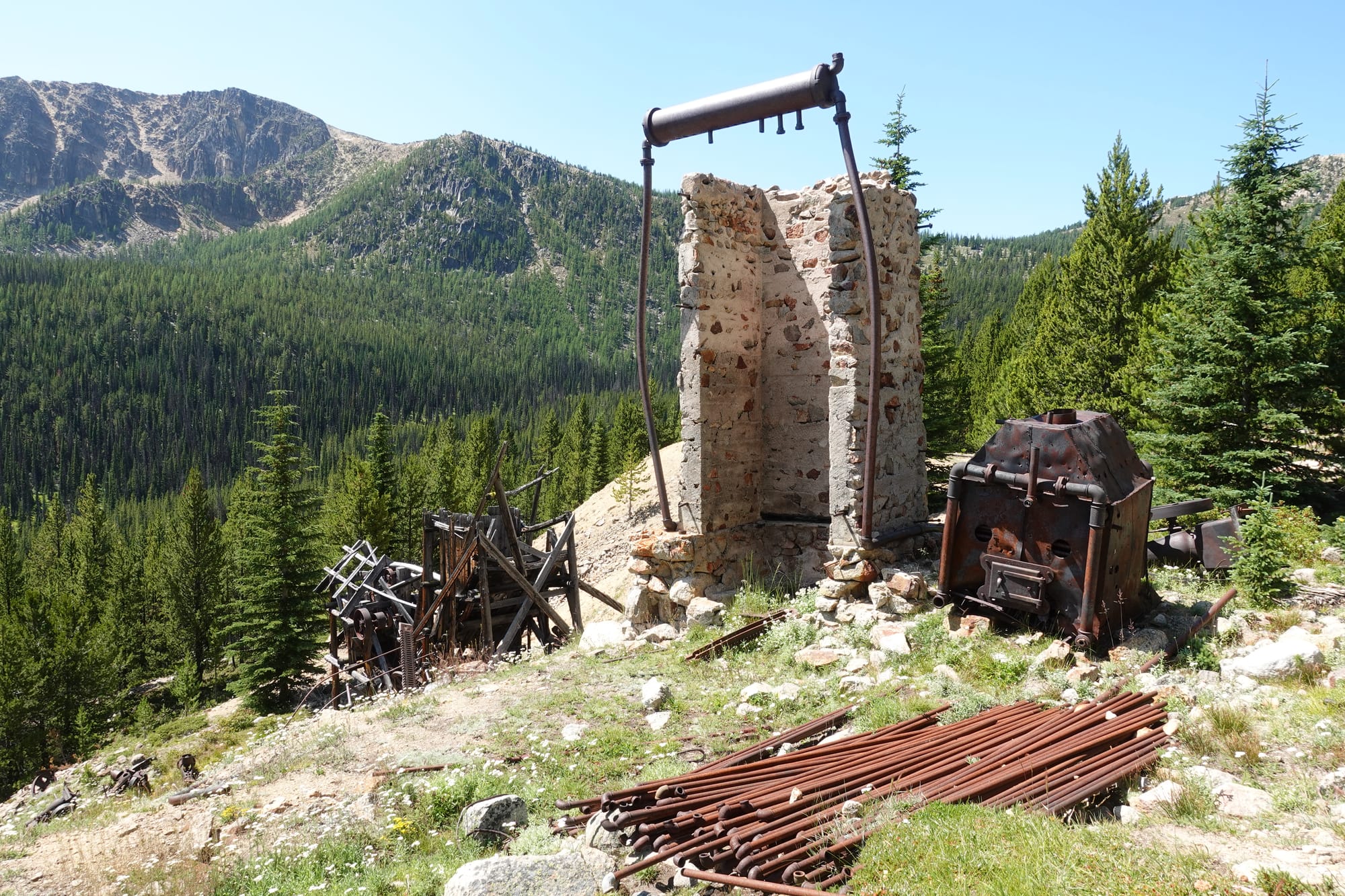
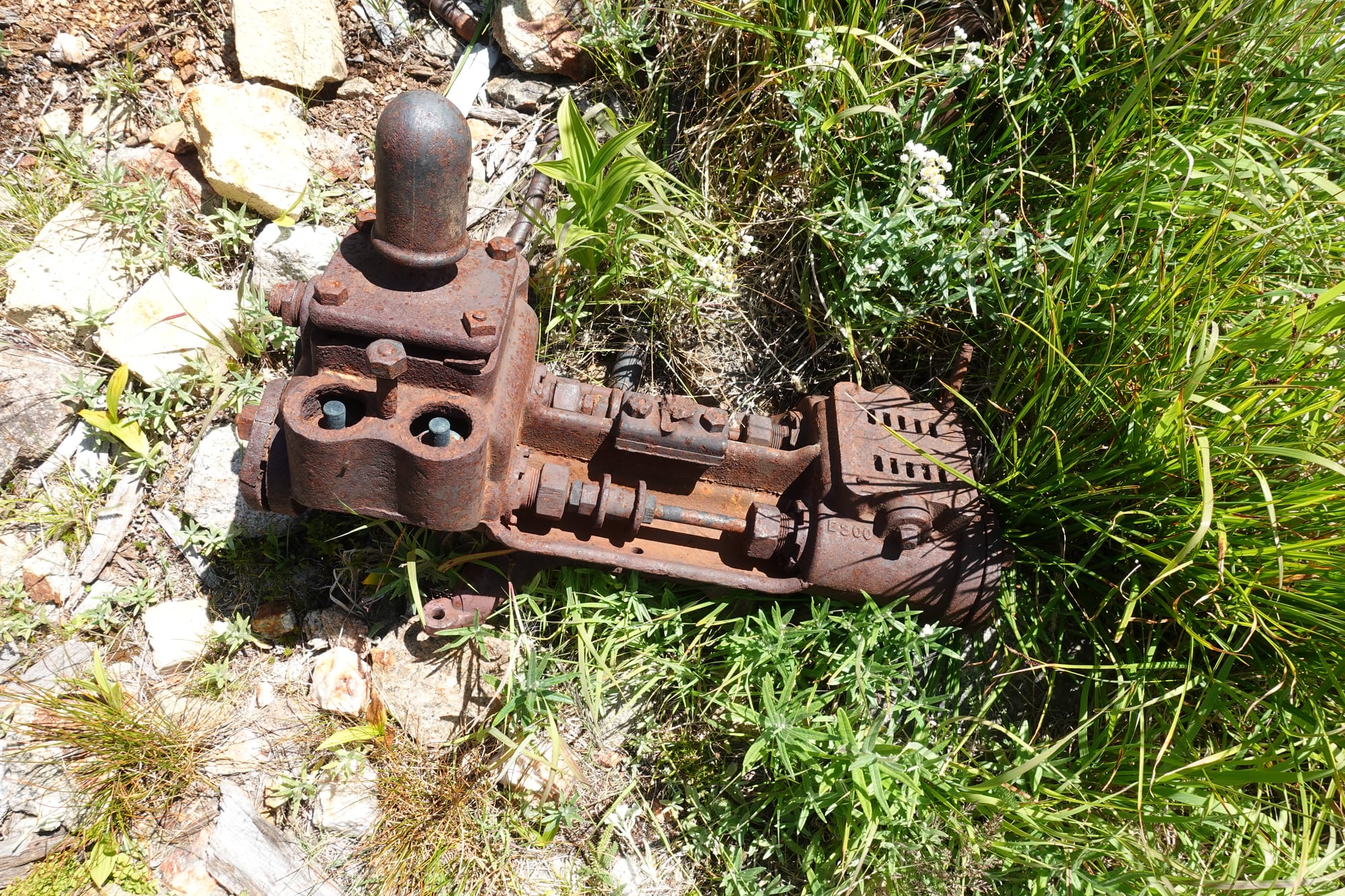
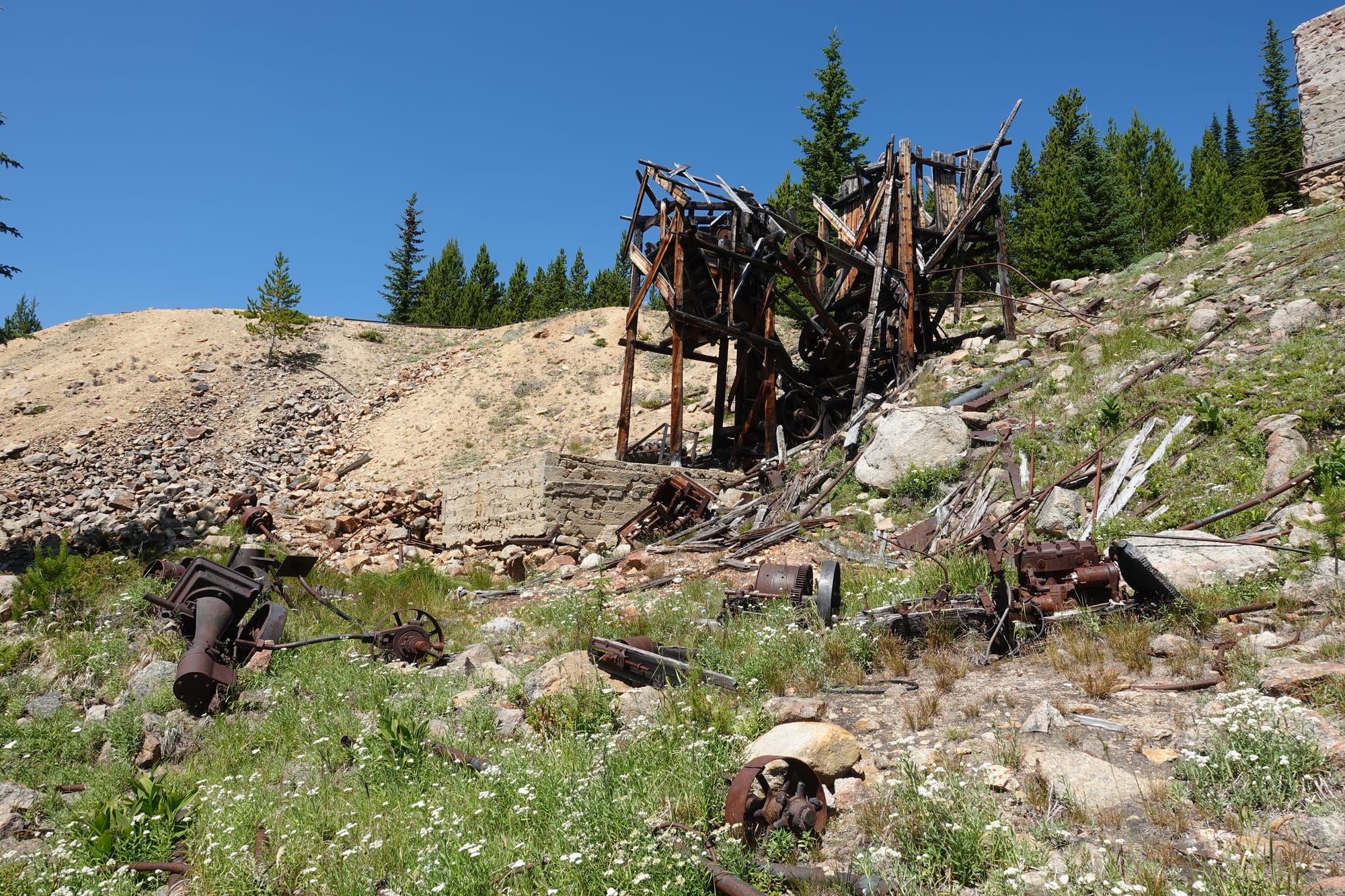
Mill site
In 1915 the Tungsten Mines Company took over the property and proceeded to develop it. During 1915, 300 tons of supplies including a complete mill were hauled into the mine. To haul the equipment in, a road was built out of snow from Loomis. All of the fill for the road was made from snow, and it worked well until it all melted away in the spring. The mine reached its peak around 1916 when 80 men were employed. Only a handful worked underground, most men being tasked with hauling supplies and erecting buildings. Activity was reduced at the end of 1916, and the mine was fully closed in 1920 due to a drop in tungsten prices after the war. From 1915 to 1918, 300 tons of concentrates were hauled by trail to the Ashnola River in Canada.
A wildfire in 1929 destroyed all the buildings on the property aside from three small cabins. In 1936, 30 tons of high grade ore were packed out by trail 30 miles to Winthrop. This ore was sent to New Jersey for refinement, but the shipment was unprofitable. That same year both General Electric and Union Carbide representatives visited the property but declined to purchase it when offered. In 1938 John Hatfield purchased the mine and leased it to F.D. Zillweger. He worked the mine at a small scale, obtaining ore from the outcrop with a horse drawn scraper. From the remains of the burned mill, Zillweger was able to piece together a smaller 10 ton per day mill. A lack of high grade ore made this operation short lived. The mine was briefly reopened in 1942 but quickly closed when the owner was drafted.
By 1951 Hatfield had apparently let the claims lapse and a claim staking war was started. At the start of spring a company from Okanogan had three men parachuted into the mine to claim it. They located it as the Border Lord Group of claims. A few days later Ray Ainsley, presumably approaching on land, staked over these claims as the Last Chance Group. Both parties submitted requests to the federal government for loans to develop the mine. Both requests were denied.
The group of men from Okanogan operated the mine under the Border Lord Mining Corporation. Over the course of the next few years the company built 23 miles of road to the mine. The road was completed in 1954 and while being extremely rough, was still passable to vehicles. The company rebuilt the mill with a Humphreys Spiral Concentrator. It is unclear if this rebuilt mill ever ran, as no production was reported from this final effort. The mine was re-claimed a few more times after this, but apparently little came of this. The ultimate death of the mine was in 1968 when the area was locked up as a wilderness.
Geologically, the deposit was a tough one to mine. The vein was exceedingly narrow, rarely being over half a foot across. It also had a fairly flat dip, greatly increasing mining costs. These features combined with its sporadic grade made the whole operation only feasible during periods of inflated tungsten costs.
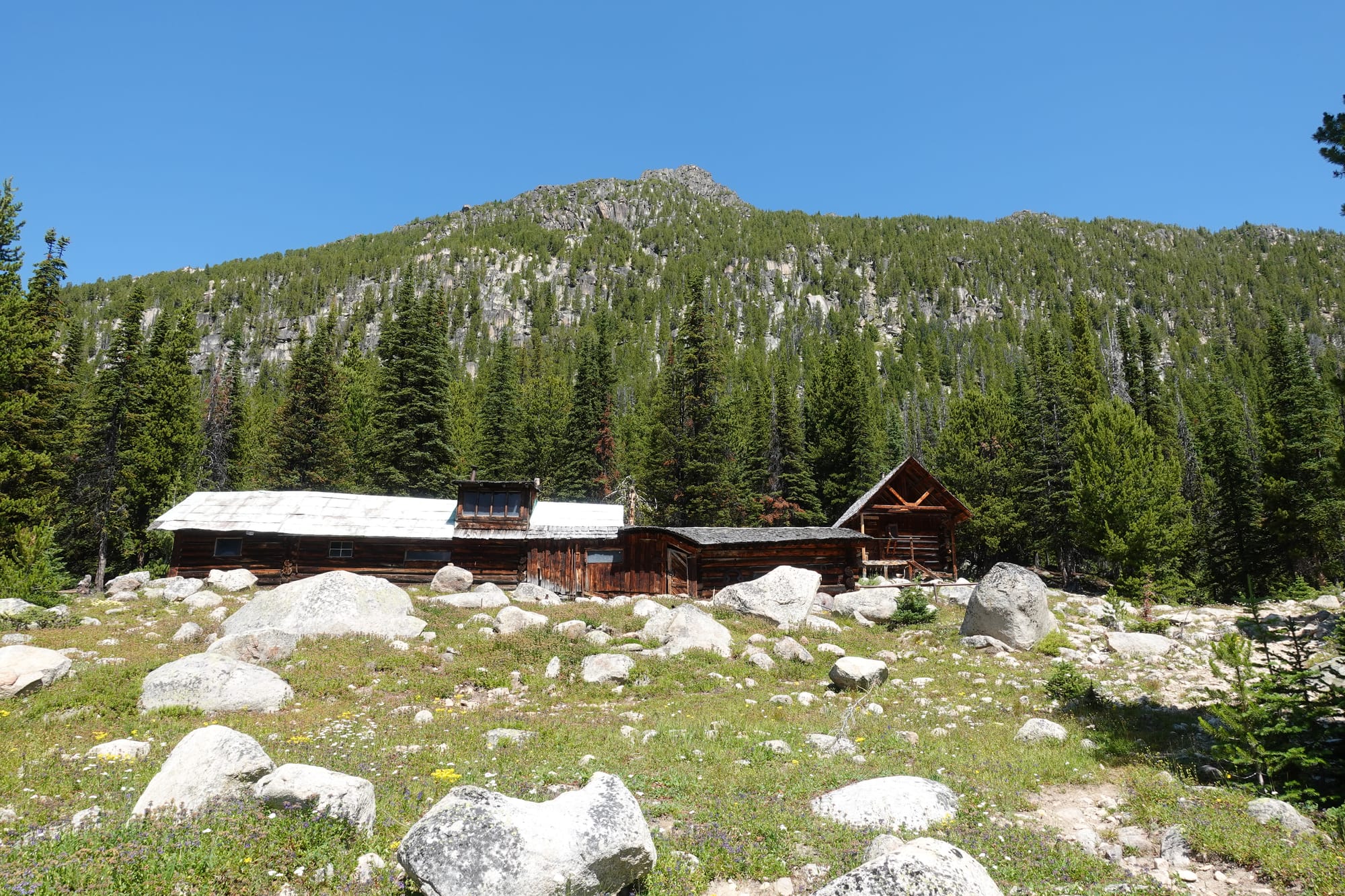
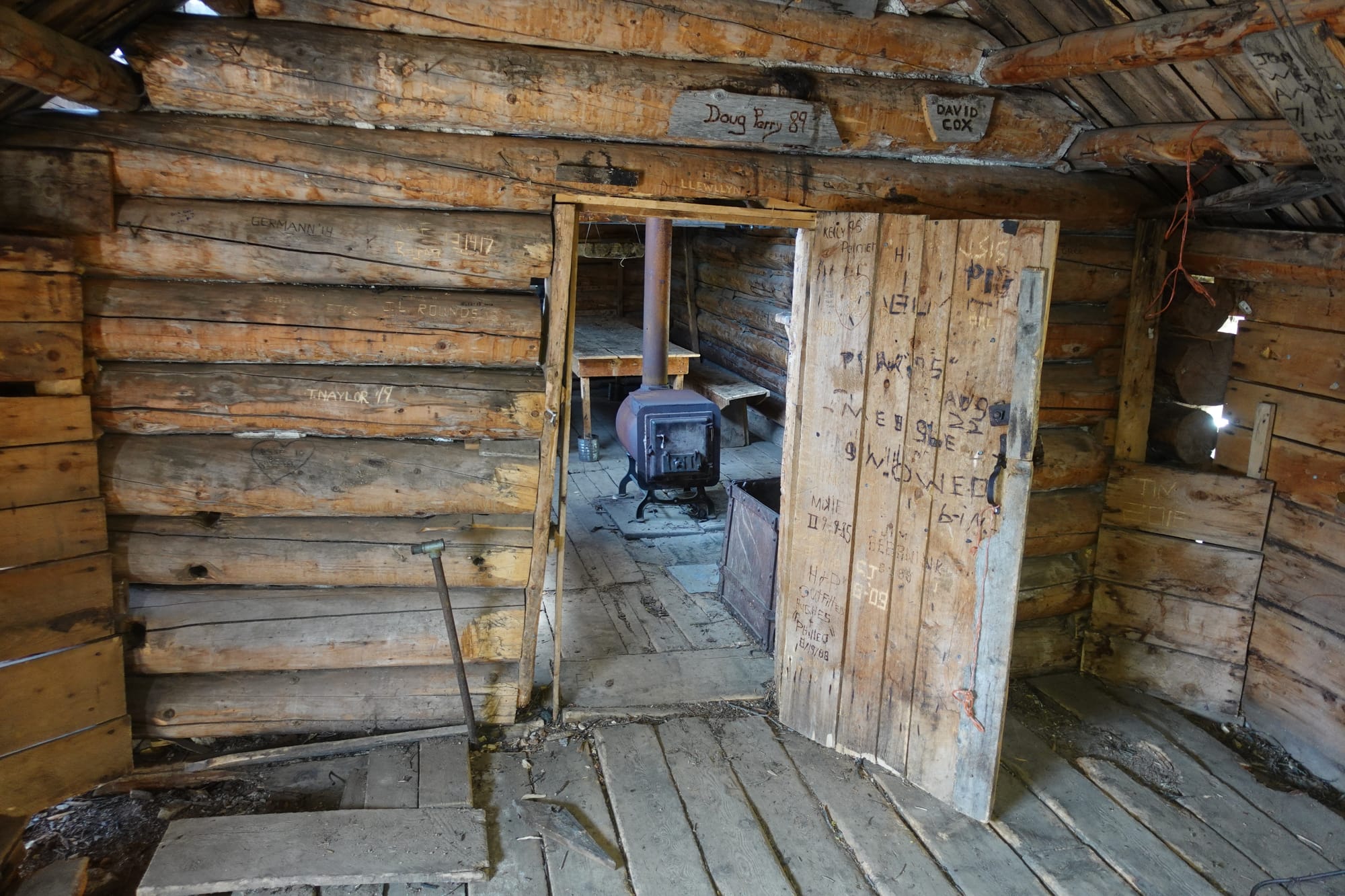
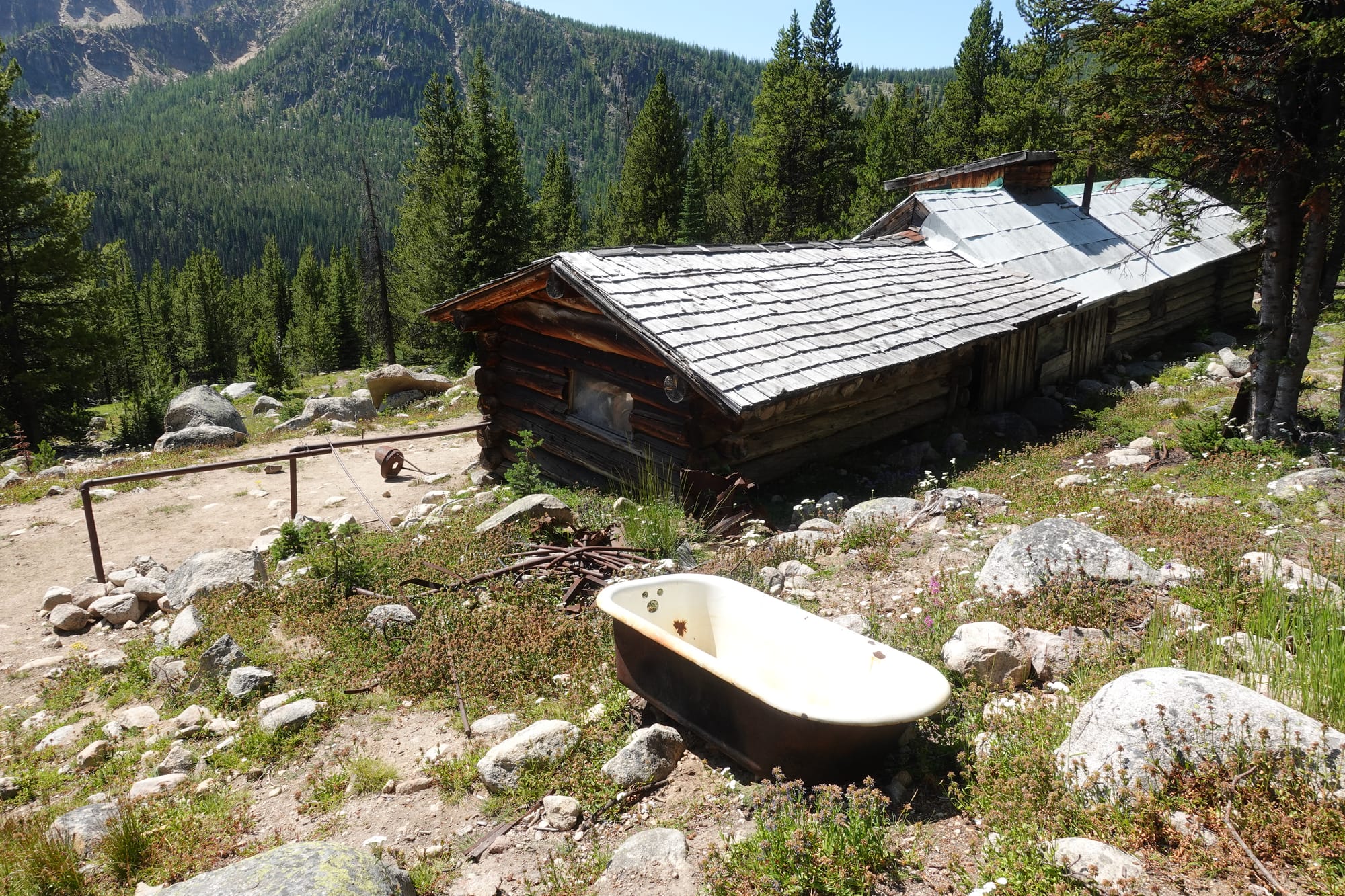
Bunkhouse