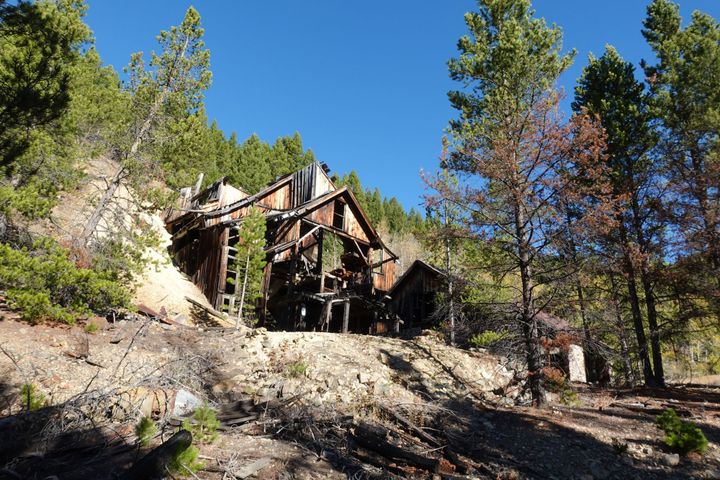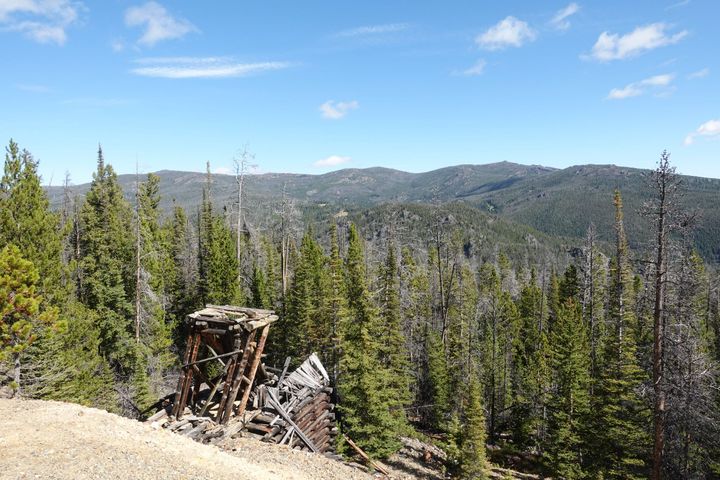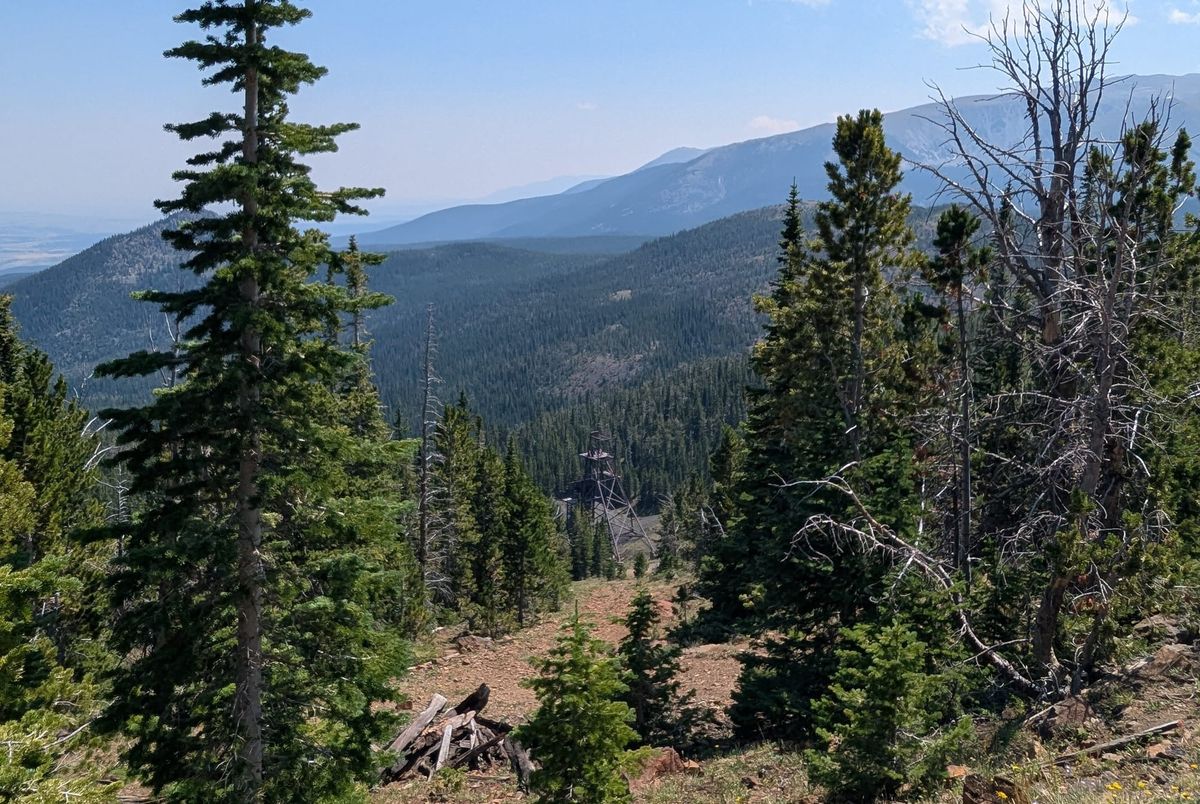
Named for Thomas Chalkley Benbow, an aviation pioneer, inventor, and prospector, the Benbow mine saw little success during his lifetime. Situated at an elevation of more than 8,400 feet in the Stillwater igneous complex, the mine later proved to be a vital wartime source of chromite, and today, the headframe, a few foundations, and piles of waste rock are all that remain of a site that bustled for just two years.
History
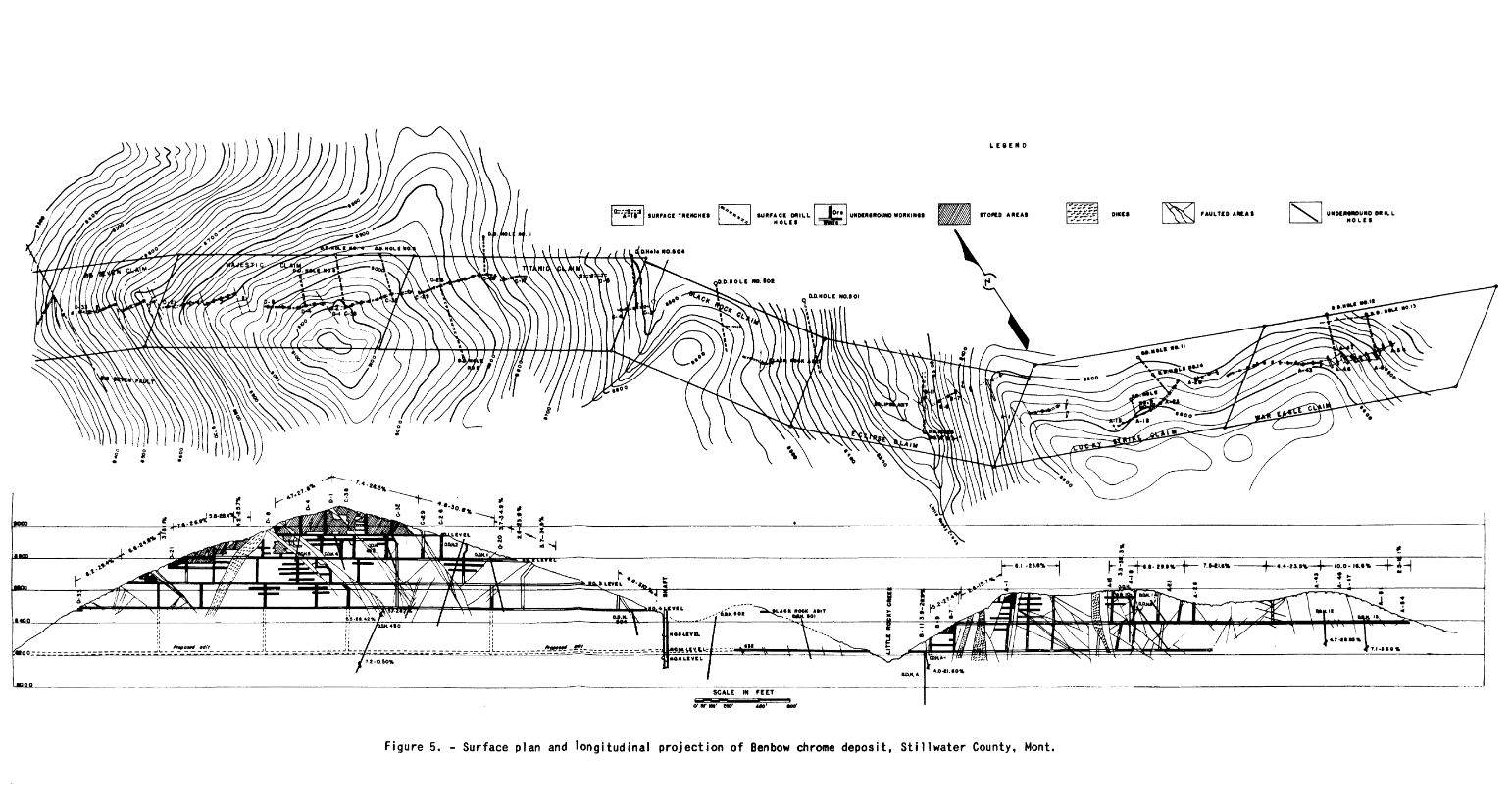
After the failure of his “Montana Meteor” airship during the Aerial Races at the 1904 St. Louis World’s Fair, T.C. Benbow moved on to other endeavors, striking chrome while prospecting in the Beartooth Mountains and staking seven claims in 1905. In the following two decades, he attempted to develop these claims into a profitable venture, with the deposits being explored during the First World War as a possible domestic supply of chromite. However, these explorations, which included driving one adit on the Eclipse claim (see map below), yielded no ore shipments.
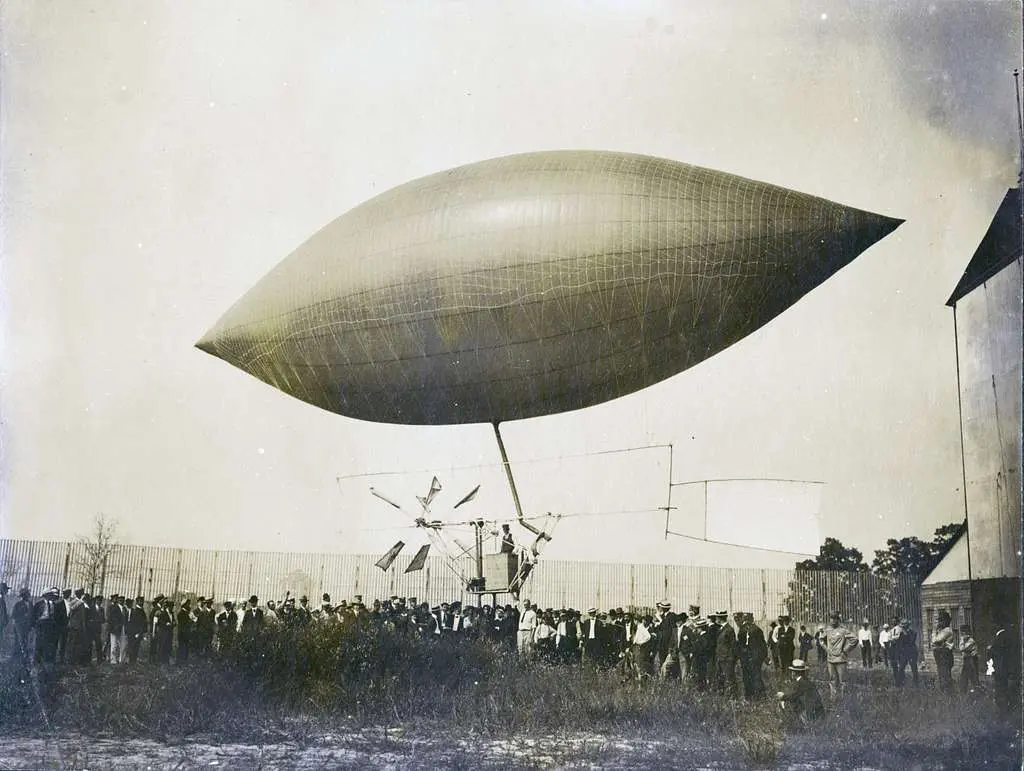
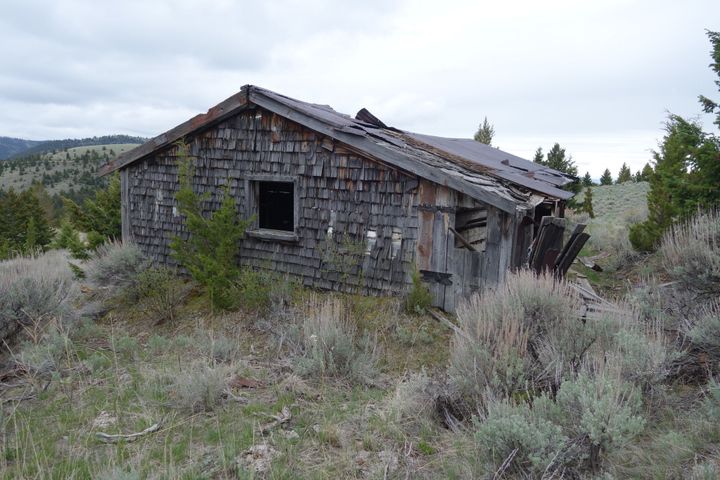
Following World War I, T.C. Benbow continued to develop the property, having three adits driven. At the same time, three cabins and a road to the nearby community of Dean were also built. Later, in February 1929, T.C. Benbow leased the property to an “Eastern syndicate” to begin mining, but the timing of this proved unfortunate: the Wall Street crash in October 1929, alongside T.C. Benbow’s death in 1931, brought an end to these plans. Two years later, the Chrome Products Corporation, a company based in Livingston, Montana, patented and acquired all seven claims. No further work was done at the site, however, until 1939.
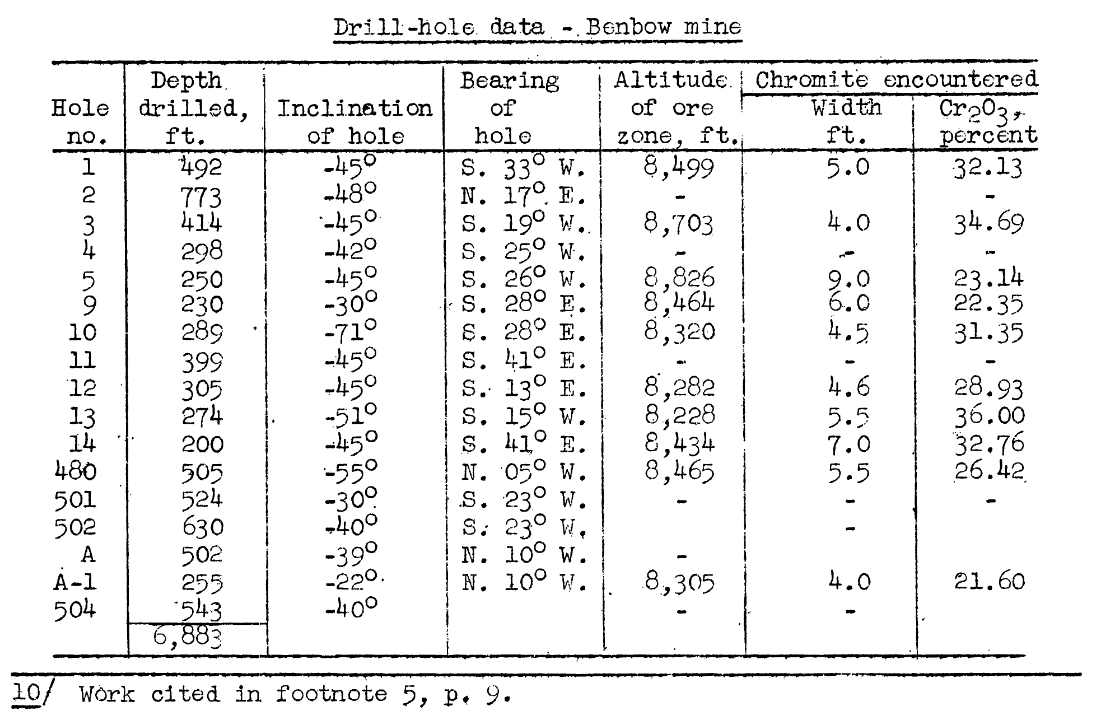
As a result of the Strategic and Critical Materials Stock Piling Act, passed in June 1939 to tackle domestic resource security in the context of growing war in Europe and Asia, Bureau of Mines engineer Paul T. Allsman began to investigate the chromite deposits at the property in July. In the following month, trenching operations revealed a tabular chromite deposit 5,660 aggregate feet long, spanning a distance of 9,000 feet. Consequently, the Bureau began diamond core drilling in June 1940, drilling 17 holes for a combined depth of 6,883 feet, the results of which are shown in the table below. Later that year, the property was sold to unnamed “Canadian interests.”
It was not until the entry of the US into the Second World War that the Benbow mine finally began to see success. With foreign shipments cut off by the German U-boat threat in the Atlantic, the US needed its own domestic supply of chromite to process into chromium for stainless steel production and chrome plating. As investigations carried out by the Bureau of Mines had shown that the Benbow mine sat over vast chromite reserves, it quickly gained critical importance for the war effort. Thus, the Anaconda Copper Company, working as an agent for the government’s Metals Reserve Company, acquired and began work at the Benbow property in June 1941.
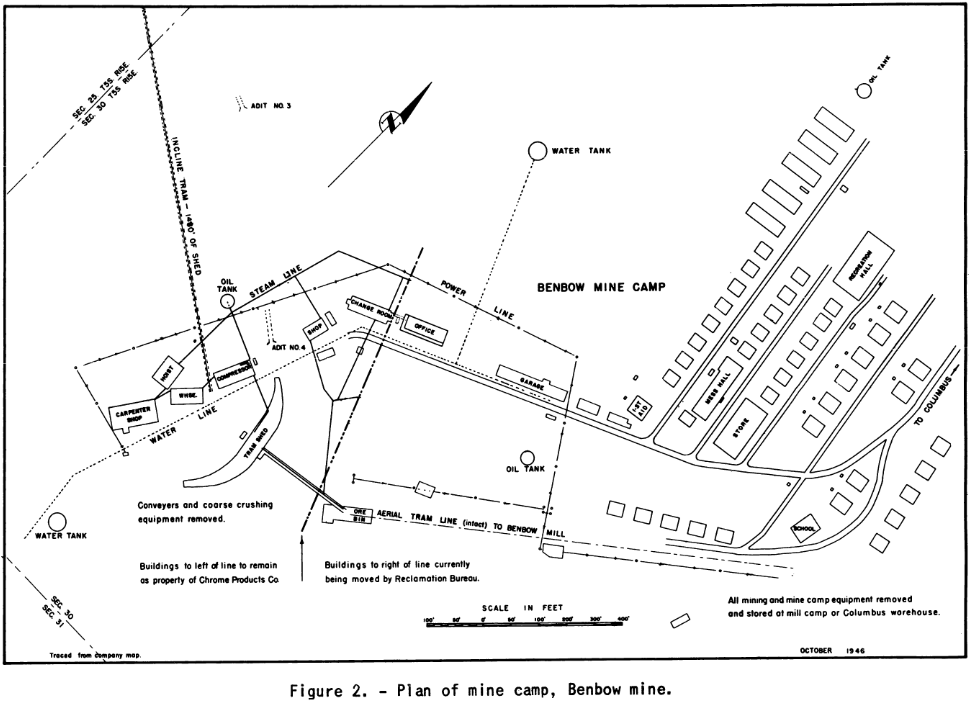
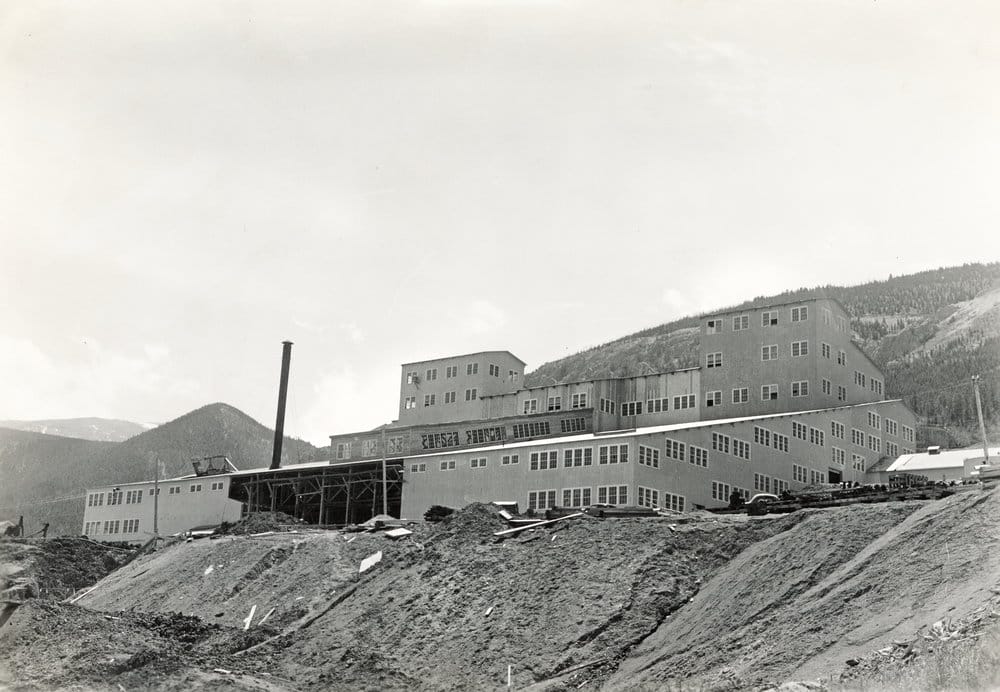
Due to a lack of nearby labor, workers were recruited from Butte, Montana, receiving wages ranging from $0.72-$1.50 an hour ($13.90-$28.95 in 2026) depending on their role in the operation. To house these workers, a mining camp was built near the mine, and to process the ore, a 500-ton gravity concentration mill was built down the mountain in 1942. By the time the mine was closed by government order in June 1943 after shipping lanes reopened, the Benbow mine had produced 224,700 tons of ore, averaging a chromium oxide content of 18.4%. The mill, originally planned to have a 1,000 ton capacity but only half complete before closure, treated 186,369 dry tons of ore, an average of about 435 tons of ore per day over its operating period of just 428 days. From this, 72,566 total dry tons of chromite concentrate, averaging a chromium oxide content of 41.5%, were produced.
To put this in perspective, domestic US chromite production was 14,259 tons (at 44.3% chromium oxide), 112,876 tons (at 43.2% chromium oxide), and 160,120 tons (at 43.8% chromium oxide) in 1941, 1942, and 1943, respectively. In fact, the 1942 edition of the US Bureau of Mines Minerals Yearbook specifically mentions Benbow as having “exceeded the recorded annual production from any domestic chromite property” after just 10 months of operation. Overall, the Benbow mine, together with the nearby Mouat-Sampson mine, and US Vanadium Corporation’s operation near Red Lodge, propelled Montana into the position of the top wartime chromite producer in the US, with the state producing more than half of the nation’s supply by 1942. Although comparatively low-grade, this ore was a crucial emergency reserve until higher quality foreign supplies could once again be accessed.
Workings and Remains
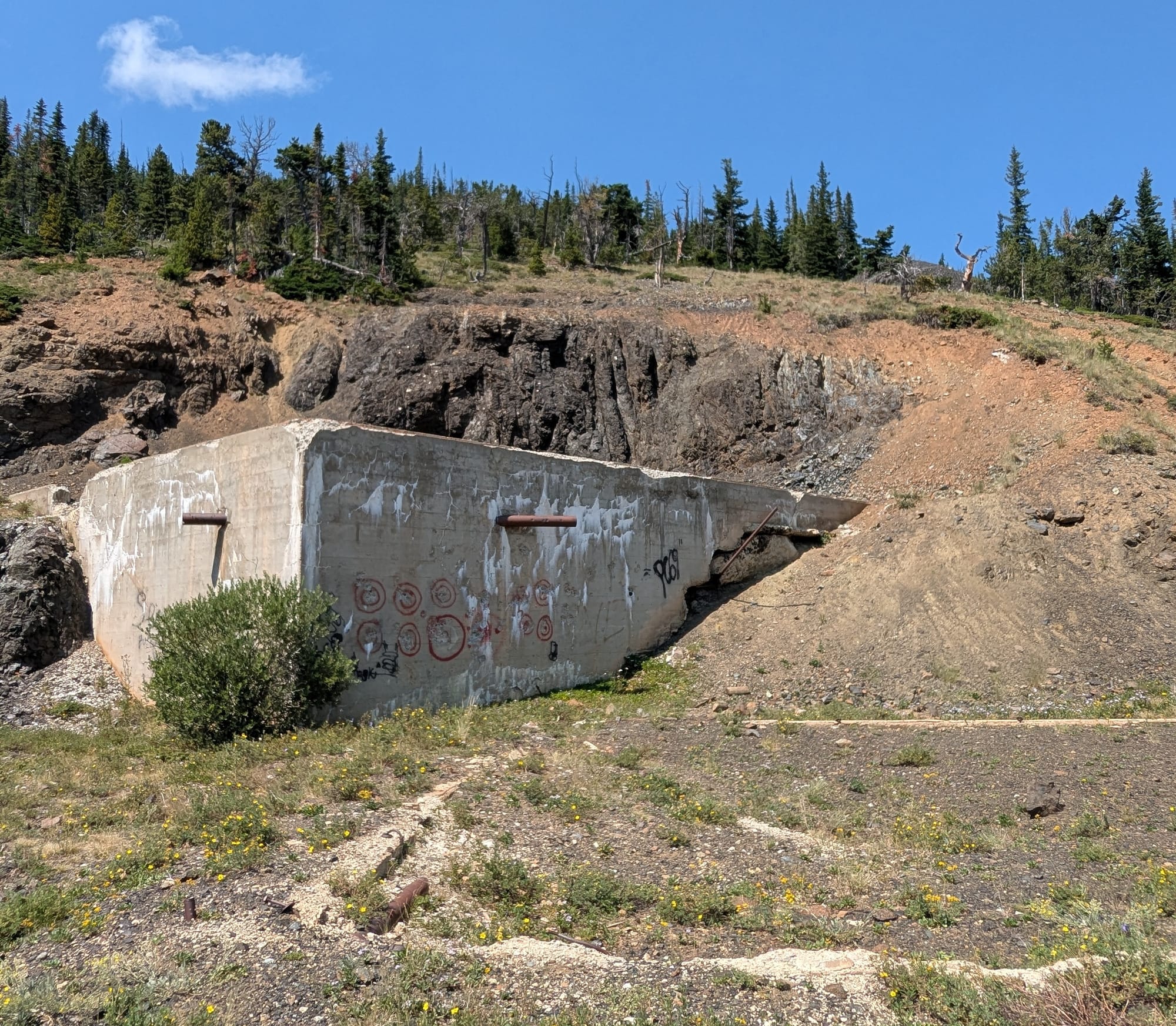
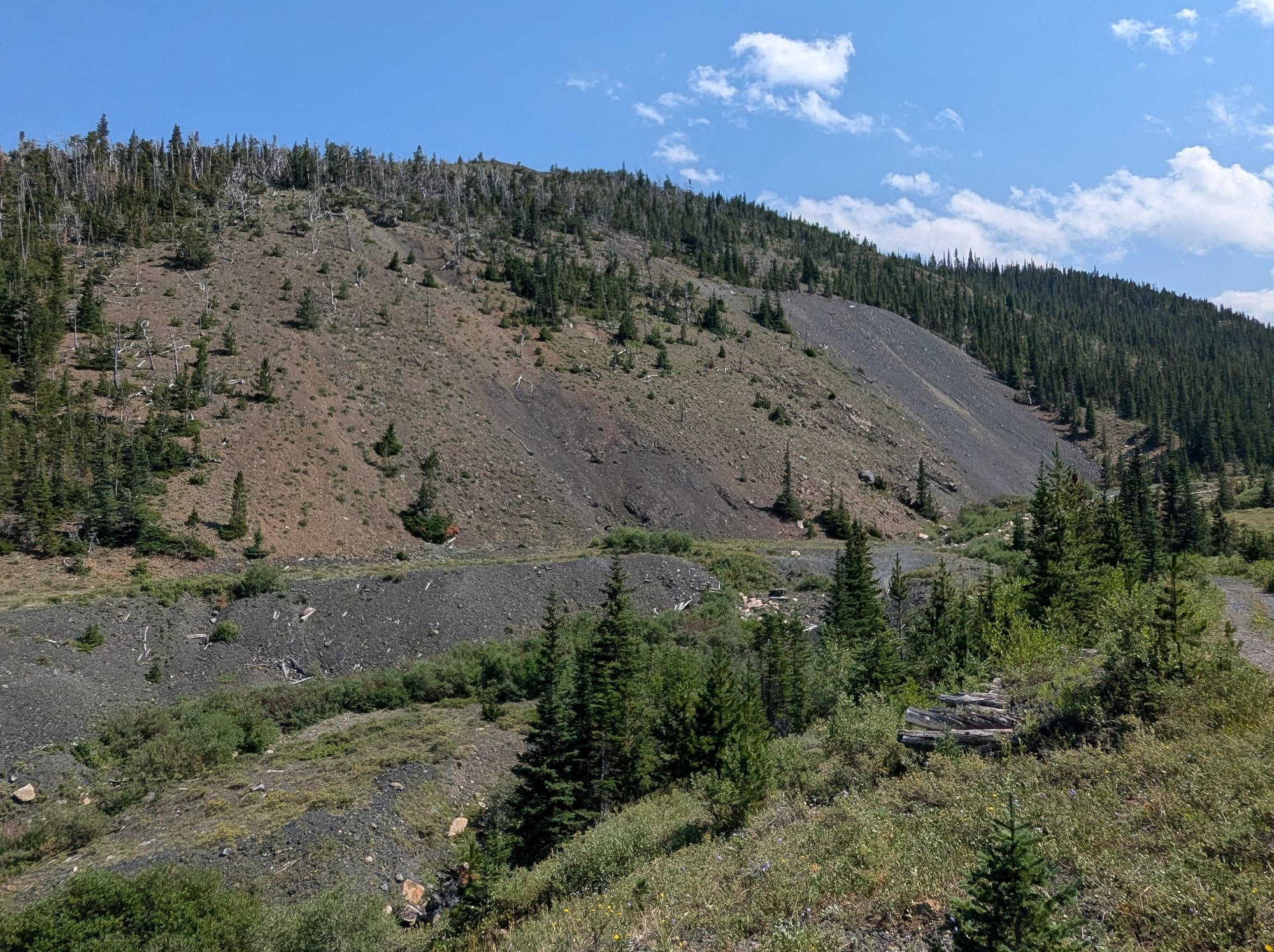
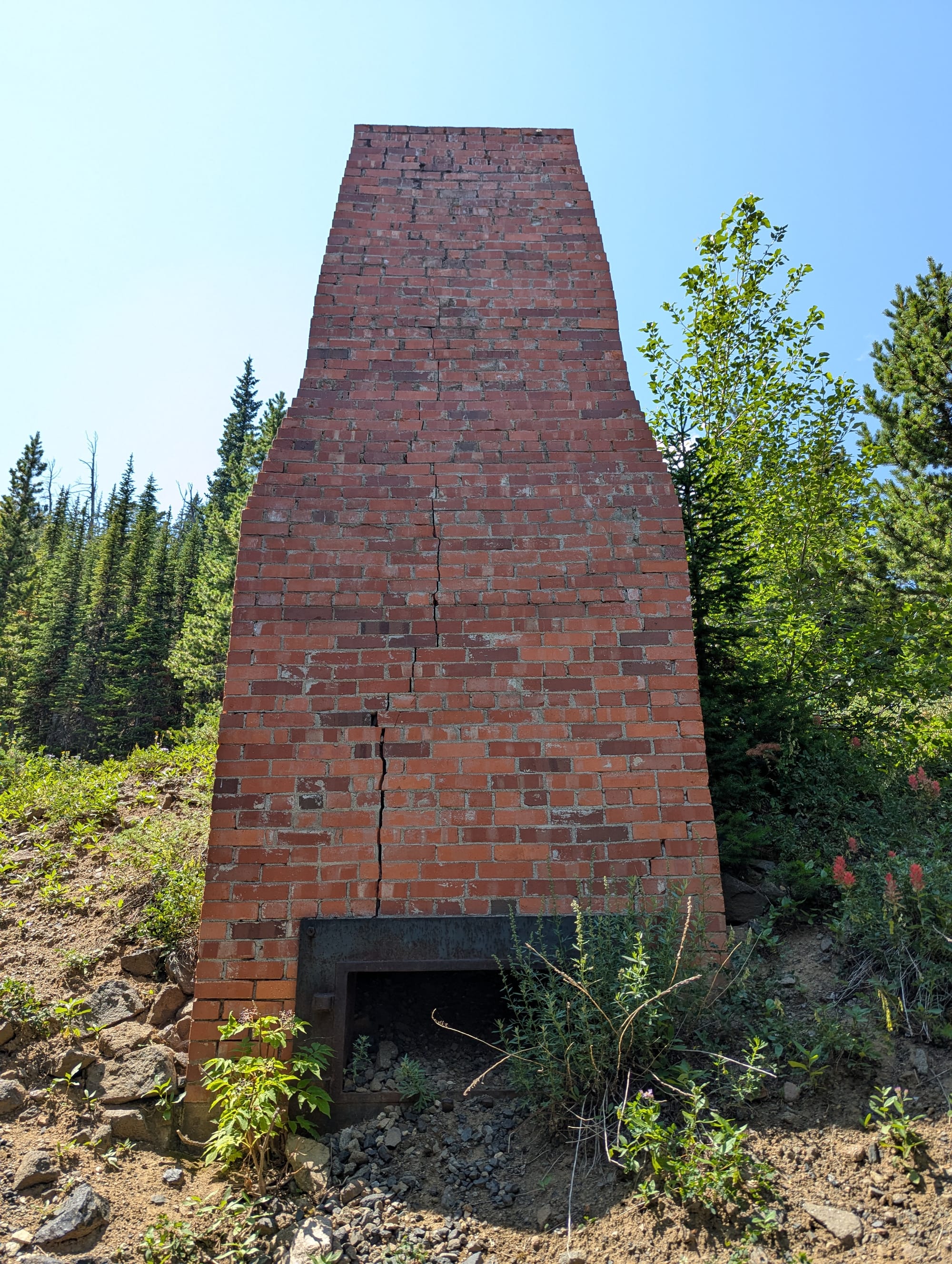
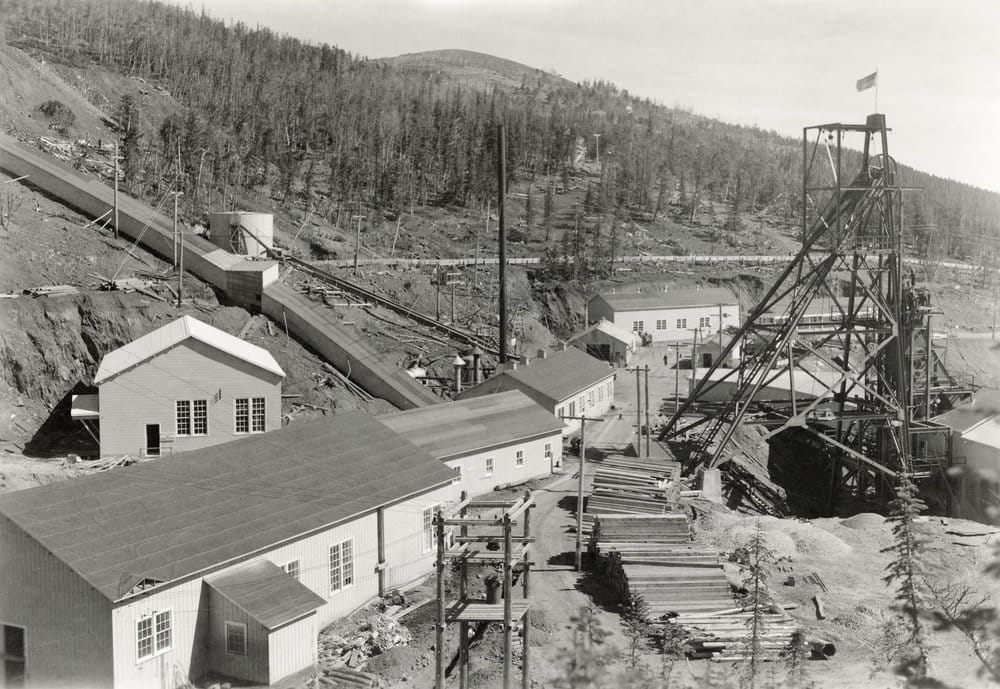
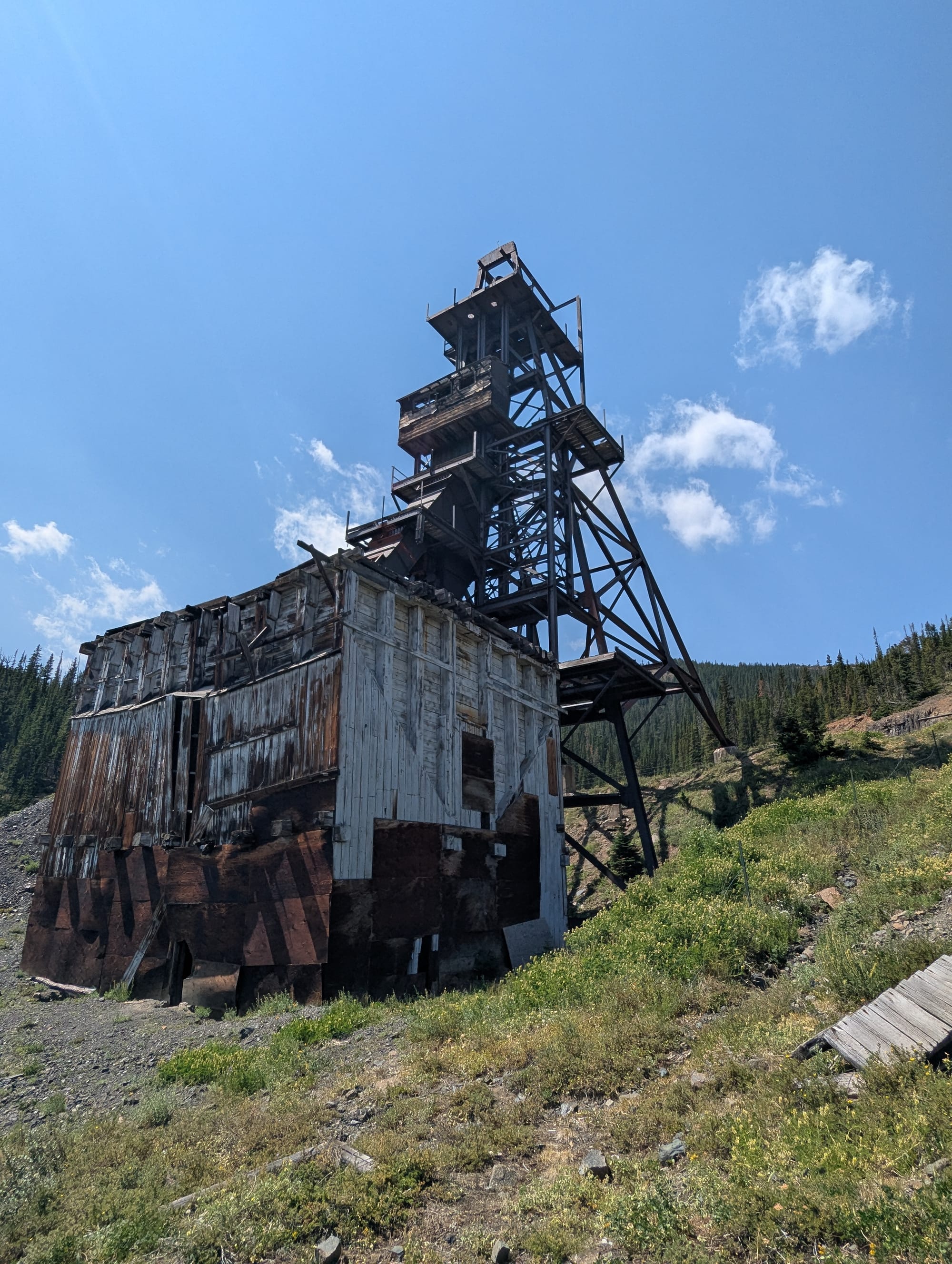
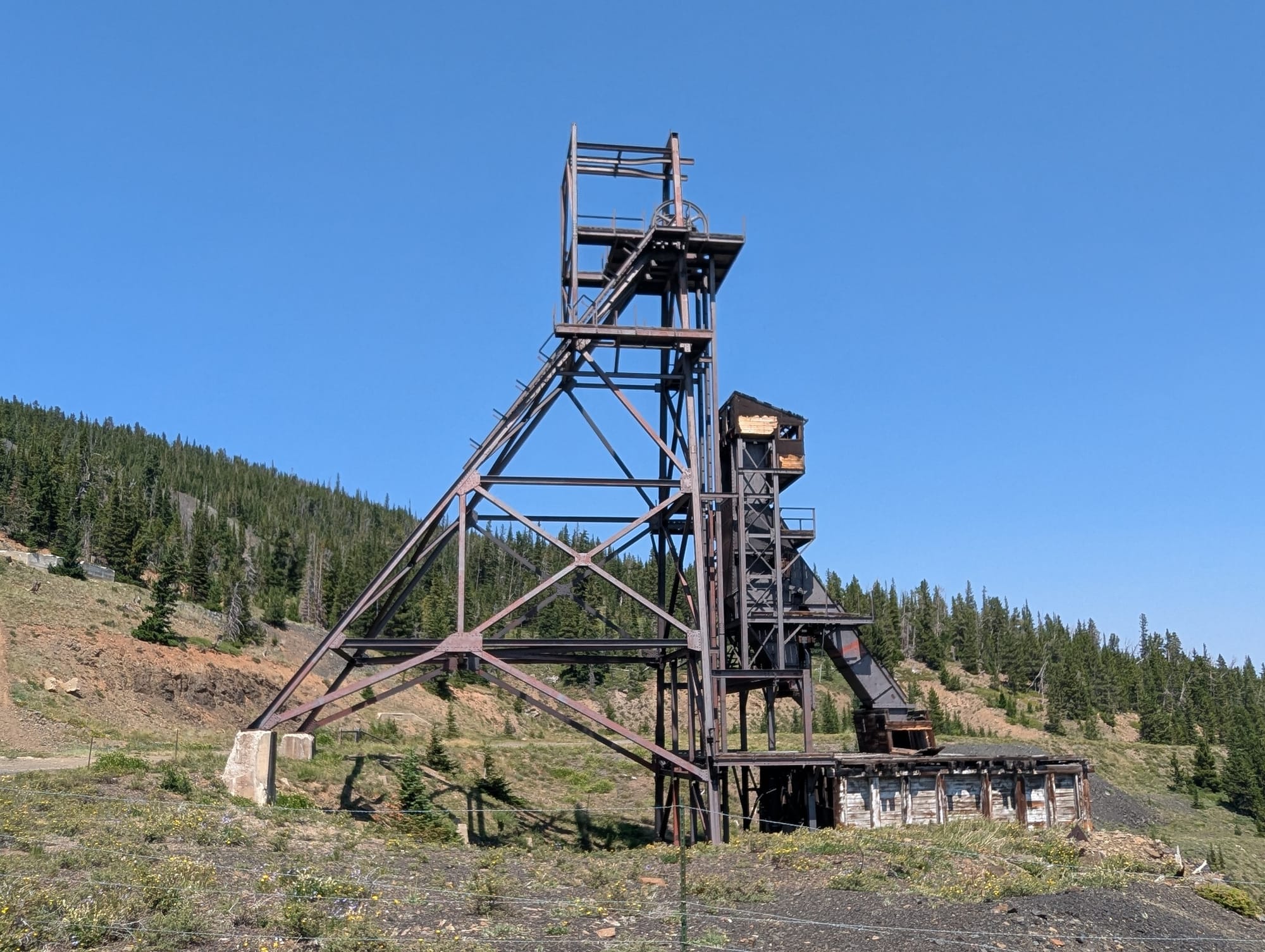
Totalling 46,787 feet of workings, the Benbow mine included a steel headframe over the almost 400-foot shaft, several shop buildings, more than 1,400 feet of shed-covered incline rail, and a 3.5-mile aerial tramline to the Benbow mill. Today, the headframe, an ore bin, a few caved/filled adits, some concrete foundations, and waste rock piles are all that remain of the mine; the aforementioned mining camp and nearly all other structures were removed soon after the end of the War by the Reclamation Bureau. Similarly, at the millsite, all that remains are concrete foundations and columns, while the imprints of the tailings ponds have been overgrown by vegetation.
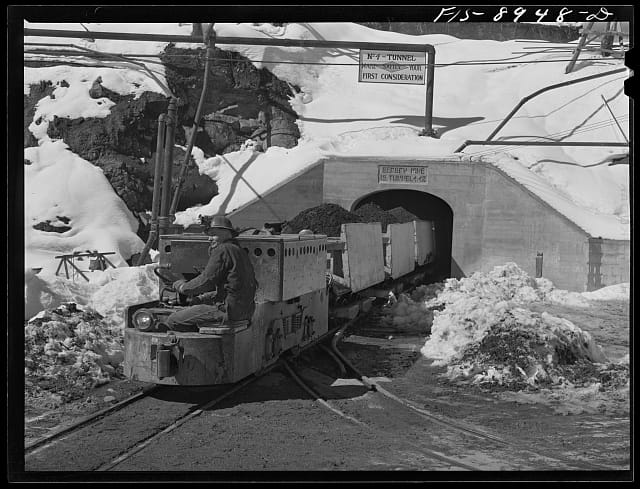
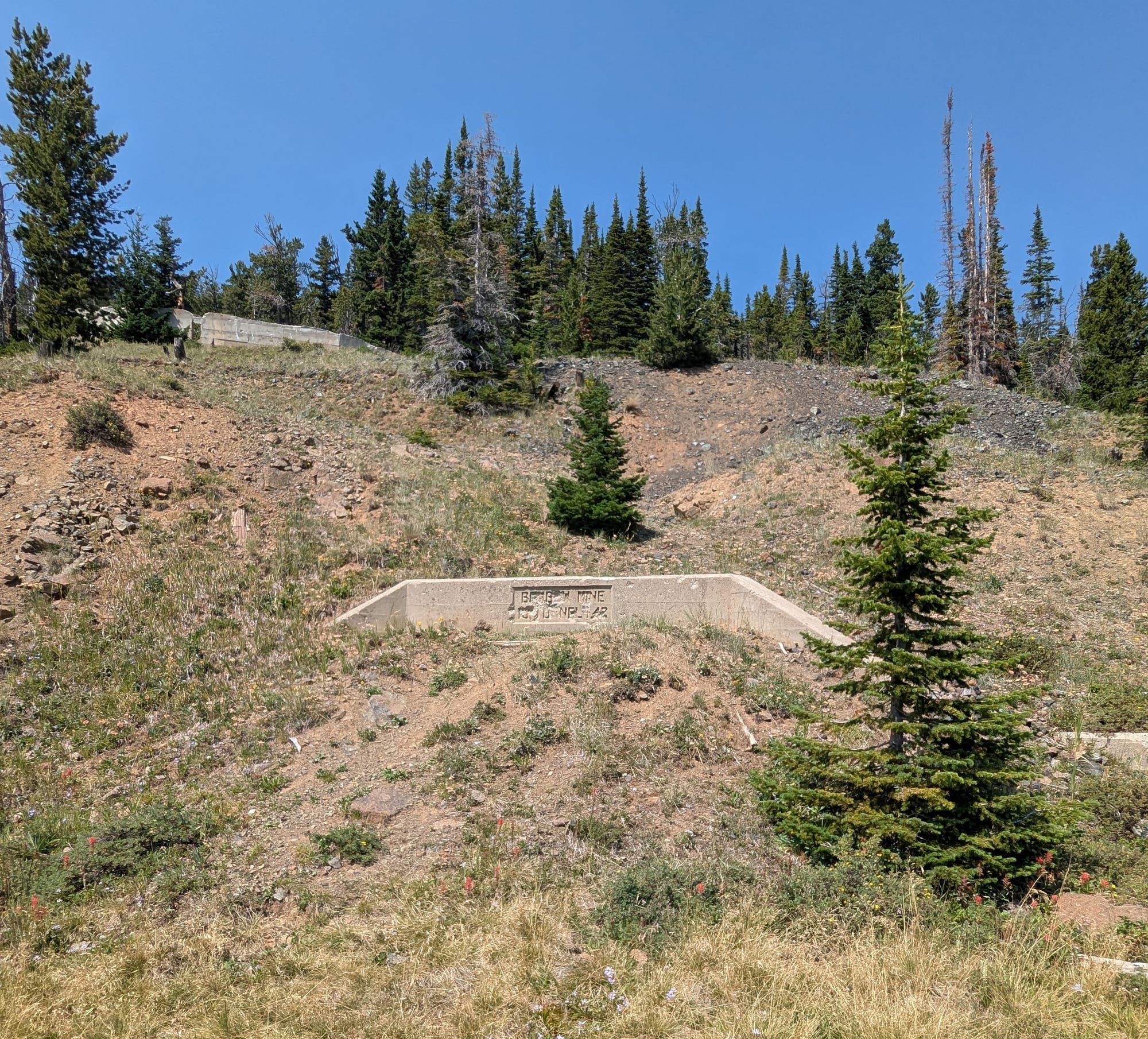
Although few structures remain at the mine, it is still worth a trip. The main attraction, of course, is the headframe, providing a fascinating dichotomy between the surrounding mountains and the area’s industrial past. Unlike the foundation remnants, the headframe and ore bin have avoided being graffitied, although peeking in the ore bin does reveal a few (though thankfully not many) not-so-old bottles. Remnants of the incline rail can also be glimpsed, in the form of timber scraps, slivers of rail, and rusted wire rope sections hidden in the brush on the way up to the highest elevation waste rock pile (~8,900 feet).
The Benbow mine site is on private land in the Custer-Gallatin National Forest, but is open to public access; please respect the site. The easiest way to get there is from Dean, MT, on Forest Service road NF-2414 (also called Benbow Road). We drove most of the way in a Toyota RAV4 without much issue, but a vehicle with good clearance is recommended. The lower section of the road also runs through grazing land, so there were some cows on the road.