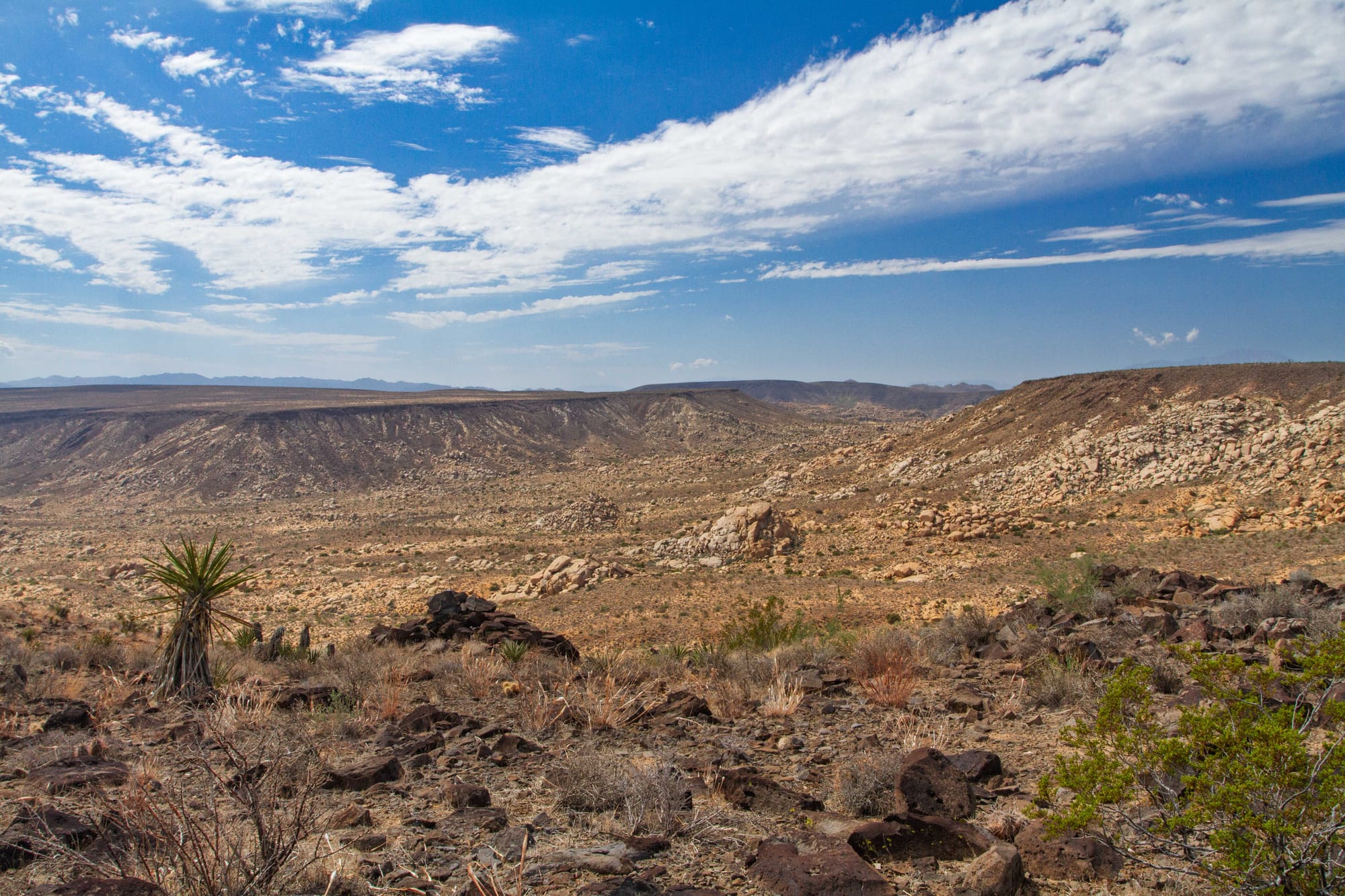
Black Lava Butte is one of a pair of mesas rising from the desert north of Pioneertown within the Sand to Snow National Monument, its dark basalt cap slowly eroding at the edges. Lava-covered mesas are rare in the Mojave, and these two stand as remnants of volcanic flows that spread eastward over granite between 6.9 and 9.3 million years ago. The basalt built up in multiple flows, each 10 to 23 feet thick, eventually creating a cap up to 200 feet deep. These are all that is left. The lava likely erupted from two possible vent areas, one near Chaparrosa Peak southwest of the mesas and another at the northeast end of this mesa.
This mesa also holds a secret.
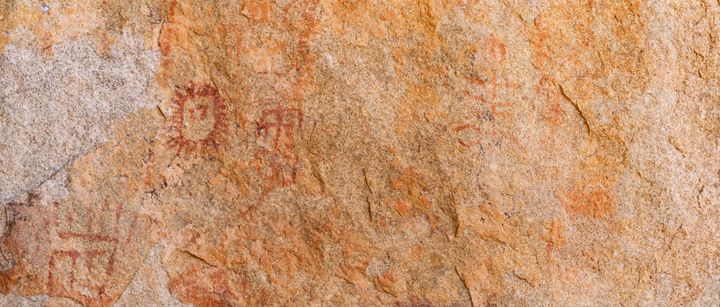
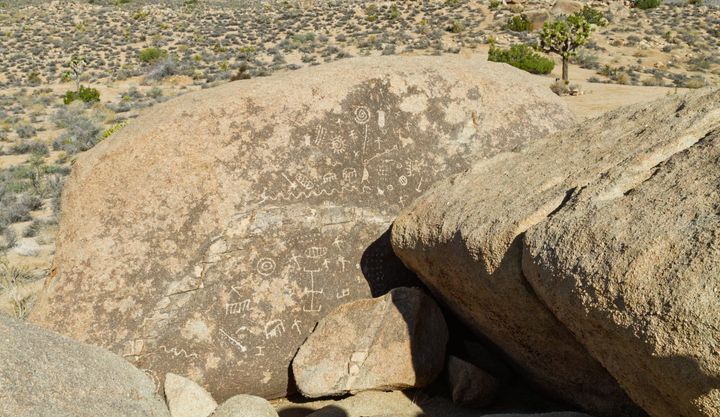
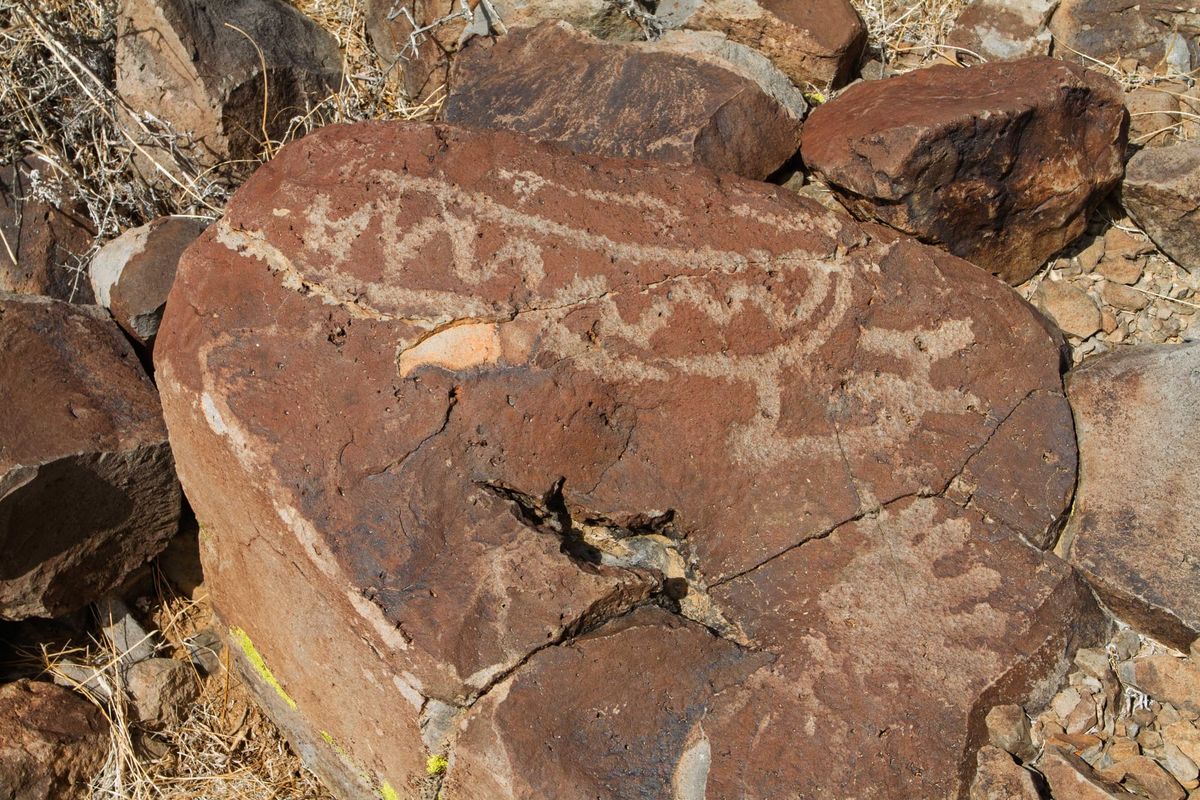
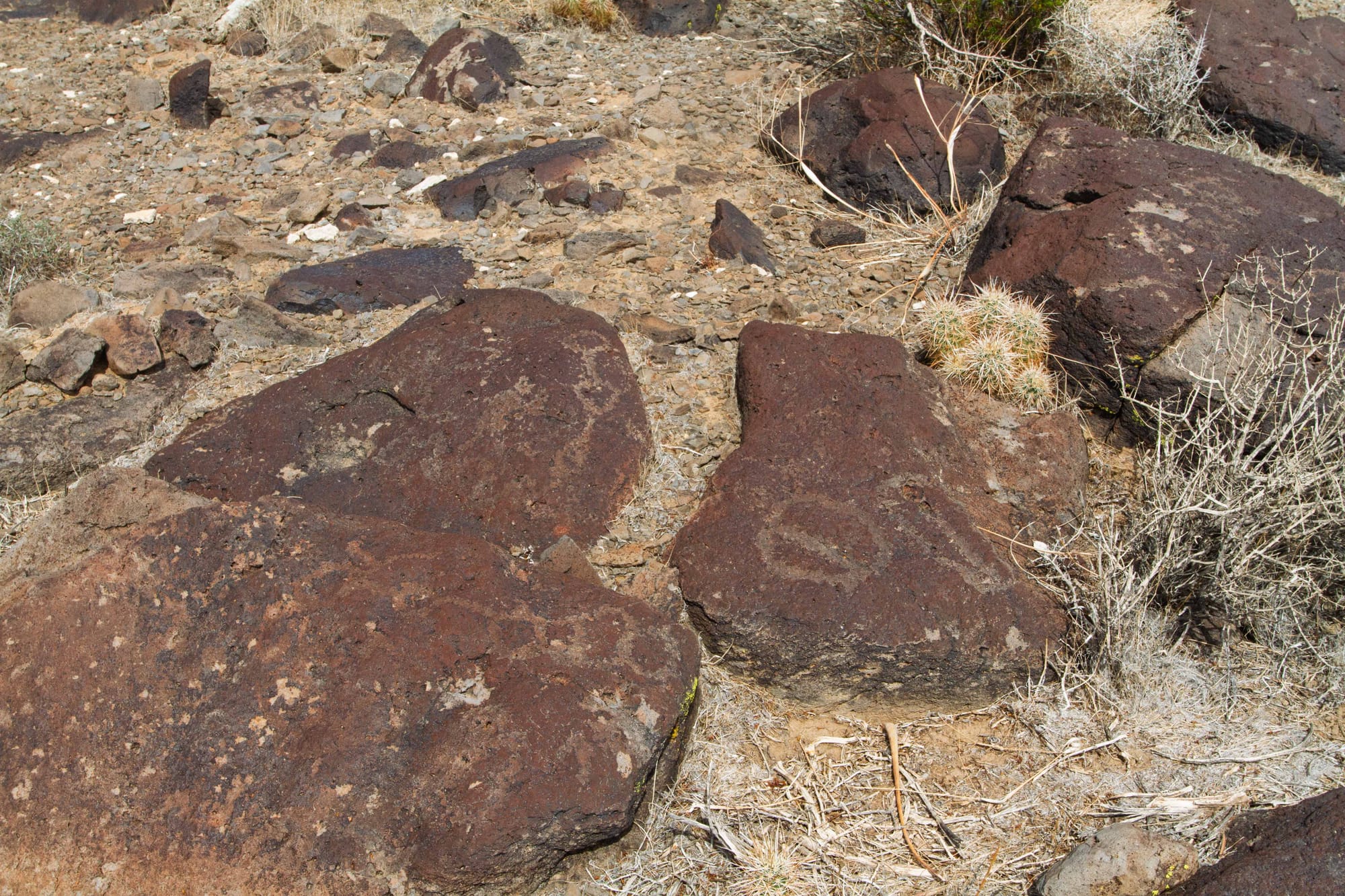
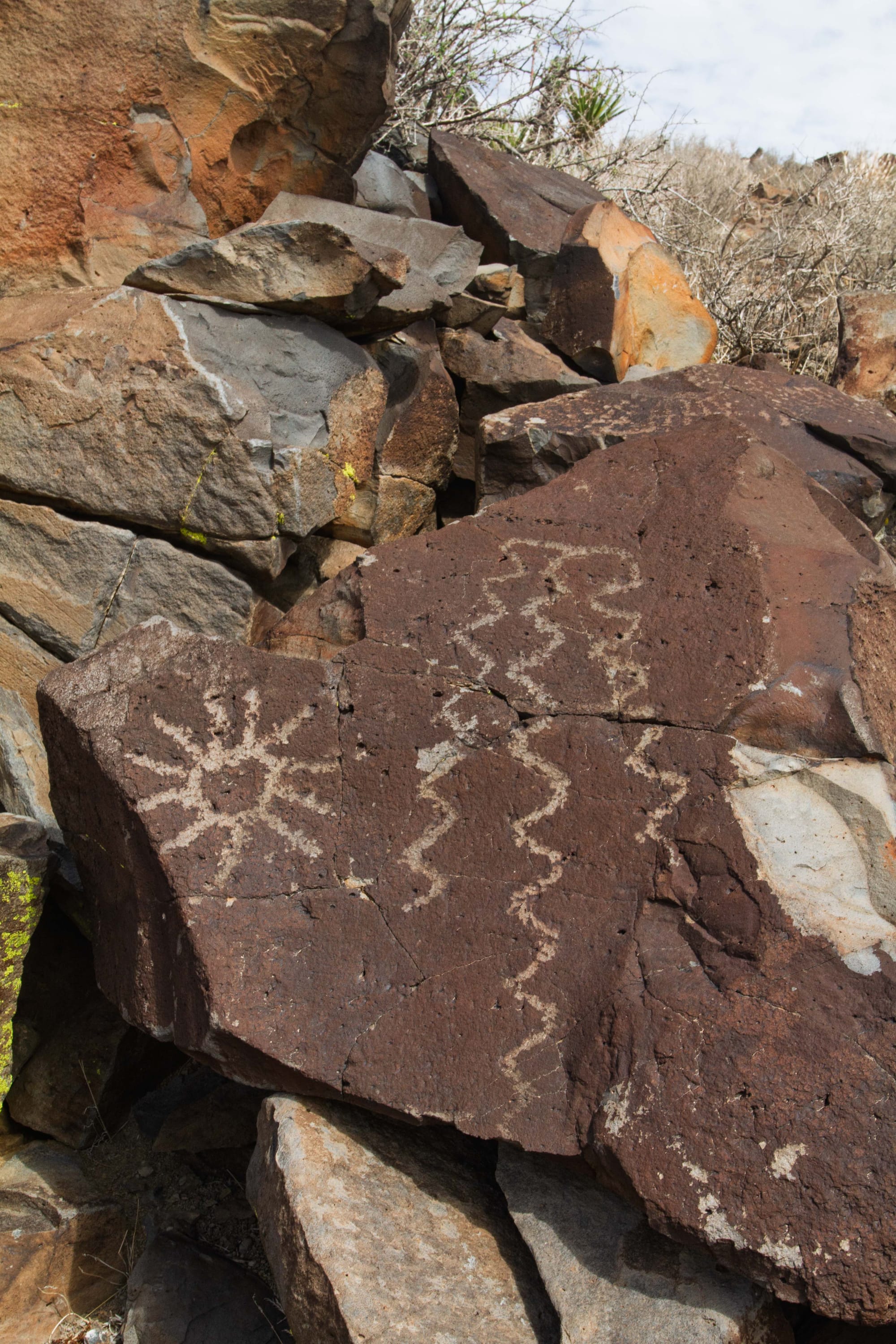
Scattered around the rim are petroglyphs left by the Serrano people carved into rock while gathering and processing seeds. The images are ancient, faint, and obscured by desert varnish. You will have to hunt to find them.
The petroglyphs are both scratched and pecked into the basalt, creating linear and curvilinear designs alongside abstract arrangements of lines and geometric forms that place them within the broader Great Basin rock art tradition. The rock art sites here often occur near bedrock milling slicks, suggesting the petroglyphs were created during seasonal visits for seed gathering rather than hunting forays.
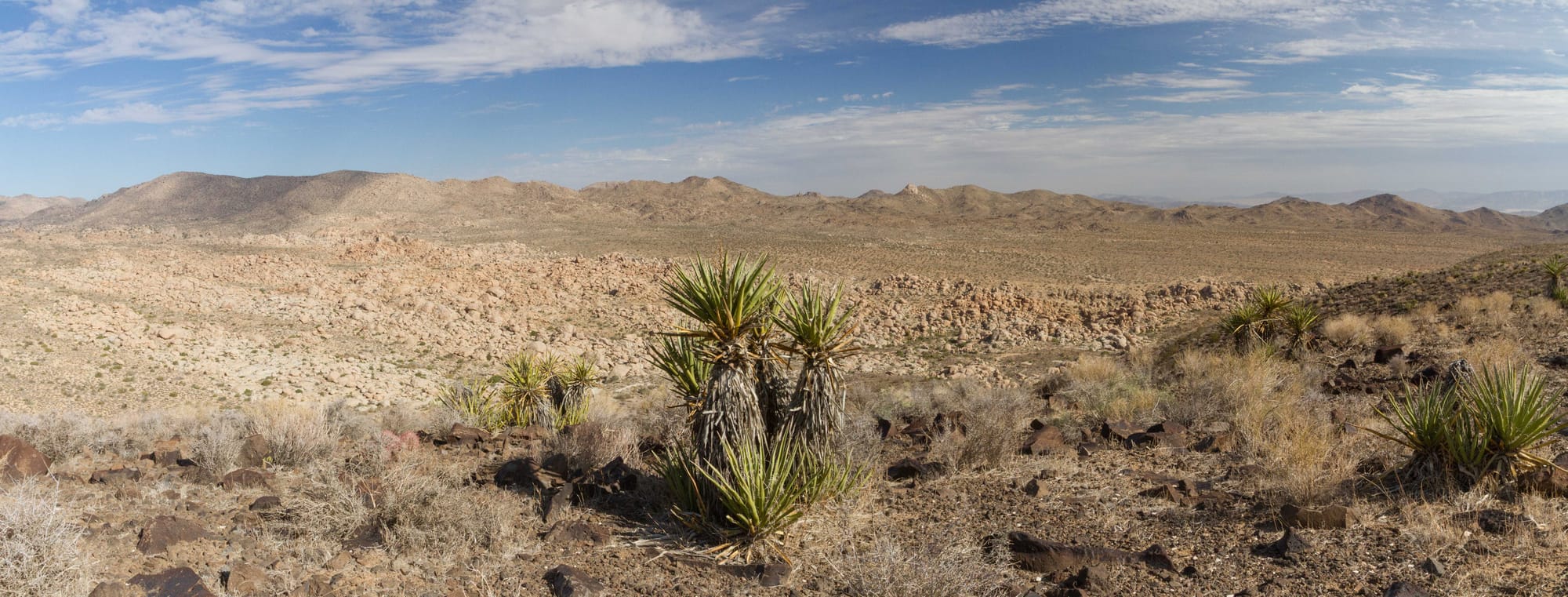
To get to Black Lava Butte, head west out of Landers on Hondo Street. The pavement ends and the road drops into Hondo Wash with its deep sand. Follow the sandy wash road to its end, which requires high clearance and 4WD. Hondo Wash is an interesting site itself.
There is no trail up to the mesa top and you will have to find your own way up. The challenge won't be reaching the mesa but finding the petroglyphs once you're there. They're scattered around the rim in small groups, often just a few images at a time.
Early morning or late afternoon light reveals the subtle incised lines better than midday sun. Look for bedrock milling slicks as the petroglyphs typically appear within a short distance of these processing areas. Watch your footing along the rim. Please follow Rock Art Etiquette to help preserve these fragile cultural resources.
No directions or GPS to this site. Please enjoy my photos.