Corn Springs Petroglyphs
Out in the open canyon country of the Chuckwalla Mountains lies Corn Springs, one of Southern California's most significant (and often forgotten about) rock art sites. More than 600 petroglyphs have been carved into desert-varnished granite boulders over thousands of years. This was a crucial stop along the ancient Coco-Maricopa trail, a major trading route that stretched from the Colorado River to Redlands in Southern California.
The springs marked the meeting point of three groups: the Desert Cahuilla from the west, the Chemehuevi from the north, and the Yuman peoples from the Colorado River area. The petroglyphs they left behind, now protected within the Chuckwalla National Monument, showcase the classic Great Basin curvilinear style characterized by sweeping arcs and intricate geometric patterns.
Among the abstract forms, one remarkable image stands out: a paddle-wheel steamboat that connects ancient and modern desert history. The artist likely saw vessels like the Uncle Sam, which transported miners, soldiers, and cargo along the Colorado River from 1852 to 1877, some 50 miles east. For Native Americans witnessing these steam-powered boats for the first time on their ancestral waterway, it must have been quite a sight—one worth preserving in stone.
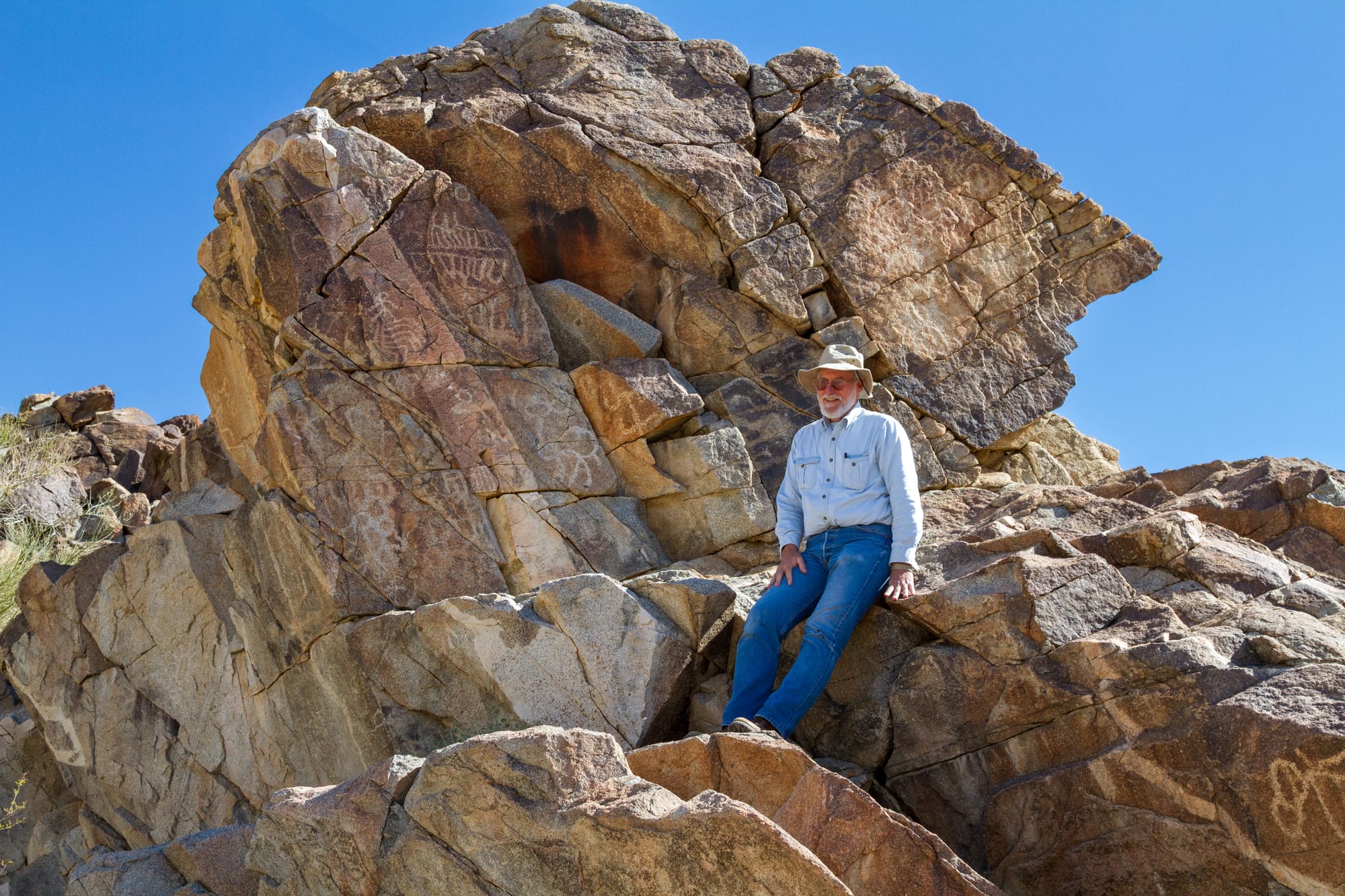
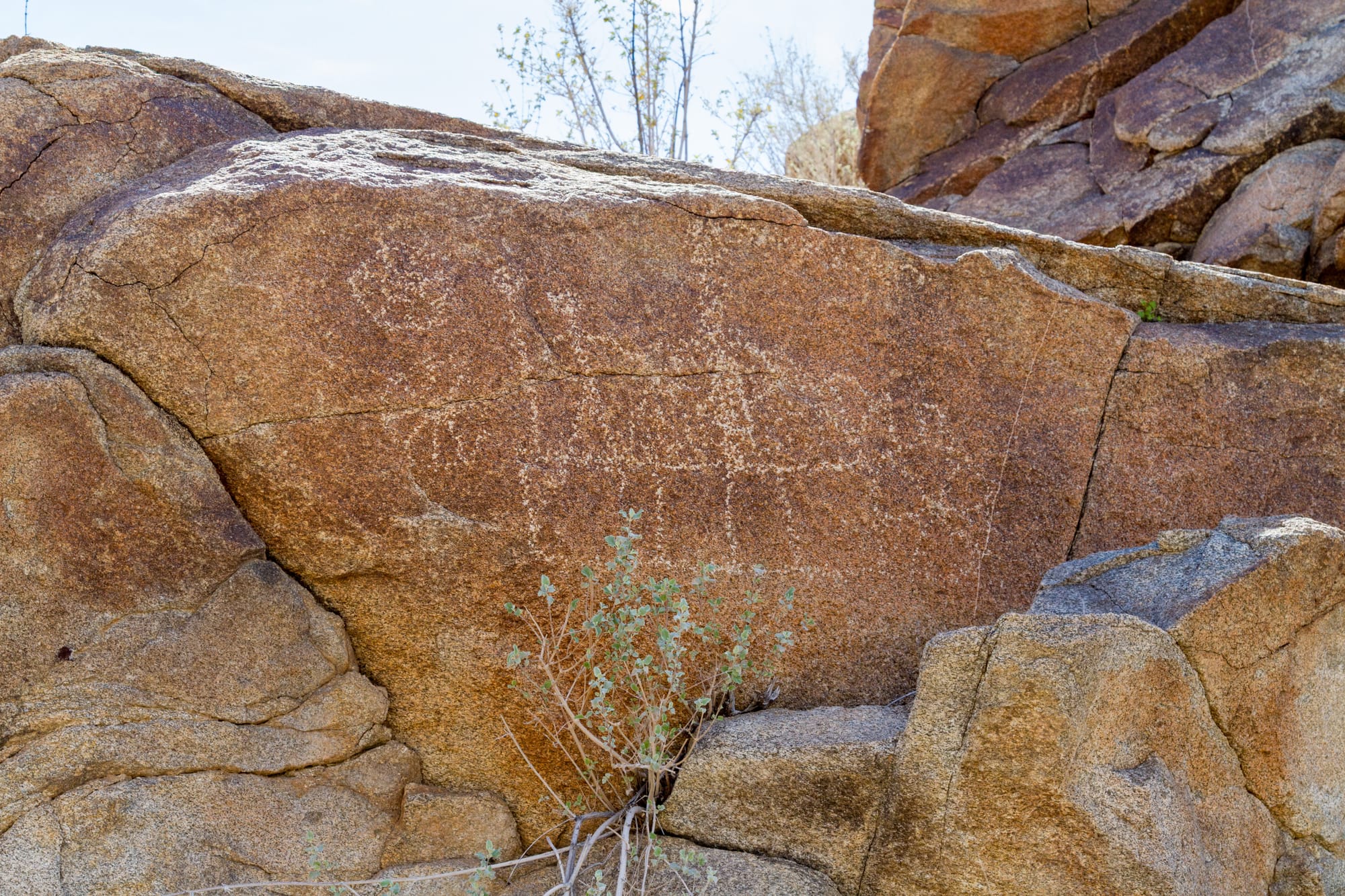
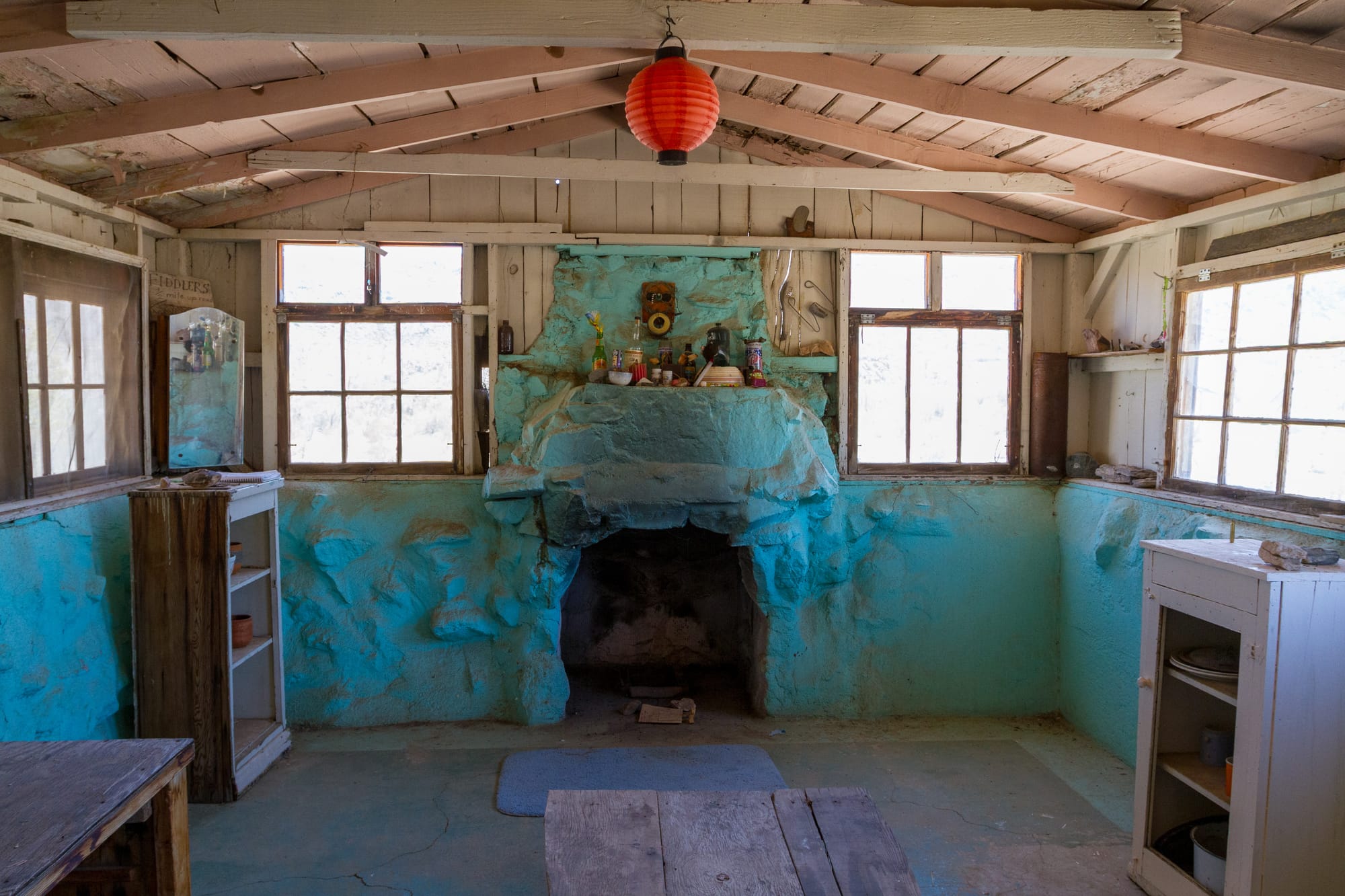
L: Archeologist Daniel McCarthy and petroglyphs. C: Paddle-wheel petroglyph R: Inside the Little Chad Cabin