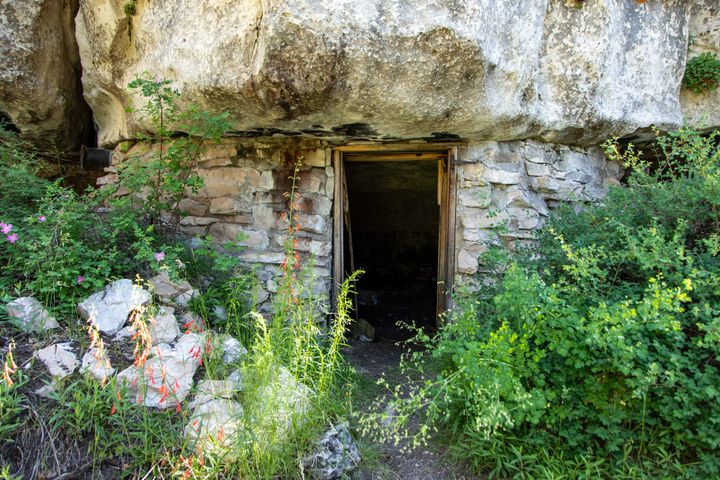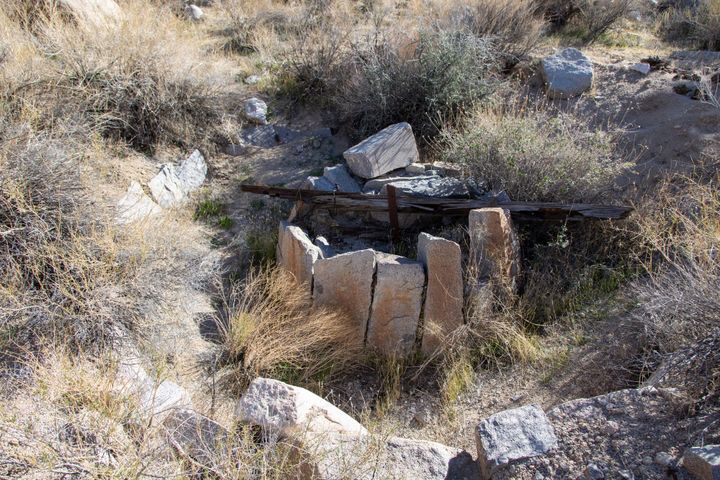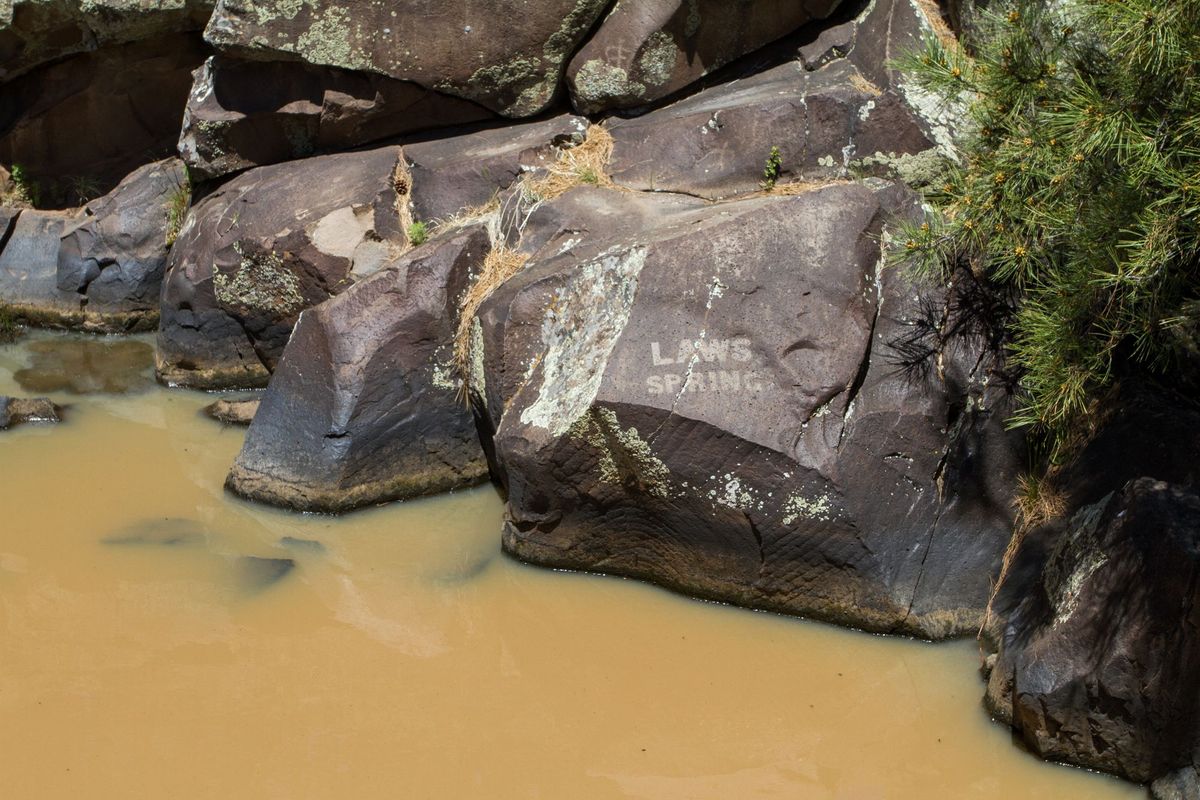
Law's Spring is a rare perennial water source in the high ponderosa country south of the Grand Canyon. Native Americans knew it long before any wagon rolled through. Petroglyphs still mark the basalt walls around the tank. For a few decades in the mid-1800s, it became a critical stop along the Beale Wagon Road, and someone carved the spring's name into the rock with the skill of a professional engraver. Who did it remains a mystery. The inscription is still crisp after more than 160 years.
History
The Beale Wagon Road came from a need to connect the new territory won from Mexico after the Mexican-American War. In 1857, Congress commissioned Navy Lieutenant Edward Fitzgerald Beale to survey and build a road from Fort Smith, Arkansas, to the Colorado River. The project came with an odd requirement: test whether camels could work as pack animals in the American desert.
Secretary of War Jefferson Davis had championed the camel experiment. Major Henry C. Wayne imported the animals from the Middle East, and Beale set out from San Antonio on June 25, 1857, with a crew of fifty men and a string of dromedaries. By October, they had reached the Colorado River. The camels performed better than anyone expected. Beale noted they carried heavy loads across volcanic rock that left his dogs unable to walk, yet the camels showed no soreness. He grew to trust them more than his mules. The muleskinners disagreed. They found the animals foul-smelling, ugly, and ill-tempered, and preferred their stubborn mules to the dromedaries.
Beale's road was modest by any standard. In most places it amounted to a ten-foot-wide track with rocks pushed aside to smooth the way for wagons. But for $210,000, he created a serviceable route stretching over 1,200 miles. From 1858 to 1859, Beale returned to extend and improve the road, eventually connecting Los Angeles to Fort Smith. The route saw heavy use until the Atlantic and Pacific Railroad came through in 1883. Today, Route 66, Interstate 40, and the Santa Fe line all follow portions of Beale's original course.
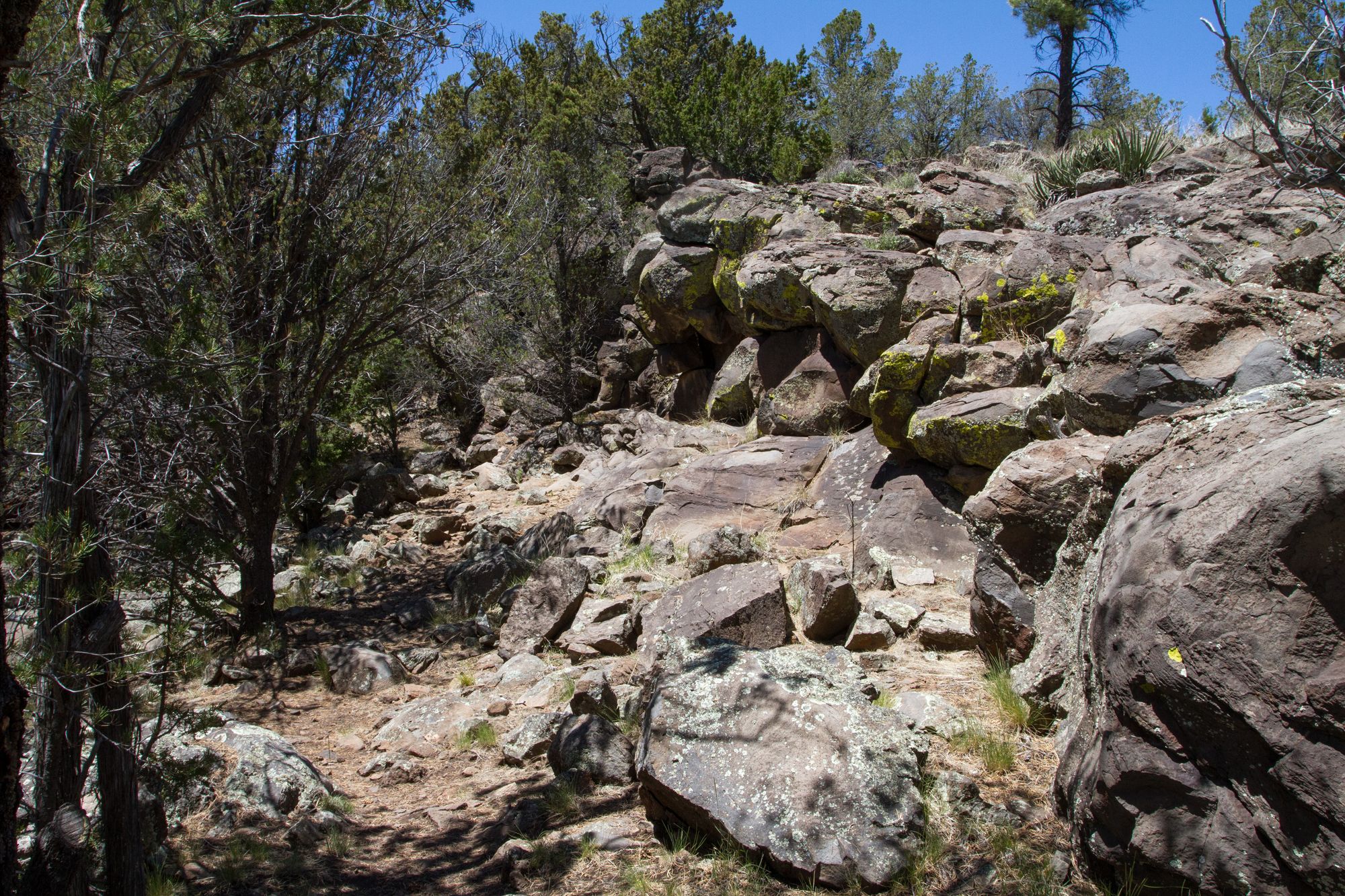
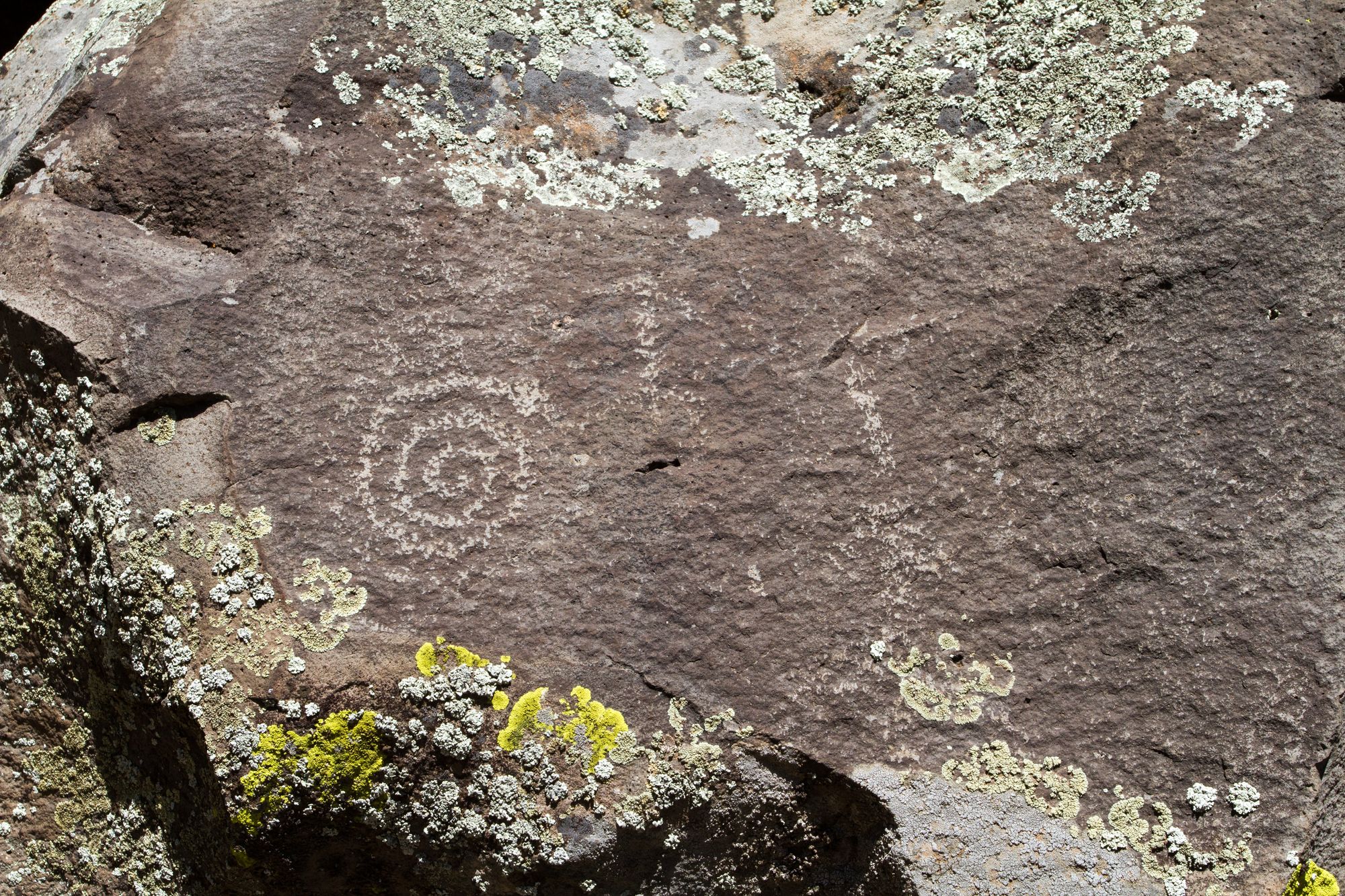
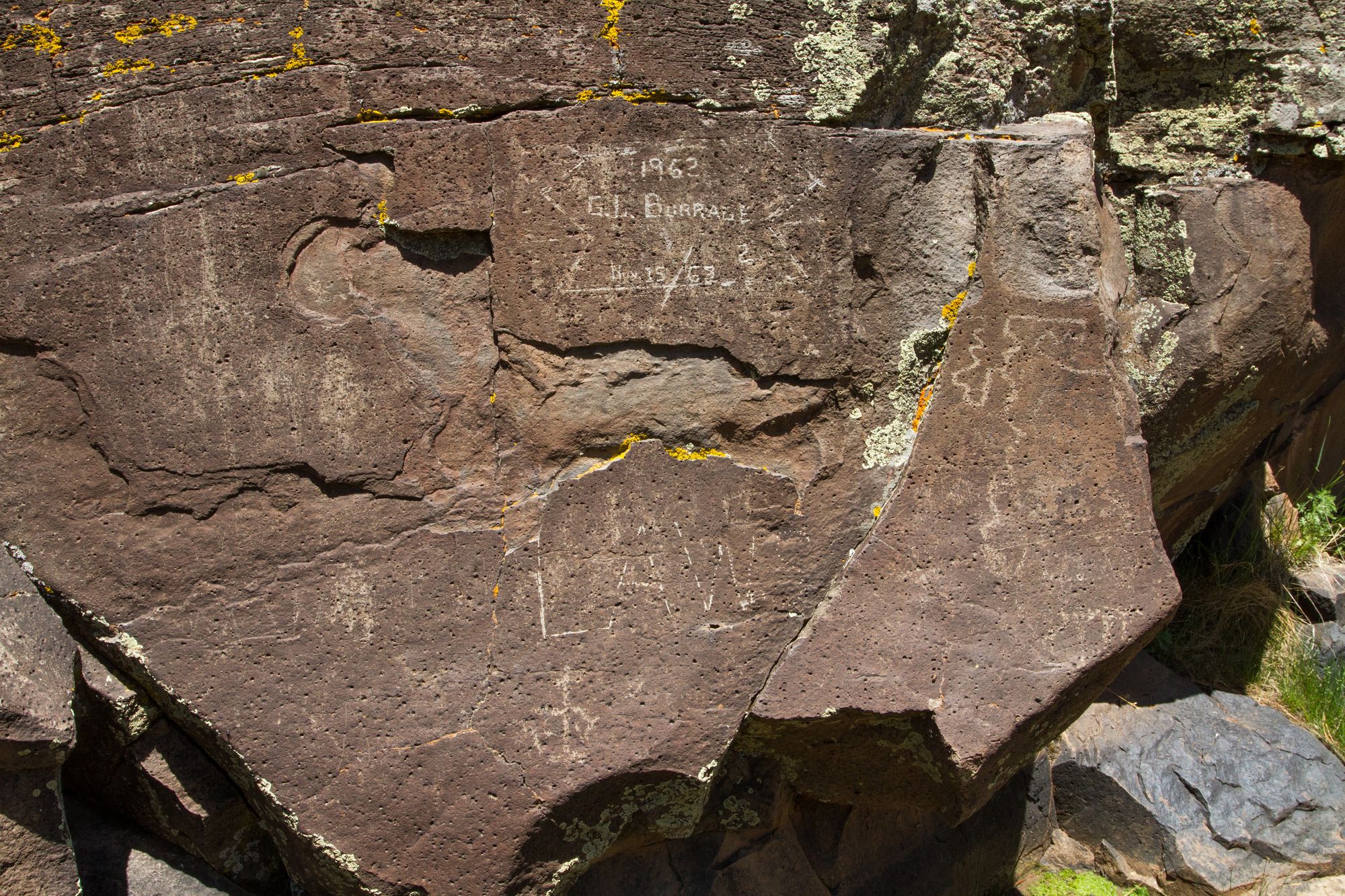
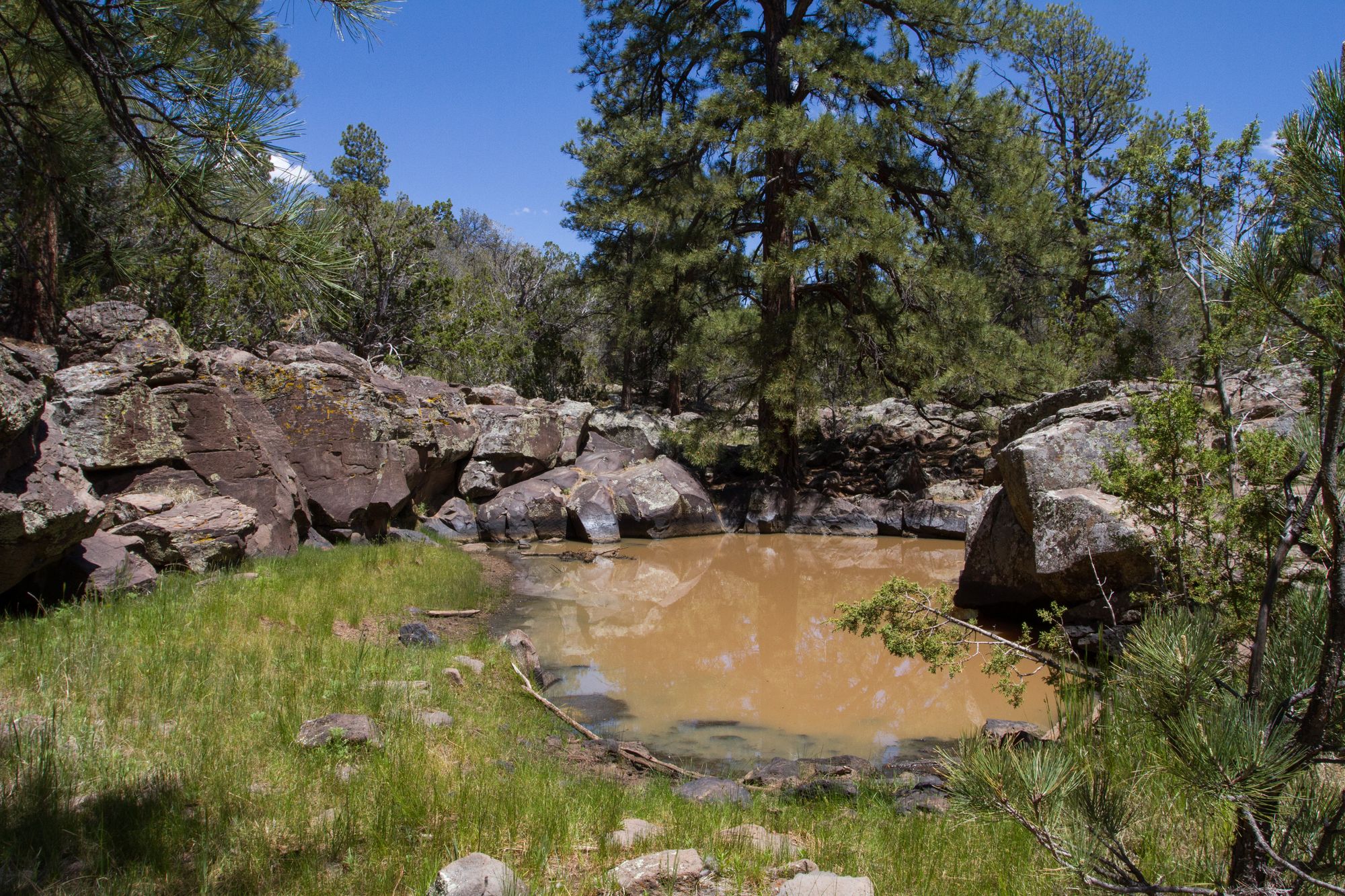
The petroglyphs around Law's Spring predate the wagon road by centuries, carved by people who lived here long before any European saw this country. Beale named the spring for Major W.L. Laws, a member of the military escort. The professionally carved inscription reading "Laws Spring" came later, believed to be the work of a tombstone engraver traveling with the expedition. Whoever carved it knew their trade.