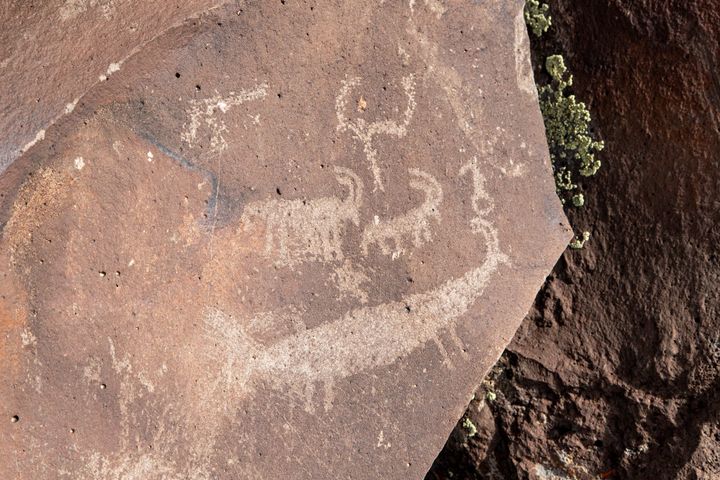
A "wagon wheel" style arrastra in the backcountry of Lake Mead National Recreation Area? I had to see it for myself. I'd read about this site years ago in an old NPS report, and the combination of a rare milling method and petroglyphs along the way was too good to pass up. Historic mining and rock art? Sign me up.
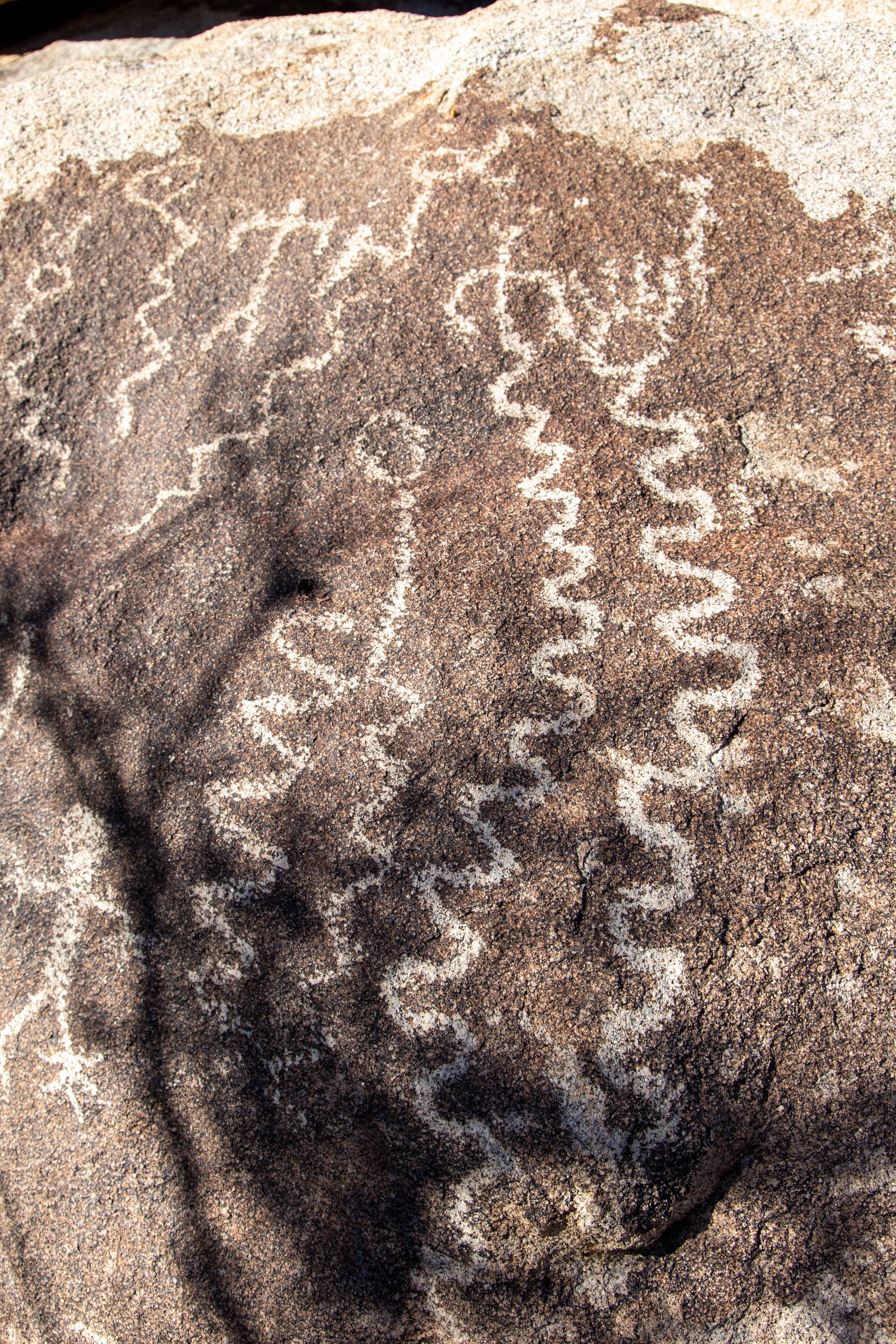
Getting out there is pretty easy. The roads are not all that difficult, but 4WD is advised. The first stop at the main petroglyph site is right along the road. The second set of petroglyphs and the arrastra are reached by a short cross-country hike.
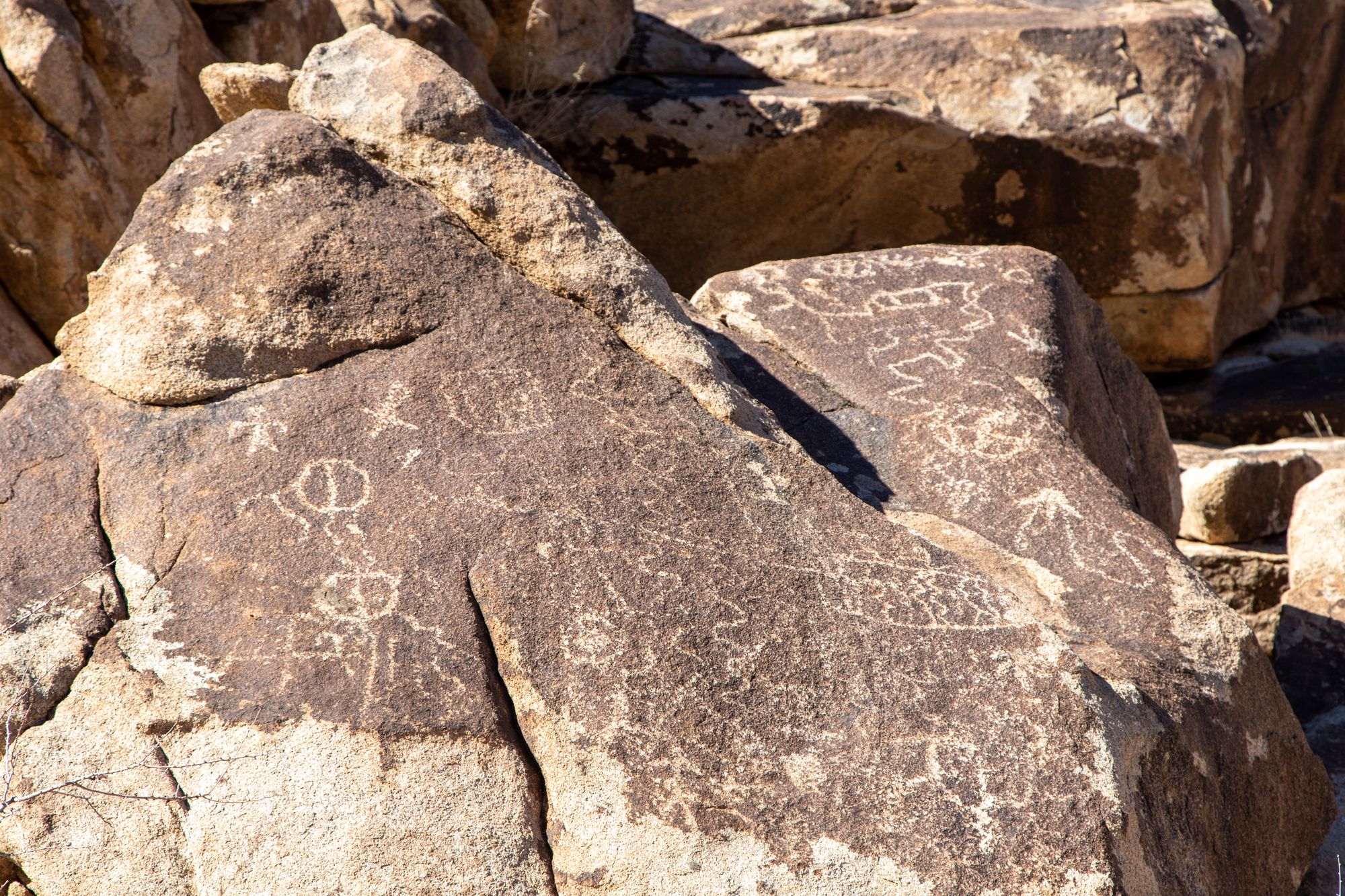
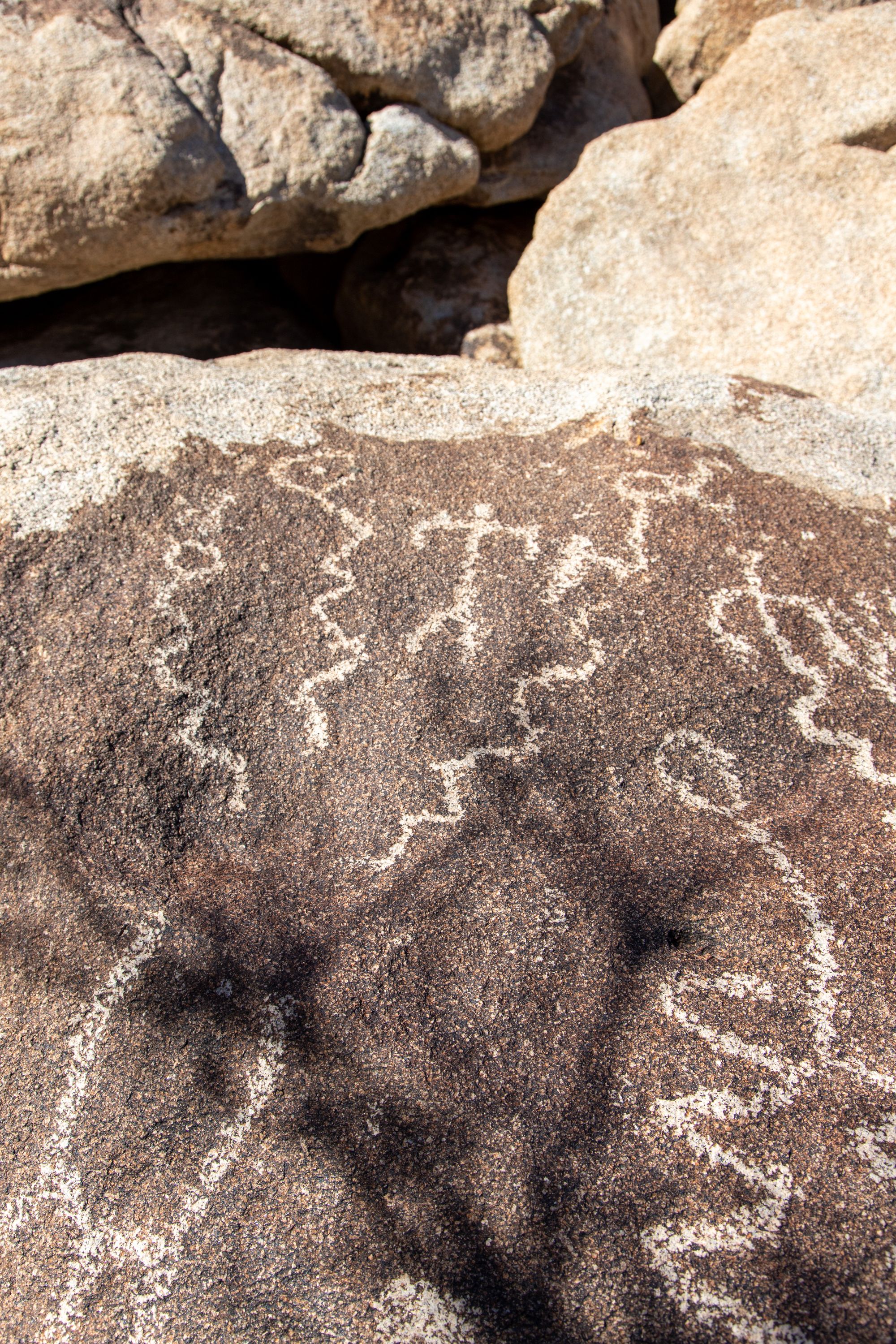
Petroglyphs
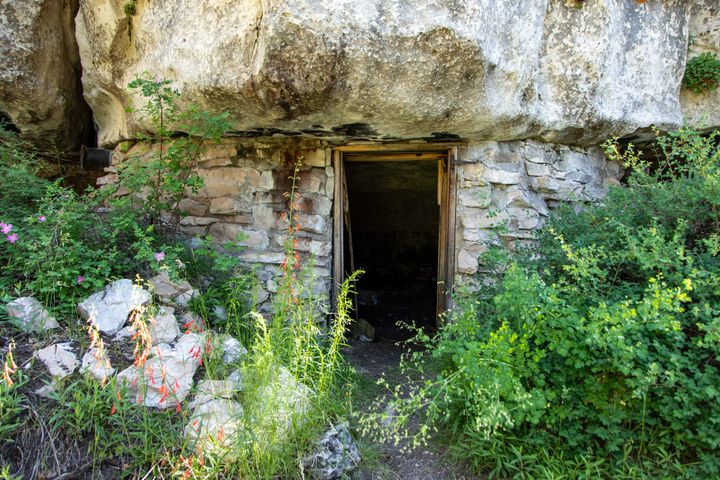
History
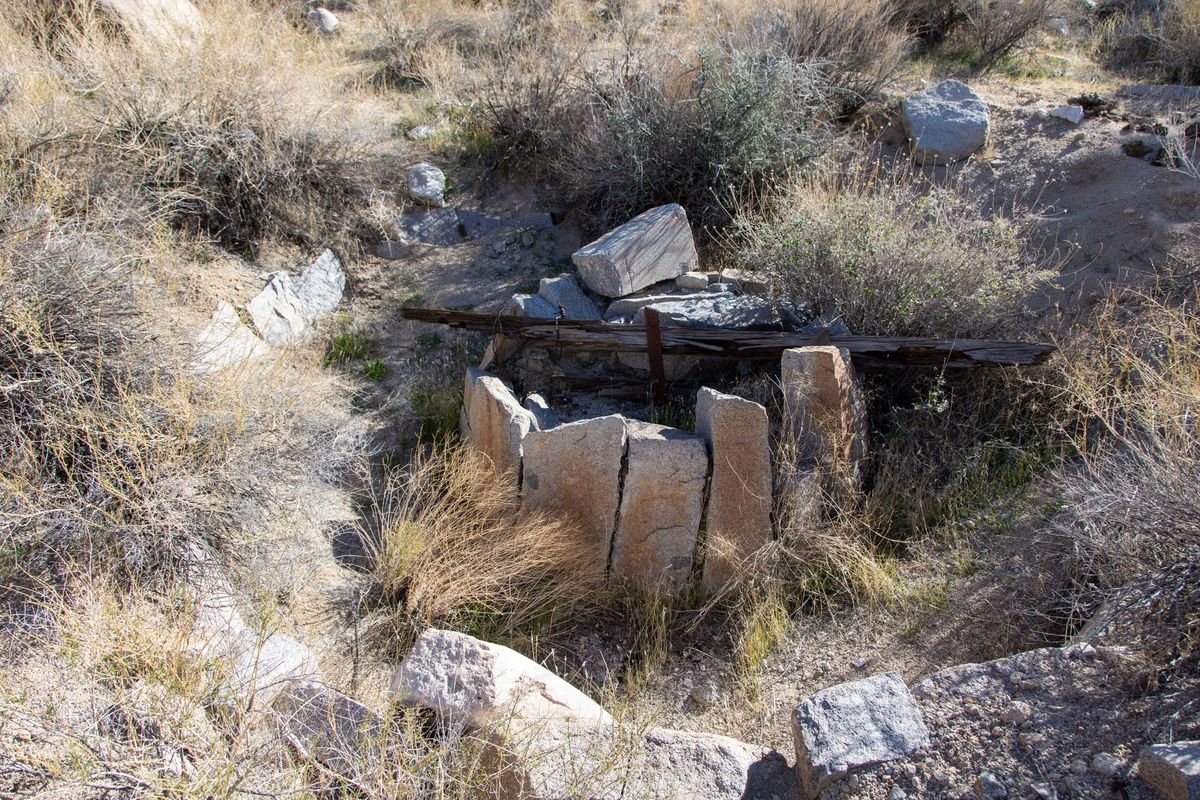
This primitive mill site is interesting even though much of it is gone: the drag stones have been pulled out, the support beam is in poor condition, and the wagon wheel itself is long gone. But the basin itself is in good condition. According to an NPS archaeological survey, the arrastra was built from 30 local granitic slabs for the walls and floor, with a freight wagon wheel serving as the pivot mechanism. A 4x6 inch beam attached to the wheel once supported the drag stones by wire loops and chains. This wagon wheel design is unusual; the only other known example on NPS land is the Pinto Wye Arrastra in Joshua Tree.


Arrastra and historic writing
The prospectors built a nice trough for excess water to exit the arrastra and a stone bridge over the trough so a burro would have a nice flat surface to walk over. Prospectors are always looking after their burros.
Besides the arrastra, the prospectors built up a flat area for their camp with a rock-stacked wall to protect it from flash floods. There are the remains of slag and brick dust from a small assay furnace. They also carved close to a dozen historic inscriptions on the boulders around the camp. The archaeological survey documented five different names with dates ranging from 1910 to 1916, along with expressions like "Hello Bill" and "966 BPOE" (Benevolent and Protective Order of Elks). Based on the artifacts left behind (mostly canned food and kerosene tins, with notably few personal items), archaeologists concluded this was probably a short spring occupation by a small crew of less than four men.
I didn't see any mines or prospects in the immediate area, which makes you wonder where they were mining. The survey noted two abandoned mines within a several-mile radius, which supports my suspicion: they built the arrastra here because there was water at depth in the wash and brought in ore by mule from prospects scattered across the surrounding mountains.
Please respect and protect everything you find out here.